Willem van Aelst
1627 – 1683
In short
Willem van Aelst was a Dutch Golden Age painter renowned for his exquisite still-life compositions, particularly those featuring flowers and game. Active in the mid-17th century, his work is characterized by its refined detail, opulent arrangements, and masterful depiction of light and texture.
Notable works


.jpg)
_-_A_Vase_of_Flowers_-_WA1940.2.2_-_Ashmolean_Museum.jpg)
Early life
Willem van Aelst was born in Delft in the Dutch Republic around 1627. Details of his early life and training are not extensively documented, a common characteristic for many artists of the Dutch Golden Age. It is presumed he received his initial artistic education in his native city. Delft was a thriving center for the arts during this period, known for its high-quality pottery, its association with the painter Johannes Vermeer, and a strong tradition of genre and still-life painting. The artistic environment of Delft likely provided a fertile ground for van Aelst to develop his skills and refine his artistic sensibilities.
Career and style
Van Aelst's career flourished during the height of the Dutch Golden Age. He is primarily known for his still-life paintings, with a particular specialization in floral arrangements and, to a lesser extent, game still lifes. His style firmly belongs to the broader movement of Dutch realism, characterized by meticulous attention to detail, accurate representation of textures, and a sophisticated handling of light. His work often conveys a sense of opulence and luxury, featuring elaborate displays of flowers, fruits, and sometimes valuable objects like watches or fine tableware. These elements, combined with his skillful composition and refined palette, contributed to his reputation as a leading still-life painter of his time. He is also noted for his 'pronkstilleven' (ostentatious still life) works, which showcased wealth and status through their lavish subject matter.
Van Aelst's travels and potential influences are not precisely documented, but his mature style suggests an awareness of developments in still-life painting across Europe. He is known to have worked in Paris for a period, likely between 1649 and 1656, before returning to the Dutch Republic. His later career saw him establish himself in Amsterdam, a major commercial and artistic hub, where he continued to produce significant works until his death in 1683. His reputation extended beyond the Dutch Republic, indicating a broader appeal for his highly accomplished still lifes.
Signature techniques
Van Aelst's signature techniques are evident in his masterful execution and compositional choices. He possessed an exceptional ability to render a wide variety of textures with remarkable verisimilitude. This includes the delicate, velvety petals of flowers, the smooth sheen of fruit skins, the hard gleam of metal or glass, and the soft fur of game. His use of light is particularly noteworthy; he often employed a soft, diffused light that gently illuminates his subjects, creating subtle gradations of tone and volume. This lighting technique enhances the three-dimensionality of the objects and contributes to the overall sense of realism and tactility.
Compositionally, van Aelst favored elegant and balanced arrangements. He often placed his subjects against dark, neutral backgrounds, which served to emphasize the brilliance and detail of the foreground elements. His floral still lifes frequently feature arrangements in classical urns or vases, sometimes with insects or dew drops adding a touch of naturalism and transience. The inclusion of such details, along with the occasional presence of a watch, suggests a contemplation of time and mortality alongside the celebration of natural beauty and material wealth. His brushwork, while precise, is also fluid and economical, avoiding excessive detail that might detract from the overall harmony of the composition.
Major works
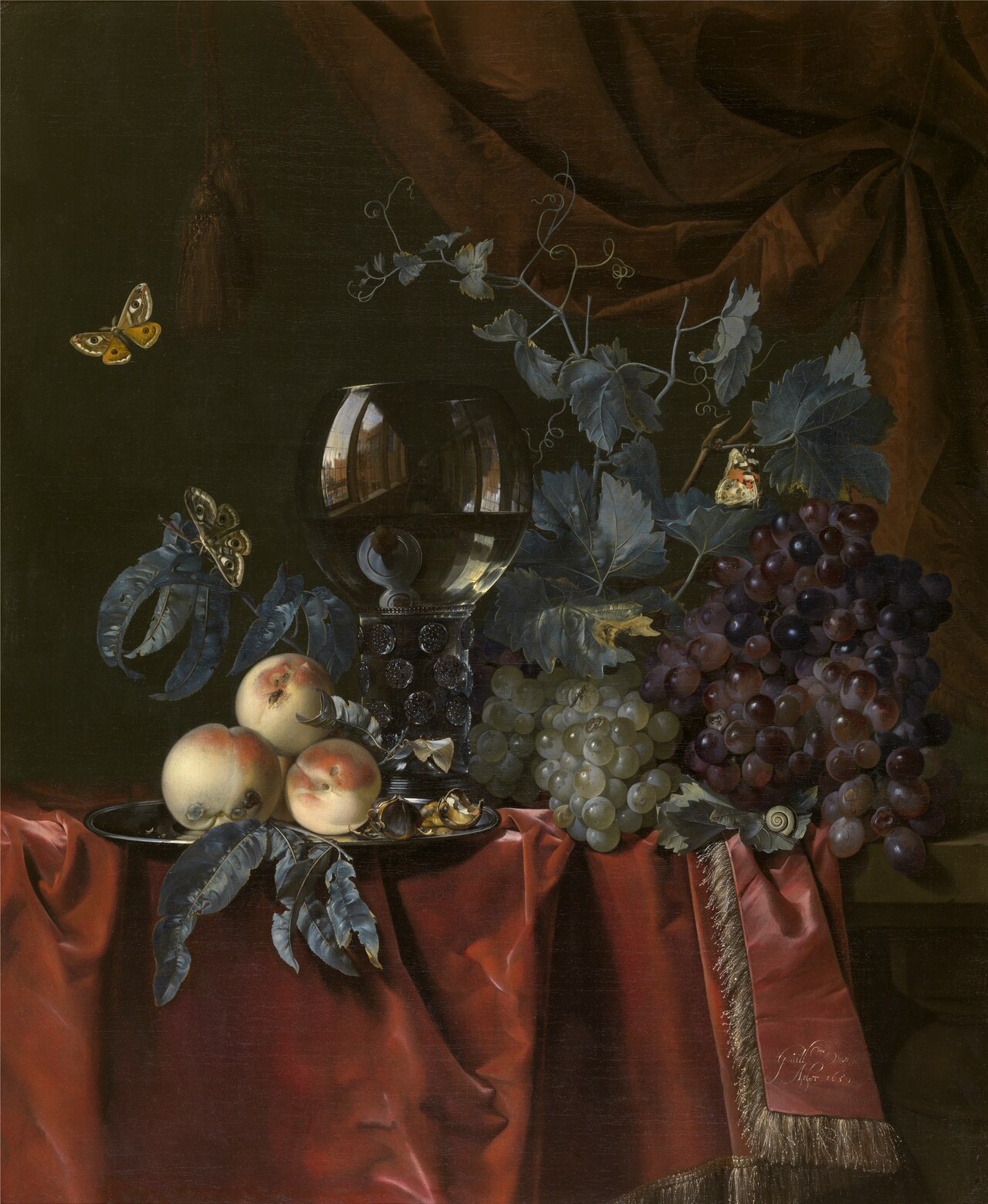
Among Willem van Aelst's significant contributions to still-life painting are several notable works that exemplify his skill and artistic vision. "Flowers in a Vase" (1651) showcases his early mastery of floral still life, presenting a vibrant bouquet with a keen eye for botanical accuracy and the play of light on petals. The following year, "Still life with fruits and dishes" (1653) demonstrates his versatility, incorporating ripe fruits and elegant ceramic or metal dishes, hinting at the bounty of nature and the refinement of human artistry.
In "Fruit and Wine Glass" (1659), van Aelst captures a more intimate scene, focusing on the textures of fruit and the transparency of glass, often bathed in a soft, atmospheric light. The works "Flower still life with a watch" (1663) and "A Vase of Flowers" (1663) are particularly representative of his mature style. In these pieces, the opulent floral arrangements are often accompanied by symbolic elements, such as a watch, which alludes to the passage of time and the fleeting nature of beauty. The meticulous rendering of each bloom, the subtle interplay of colors, and the sophisticated composition solidify these works as hallmarks of his oeuvre, embodying both the aesthetic appeal and the contemplative undertones characteristic of his still lifes.
Influence and legacy
Willem van Aelst's influence on subsequent generations of still-life painters is significant, particularly within the Dutch tradition. His refined technique, elegant compositions, and masterful handling of light set a high standard for floral and game still lifes. Artists who followed, particularly those working in the late 17th and early 18th centuries, often emulated his approach to depicting luxurious arrangements and conveying a sense of opulence. His work contributed to the development and prestige of the still-life genre during the Dutch Golden Age, solidifying its place as a major artistic category.
While not as widely discussed in popular art history as some of his contemporaries, van Aelst's contributions are recognized by specialists for their technical brilliance and aesthetic quality. His paintings remain highly valued for their exquisite detail, sophisticated beauty, and the subtle philosophical reflections they often contain. The legacy of Willem van Aelst lies in his ability to elevate the still-life genre through meticulous observation, refined execution, and a profound understanding of composition and light, leaving behind a body of work that continues to be admired for its enduring artistic merit.
Frequently asked questions
Who was Willem van Aelst?
Willem van Aelst was a Dutch Golden Age painter, born around 1627 and died in 1683. He was renowned for his highly detailed and opulent still-life paintings, particularly those featuring flowers and game.
What art movement or style is Willem van Aelst associated with?
Willem van Aelst is associated with the Dutch Golden Age and the art movement of realism. His style is characterized by meticulous detail, accurate representation, and sophisticated handling of light and texture.
What are Willem van Aelst's most famous works?
Some of Willem van Aelst's most recognized works include 'Flower still life with a watch' (1663), 'Still life with fruits and dishes' (1653), and 'Flowers in a Vase' (1651). These pieces exemplify his mastery of floral arrangements and luxurious compositions.
Why is Willem van Aelst considered important in art history?
Van Aelst is important for his exceptional technical skill in still-life painting, particularly his realistic depiction of textures and light. He elevated the genre with his elegant compositions and luxurious subject matter, influencing later artists.
How can I recognize a painting by Willem van Aelst?
Look for meticulously rendered flowers and fruits, often arranged in classical vases or urns against dark backgrounds. You might also see opulent details like insects, dew drops, or valuable objects such as watches, all depicted with exquisite realism and a refined sense of light.