Wilhelm Schubert van Ehrenberg
1630 – 1676
In short
Wilhelm Schubert van Ehrenberg (1630–1676) was a Flemish painter from Antwerp who specialised in detailed architectural scenes, especially church interiors, both real and imagined. His work exemplifies the Baroque fascination with space and light, and he is noted for his precise perspective and atmospheric rendering of sacred architecture.
Notable works

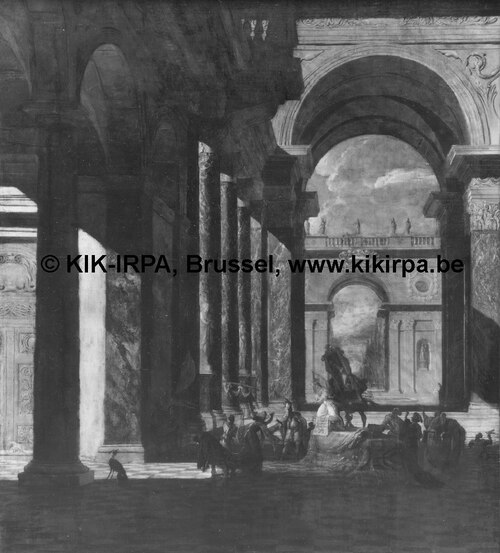
.jpg)


Early life Wilhelm Schubert van Ehrenberg was born in Antwerp in 1630, a city that was then part of the Habsburg Netherlands and a thriving centre of artistic production. Little is recorded about his family background or early training, but it is likely that he entered the local guild system, as was customary for painters of his generation. Antwerp’s vibrant artistic community, which included masters of genre, portraiture, and especially still life, provided a fertile environment for a young artist interested in the emerging interest in architectural painting.
Career and style By the mid‑1650s van Ehrenberg had established himself as a specialist in architectural vedute, a niche that catered to both religious patrons and private collectors fascinated by the grandeur of ecclesiastical and secular spaces. His oeuvre is dominated by interior church scenes, rendered with a meticulous eye for perspective and an acute sensitivity to light. Though he occasionally painted imagined Renaissance palaces and picture galleries, his most celebrated works are depictions of real churches, often embellished with figures that animate the spaces without detracting from the architectural focus.
The style of van Ehrenberg aligns with the late Baroque period’s preoccupation with dramatic spatial effects. He employed a clear, balanced composition that guides the viewer’s eye through the nave, aisles, and altars, while the use of chiaroscuro enhances the three‑dimensional quality of stone, marble, and gilded surfaces. His paintings convey a sense of reverence and awe, reflecting contemporary Counter‑Reformation attitudes that emphasized the visual splendor of sacred spaces.
Signature techniques Van Ehrenberg’s technical repertoire is distinguished by several recurring methods. First, he mastered linear perspective, often using a vanishing point placed high in the composition to create a sense of infinite depth. This approach is evident in the way he renders vaulted ceilings and elongated columns, giving the interior a cathedral‑like expansiveness. Second, he employed a restrained colour palette of muted earth tones punctuated by the rich reds and golds of liturgical furnishings, allowing the architectural forms to dominate the visual field.
In terms of brushwork, his handling of stone and marble surfaces is fine and detailed, whereas textiles and drapery are rendered with softer, more fluid strokes. Light plays a crucial role: he frequently depicted shafts of daylight entering through high windows, casting dramatic shadows that highlight the curvature of arches and the intricacy of ornamental details. These lighting effects not only enhance realism but also imbue the scenes with a spiritual atmosphere.
Major works Among van Ehrenberg’s most notable paintings are:
- Ulysses at the Palace of Circe (1667) – This work diverges from his typical ecclesiastical subjects, presenting an imagined Renaissance interior where the mythological narrative unfolds. The composition showcases his skill in rendering opulent architectural elements, such as marble columns and elaborate frescoes, while maintaining a clear narrative focus.
- Chariclea is Recognized by her Parents (1666) – Another departure into mythological storytelling, this painting situates the drama within a grand hall that demonstrates van Ehrenberg’s ability to blend narrative content with his signature architectural precision.
- Interior of the Saint Peter's Church in Rome (1671) – A remarkable example of his real‑site church interiors, this canvas captures the monumental scale of St Peter’s Basilica, emphasizing the soaring dome, the rhythmic sequence of pilasters, and the interplay of natural light filtering through the high windows.
- Interior of a Church (1665) and Church Interior (1664) – Both works exemplify his mature style: meticulously rendered nave, detailed altar pieces, and a subtle yet effective use of light to suggest the sanctity of the space. The 1665 painting includes a modest congregation, providing a narrative element that enhances the architectural focus.
These works collectively illustrate van Ehrenberg’s versatility in handling both real and imagined spaces, his command of perspective, and his capacity to convey the spiritual resonance of interiors through compositional balance and lighting.
Influence and legacy Wilhelm Schubert van Ehrenberg’s paintings contributed to the broader Baroque interest in architectural illusionism, a trend that would later influence Dutch and German painters who specialised in interior scenes. His precise perspective and atmospheric lighting prefigured the work of later artists such as Pieter Saenredam and later, in the 18th century, the Dutch vedutisti who produced capricci of imagined interiors.
Although he did not found a distinct school, his works were circulated among collectors across the Low Countries and Italy, reinforcing the market for architectural paintings that combined devotional content with aesthetic grandeur. Contemporary scholars regard van Ehrenberg as a key figure in the development of the architectural genre, particularly for his ability to blend accurate representation with idealised, often theatrical, compositions.
Today, his paintings are housed in major European museums and continue to be studied for their technical mastery and their role in shaping the visual language of sacred space. By capturing the solemnity and splendor of ecclesiastical architecture, van Ehrenberg helped to codify a visual tradition that underscores the enduring power of architecture as both subject and symbol in art.
---
Influence and legacy Wilhelm Schubert van Ehrenberg’s paintings contributed to the broader Baroque interest in architectural illusionism, a trend that would later influence Dutch and German painters who specialised in interior scenes. His precise perspective and atmospheric lighting prefigured the work of later artists such as Pieter Saenredam and later, in the 18th century, the Dutch vedutisti who produced capricci of imagined interiors.
Although he did not found a distinct school, his works were circulated among collectors across the Low Countries and Italy, reinforcing the market for architectural paintings that combined devotional content with aesthetic grandeur. Contemporary scholars regard van Ehrenberg as a key figure in the development of the architectural genre, particularly for his ability to blend accurate representation with idealised, often theatrical, compositions.
Today, his paintings are housed in major European museums and continue to be studied for their technical mastery and their role in shaping the visual language of sacred space. By capturing the solemnity and splendor of ecclesiastical architecture, van Ehrenberg helped to codify a visual tradition that underscores the enduring power of architecture as both subject and symbol in art.
Frequently asked questions
Who was Wilhelm Schubert van Ehrenberg?
He was a Flemish painter (1630–1676) from Antwerp who specialised in detailed architectural scenes, especially church interiors, both real and imagined.
What artistic style or movement is he associated with?
His work aligns with the late Baroque period, characterised by dramatic perspective, chiaroscuro lighting, and a focus on the grandeur of sacred architecture.
What are his most famous works?
Key paintings include *Ulysses at the Palace of Circe* (1667), *Chariclea is Recognized by her Parents* (1666), *Interior of the Saint Peter's Church in Rome* (1671), and the church interior scenes of 1664 and 1665.
Why is Wilhelm Schubert van Ehrenberg important in art history?
He helped define the architectural genre in the Baroque era, influencing later artists with his precise perspective and atmospheric treatment of interior spaces.
How can I recognise a painting by van Ehrenberg?
Look for meticulously rendered stone and marble, a clear vanishing point high in the composition, restrained colour palettes punctuated by rich reds and golds, and dramatic shafts of light that illuminate expansive church interiors.