Violante Beatrice Siries
1709 – 1783
In short
Violante Beatrice Siries (1709–1783) was a Florentine‑born painter who trained in Italy and Paris before establishing a successful portrait practice in her native city. She is best known for her self‑portrait (1750) and aristocratic commissions such as the portraits of Captain Edward Hughes and Count Claude Alexandre de Bonneval.
Notable works

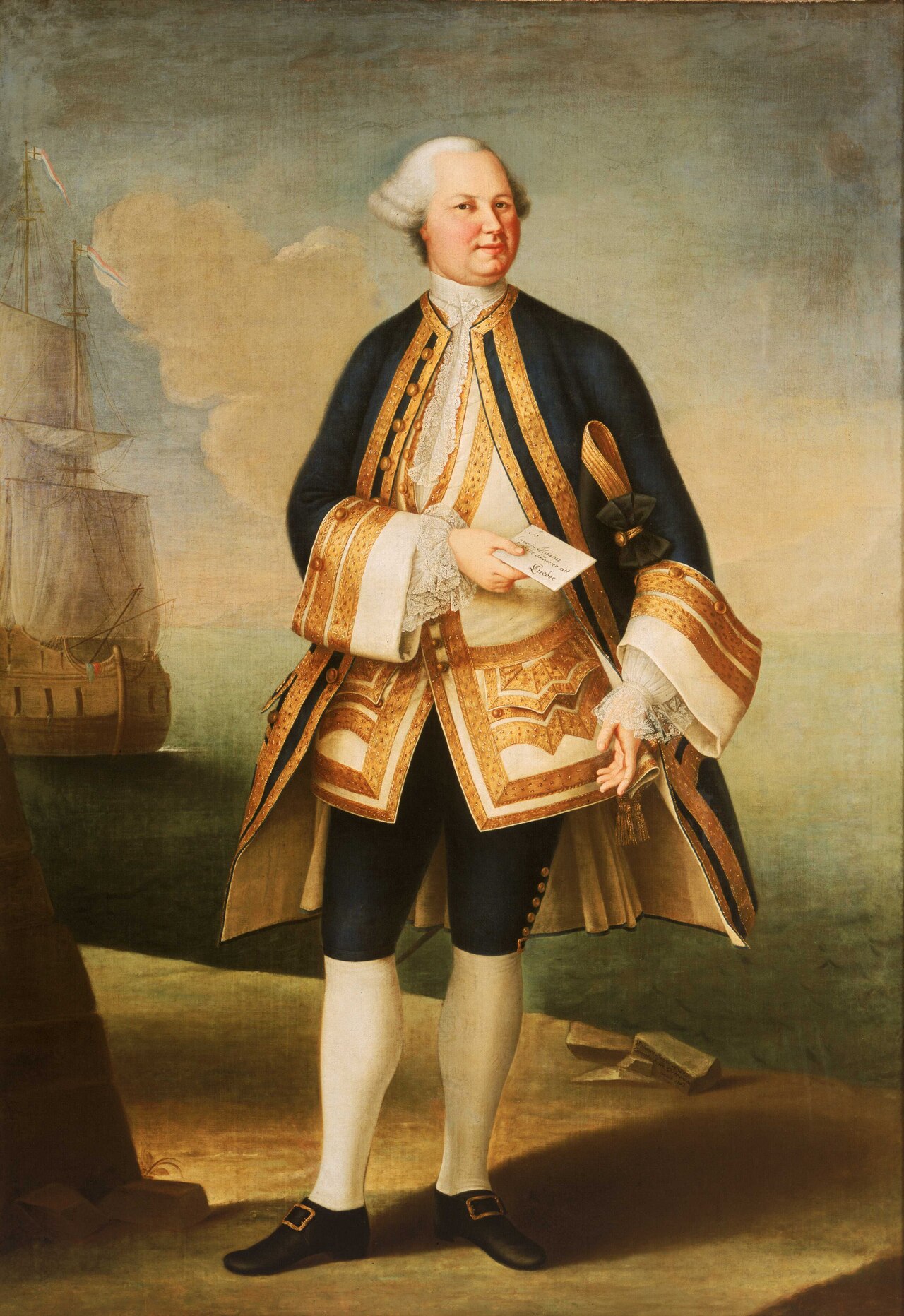

Early life Violante Beatrice Siries was born in 1709 in Florence, a city with a long tradition of artistic excellence. Details of her family background are scarce, and contemporary records do not specify her nationality beyond her place of birth. She began her artistic education under the guidance of Giovanna Fratellini, a respected Florentine painter who was herself a trailblazer for women in the arts. Siries also received instruction in sculpture from the sculptor Filippo della Valle, an experience that broadened her understanding of form and anatomy.
In 1726, at the age of seventeen, Siries moved to Paris. The French capital offered a vibrant artistic milieu, and she quickly secured apprenticeships with two of the most prominent court painters of the era: Hyacinthe Rigaud, celebrated for his grand, Baroque portraiture, and François Boucher, a leading exponent of the Rococo style. This period in Paris exposed Siries to the latest developments in European painting, from the dramatic chiaroscuro favoured by Rigaud to the delicate pastel palette championed by Boucher.
Career and style Upon returning to Florence after her Parisian apprenticeship, Siries married Giuseppe Cerroti, about whom little is documented. The marriage did not diminish her artistic ambitions; instead, she continued her studies under the Florentine painter Francesco Conti, who was known for his refined academic approach. Siries established a studio that catered primarily to the Florentine aristocracy and visiting diplomats, producing portraits that combined the solemnity of French court portraiture with the softer tonalities of the Italian tradition.
Her style can be characterised as a synthesis of Baroque gravitas and early Rococo elegance. Siries employed a controlled yet expressive brushwork, favouring a balanced composition that highlighted the sitter’s status through subtle symbols—such as medals, attire, or background objects—while maintaining a focus on the psychological presence of the subject. The influence of her Paris mentors is evident in the confident rendering of fabrics and the nuanced treatment of light, yet her works retain a distinctly Florentine sensibility, particularly in the restrained colour schemes and the careful rendering of facial features.
Signature techniques Siries developed several techniques that became hallmarks of her portraiture. First, she utilised a layered glazing method, applying thin translucent layers of pigment to achieve depth and luminosity, especially in skin tones. This approach allowed for a gentle modelling of the face that avoided the harsh contrasts typical of earlier Baroque works. Second, she employed a delicate sfumato around the edges of garments and background elements, creating a subtle atmospheric haze that softened the overall composition.
Another distinctive practice was her use of symbolic props. In many of her aristocratic commissions, Siries incorporated objects that alluded to the sitter’s achievements—such as military insignia, books, or heraldic devices—integrating them into the visual narrative without overwhelming the portrait’s intimacy. Finally, her attention to the interplay of light and shadow on textiles gave her works a tactile quality, making the fabrics appear almost tangible to the viewer.
Major works Siries’s most celebrated pieces include three portraits that exemplify her mature style. The **Self‑portrait (1750)** presents the artist with a composed yet confident gaze, her hands delicately holding a palette and brushes, signalling both her professional identity and personal poise. The work demonstrates her mastery of glazing techniques, with a luminous flesh tone that contrasts against a subdued, dark background.
The Portrait of Captain Edward Hughes (1761) captures the British naval officer in a dignified pose, rendered with meticulous attention to the details of his uniform and medals. Siries’s handling of the metallic gleam on the medals, combined with a soft rendering of the captain’s visage, reflects her ability to blend realism with an idealised representation of status.
The Portrait of Count Claude Alexandre de Bonneval (1750) portrays the French‑born military figure in a regal attire, complete with a sword and elaborate drapery. The composition balances the count’s authoritative presence with a subtle hint of Rococo elegance, evident in the delicate brushstrokes that suggest the texture of silk and velvet.
These works, together with several lesser‑known commissions, underscore Siries’s capacity to navigate the expectations of high‑society patronage while maintaining an individual artistic voice.
Influence and legacy Although Siries did not found a school or movement, her career offers valuable insight into the opportunities and constraints faced by women artists in eighteenth‑century Italy. By successfully operating a studio that attracted elite patrons, she demonstrated that female painters could achieve professional recognition beyond the confines of domestic or religious art.
Her portraits contributed to the visual documentation of Florentine and European aristocracy, providing historians with reliable visual records of fashion, insignia, and social hierarchy of the period. Moreover, her synthesis of French and Italian techniques anticipated the later diffusion of Rococo aesthetics across Italy, influencing younger portraitists who sought to emulate her refined approach.
Modern scholarship continues to reassess Siries’s oeuvre, recognising her as a pivotal figure in the transition from Baroque solemnity to the lighter, more intimate portraiture that characterized the late eighteenth century. Exhibitions of her work, alongside those of her mentors and contemporaries, have helped to restore her presence within the broader narrative of European art history.
In sum, Violante Beatrice Siries stands as a testament to artistic adaptability and the nuanced contributions of women painters during a period of significant stylistic evolution.
Frequently asked questions
Who was Violante Beatrice Siries?
Violante Beatrice Siries (1709–1783) was a Florentine-born painter who trained in Italy and Paris and became known for her refined portraiture of aristocratic clients.
What style or art movement is she associated with?
She worked at the crossroads of late Baroque and early Rococo, blending the solemnity of French court portraiture with a softer, Italianate palette.
What are her most famous works?
Her best‑known paintings are the Self‑portrait (1750), the Portrait of Captain Edward Hughes (1761), and the Portrait of Count Claude Alexandre de Bonneval (1750).
Why is she important in art history?
Siries demonstrates how a woman could achieve professional success in eighteenth‑century Europe, and her portraits provide valuable visual records of elite fashion and status while influencing the spread of Rococo aesthetics in Italy.
How can I recognise a painting by Violante Beatrice Siries?
Look for a balanced composition, soft glazing that gives luminous skin tones, subtle sfumato around fabrics, and the inclusion of symbolic props that reflect the sitter’s rank.