Théophile Hamel
1817 – 1870
In short
Théophile Hamel (1817–1870) was a Canadian painter from Quebec known for portraiture and religious scenes in the mid‑19th century. His work captures the social and cultural milieu of Quebec society, and several of his paintings are held in regional collections.
Notable works


_No%C3%A9mie,_Eug%C3%A9nie,_Antoinette_et_S%C3%A9phora_Hamel_(1854).jpg)
Early life Théophile‑Abraham Hamel was born in 1817 in the parish of Sainte‑Foy, a community that later became part of Quebec City. Little is recorded about his family background, but the region’s strong Catholic tradition and the presence of a modest but growing bourgeois class provided a fertile environment for artistic development. Hamel likely received his initial training locally, perhaps through apprenticeships with itinerant painters who supplied religious imagery for churches and portraits for the emerging professional class. By the late 1830s he had begun to establish himself as a competent draftsman, a skill that would underpin his later career.
Career and style During the 1840s and 1850s Hamel worked primarily in Quebec City, where he responded to the demand for portraiture among the province’s elite families and for devotional images in churches. His style reflects the conventions of academic realism that were disseminated through European prints and the teachings of French academies, yet it is tempered by a distinctly North‑American sensibility. The figures in his paintings are rendered with careful attention to facial features and clothing, conveying both individuality and the social status of the sitters. Color palettes are generally restrained, favouring muted earth tones and modest contrasts that suit the interior settings of his subjects.
While Hamel did not align himself with any formal avant‑garde movement, his work demonstrates an awareness of contemporary trends such as the Romantic emphasis on narrative drama and the emerging Realist concern for truthful representation. In religious works he employed conventional iconography, but he often introduced subtle local details—such as the texture of Quebec‑made fabrics or the particular architecture of provincial churches—that anchor the scenes in a recognizable cultural context.
Signature techniques Hamel’s paintings are characterised by a precise drawing style, achieved through meticulous under‑drawing before the application of paint. He favoured oil on canvas for his larger commissions, employing a layered glazing technique that allowed for depth of colour without sacrificing detail. Light is typically modelled in a soft, diffused manner, illuminating the faces of his subjects while leaving surrounding elements in gentle shadow. This approach enhances the three‑dimensional quality of the figures and contributes to a sense of dignity.
In portraiture, Hamel often used a limited compositional format: the sitter is positioned centrally, with a simple backdrop that may include a hint of interior décor or a neutral drapery. This focus on the individual aligns with the mid‑nineteenth‑century Canadian market, where patrons sought personal commemoration rather than grand historical allegory. For his religious scenes, he employed a more expansive composition, arranging multiple figures within a narrative tableau while still maintaining clear spatial relationships.
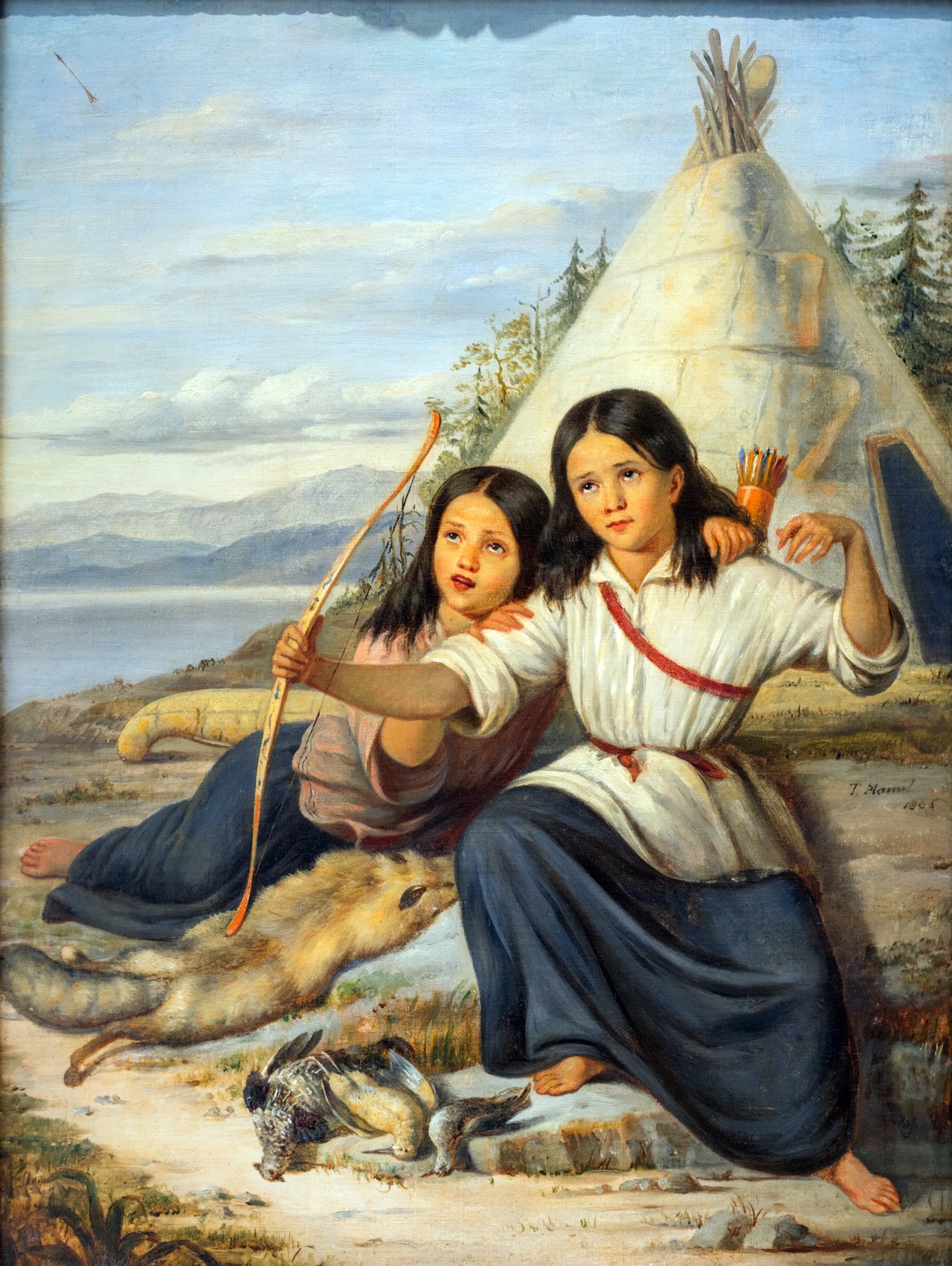
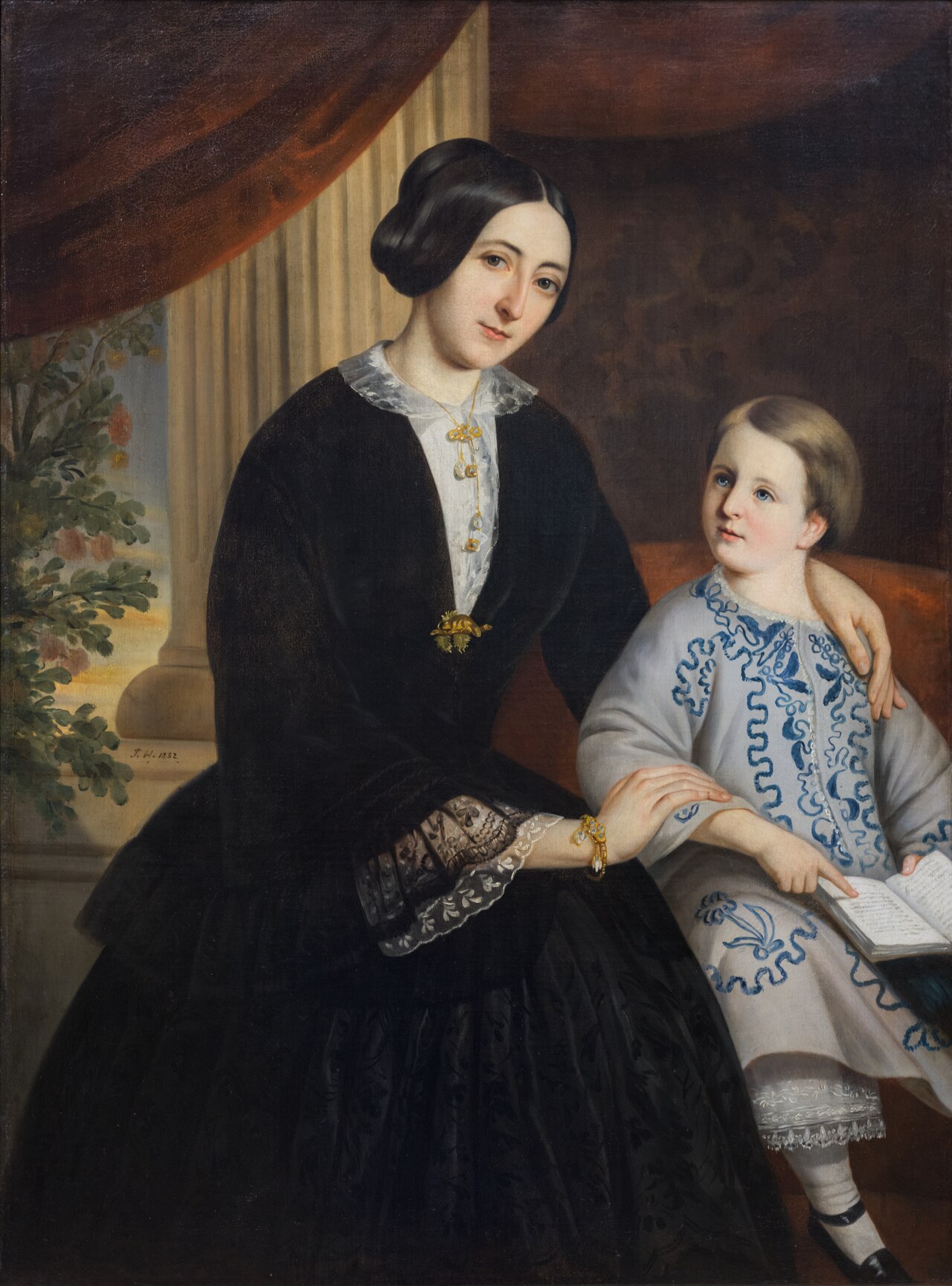
Major works - **Moses and the Daughters of Jethro (1838)** – One of Hamel’s earliest known religious compositions, this painting depicts the biblical episode in which Moses assists the daughters of Jethro at a well. The work demonstrates his skill in handling complex group dynamics, with each figure rendered with distinct expression and posture. The composition is balanced, with Moses centrally placed and the daughters arranged in a semi‑circular formation that guides the viewer’s eye. - **Portrait of Louise‑Adèle Taschereau (1851)** – This portrait captures a young woman from the prominent Taschereau family. Hamel renders her attire with meticulous attention to the lace and silk textures, while the subdued background ensures that the sitter’s face remains the focal point. The painting exemplifies his ability to convey both the elegance and the restrained modesty expected of women of her social standing. - **Madame Cyrice Têtu, née Caroline Dionne, et son fils Amable (1852)** – In this two‑generation portrait, Hamel portrays a mother and her son in a domestic setting. The interaction between the figures, highlighted by a gentle touch and shared gaze, conveys an intimate familial bond. The work’s delicate handling of light across their faces underscores Hamel’s mastery of chiaroscuro within a modest scale. - **Noémie, Eugénie, Antoinette and Séphora Hamel, The Artist’s Nieces (1854)** – This group portrait of Hamel’s own nieces reveals a more relaxed, almost informal atmosphere. The girls are depicted in varied poses, each displaying a distinct personality. The painting’s informal quality suggests Hamel’s comfort in rendering subjects with whom he shared personal connections, allowing for a softness that contrasts with his more formal commissions. - **Jeunes Indiennes à Lorette (1865)** – Representing Indigenous girls from the Lorette community, this work reflects a broader 19th‑century interest in depicting First Nations subjects. Hamel presents the figures with respectful dignity, avoiding the sensationalist tropes common in some contemporary depictions. The painting’s careful observation of clothing and posture offers valuable visual documentation of the community’s attire during that period.
These works collectively illustrate Hamel’s range—from biblical narrative to intimate portraiture—and his capacity to adapt his technique to varied subjects while maintaining a coherent visual language.
Influence and legacy Théophile Hamel’s career coincided with a formative era for Canadian visual culture, when the country was beginning to articulate its own artistic identity separate from European models. Although he never achieved the international fame of later Canadian painters such as the Group of Seven, his contributions were significant within Quebec’s artistic milieu. By providing high‑quality portraiture for the province’s elite, Hamel helped to establish a tradition of local commemorative art that reinforced social hierarchies and cultural continuity.
His religious paintings served the practical needs of parish churches, supplying visual narratives that reinforced Catholic doctrine. In doing so, Hamel participated in a broader network of ecclesiastical art that shaped the visual environment of Quebec’s communities. The preservation of several of his works in regional museums and church collections attests to their enduring value as historical documents.
Modern scholars regard Hamel as an exemplar of mid‑nineteenth‑century Canadian realism. His careful observation of dress, interior settings, and regional characteristics provides historians with insight into the material culture of Quebec during a period of rapid change. Moreover, his depiction of Indigenous subjects, though limited, contributes to the visual record of First Nations communities in the province.
In recent years, exhibitions focusing on early Canadian portraiture have begun to re‑examine Hamel’s oeuvre, situating him alongside contemporaries such as William Berczy and Joseph Légaré. These reassessments underscore his role in laying the groundwork for a distinctly Canadian artistic practice, one that balances European technical influences with local content. Hamel’s legacy, therefore, rests not only in the aesthetic quality of his paintings but also in the way his work reflects the cultural narratives of 19th‑century Quebec.
Overall, Théophile Hamel remains a pivotal figure for anyone studying the development of Canadian art, particularly the intersection of portraiture, religious imagery, and regional identity during a formative historical moment.
Frequently asked questions
Who was Théophile Hamel?
Théophile Hamel (1817–1870) was a Canadian painter from Quebec who specialised in portraiture and religious scenes in the mid‑19th century.
What style or movement is he associated with?
He worked in a realist, academically‑influenced style, blending European academic conventions with a distinctly Quebec‑based sensibility.
What are his most famous works?
His best‑known paintings include *Moses and the Daughters of Jethro* (1838), the *Portrait of Louise‑Adèle Taschereau* (1851), *The Artist’s Nieces* (1854), and *Jeunes Indiennes à Lorette* (1865).
Why does he matter in art history?
Hamel helped establish a local tradition of high‑quality portraiture and religious art in Quebec, providing valuable visual documentation of the province’s social and cultural life in the 19th century.
How can I recognise a Hamel painting?
Look for precise drawing, restrained colour, soft diffused lighting, and a focus on the sitter’s face; his portraits often feature modest interiors and a gentle, dignified treatment of the subject.