Théodore Verstraete
1850 – 1907
In short
Théodore Verstraete (1850–1907) was a Belgian Realist painter and printmaker renowned for his empathetic depictions of rural and coastal life, earning him the nickname “poet of rural life.”
Notable works
.jpg)

Early life
Théodore Verstraete was born in 1850 in the historic city of Ghent, Belgium. Little is recorded about his family background, but the industrial and agricultural surroundings of Flanders left an early imprint on his sensibilities. He grew up during a period when Belgian art was increasingly turning its attention to the everyday lives of ordinary people, a shift that would later define his own artistic trajectory.
Career and style
Verstraete began his formal artistic training in the 1860s, likely attending the Royal Academy of Fine Arts in Ghent, where the curriculum emphasized drawing from life and the study of classical techniques. By the 1880s he had established himself as a painter of the Realist school, a movement that sought to portray subjects truthfully, without idealisation. His work is characterised by a restrained palette, careful observation of light, and a quiet, almost lyrical treatment of landscape.
Unlike many of his contemporaries who favoured grand historical or mythological subjects, Verstraete concentrated on the modest, often overlooked corners of the Belgian countryside. He portrayed peasants working in fields, fishermen on the North Sea coast, and the subtle changes of weather across the flat Flemish terrain. This focus on the humble environment earned him the epithet “poet of rural life.”
In the late 1880s and early 1890s Verstraete broadened his repertoire to include coastal scenes, travelling to seaside towns such as Blankenberge and the Dutch province of Zeeland. These trips introduced a new visual vocabulary—windswept dunes, expansive skies, and the shimmering surface of sea water—yet his underlying Realist approach remained constant.
Signature techniques
Verstraete’s paintings are marked by several recurring technical choices:
1. Atmospheric colour modulation – He often layered thin glazes of muted greens, ochres, and greys to convey the soft, diffused light typical of the Low Countries. 2. Economy of brushstroke – Rather than vigorous impasto, he employed delicate, controlled strokes that suggested form without overt detail, allowing the viewer’s eye to complete the scene. 3. Printmaking influence – As an accomplished printmaker, Verstraete transferred some of the graphic clarity of etching onto canvas, producing works where foreground and background are balanced through tonal contrast. 4. Human presence as narrative anchor – Small figures, frequently engaged in routine tasks, appear within his landscapes, providing a subtle narrative thread that connects the viewer to the land.
These techniques combine to create an atmosphere of calm contemplation, inviting the audience to experience the quiet dignity of rural and coastal life.
Major works
Several of Verstraete’s paintings have become emblematic of his oeuvre:
- Spring in Schoore (Zealand) (1894) – Executed during a visit to the Dutch province of Zeeland, this canvas captures the emergence of new growth against a flat, watery horizon. The delicate greens of newly sprouted reeds contrast with the pale sky, illustrating Verstraete’s mastery of seasonal transition.
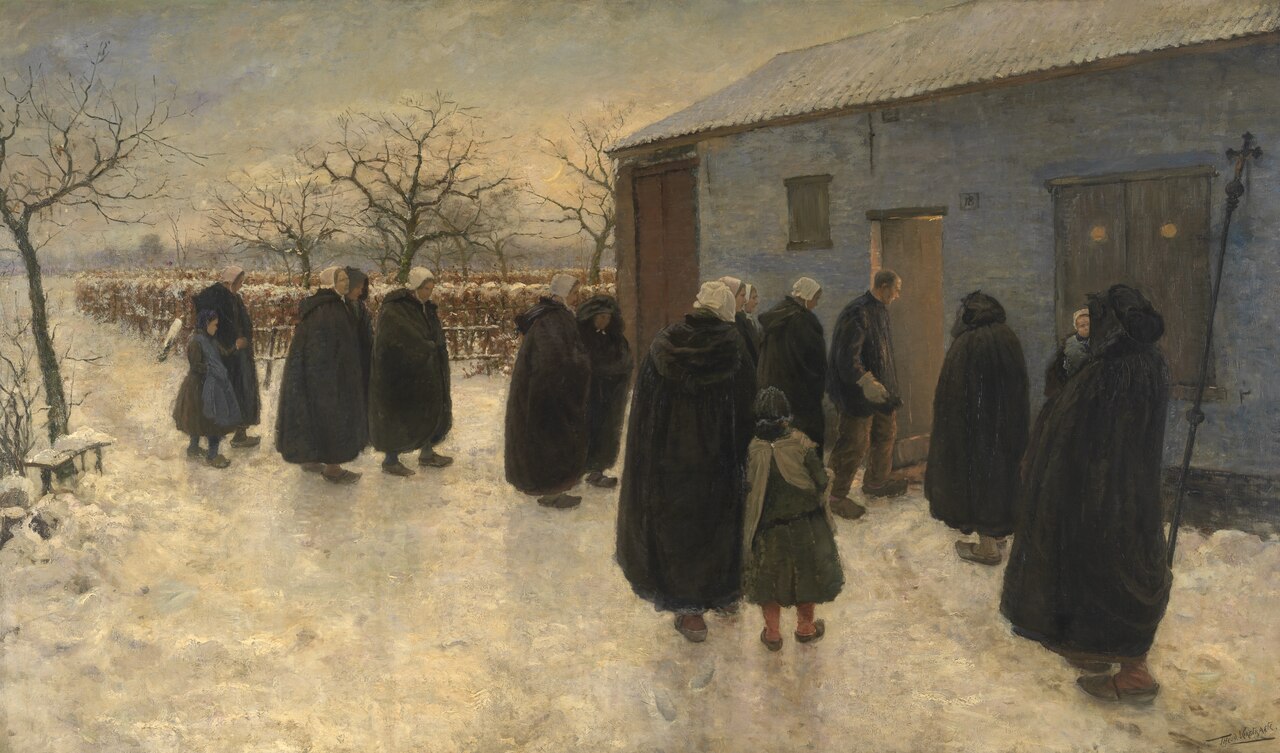
- To the Vigil (1889) – A poignant genre scene, this work shows a group of villagers gathered around a dimly lit interior, awaiting the night’s watch. The muted interior light against the dark exterior showcases his skill in rendering chiaroscuro within a modest setting.
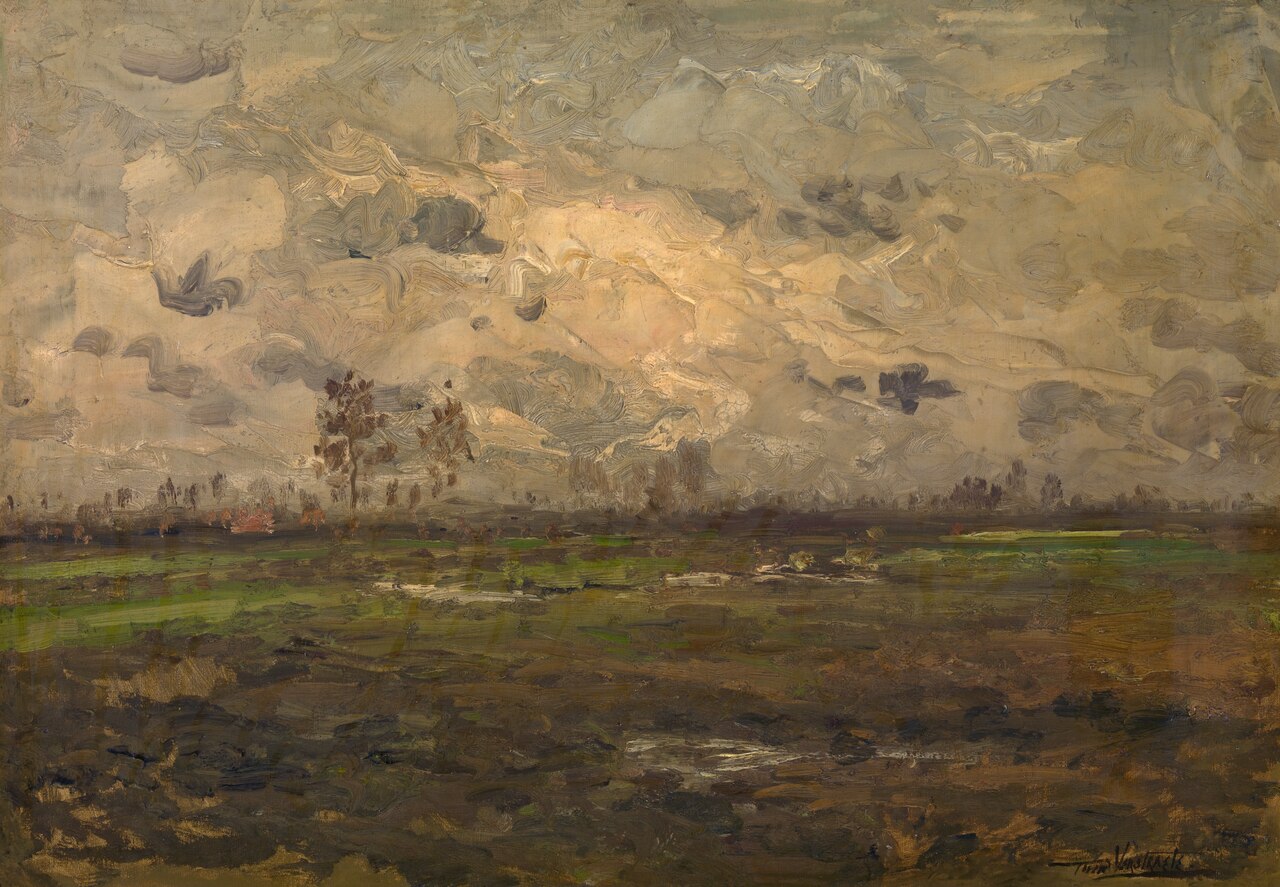
- After the Rain (1891) – In this landscape, rain‑slicked fields reflect a silvery sky, while distant silhouettes of cottages emerge through the mist. The painting is celebrated for its atmospheric depth and the subtle play of light on wet surfaces.
- The Heath (date uncertain) – Though the exact year of its creation is unclear, *The Heath* presents an open, windswept heathland dotted with solitary figures. Its composition emphasizes the vastness of the landscape, a recurring theme in Verstraete’s work.
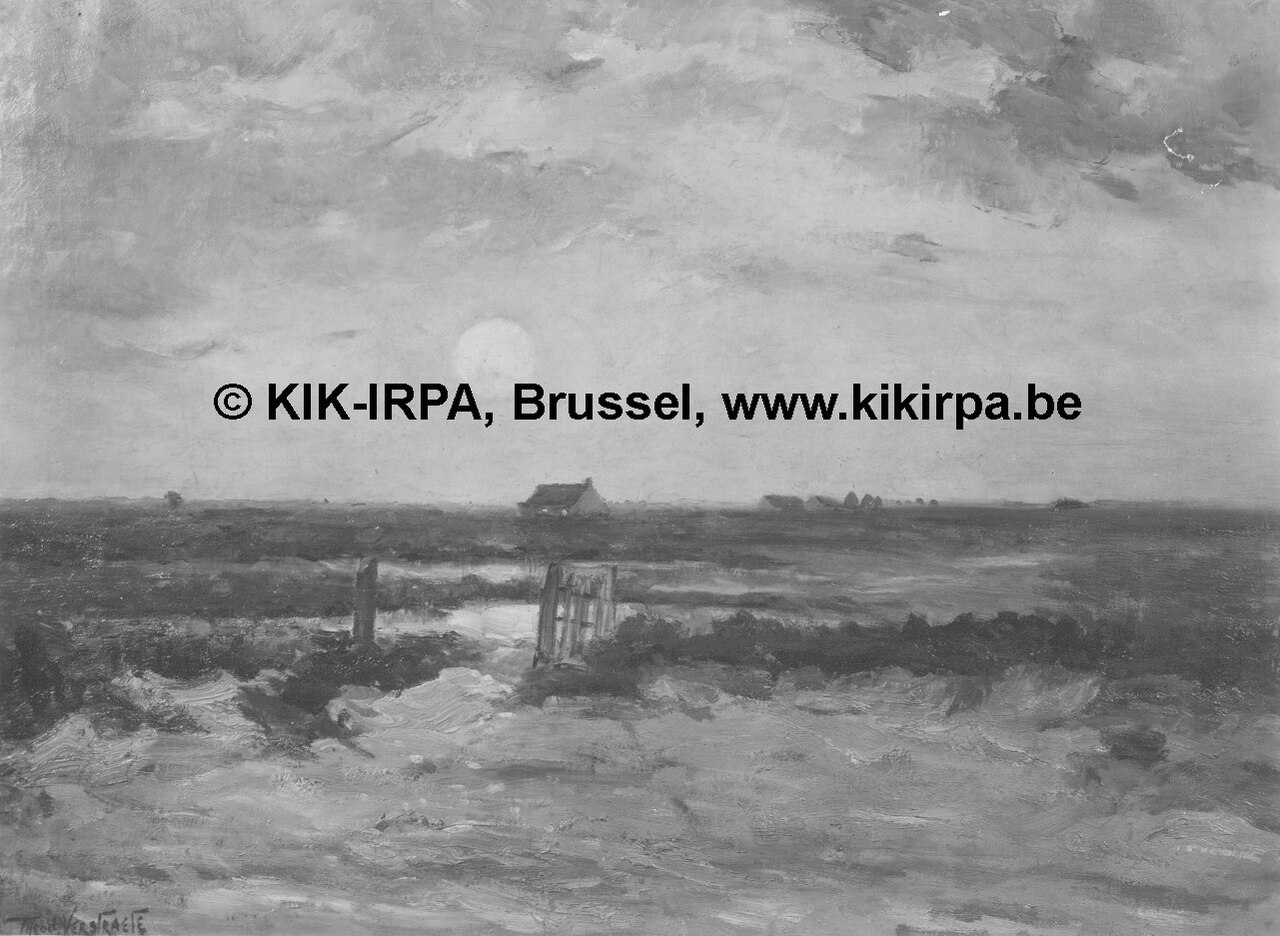
- Rising of the Moon in Blankenberge (1890) – One of his most admired coastal scenes, this painting depicts the moon’s early ascent over the Belgian seaside town of Blankenberge. The gentle illumination of the sea and the faint outlines of fishermen’s boats convey a serene nocturnal mood.
These works collectively illustrate Verstraete’s commitment to portraying both the natural environment and the human activities that inhabit it, each rendered with a restrained yet evocative realism.
Influence and legacy
Théodore Verstraete’s dedication to authentic rural representation placed him alongside other Belgian Realists such as Charles de Groux and Eugène Laermans. While he never achieved the international fame of some of his French counterparts, his paintings were well received in Belgium and the Netherlands, where they resonated with audiences attuned to the region’s agrarian heritage.
In the decades following his death in Antwerp in 1907, Verstraete’s work continued to be exhibited in regional museums, particularly those focusing on 19th‑century Belgian art. Contemporary scholars regard his oeuvre as a valuable visual record of Flemish rural life at the turn of the century, offering insight into social conditions, agricultural practices, and the relationship between people and landscape.
Today, Verstraete’s paintings are held in several public collections, including the Royal Museum of Fine Arts in Antwerp and the Museum of Fine Arts in Ghent. His legacy endures in the continued appreciation of Realist landscape painting, and his works are frequently cited in discussions of how art can capture the dignity of everyday labour.
Overall, Théodore Verstraete remains a significant figure in Belgian art history, celebrated for his poetic yet unembellished portrayals of the countryside and coast that continue to speak to modern audiences.
Frequently asked questions
Who was Théodore Verstraete?
Théodore Verstraete (1850–1907) was a Belgian Realist painter and printmaker known for his empathetic landscapes of rural and coastal life.
What artistic style or movement is he associated with?
He worked within the Realist tradition, focusing on truthful, everyday subjects rather than idealised or historical themes.
What are his most famous works?
Key paintings include *Spring in Schoore (Zealand)* (1894), *To the Vigil* (1889), *After the Rain* (1891), *The Heath* (date uncertain), and *Rising of the Moon in Blankenberge* (1890).
Why does Verstraete matter in art history?
He is regarded as the ‘poet of rural life,’ providing a nuanced visual record of Flemish countryside and coastal scenes, and influencing later Belgian landscape painters.
How can I recognise a Verstraete painting?
Look for restrained colour palettes, delicate brushwork, atmospheric light, modest figures set within expansive fields or seascapes, and a calm, contemplative mood.