Théodore Baron
1840 – 1899
In short
Théodore Baron (1840–1899) was a Belgian landscape painter who worked in a realistic style. Born in Brussels and dying in Saint‑Servais, he is known for atmospheric depictions of forests, dunes and rocky scenes, including works such as The Forest of Fontainebleau – Autumn Evening and Rocher de Frêne near Profondeville.
Notable works
.jpg)
Early life Théodore Baron was born in Brussels in 1840, a period when Belgium was establishing its own artistic identity following independence in 1830. Little is recorded about his family background, but the capital’s vibrant cultural milieu provided ample exposure to contemporary artistic trends. Brussels, with its academies and galleries, offered young artists access to formal training and the works of both Flemish masters and modern European painters. Baron's early education would have included drawing from plaster casts, studies of classical anatomy, and instruction in plein‑air observation, a foundation that later informed his commitment to realistic landscape painting.
Career and style Baron’s professional career unfolded during the second half of the 19th century, a time when realism was asserted as a counterpoint to Romantic idealisation. In Belgium, landscape painters began to focus on direct observation of nature, influenced by the French Barbizon school and the broader European turn toward naturalism. Baron aligned himself with this movement, producing works that emphasized the truthful depiction of light, atmosphere and terrain. His canvases display a restrained palette, often dominated by earth tones, muted greens and the subtle chiaroscuro of dawn or dusk. While the precise details of his exhibition history are scarce, it is known that he participated in the annual salons of the Société des Beaux‑Arts in Brussels, where his works were received with modest acclaim for their sincerity and technical competence.
Signature techniques Baron’s technique was characterised by several recurring elements. He favoured a restrained, yet confident brushwork that conveyed the texture of foliage, rock and sand without resorting to overtly decorative strokes. His handling of light often involved a delicate gradation from warm, golden hues in the foreground to cooler, bluish tones in the distance, creating a sense of depth and atmospheric perspective. The artist employed a relatively limited colour palette, allowing the tonal variations of the landscape itself to dominate the composition. In addition, he sometimes utilised a glazing method – applying thin, translucent layers of pigment over a dried underpainting – to achieve the luminous quality evident in his night scenes. This combination of careful observation, measured brushwork and subtle glazing contributed to the realistic yet evocative quality of his landscapes.
Major works Baron’s oeuvre, though not extensive, includes several works that illustrate his mastery of landscape realism:
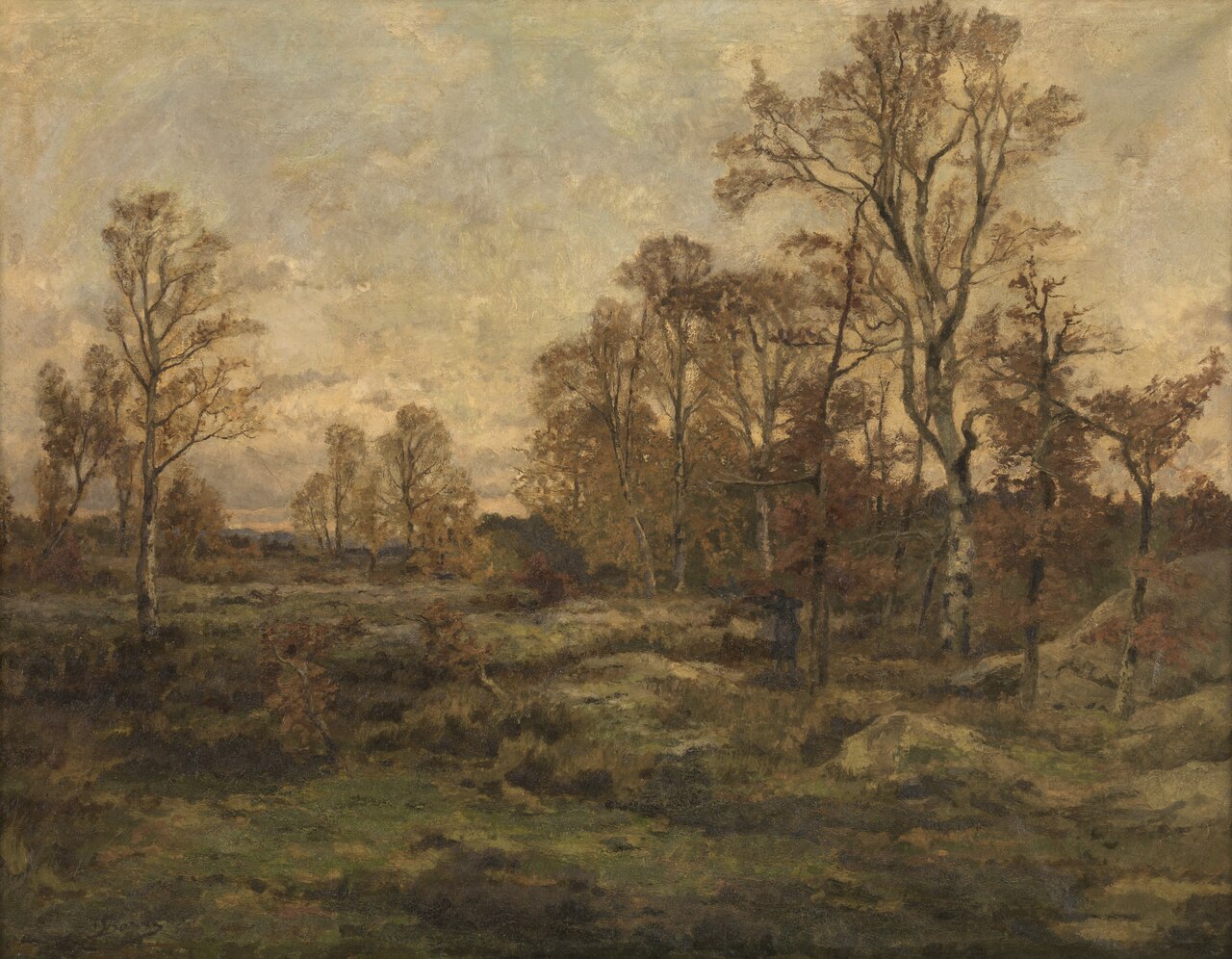
- The Forest of Fontainebleau – Autumn Evening – This painting captures the iconic French forest bathed in the amber glow of an autumn sunset. Baron’s composition places a dense canopy of trees in the foreground, with shafts of light filtering through the foliage, revealing the rich ochre of fallen leaves. The work demonstrates his skill in rendering atmospheric light and the nuanced colour shifts that accompany the evening hour.
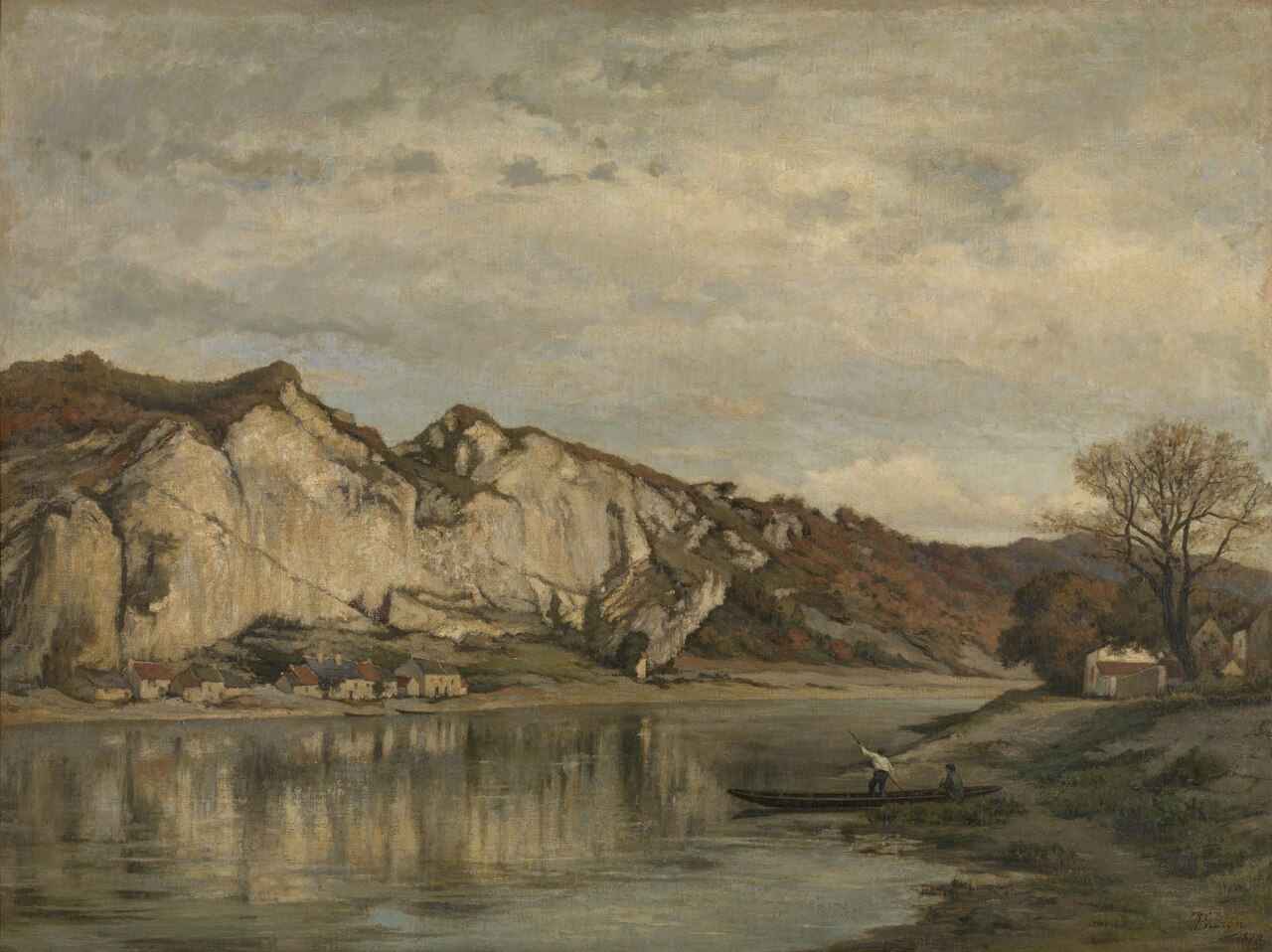
- Rocher de Frêne near Profondeville (1872) – Dated 1872, this canvas portrays a solitary rock formation near the village of Profondeville. The painting is notable for its precise rendering of the stone’s texture against a backdrop of verdant woodland. Baron’s use of cool greens and muted browns creates a tranquil mood, while the subtle highlights on the rock surface convey a realistic sense of sunlit stone.
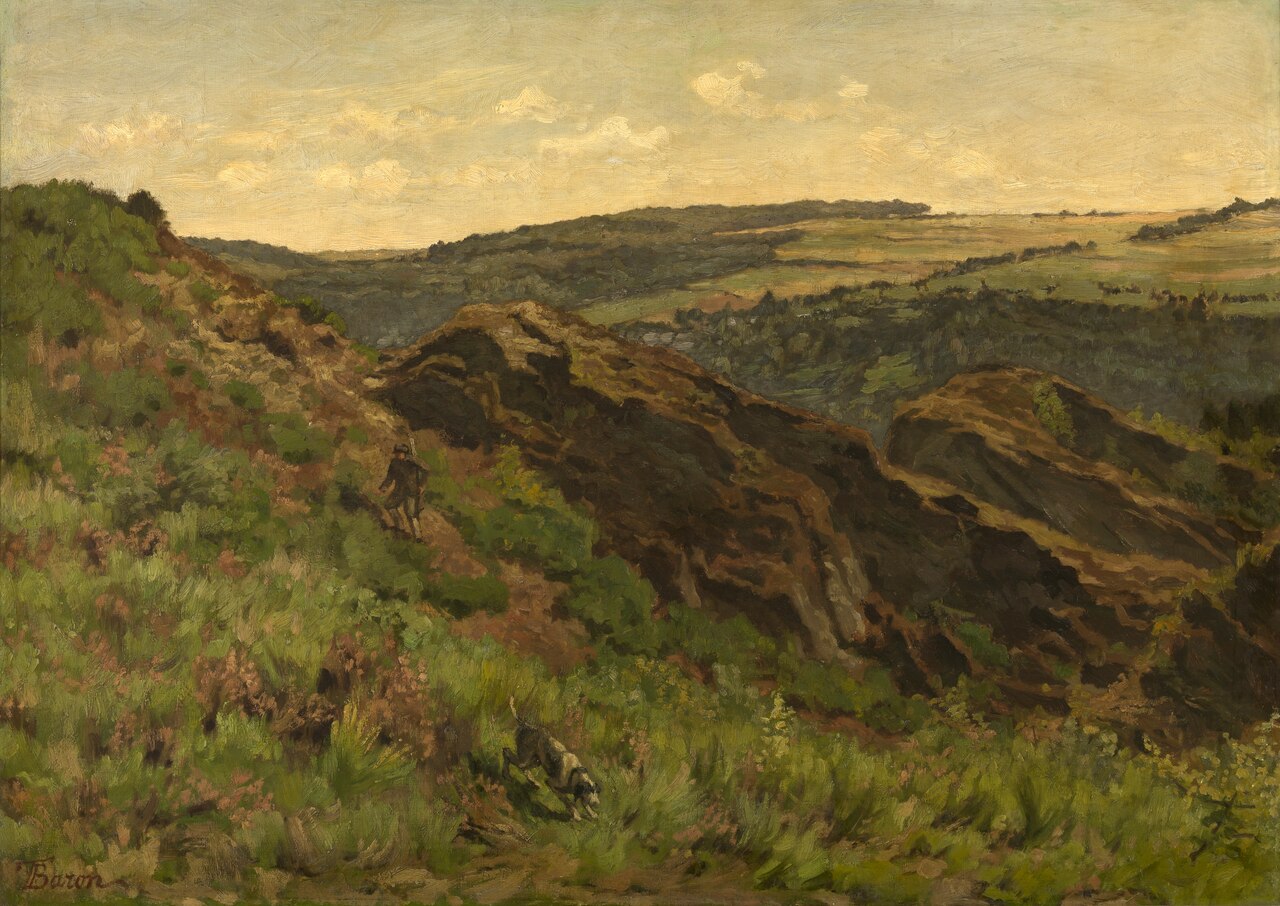
- Rocks by Night – In this nocturnal scene, Baron demonstrates his ability to depict low‑light conditions with a restrained palette of deep blues and muted greys. The composition centres on a cluster of rocks illuminated by a faint moonlight, the surrounding darkness rendered with soft, diffused edges that suggest an atmospheric veil.
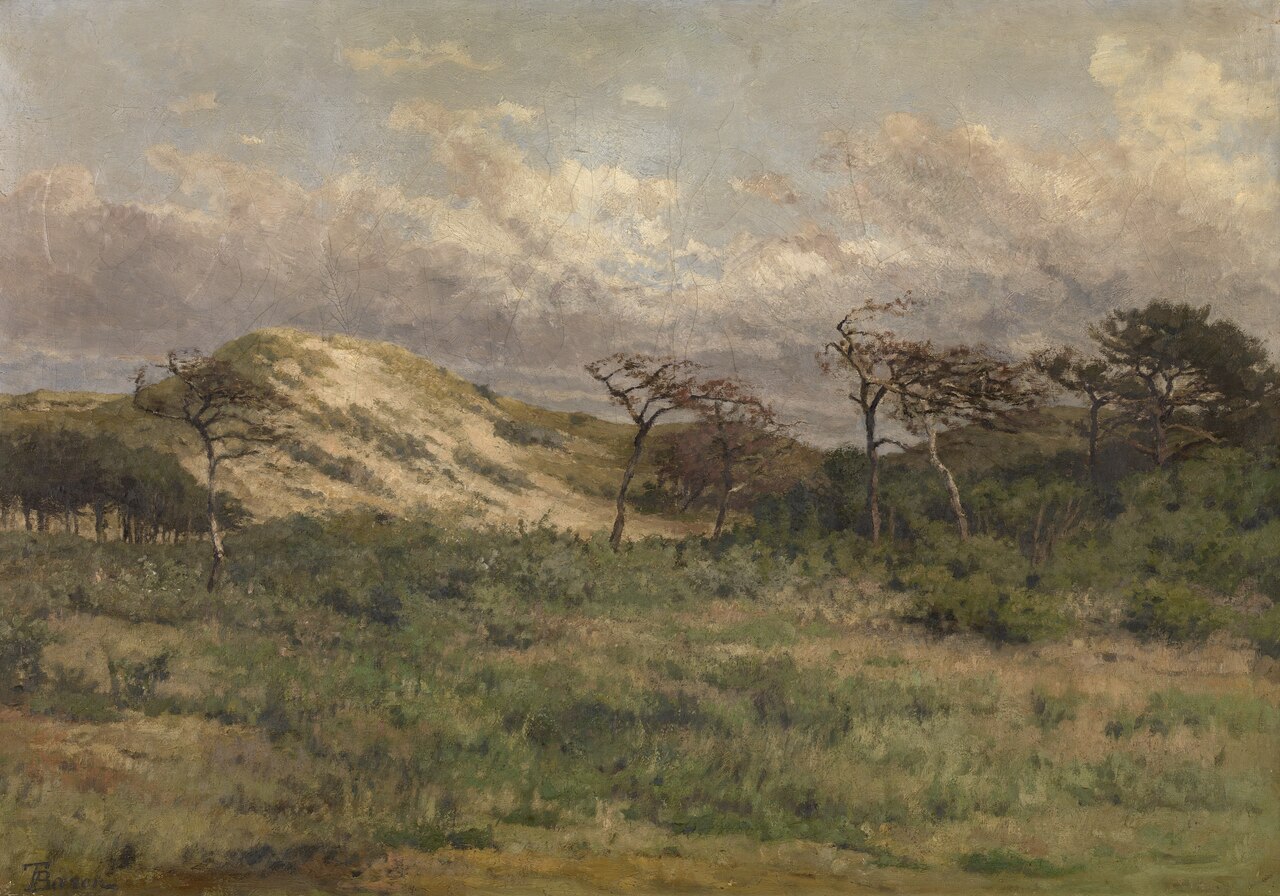
- In the Dunes and Dunes – Both works explore the coastal landscapes of Belgium’s North Sea coast. Baron renders the shifting sands with delicate gradations of colour, from pale ochre near the shoreline to cooler, silvery tones further inland. The sky, often rendered in a delicate gradient from pale blue to soft pink, balances the composition, while the dunes themselves are depicted with careful attention to the interplay of light and shadow, highlighting the transient nature of the environment.
These works collectively reveal Baron's preoccupation with the natural world’s varied moods, from the quietude of night to the vibrant colours of autumn, and his proficiency in translating these scenes onto canvas with fidelity and subtle emotional resonance.
Influence and legacy Théodore Baron’s contribution to Belgian landscape painting lies in his steadfast commitment to realism at a time when artistic currents were shifting towards impressionism and symbolism. Though he never achieved the fame of contemporaries such as James Ensor or Fernand Khnopff, his works provided a bridge between the academic traditions of the early 19th century and the more experimental approaches that followed. By faithfully rendering the Belgian and French countryside, Baron helped preserve visual records of landscapes that have since undergone considerable change due to industrialisation and urban expansion.
In the decades after his death in Saint‑Servais in 1899, Baron's paintings continued to appear in regional exhibitions, where they were appreciated for their technical skill and atmospheric qualities. Modern scholars of Belgian art regard his oeuvre as an example of the realist strand within the nation’s 19th‑century painting, offering insight into the broader European fascination with naturalism. While his name may not dominate mainstream art history narratives, his works remain of interest to collectors, curators and historians seeking to understand the diversity of landscape practice in 19th‑century Belgium.
Overall, Théodore Baron stands as a representative figure of the realist landscape tradition, whose measured approach to light, texture and composition contributed to the visual documentation of his era’s natural environments.
Frequently asked questions
Who was Théodore Baron?
Théodore Baron (1840–1899) was a Belgian landscape painter known for his realistic depictions of forests, dunes and rocky scenes.
What style or movement is he associated with?
Baron worked within the realist tradition, producing naturalistic landscapes that reflect the 19th‑century European focus on truthful observation.
What are his most famous works?
His notable paintings include The Forest of Fontainebleau – Autumn Evening, Rocher de Frêne near Profondeville (1872), Rocks by Night, In the Dunes and Dunes.
Why is Théodore Baron important in art history?
He exemplifies the realist landscape genre in Belgium, bridging academic traditions and later experimental movements while documenting the era’s natural scenery.
How can I recognise a Théodore Baron painting?
Baron’s works are characterised by restrained brushwork, subtle glazing, a limited earth‑tone palette and an emphasis on atmospheric light, especially in depictions of night or dusk.