Simon Pietersz Verelst
1644 – 1721
Notable works
.jpg)
.jpg)


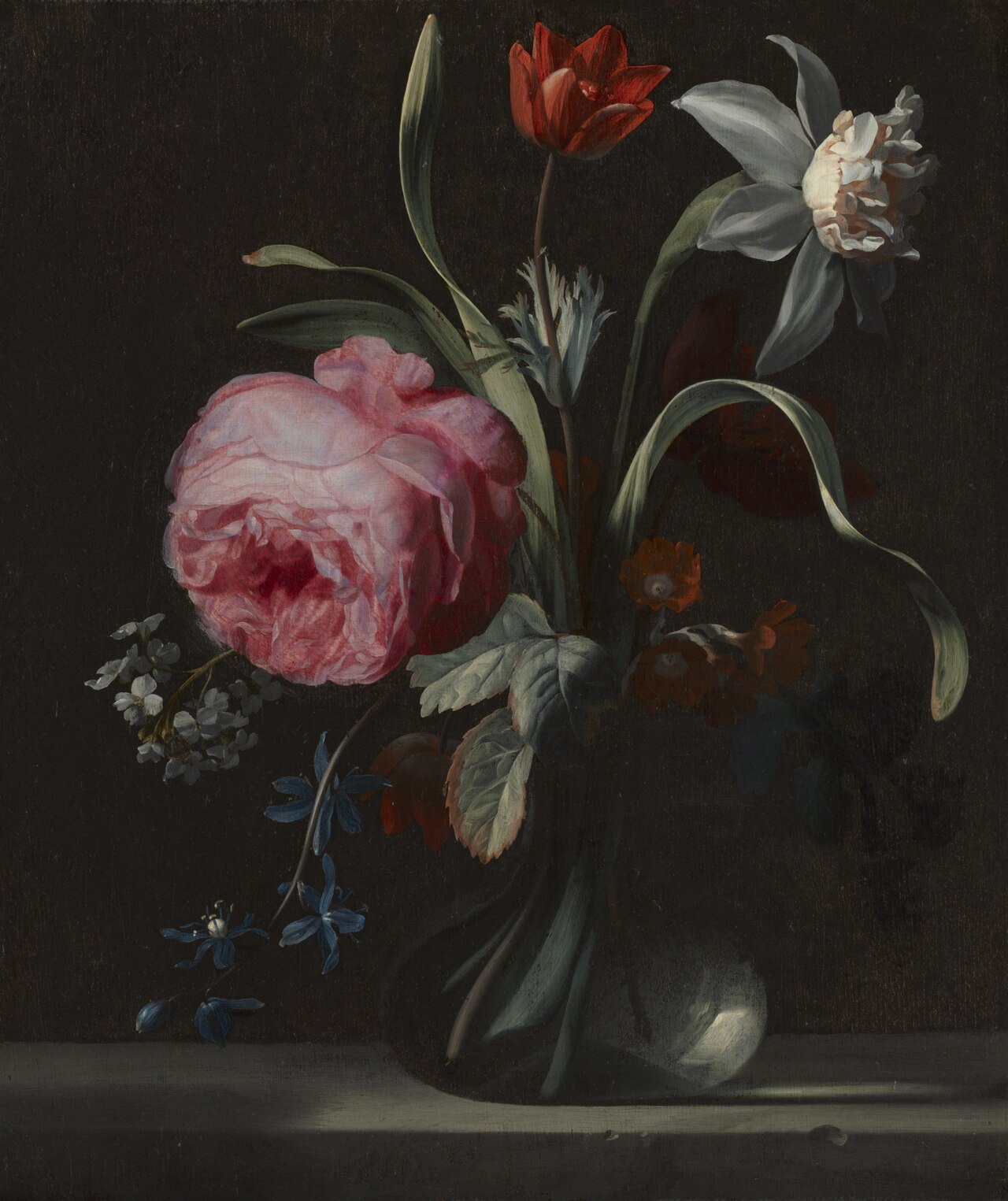
Early life Simon Pietersz Verelden was born in 1644 in The Hague, a city that in the mid‑17th century was a vibrant centre for Dutch art. His family was part of the merchant class, which allowed him access to the thriving artistic community of the Dutch Republic. Like many young painters of his generation, Verelst would have begun an apprenticeship in a local workshop, where he absorbed the technical rigour and compositional principles that characterised Dutch still‑life painting. The Hague’s proximity to the court of the Prince of Orange also meant that the young artist was exposed to both domestic and courtly visual culture, an influence that later helped him navigate the English patronage system.
Career and style By the late 1660s Verelst had established a reputation for his meticulous treatment of botanical subjects. The commercial success of Dutch still‑life painters encouraged him to seek a broader market, and sometime in the early 1670s he relocated to London. England’s aristocracy, eager to emulate continental tastes, provided a ready audience for his highly finished floral compositions. In addition to still‑lifes, Verelst received portrait commissions, a testament to his versatility and to the fluid boundaries between genres in the late‑Baroque period. His style blended the Dutch emphasis on naturalistic detail with the English preference for a more theatrical presentation, producing works that were both technically precise and visually striking.
Signature techniques Verelst’s paintings are distinguished by several recurring technical hallmarks. First, his handling of light demonstrates a subtle chiaroscuro that gives depth to delicate petals and fruit skins, creating a three‑dimensional illusion on a flat surface. Second, he employed a layered glazing method: thin, translucent oil layers were built up over a detailed underdrawing, allowing luminous colours to emerge gradually. Third, his compositions often feature a careful balance of colour and form; bright reds, blues and yellows are juxtaposed with cooler greens and muted earth tones, producing a harmonious visual rhythm. Finally, Verelst paid particular attention to texture, rendering the velvety softness of rose petals, the glossy sheen of ripe fruit, and the feathered detail of bird plumage with a level of fidelity that set his work apart from many contemporaries.
Major works - **Eleanor (‘Nell’) Gwyn (1680)** – This portrait of the celebrated actress and royal mistress captures Gwyn’s lively expression against a subdued background. Verelst’s handling of the sitter’s clothing and the delicate rendering of a single rose in her hand echo his still‑life expertise, linking portraiture with his floral specialty. - **Prince Rupert of the Rhine, Count Palatine, Duke of Cumberland (1619‑1682) (1680)** – A formal portrait of the military leader, this work showcases Verelst’s capacity to render aristocratic regalia with precision. The inclusion of a small vase of flowers on a nearby table reflects his signature motif and demonstrates his skill in integrating still‑life elements into portrait settings. - **Flowers in a Vase (1669)** – One of Verelst’s earliest documented still‑lifes, this piece presents a tightly arranged bouquet of roses, tulips and lilies within a simple glass vessel. The composition’s balance and the vivid colour palette exemplify the Dutch tradition while hinting at the more elaborate arrangements he would later develop in England. - **A Vase with Flowers (1690)** – Executed two decades later, this work shows Verelst’s mature style. The vase is rendered with a polished ceramic surface, and the flowers—predominantly exotic species such as orchids and rare tulips—are depicted with extraordinary botanical accuracy, reflecting the period’s fascination with imported flora. - **Still Life with Dead Partridge and Kingfisher (1690)** – Diverging from his purely floral subjects, this composition combines a hunted bird, a perched kingfisher, and a modest arrangement of fruit. The juxtaposition of life and death, along with the meticulous rendering of feathers and plumage, reveals Verelst’s ability to handle a broader range of natural subjects while maintaining his characteristic attention to texture.
Influence and legacy Simon Pietersz Verelst occupies a distinctive niche in the cross‑currents of Dutch and English art of the late 17th century. His successful migration to London helped to transmit the Dutch still‑life tradition to an English audience, influencing a generation of Anglo‑Dutch painters who would follow. The clarity and precision of his floral arrangements can be traced in the work of later English artists such as the Van der Meulen brothers and the early members of the Royal Academy’s still‑life school. Moreover, Verelst’s ability to blend portraiture with still‑life motifs paved the way for a more integrated approach to genre painting in Britain. Today, his paintings are held in major European collections, and they continue to be cited as exemplary models of technical mastery and cross‑cultural artistic exchange.
---
Frequently asked questions
Who was Simon Pietersz Verelst?
Simon Pietersz Verelst (1644–1721) was a Dutch‑born painter who worked mainly in England, celebrated for his highly detailed flower and fruit still‑lifes and for portrait commissions such as Eleanor Gwyn and Prince Rupert.
What artistic style or movement is Verelst associated with?
Verelst is linked to the Dutch still‑life tradition of the 17th century, adapted to English tastes; his work bridges the Baroque realism of the Dutch Republic with the more decorative sensibilities of late‑Baroque England.
What are his most famous works?
Key works include the portrait of Eleanor ‘Nell’ Gwyn (1680), the portrait of Prince Rupert (1680), the still‑life paintings Flowers in a Vase (1669), A Vase with Flowers (1690) and Still Life with Dead Partridge and Kingfisher (1690).
Why does Verelst matter in art history?
He helped introduce the Dutch still‑life aesthetic to England, influencing subsequent Anglo‑Dutch artists and demonstrating how meticulous natural observation could be combined with portraiture.
How can I recognise a Verelst painting?
Look for precise botanical detail, a luminous glazing technique, balanced colour palettes, and often a small vase of flowers or other natural elements incorporated into portrait settings.