Nicolaes van Verendael
1640 – 1691
In short
Nicolaes van Verendael (1640–1691) was a Flemish painter from Antwerp, best known for his detailed flower still lifes, vanitas compositions and collaborative works that added decorative elements to larger paintings. He worked mainly in the Habsburg Netherlands, producing works that combine scientific observation with symbolic meaning.
Notable works


_Allegory_of_Vanity_by_Nicolaes_Van_Verendael_-_Gallerie_Accademia.jpg)
Early life Nicolaes van Verendael was born in 1640 in Antwerp, a bustling centre of artistic production in the Habsburg Netherlands. Little is recorded about his family background, but the city’s guild system suggests that he likely began his training in a local workshop, as was customary for aspiring painters of the period. Antwerp’s vibrant market for decorative arts and its strong tradition of still‑life painting would have provided a fertile environment for his early artistic development.
Career and style By the mid‑1650s van Verendael had established himself as a specialist in flower and vanitas still lifes. His oeuvre reflects the prevailing Flemish taste for highly finished, naturalistic renderings of botanical subjects, yet it also incorporates a moralising undercurrent typical of vanitas themes. In many of his paintings, luxuriant bouquets are juxtaposed with symbols of mortality—skulls, wilted leaves, or crucifixes—creating a dialogue between the transience of life and the fleeting beauty of nature.
Van Verendael was a frequent collaborator. It was common in Antwerp for painters to combine their expertise on a single canvas: a figure painter might provide the central narrative, while a still‑life specialist such as van Verendael added the decorative flora, fruit, or objects. This collaborative practice allowed him to work with a range of artists, contributing the intricate botanical elements that enhanced the overall composition.
In addition to his flower and vanitas pieces, van Verendael produced a modest number of singeries—humorous scenes in which monkeys are dressed as humans and engaged in leisure activities. These works echo a broader Flemish fascination with anthropomorphic animal subjects and demonstrate his versatility beyond strict still‑life conventions.
Signature techniques Van Verendael’s paintings are distinguished by several technical hallmarks:
* Meticulous botanical observation – He rendered petals, leaves and stems with a level of detail that approaches scientific illustration, capturing subtle variations in colour, texture and translucency. * Layered glazing – Multiple transparent layers of oil paint create depth and a luminous quality, especially evident in the glass vessels that hold the flowers. * Symbolic juxtaposition – In vanitas works, he places objects such as skulls, hourglasses or crucifixes alongside sumptuous bouquets, inviting contemplation of the inevitable passage of time. * Fine brushwork – Delicate, hair‑like strokes convey the softness of petals and the intricate structure of foliage, while broader strokes define the background architecture. * Collaborative integration – When adding still‑life elements to another artist’s composition, van Verendael skillfully matches the colour palette and lighting, ensuring seamless visual cohesion.
Major works Although many of his paintings remain in private collections, a few key works illustrate the range of his practice:
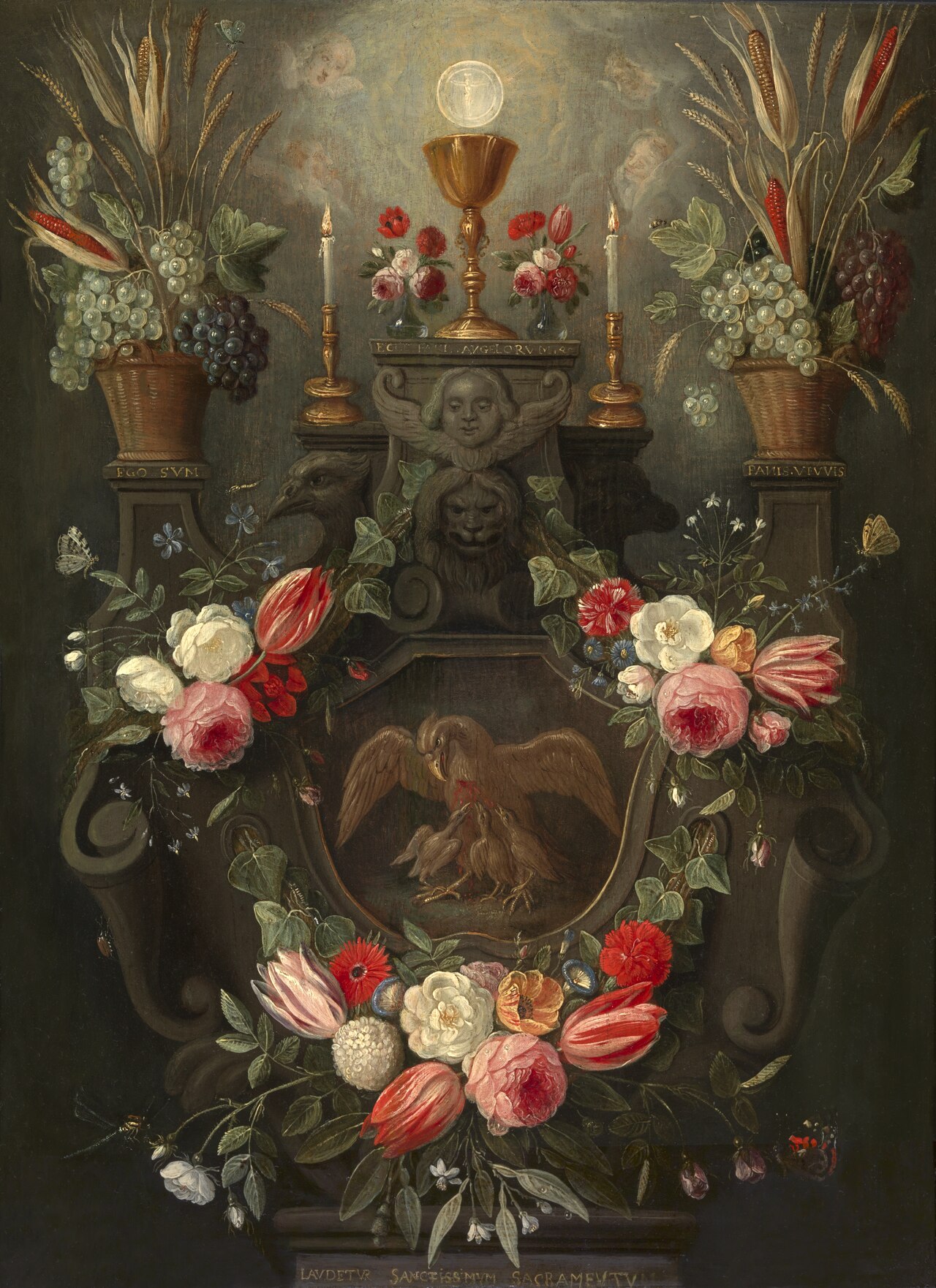
* Flowers in a glass vase on a partly draped stone ledge (c. 1660) – This composition showcases a dense bouquet of seasonal blossoms rendered with vivid colour against a dark stone surface, the glass vase catching subtle reflections that demonstrate his mastery of light. * A Bouquet of Flowers in a Crystal Vase (1662) – Here the clarity of the crystal vessel allows the viewer to see through to the intricate arrangement of flowers, highlighting his skill in rendering transparent materials. * Flower still‑life with a skull and crucifix (date uncertain) – Combining a lush floral arrangement with a skull and a crucifix, this work epitomises the vanitas tradition, reminding viewers of mortality amidst earthly beauty. * Allegory of the Vanity of Life (c. 1650) – An elaborate allegorical piece that pairs opulent objects with symbolic reminders of transience, underscoring the moral message prevalent in mid‑17th‑century Flemish art. * The Holy Sacrament of the Altar – While primarily a religious subject, van Verendael’s contribution would have been the detailed still‑life elements that frame the central sacral scene, a typical example of his collaborative role.
These works, together with his collaborative productions, illustrate how van Verendael blended scientific observation, decorative elegance and moral symbolism.
Influence and legacy Nicolaes van Verendael occupies a niche within Flemish Baroque painting that bridges the decorative still‑life tradition with the moralising concerns of vanitas art. His meticulous botanical depictions contributed to the broader European appreciation for flower painting as both an aesthetic and a scientific pursuit. By working closely with other Antwerp painters, he helped solidify a collaborative model that persisted in the city’s workshops well into the early 18th century.
Although he never achieved the fame of contemporaries such as Jan Brueghel the Elder, van Verendael’s paintings continue to be studied for their technical finesse and their role in the visual culture of the Habsburg Netherlands. Modern exhibitions of Flemish still lifes often include his work to illustrate the period’s fascination with the fleeting beauty of nature and the ever‑present reminder of mortality. His singeries, though fewer in number, provide an entertaining glimpse into the playful side of Flemish genre painting.
Overall, van Verendael’s legacy lies in his ability to fuse precise natural observation with layered symbolic meaning, a combination that remains compelling to scholars and collectors alike.
Frequently asked questions
Who was Nicolaes van Verendael?
Nicolaes van Verendael (1640–1691) was a Flemish painter from Antwerp, renowned for his detailed flower still lifes, vanitas compositions, and collaborative decorative work.
Which artistic style or movement is he associated with?
He worked within the Flemish Baroque still‑life tradition, combining naturalistic flower painting with the moralising symbolism of vanitas art.
What are his most famous works?
Key works include *Flowers in a glass vase on a partly draped stone ledge* (c. 1660), *A Bouquet of Flowers in a Crystal Vase* (1662), and the vanitas piece *Flower still‑life with a skull and crucifix*.
Why is he important in art history?
Van Verendael exemplifies the high level of technical skill in 17th‑century Flemish still‑life painting and illustrates the collaborative workshop practice that defined Antwerp’s artistic output.
How can I recognise a painting by Nicolaes van Verendael?
Look for meticulously rendered flowers, delicate glazing that creates luminous glass effects, and, in vanitas works, the juxtaposition of beautiful bouquets with symbols of mortality such as skulls or crucifixes.