Simon Peter Tilemann
1601 – 1668
In short
Simon Peter Tilemann (1601–1668) was a German Baroque painter known for his portraits, genre scenes and occasional history pieces. Working in Bremen, Utrecht, Kassel and Italy, he blended German traditions with Caravaggist influences.
Notable works
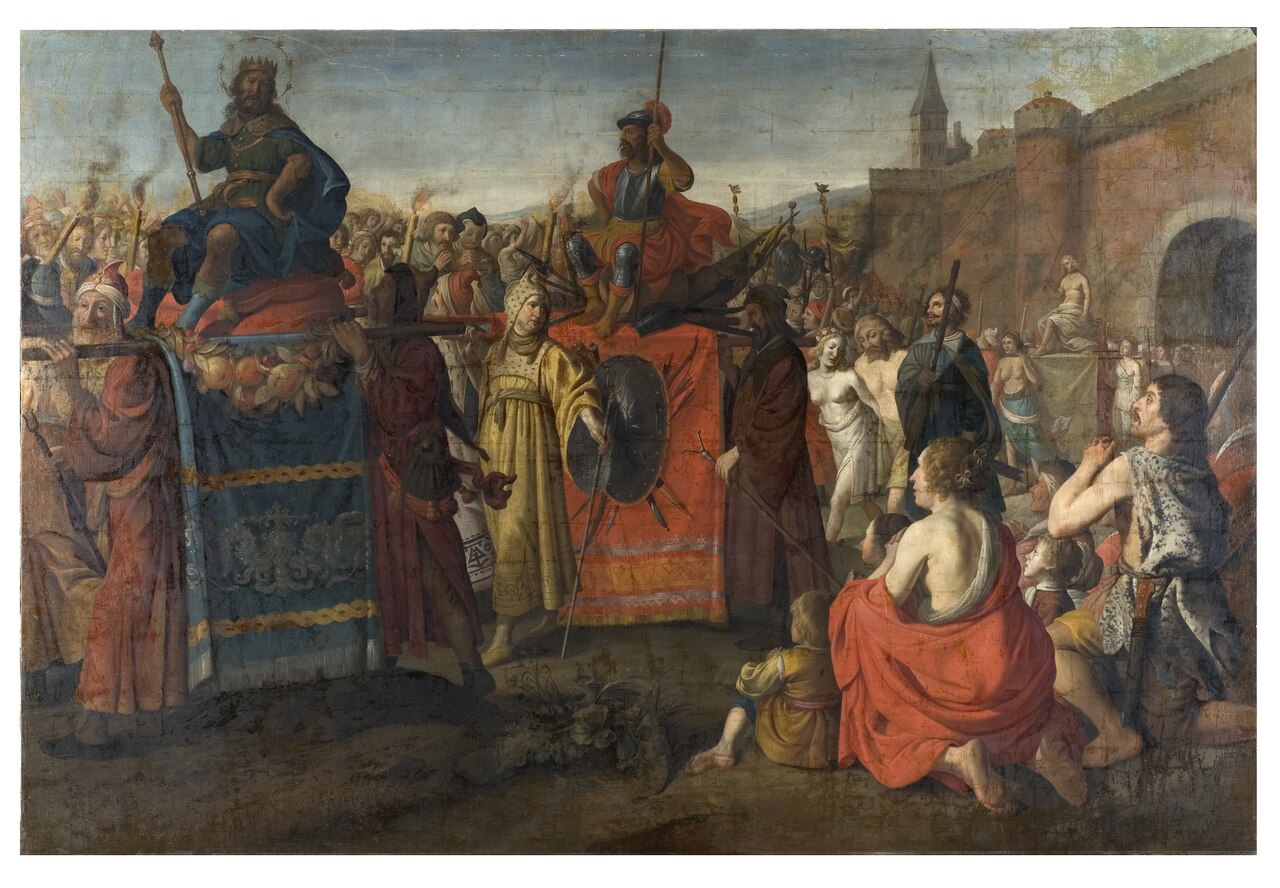
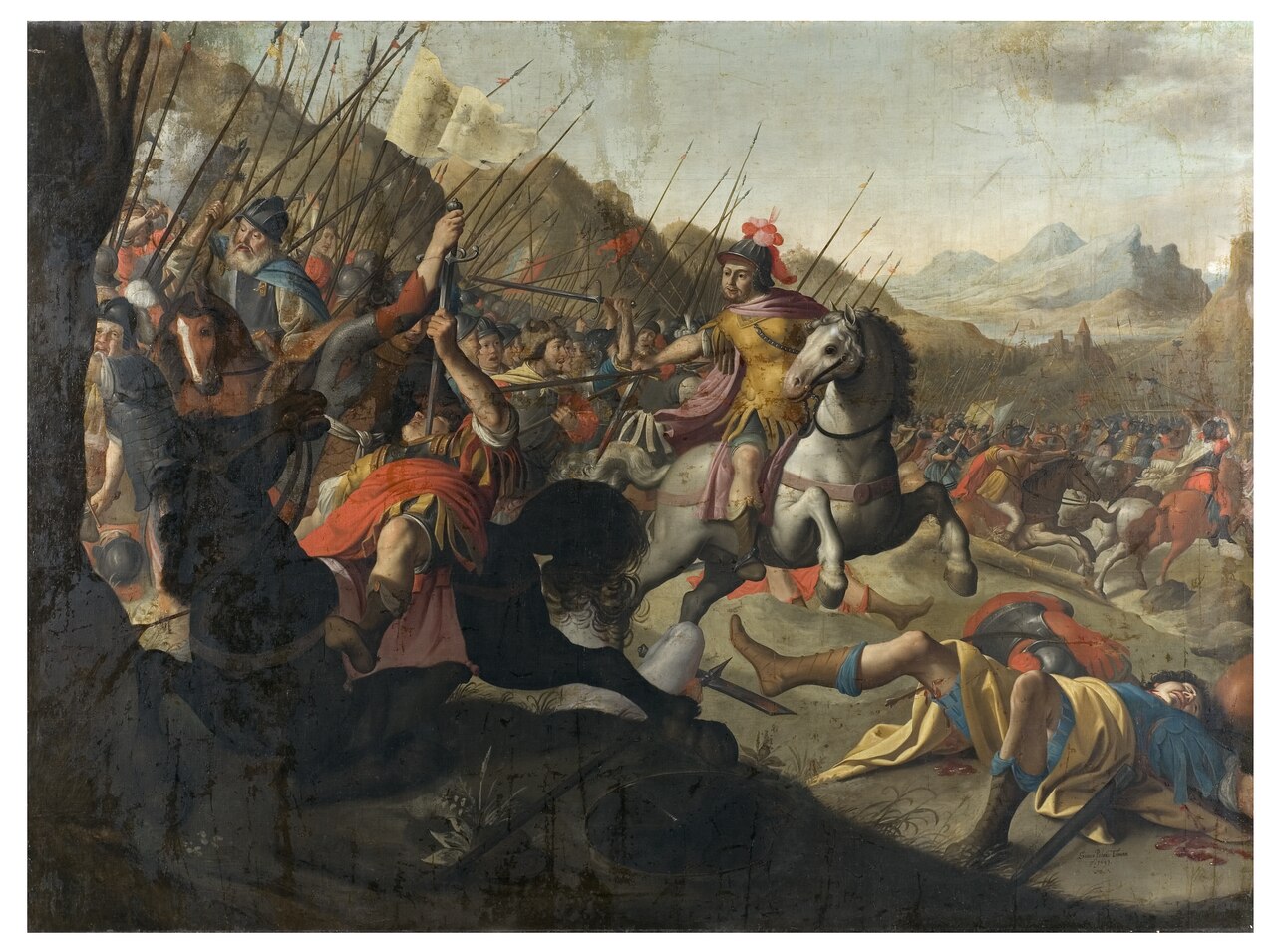


Early life Simon Peter Tilemann was born in 1601 in the town of Lemgo, located in the Westphalian region of what is now Germany. Little is recorded about his family background, but the name "Schenk" occasionally appears in contemporary documents, suggesting a possible nickname or workshop affiliation. Tilemann’s formative years coincided with the rise of the Baroque style across Europe, an artistic climate that would shape his later output. He likely received his initial training in a local workshop, where the emphasis was on drawing from life and mastering the techniques of oil painting.
Career and style Tilemann’s professional career began in the early 1620s, when he moved to larger artistic centres. By the mid‑1630s he was active in Kassel, a court city that attracted a number of northern German artists. His reputation as a portraitist grew, and he secured commissions from local nobility. A pivotal period came when he travelled to Italy, probably around 1638–1640, where he encountered the work of Caravaggio and his followers. The dramatic chiaroscuro and heightened naturalism of the Caravaggisti left a clear imprint on Tilemann’s subsequent paintings, especially in his handling of light and shadow.
After returning north, Tilemann settled in Utrecht for several years, a city that was a hub for Dutch painters who also embraced Caravaggist tenets. Here he mixed with a circle of artists who were experimenting with genre scenes that combined everyday realism with theatrical lighting. By the early 1640s Tilemann had established himself in Bremen, where he remained for the rest of his life. In Bremen he received both civic and private commissions, producing portraits of merchants, members of the patrician class, and occasional mythological or historical subjects.
Tilemann’s style can be described as a synthesis of German Baroque solidity and the dynamic, light‑driven approach of the Caravaggisti. His figures are generally robust, with careful attention to facial expression, while his compositions often feature strong diagonal lines that guide the viewer’s eye. Though he never aligned himself with a single movement, his work reflects the broader European shift toward realism and emotional intensity that characterised mid‑17th‑century art.
Signature techniques Tilemann’s paintings are distinguished by several technical hallmarks. First, his use of chiaroscuro is both dramatic and controlled; he typically illuminates the central figures with a focused light source, allowing surrounding elements to recede into deep, warm shadows. This technique creates a three‑dimensional effect and emphasizes the narrative moment. Second, his brushwork varies according to the subject: portraiture features fine, layered strokes that render skin texture and fabric detail, while his genre and history scenes employ broader, more fluid passages to suggest movement and atmospheric depth.
Another recurring element is his careful rendering of textiles. Tilemann often portrays sumptuous fabrics—velvet, silk, brocade—with a tactile quality that underscores the social status of his sitters. He also favoured a limited but rich palette, employing earth tones, deep reds, and occasional touches of gold to convey both realism and a subtle sense of opulence.
Tilemann’s compositions frequently incorporate architectural or landscape backdrops that function as narrative devices. In his mythological works, for example, classical ruins or Roman architecture provide a historical context, while in portraiture the inclusion of books, globes, or heraldic symbols signals the sitter’s intellect or lineage.
Major works Tilemann’s oeuvre includes several works that are frequently cited in art‑historical surveys. **A Roman Triumphal Parade** (1641) and **A Roman Battle** (1641) are twin canvases that demonstrate his engagement with classical subjects. Both paintings exhibit a vivid sense of motion, a crowded composition of soldiers and chariots, and the dramatic lighting that characterises his Caravaggist influence. The triumphal procession is rendered with a triumphant glow on the central figure, while the battlefield scene uses stark contrasts to heighten the chaos of combat.
In 1645 Tilemann painted the Portrait of Lodewijk Filips, 9th Count of Egmont and 6th Prince of Gavere. This portrait showcases his ability to capture aristocratic dignity; the sitter is depicted in elaborate armour, set against a dark background that accentuates the glitter of metal and the subtle expression on the count’s face. The work reflects both the status of the patron and Tilemann’s skill in rendering intricate details.
The Family Portrait (1658) is a domestic composition that reveals Tilemann’s versatility. Here, a multi‑generational family is arranged around a table, each figure rendered with individualized features and clothing. The painting’s warm lighting and gentle interaction between subjects convey a sense of intimacy, contrasting with the more formal tone of his court portraits.
Diana and her Nymphs sleeping after the Hunt (1652) illustrates Tilemann’s mythological interests. The composition places the goddess and her attendants in a tranquil, wooded setting, their bodies illuminated by a soft, diffused light that suggests dawn. The painting’s delicate handling of flesh tones and the subtle interplay of foliage demonstrate Tilemann’s capacity to blend narrative content with a refined aesthetic.
These works, together with several still‑life pieces and lesser‑known genre scenes, constitute the core of Tilemann’s surviving legacy. They are held in various European collections, and reproductions frequently appear in catalogues of German Baroque art.
Influence and legacy Although not as widely recognised as some of his contemporaries, Tilemann contributed to the diffusion of Caravaggist techniques within northern Germany and the Dutch Republic. His portraits provided a model for later German painters who sought to combine realistic characterisation with the dramatic lighting that had become fashionable after the Italian journeys of the early 17th century. In Bremen, his workshop trained a number of apprentices who continued his stylistic approach well into the late 17th century.
Tilemann’s works also serve as valuable documentation of the cultural exchange between German, Dutch and Italian artistic centres during the Baroque period. By integrating Italianate chiaroscuro with Germanic compositional solidity, he helped create a hybrid visual language that influenced subsequent generations of portrait and genre painters.
Modern scholarship regards Tilemann as an illustrative figure of the transnational nature of Baroque art. His paintings are studied for their technical mastery, their synthesis of disparate artistic currents, and their capacity to convey both the personal identity of sitters and broader mythological narratives. While his name may not dominate popular art history, his contributions remain essential for a nuanced understanding of 17th‑century European painting.
Overall, Simon Peter Tilemann stands as a testament to the fluid artistic dialogues of his time, bridging regional traditions and international trends through a body of work that continues to be examined for its stylistic richness and historical significance.
Frequently asked questions
Who was Simon Peter Tilemann?
Simon Peter Tilemann (1601–1668) was a German Baroque painter known for portraits, genre scenes and occasional history paintings, active in Bremen, Utrecht, Kassel and Italy.
What artistic style or movement is Tilemann associated with?
Tilemann worked within the Baroque tradition and incorporated Caravaggist influences, especially in his dramatic use of light and shadow.
What are Tilemann's most famous works?
His most frequently cited works include *A Roman Triumphal Parade* (1641), *A Roman Battle* (1641), *Diana and her Nymphs sleeping after the Hunt* (1652), the *Portrait of Lodewijk Filips, 9th Count of Egmont* (1645) and the *Family Portrait* (1658).
Why is Tilemann important in art history?
He helped transmit Caravaggist lighting techniques to northern Germany and the Dutch Republic, influencing later portrait and genre painters and illustrating the cross‑regional exchange of Baroque styles.
How can I recognise a Tilemann painting?
Look for strong chiaroscuro, robust figures, meticulous rendering of textiles, and a balanced composition that often combines a central illuminated subject with deep, warm shadows.