Simon de Vos
1603 – 1676
In short
Simon de Vos (1603–1676) was a Flemish Baroque painter from Antwerp who began with small, Caravaggesque genre scenes and later turned to larger history paintings influenced by Rubens and van Dyck.
Notable works


Early life Simon de Vos was born in 1603 in Antwerp, a thriving commercial centre of the Habsburg Netherlands. Little is recorded about his family background, but the city's vibrant artistic environment provided ample opportunity for a budding talent. He likely apprenticed in a local workshop, where he would have been exposed to the prevailing Flemish traditions as well as the influx of Italianate styles that were circulating through the city via prints and travelling artists.
Career and style De Vos entered the Antwerp art market in the early 1620s, initially producing small‑format cabinet pictures. These works catered to private collectors who favoured intimate, finely detailed scenes that could be displayed in domestic settings. His early genre paintings display a clear Caravaggesque influence: dramatic chiaroscuro, strong contrasts of light and shadow, and a focus on everyday subjects such as tavern gatherings, musicians, and merrymaking youths. This period aligns with the broader Flemish fascination with the ‘merry company’ genre, which combined moralising undertones with lively depictions of social interaction.
Around the mid‑1630s de Vos began to expand his ambitions toward larger, more ambitious subjects. The shift coincided with a growing demand for history paintings—works that illustrated biblical, mythological, or historical narratives. In this second phase his style absorbed the grandeur of Peter Paul Rubens and the refined elegance of Anthony van Dyck. The compositions became broader, the figures more monumental, and the colour palette richer, reflecting the full‑bodied Baroque aesthetic that dominated Antwerp’s public commissions.
Signature techniques De Vos is distinguished by several technical hallmarks that persist across his oeuvre:
* Chiaroscuro modelling – Even after moving away from strictly Caravaggesque subjects, he retained a keen sense of light falling across forms, creating three‑dimensionality and emotional intensity. * Compact yet dynamic composition – Whether in a cramped tavern scene or a sprawling battle, de Vos arranges figures in a way that directs the viewer’s eye along a narrative arc, often using diagonal lines to suggest movement. * Fine brushwork in small formats – His early cabinet pictures demonstrate meticulous detailing, especially in textiles, metal objects, and facial expressions, a skill that earned him a reputation among private collectors. * Vibrant colour contrasts – In his later history paintings, he juxtaposes deep reds, golds, and blues against a warm, luminous ground, echoing the colouristic strategies of Rubens while preserving his own tonal sensibility. * Integration of genre elements into history scenes – De Vos sometimes infused grand narratives with everyday gestures—hand‑held objects, expressive gazes—bridging the gap between the sacred and the secular.
Major works The surviving catalogue of de Vos includes a handful of works that illustrate his artistic evolution:
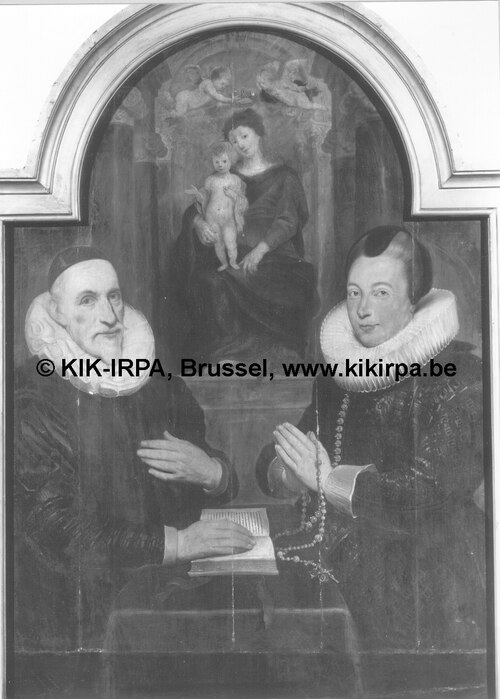
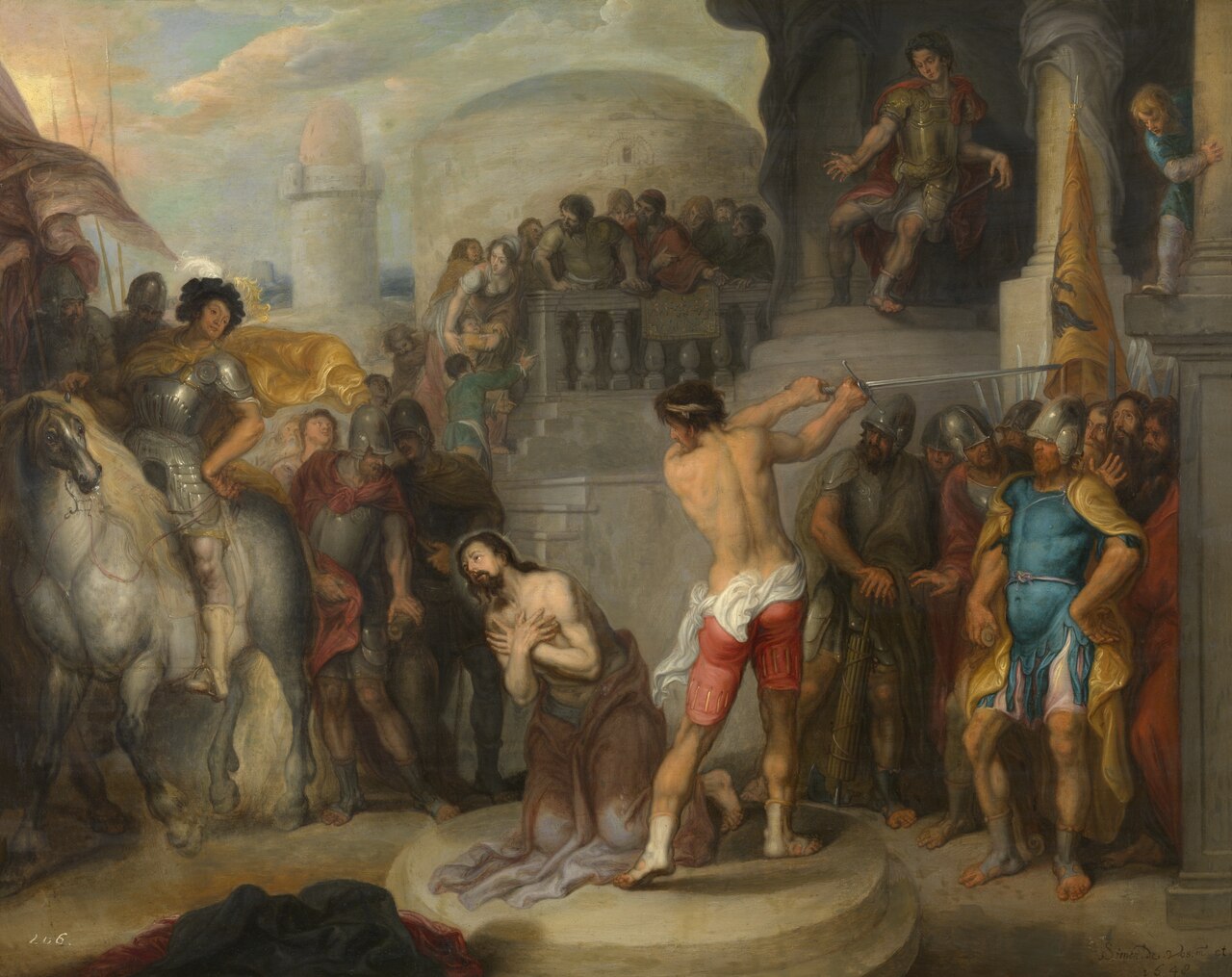
* Village procession (1640) – This canvas records a festive civic parade, populated by exuberant townspeople and richly dressed figures. The composition balances a bustling foreground with a distant architectural backdrop, showcasing de Vos’s ability to combine genre vitality with a structured, almost theatrical space. * The Acts of Mercy (1700) – Though dated after his death, the work is often attributed to his workshop or to later followers who emulated his style. It depicts a charitable scene, likely drawn from a biblical source, rendered with the same dramatic lighting and emotive gestures that characterised his mature period. * Gathering of Smokers and Drinkers (1626) – One of his early genre paintings, this piece exemplifies the Caravaggesque influence. The figures are illuminated by a single, unseen light source, casting deep shadows that heighten the intimate, almost conspiratorial atmosphere of the gathering. * Donor and His Wife – A portrait‑type composition, this work reflects de Vos’s capacity to capture the status and personality of private patrons. The couple is presented with dignified poses, set against a subdued background that emphasises their attire and the subtle interplay of light on their faces. * The Beheading of Saint Paul (1648) – A large‑scale history painting, it presents the martyrdom with a dramatic narrative focus. The composition is anchored by the central figure of Saint Paul, whose expression conveys both suffering and spiritual resolve, while surrounding soldiers are rendered with vigorous brushwork that conveys motion and tension.
Influence and legacy Simon de Vos occupied a transitional space in Flemish art, bridging the intimate Caravaggesque genre scenes of the early 17th century with the grand, Rubens‑inspired history painting that dominated later decades. His early works contributed to the diffusion of Caravaggio’s dramatic lighting in the Low Countries, while his larger canvases reinforced the Baroque language of movement, colour, and emotional immediacy.
Although not as widely celebrated as Rubens or van Dyck, de Vos’s paintings were collected by both private patrons and municipal institutions, ensuring his visibility in the artistic market of his time. Contemporary scholars view his oeuvre as a valuable lens through which to understand the shifting tastes of Antwerp’s bourgeoisie, as well as the adaptive strategies of artists navigating changing patronage structures.
His legacy endures in museum collections across Europe, where his works are appreciated for their technical finesse and narrative clarity. Modern exhibitions on Flemish Baroque often include de Vos to illustrate the diversity of stylistic approaches within the period, highlighting how an artist could successfully negotiate both genre intimacy and monumental history painting within a single career.
--- In sum, Simon de Vos exemplifies the versatility of a 17th‑century Flemish painter, adept at marrying the chiaroscuro drama of Caravaggio with the opulent grandeur of Rubens, leaving a body of work that continues to inform our understanding of Baroque visual culture.
Frequently asked questions
Who was Simon de Vos?
Simon de Vos was a Flemish painter (1603–1676) from Antwerp who worked in the Baroque style, initially creating small Caravaggesque genre scenes before moving to larger history paintings.
What artistic movement did he belong to?
He belonged to the Baroque movement, blending Caravaggesque chiaroscuro with the vibrant, dynamic style of Rubens and van Dyck.
What are his most famous works?
Key works include Village procession (1640), The Acts of Mercy (1700), Gathering of Smokers and Drinkers (1626), Donor and His Wife, and The Beheading of Saint Paul (1648).
Why is Simon de Vos important in art history?
He illustrates the transition from intimate genre painting to grand history painting in 17th‑century Flanders, showing how artists adapted to shifting patronage and stylistic trends.
How can I recognise a painting by Simon de Vos?
Look for strong chiaroscuro, lively figures, compact yet dynamic compositions, and a colour palette that combines deep reds and golds with warm illumination, often merging everyday gestures with larger narrative themes.