Paul de Vos
1590 – 1678
In short
Paul de Vos (1590–1678) was a Flemish Baroque painter from the Habsburg Netherlands, renowned for his vivid animal and hunting scenes, who worked in Antwerp for elite patrons and collaborated with leading artists such as Rubens and van Dyck.
Notable works



Early life Paul de Vos was born in 1590 in the town of Hulst, then part of the Habsburg Netherlands. Little is recorded about his family background, but the region’s thriving artistic environment meant that he was exposed to the flourishing Flemish painting tradition from an early age. Hulst lay near the cultural hub of Antwerp, a city that attracted painters, collectors and merchants from across Europe. It is likely that as a youth de Vos moved to Antwerp to pursue an apprenticeship, as was customary for aspiring artists of his generation.
Career and style By the early 1620s de Vos had established himself as a professional painter in Antwerp, a city that was then the heart of the Southern Netherlandish art market. He specialised in animal subjects, hunting scenes and still‑life compositions, genres that enjoyed strong demand among the aristocratic and mercantile elite. His work reflects the exuberant dynamism of the Flemish Baroque, characterised by dramatic lighting, rich colour palettes and a sense of movement that animates even the most static of subjects.
De Vos’s style was shaped by the dominant visual language of his time, particularly the influence of Peter Paul Rubens. Like Rubens, he employed a robust, muscular handling of forms and a keen eye for the play of light across fur, feathers and foliage. Yet de Vos distinguished himself through a meticulous focus on animal anatomy; his depictions of birds, mammals and reptiles convey a level of observation that suggests close study of live specimens or taxidermied models. This naturalistic attention was balanced by a theatrical composition, often arranging animals in dynamic groups that suggest narrative tension or allegorical meaning.
Throughout his career de Vos maintained a network of collaborations with leading Antwerp painters. He frequently supplied the animal elements for larger compositions by artists such as Anthony van Dyck and Rubens, whose workshops routinely employed specialist painters to flesh out specific components of a complex work. These collaborations reinforced his reputation among patrons who prized the combination of grand historical or religious subjects with expertly rendered animal motifs.
Signature techniques De Vos’s paintings are marked by several recurring technical approaches:
* Chiaroscuro modelling – He used strong contrasts of light and shadow to give his animal figures a three‑dimensional presence, often illuminating a single animal against a darker background to draw the viewer’s eye. * Textural fidelity – Whether rendering the glossy sheen of a bird’s plumage, the coarse hide of a hunting dog, or the delicate fur of a seal, de Vos achieved a convincing tactile quality through fine brushwork and layered glazes. * Dynamic grouping – Animals are rarely presented in isolation; instead they are arranged in lively clusters that suggest interaction, pursuit or a shared narrative moment. * Colour harmonies – He favoured a palette of deep ochres, burnt siennas, rich reds and occasional verdant greens, which harmonised with the luxurious interiors and outdoor settings favoured by his patrons. * Symbolic accessory – In works that carry allegorical content, de Vos incorporated objects such as hunting weapons, musical instruments or mythological figures, using them to deepen the interpretive layers of the painting.
These techniques combined to produce works that were both visually striking and intellectually engaging, satisfying the tastes of a clientele that valued both aesthetic virtuosity and symbolic depth.
Major works Paul de Vos’s oeuvre includes several documented pieces that illustrate his range and the evolution of his style:
* Two Young Seals on the Shore (c. 1650) – This painting presents a pair of seals lounging on a rocky coastline, bathed in a soft, diffused light that highlights the smooth texture of their bodies. The compositional balance between the seals and the expansive sea demonstrates de Vos’s ability to integrate marine subjects within a Baroque framework.
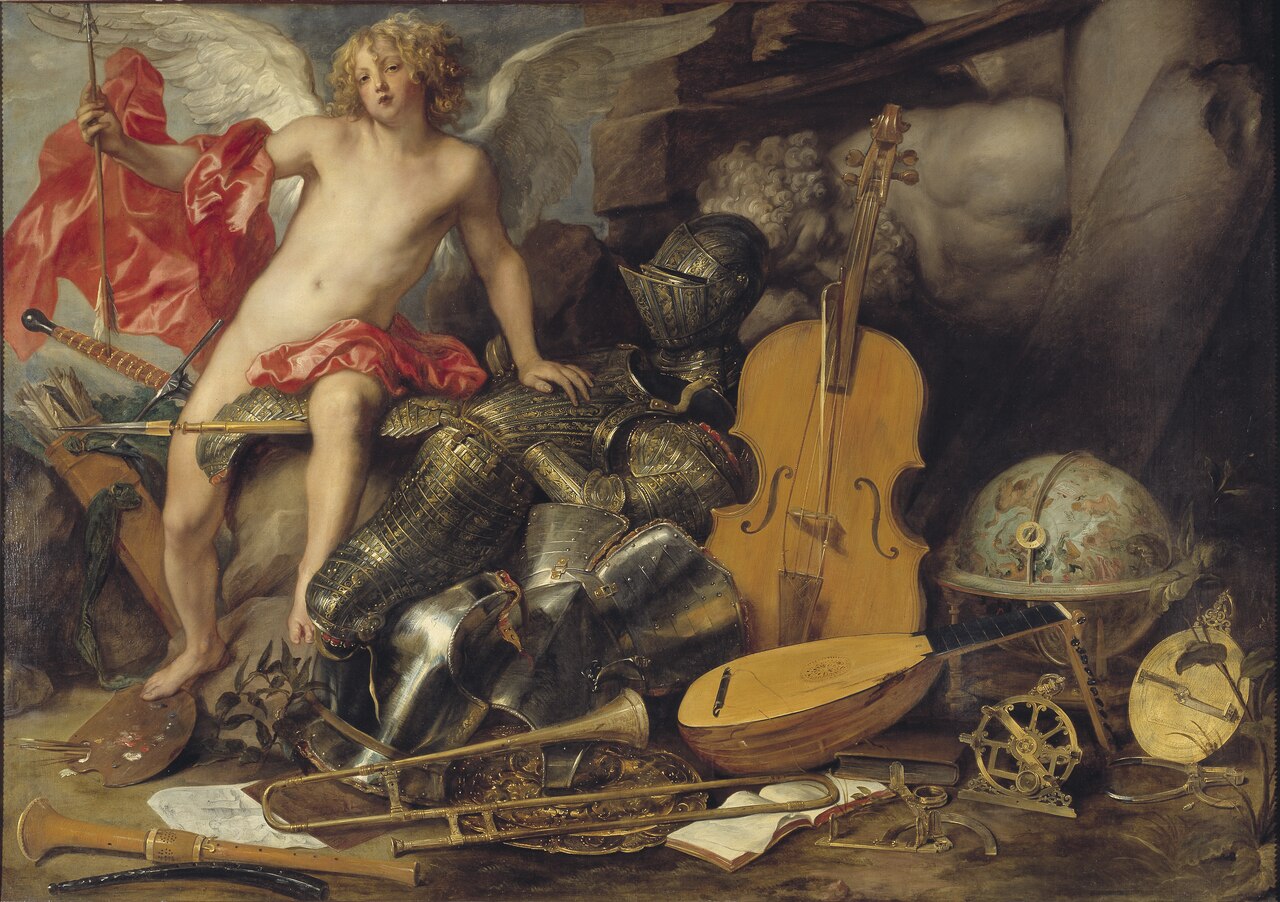
* Triumphant Cupid among Emblems of Art and War (1645) – In this allegorical work, Cupid is surrounded by symbols representing the arts (musical instruments, painter’s tools) and warfare (armor, weapons). De Vos contributed the animal figures—particularly a hunting dog and a falcon—infusing the scene with kinetic energy and reinforcing the contrast between cultural refinement and martial vigor.
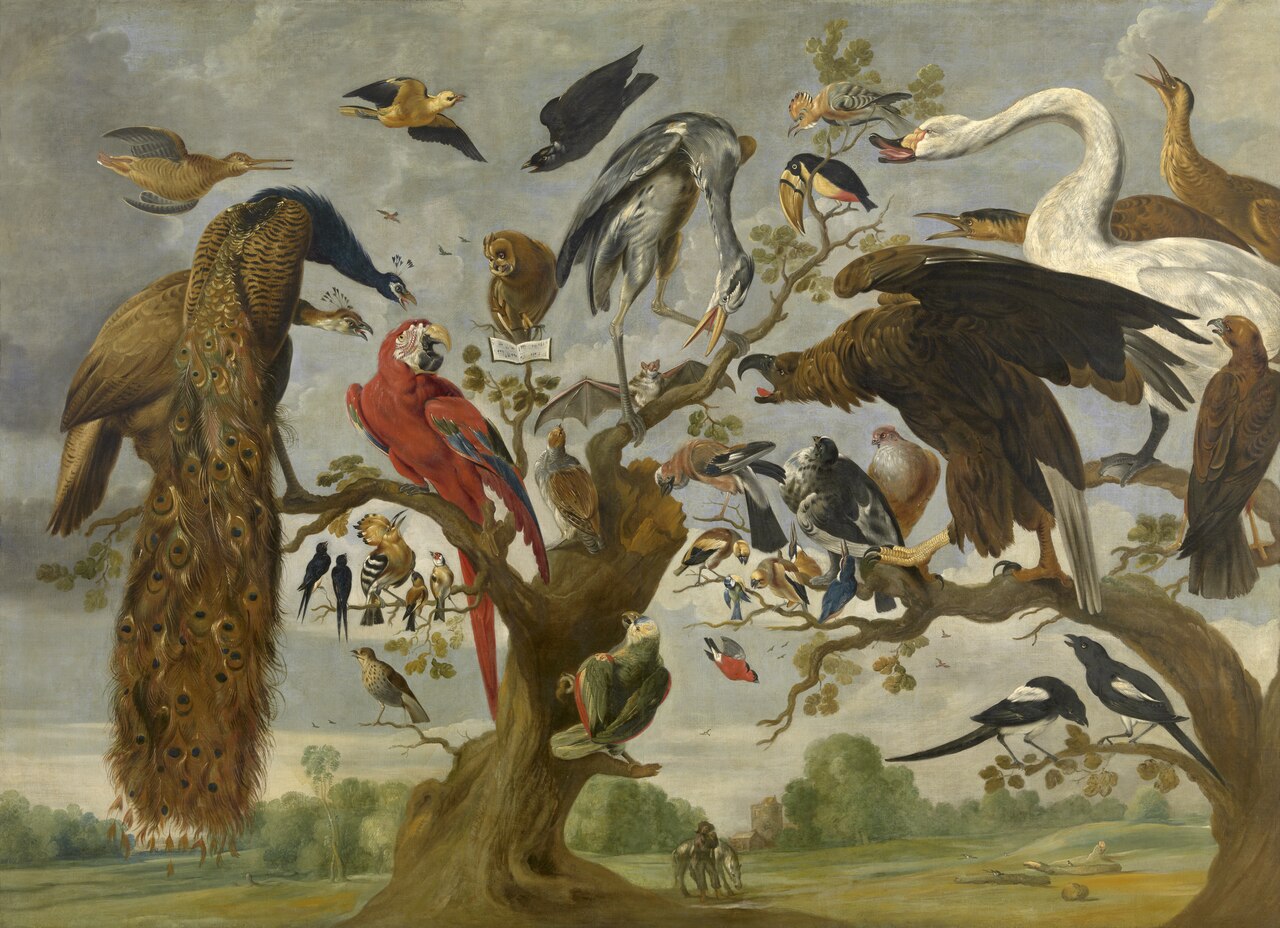
* A Concert of Birds (1664) – This lively tableau depicts a variety of birds perched on a tree branch, seemingly engaged in a musical performance. The precise rendering of each species, from the delicate finches to the more robust parrots, showcases de Vos’s observational skill and his capacity to render a collective narrative through animal interaction.
* Turkey and Rooster (1630) – A still‑life composition that juxtaposes a domesticated turkey with a proud rooster, set against a dark, textured background. The contrast of the birds’ plumage and the careful rendering of their feathers exemplify de Vos’s mastery of texture and colour.
* A Dog (1636) – This portrait‑like work focuses on a single hunting dog, rendered with meticulous attention to the animal’s muscular form and alert expression. The piece reflects the popularity of canine subjects among the aristocracy, who often commissioned such works to celebrate their hunting pursuits.
Each of these works demonstrates de Vos’s consistent emphasis on realism, compositional drama and the integration of symbolic content.
Influence and legacy Paul de Vos occupies a distinctive niche within Flemish Baroque art. While his name is less widely recognised than that of Rubens or van Dyck, his contributions to the genre of animal painting helped to elevate the status of such subjects beyond mere decorative motifs. By supplying animal figures for major commissions, he shaped the visual vocabulary of many high‑profile projects, ensuring that the natural world remained a vital component of Baroque narrative art.
His approach to animal anatomy and movement influenced a subsequent generation of Flemish painters who specialised in hunting and still‑life scenes. Moreover, the collaborative model he embodied—working alongside leading artists to provide specialist expertise—became a standard practice within Antwerp’s prolific workshop system.
De Vos’s works continue to be studied for their technical brilliance and their insight into the tastes of 17th‑century elite patrons. Modern exhibitions of Baroque art often include his paintings as exemplars of the period’s fascination with the natural world, and his pieces remain present in major European museum collections, attesting to the enduring relevance of his artistic vision.
Overall, Paul de Vos’s legacy lies in his synthesis of rigorous natural observation with the theatrical flair of the Baroque, producing paintings that both delight the eye and convey the cultural values of his time.
Frequently asked questions
Who was Paul de Vos?
Paul de Vos (1590–1678) was a Flemish Baroque painter from the Habsburg Netherlands, known for his vivid animal, hunting and still‑life scenes, and for collaborating with leading Antwerp artists such as Rubens and van Dyck.
What artistic style or movement is Paul de Vos associated with?
He worked within the Flemish Baroque tradition, employing dramatic lighting, rich colour, and dynamic compositions while focusing on naturalistic depictions of animals.
What are Paul de Vos’s most famous works?
Key works include *Two Young Seals on the Shore* (c. 1650), *Triumphant Cupid among Emblems of Art and War* (1645), *A Concert of Birds* (1664), *Turkey and Rooster* (1630) and *A Dog* (1636).
Why is Paul de Vos important in art history?
He elevated animal painting within the Baroque era, contributed specialist figures to major collaborative works, and influenced later Flemish artists who pursued hunting and still‑life subjects.
How can I recognise a painting by Paul de Vos?
Look for finely rendered animal anatomy, strong chiaroscuro, dynamic groupings of creatures, a rich, earthy palette, and often symbolic accessories that link the animals to broader allegorical themes.