Rudolf Lehmann
1819 – 1905
In short
Rudolf Lehmann (1819–1905) was a German‑born British portrait painter who settled in England in 1866. He is best known for his refined portraits of literary and scientific figures such as Wilkie Collins, Robert Browning and Sir William Siemens, and for his role in Victorian portraiture.
Notable works
_Wilkie_Collins_by_Rudolph_Lehmann.jpg)


_-_Sir_Charles_Edward_Trevelyan_(1809%E2%80%931886),_1st_Bt_-_584342_-_National_Trust.jpg)
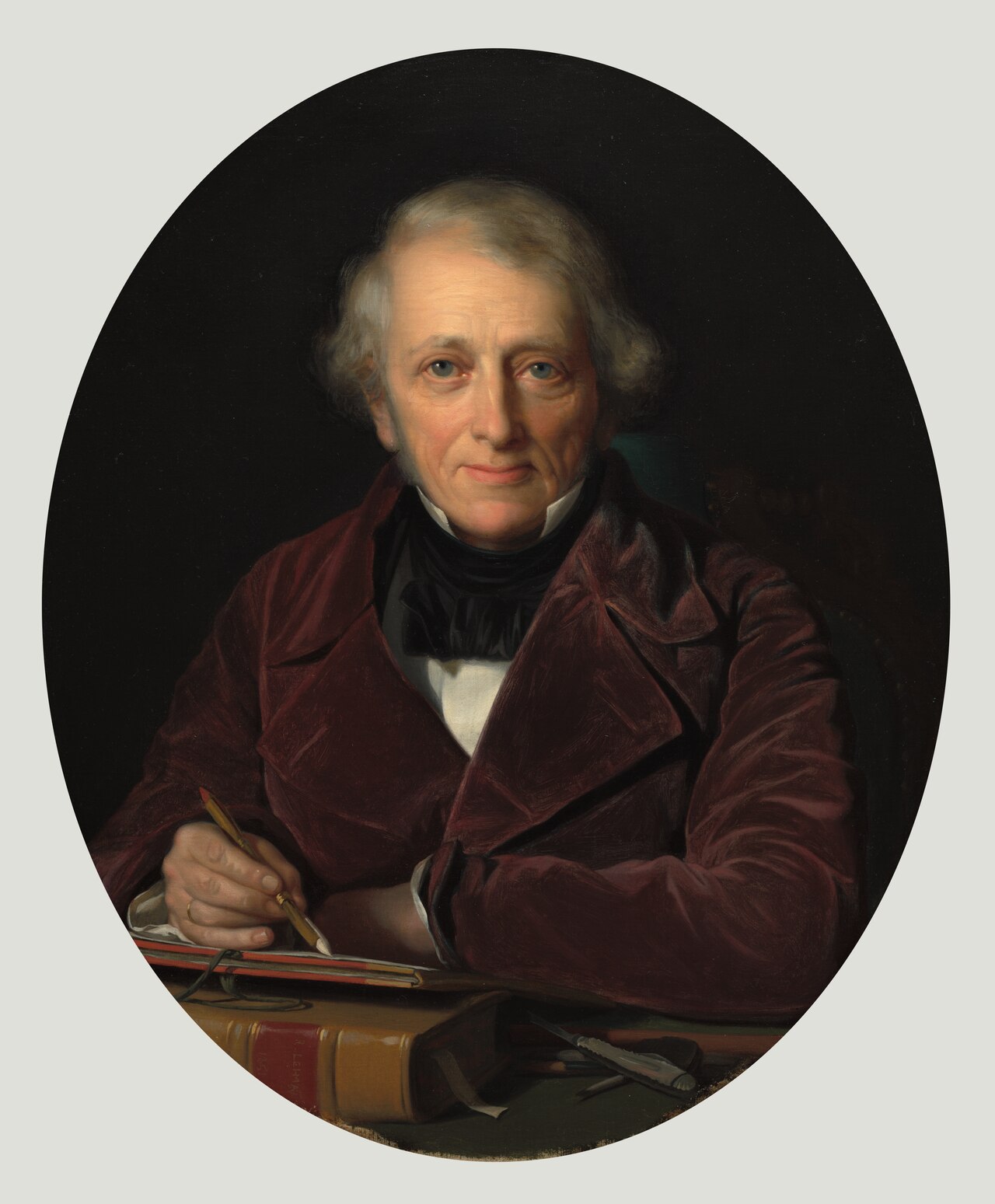
Early life Rudolf Lehmann was born on 12 July 1819 in Ottensen, a suburb of Hamburg, then part of the German Confederation. He grew up in a middle‑class family that valued education and the arts. Early training in drawing and painting was undertaken at the Kunstakademie in Hamburg, where he absorbed the academic principles of the German Romantic tradition. By his early twenties Lehmann had already exhibited locally, gaining a modest reputation for his ability to render likenesses with psychological depth.
In 1866, seeking broader opportunities, Lehmann emigrated to the United Kingdom. He settled in London, a city that was then the centre of the British Empire’s cultural life. The move coincided with a flourishing market for portrait commissions among the professional and literary elite, offering the young artist a fertile environment in which to develop his career.
Career and style Lehmann quickly established himself as a portraitist for the burgeoning Victorian middle class and for a number of eminent figures in literature, science and politics. His style combined the academic rigour of his German training with a distinctly British sensibility: a restrained palette, careful modelling of flesh tones, and an emphasis on the sitter’s character rather than overt flamboyance.
Unlike many of his contemporaries who favoured grand historical or mythological subjects, Lehmann concentrated almost exclusively on portraiture. He worked primarily in oil on canvas, employing a measured, layered approach that allowed subtle glazes to create depth and luminosity. His sitters were often depicted against simple, muted backgrounds, which served to focus attention on facial expression and the texture of clothing.
Lehmann also published a number of articles on artistic practice, reflecting his status as an author as well as a painter. His writings reveal a belief in the moral purpose of art and the importance of technical mastery, themes that resonated with the Victorian ethos of self‑improvement.
Signature techniques Lehmann’s portraits are recognisable for several technical hallmarks:
1. Delicate flesh modelling – He built skin tones through successive thin layers of oil, creating a soft, almost translucent quality that conveys the sitter’s vitality. 2. Controlled chiaroscuro – Light is used sparingly but effectively to highlight the face, while shadows are rendered with a muted, almost velvety texture, giving a three‑dimensional sense without harsh contrast. 3. Subtle colour palette – A restrained range of earth tones, greys and muted blues dominates his canvases, allowing the natural colour of the subject’s skin and eyes to stand out. 4. Attention to attire – Fabrics such as silk, wool and lace are rendered with meticulous detail, reflecting the sitter’s social status while also serving as a compositional counterpoint to the flesh. 5. Psychological insight – Beyond technical skill, Lehmann captured a fleeting expression or a thoughtful gaze, suggesting an inner narrative that invites viewers to contemplate the personality of the subject.
These techniques together produce portraits that feel both realistic and contemplative, aligning with the Victorian preference for modesty and dignity.
Major works Lehmann’s most celebrated portraits include:
- Wilkie Collins (1880) – The portrait of the celebrated novelist captures Collins in a relaxed pose, his eyes directed slightly away from the viewer. The muted background and the soft rendering of the writer’s beard and hair reinforce the intimate atmosphere of the work.
- Sir (Charles) William Siemens (1882) – Also known as Karl Wilhelm Siemens, the industrialist is shown seated, his hands resting on a table laden with technical drawings. Lehmann’s careful rendering of the steel‑blue suit and the subtle gleam of the metal objects underscores Siemens’ engineering achievements.
- Robert Browning (1884) – In this portrait, the poet is depicted with a contemplative expression, his hand holding a manuscript. The painting’s restrained colour scheme and the delicate treatment of Browning’s aged skin exemplify Lehmann’s skill in portraying intellectual gravitas.
- Sir Charles Edward Trevelyan, 1st Baronet (1878) – This portrait of the civil servant and philanthropist shows Trevelyan in formal attire, his posture dignified yet approachable. Lehmann’s attention to the texture of the silk waistcoat and the subtle play of light on the subject’s face convey both status and humanity.
- Leo Lehmann (1851) – A portrait of his younger brother, Leo, offers a more personal glimpse into Lehmann’s work. The painting is notable for its warm tonal balance and the affectionate rendering of the sitter’s smile, suggesting a familial intimacy that differs from his more formal commissions.
These works, now held in public collections and private holdings across the United Kingdom, illustrate Lehmann’s ability to adapt his technique to a range of personalities while maintaining a consistent aesthetic.
Influence and legacy Rudolf Lehmann’s contribution to Victorian portraiture lies in his synthesis of German academic training with British restraint. While he never founded a distinct artistic movement, his portraits influenced younger British portraitists who sought to balance technical proficiency with a modest, character‑focused approach.
Lehmann’s works were exhibited at the Royal Academy and other prestigious venues, securing his reputation among the artistic establishment of his time. His portraits of literary and scientific figures also serve as valuable historical documents, providing visual records of individuals who shaped 19th‑century culture.
After his death in Bushey, Hertfordshire, on 16 June 1905, Lehmann’s paintings continued to be acquired by museums and galleries. Contemporary scholarship frequently cites his portraits in studies of Victorian visual culture, and his technique is examined in art‑historical curricula that explore the cross‑national exchange of artistic ideas in the 19th century.
Overall, Rudolf Lehmann remains a noteworthy example of a transnational artist who successfully merged continental training with British tastes, leaving a body of work that reflects both the personal dignity of his sitters and the broader aesthetic currents of his era.
Frequently asked questions
Who was Rudolf Lehmann?
Rudolf Lehmann (1819–1905) was a German‑born British portrait painter who worked in London from 1866 until his death, renowned for his refined portraits of literary and scientific figures.
What artistic style or movement is he associated with?
Lehmann did not belong to a specific movement; his work combines German academic training with a restrained, character‑focused Victorian portrait style.
What are his most famous works?
His best‑known portraits include Wilkie Collins (1880), Sir William Siemens (1882), Robert Browning (1884), Sir Charles Edward Trevelyan (1878) and a personal portrait of his brother Leo Lehmann (1851).
Why is Rudolf Lehmann important in art history?
He exemplifies the cross‑national exchange of artistic practice in the 19th century and contributed to the development of a dignified, psychologically nuanced Victorian portrait tradition.
How can I recognise a Rudolf Lehmann portrait?
Look for delicate flesh modelling, a muted colour palette, subtle chiaroscuro, meticulous rendering of clothing, and an expressive yet restrained gaze that conveys the sitter’s character.