Raphaël Collin
1850 – 1916
In short
Raphaël Collin was a French painter born in 1850 and died in 1916, known for his contributions to the Symbolism art movement. He played a significant role in bridging French and Japanese art, particularly in painting and ceramics. Collin's work had a lasting impact on the development of modern art.
Notable works

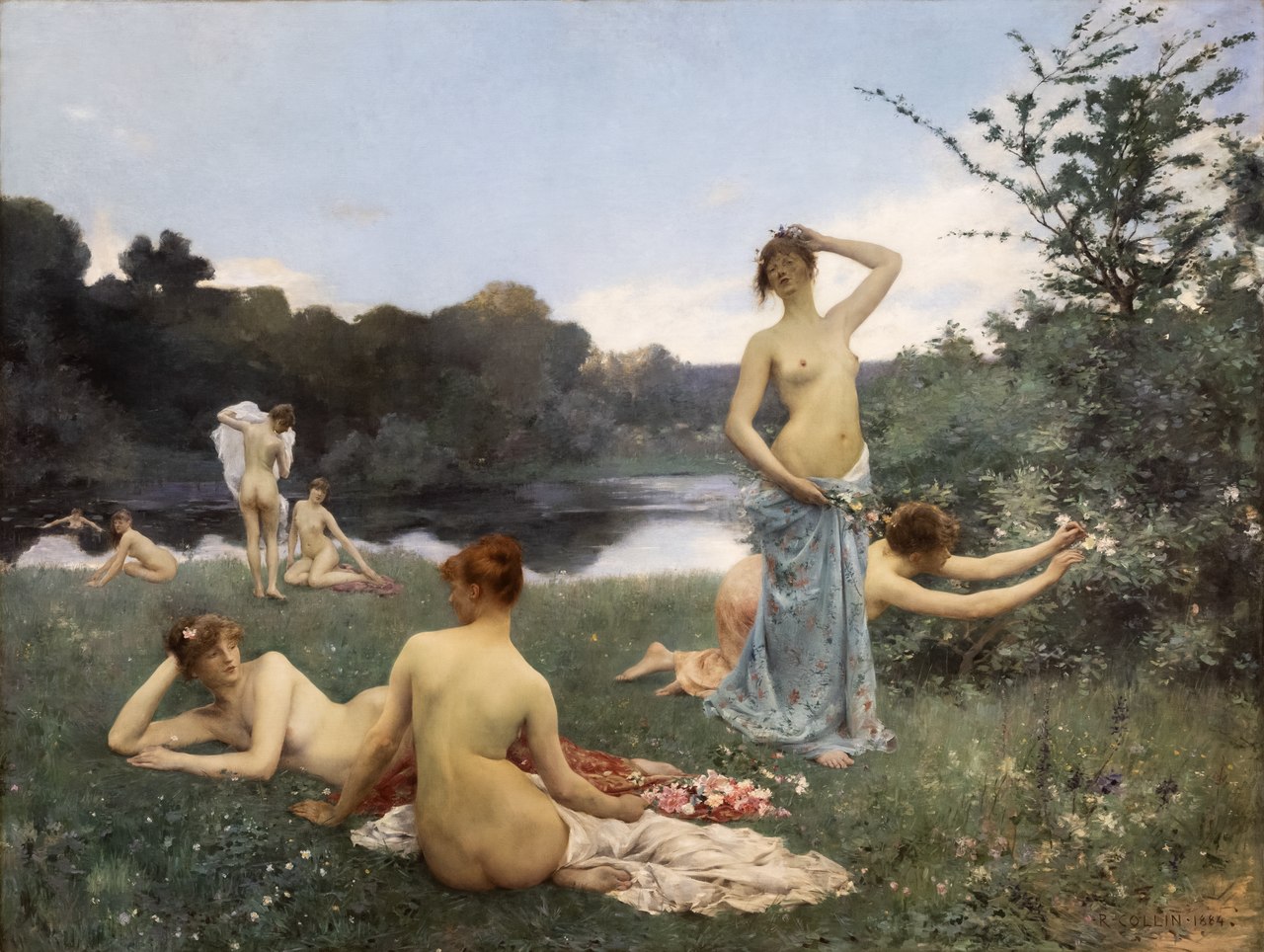

.jpg)
Early life Raphaël Collin was born in 1850 in Rue Louise-Émilie-de-La-Tour-d'Auvergne, France. Although specific details about his early life are scarce, it is known that he was raised in a environment that nurtured his artistic talents. As a young artist, Collin was exposed to the rich cultural heritage of France, which would later influence his unique style.
Career and style Collin's career as a painter was marked by his affiliation with the Symbolism art movement. This movement, which emerged in the late 19th century, emphasized the use of symbols and metaphors to convey complex emotions and ideas. As a Symbolist painter, Collin's work was characterized by its dreamlike quality, often featuring sensual and evocative depictions of the human form. His style was also influenced by his interest in Japanese art, which is evident in the use of bold colors and flat perspectives in his paintings.
Signature techniques Collin's signature techniques were shaped by his experimentation with different mediums and styles. He was known to have worked with a range of materials, including oil paints, watercolors, and ceramics. His use of color was particularly noteworthy, as he often employed a palette of soft, muted tones to create a sense of intimacy and contemplation. Additionally, Collin's work was marked by its emphasis on texture and pattern, which added depth and visual interest to his compositions.
Major works Some of Collin's most notable works include 'Floréal' (1888), 'Summer' (1884), 'Woman bathing' (1880), and 'The Sleeping' (1892). 'Floréal' is a quintessential example of Collin's Symbolist style, featuring a delicate, flower-like figure set against a soft, blue background. 'Summer' and 'Woman bathing' showcase Collin's ability to capture the beauty of the human form, while 'The Sleeping' demonstrates his skill in conveying a sense of quiet contemplation. These works not only demonstrate Collin's technical proficiency but also his ability to evoke powerful emotions and moods through his art.
Influence and legacy Collin's influence on the development of modern art is undeniable. As a pioneer of the Symbolism movement, he played a significant role in shaping the course of modern art. His work has inspired generations of artists, from the early 20th-century avant-garde to contemporary painters. Today, Collin's paintings are held in high esteem by art collectors and enthusiasts, who appreciate their beauty, sensuality, and emotional depth. His legacy continues to be felt, as his work remains a testament to the power of art to evoke and express the human experience.
Frequently asked questions
Who was Raphaël Collin?
Raphaël Collin was a French painter born in 1850 and died in 1916, known for his contributions to the Symbolism art movement.
What style or movement was Raphaël Collin associated with?
Raphaël Collin was associated with the Symbolism art movement, which emphasized the use of symbols and metaphors to convey complex emotions and ideas.
What are some of Raphaël Collin's most famous works?
Some of Raphaël Collin's most notable works include 'Floréal', 'Summer', 'Woman bathing', and 'The Sleeping'.
Why is Raphaël Collin important in the history of art?
Raphaël Collin is important because he played a significant role in bridging French and Japanese art, and his work had a lasting impact on the development of modern art.
How can I recognize a painting by Raphaël Collin?
You can recognize a painting by Raphaël Collin by looking for characteristics such as dreamlike quality, sensual and evocative depictions of the human form, and the use of bold colors and flat perspectives, which are hallmarks of his Symbolist style.