Pieter Van der Ouderaa
1841 – 1915
In short
Pieter Van der Ouderaa (1841–1915) was a Belgian painter and lithographer from Antwerp, recognised for his religious, genre, portrait and landscape paintings, with notable works including The Settlement (1879) and Self‑Portrait (1904).
Notable works


Early life
Pieter Van der Ouderaa was born in 1841 in the bustling port city of Antwerp, Belgium. His family was part of the city's middle‑class artisan community, a background that gave him early exposure to the crafts of drawing and printmaking. Antwerp’s rich artistic heritage—home to the 17th‑century masters Peter Paul Rubens and Anthony van Dyck—provided a fertile environment for a young talent. Van der Ouderaa entered the Royal Academy of Fine Arts in Antwerp in the late 1850s, where he received formal training in drawing, composition and the fundamentals of oil painting. The Academy’s curriculum emphasised the study of classical models, anatomy and perspective, and it was here that Van der Ouderaa first encountered the techniques of lithography, a medium that would remain a secondary but significant part of his oeuvre.
Career and style
After completing his studies, Van der Ouderaa set up a studio in the historic centre of Antwerp. He quickly established a reputation as a versatile artist capable of working across several genres. Although he never aligned himself with a specific avant‑garde movement, his work reflects the lingering influence of academic realism that dominated Belgian art in the second half of the 19th century. His religious paintings display a careful attention to narrative detail and a restrained colour palette, while his genre scenes often capture everyday moments with a gentle, almost nostalgic sentiment.
Portraiture formed a substantial part of Van der Ouderaa’s output. He was commissioned by both private patrons and municipal bodies to produce likenesses that combined faithful representation with a subtle psychological depth. In his landscape paintings, the artist favoured the flat, light‑filled skies of the Flemish countryside, rendering fields, canals and village streets with a calm, measured brushstroke. Throughout his career, Van der Ouderaa maintained a steady production schedule, exhibiting regularly at the Salon of the Société des Beaux‑Arts in Brussels and at local Antwerp societies.
Signature techniques
Van der Ouderaa’s technique is characterised by a disciplined handling of line and a restrained, layered application of paint. In oil works he often began with a monochrome underpainting (grisaille) to establish values before introducing colour in thin glazes. This method allowed him to achieve a luminous quality, especially in the rendering of light on fabric and stone. His lithographs display a confident, fluid line that captures the immediacy of the subject while preserving fine detail. The artist favoured a limited palette of earth tones, muted blues and warm ochres, which contributed to the cohesive visual language across his varied subject matter.
Another hallmark of his practice is the careful compositional balance. Van der Ouderaa frequently employed the classic triangle or cruciform arrangements to guide the viewer’s eye toward focal points, a strategy evident in both his religious narratives and secular genre pieces. The artist also paid close attention to the treatment of textures—whether the sheen of polished brass, the softness of a woolen shawl, or the roughness of a stone façade—using subtle brushwork or fine hatching in lithographs to convey materiality.
Major works
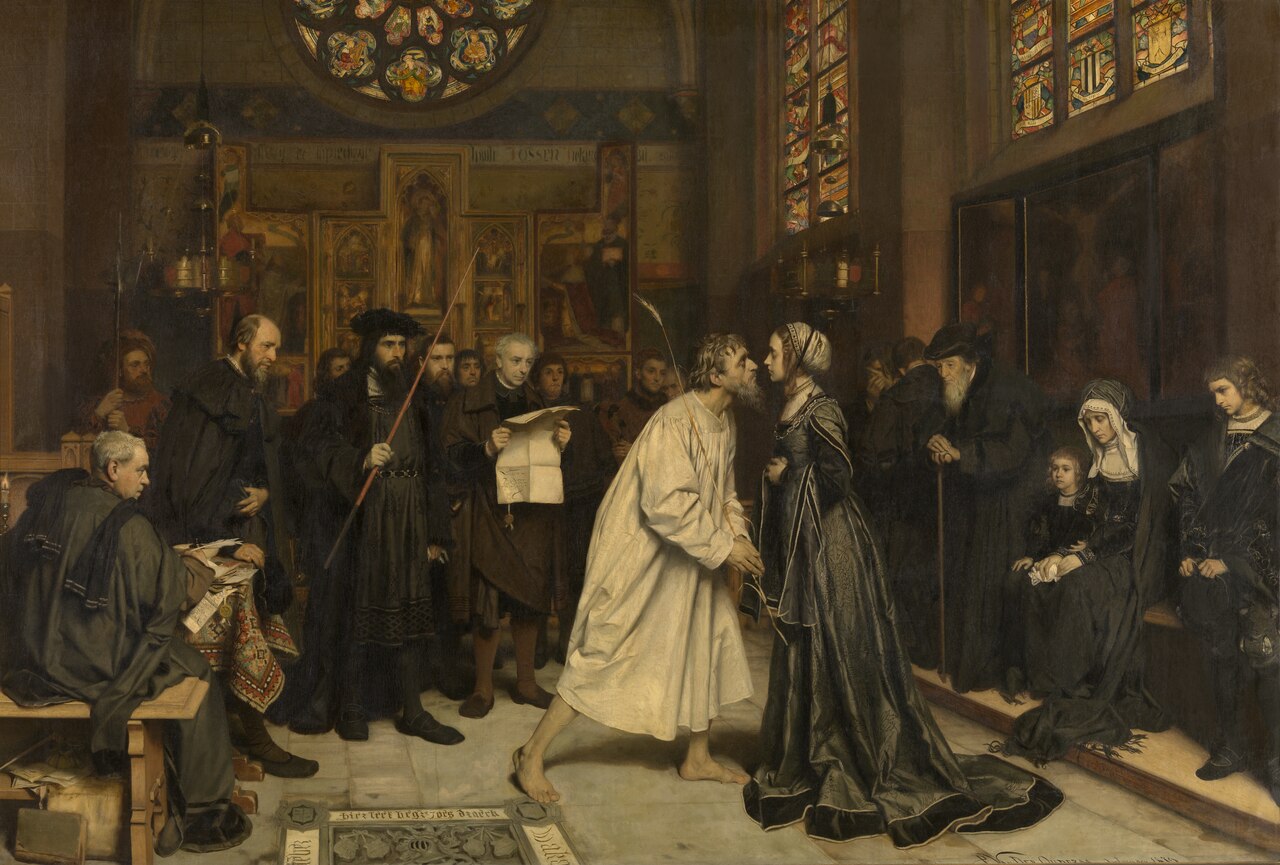
- The Settlement (1879) – This large‑scale genre painting depicts a group of Flemish peasants gathered around a newly built farmhouse. Van der Ouderaa captures the optimism of post‑industrial prosperity through bright, earthy colours and a composition that centres the central doorway, symbolising stability and community.
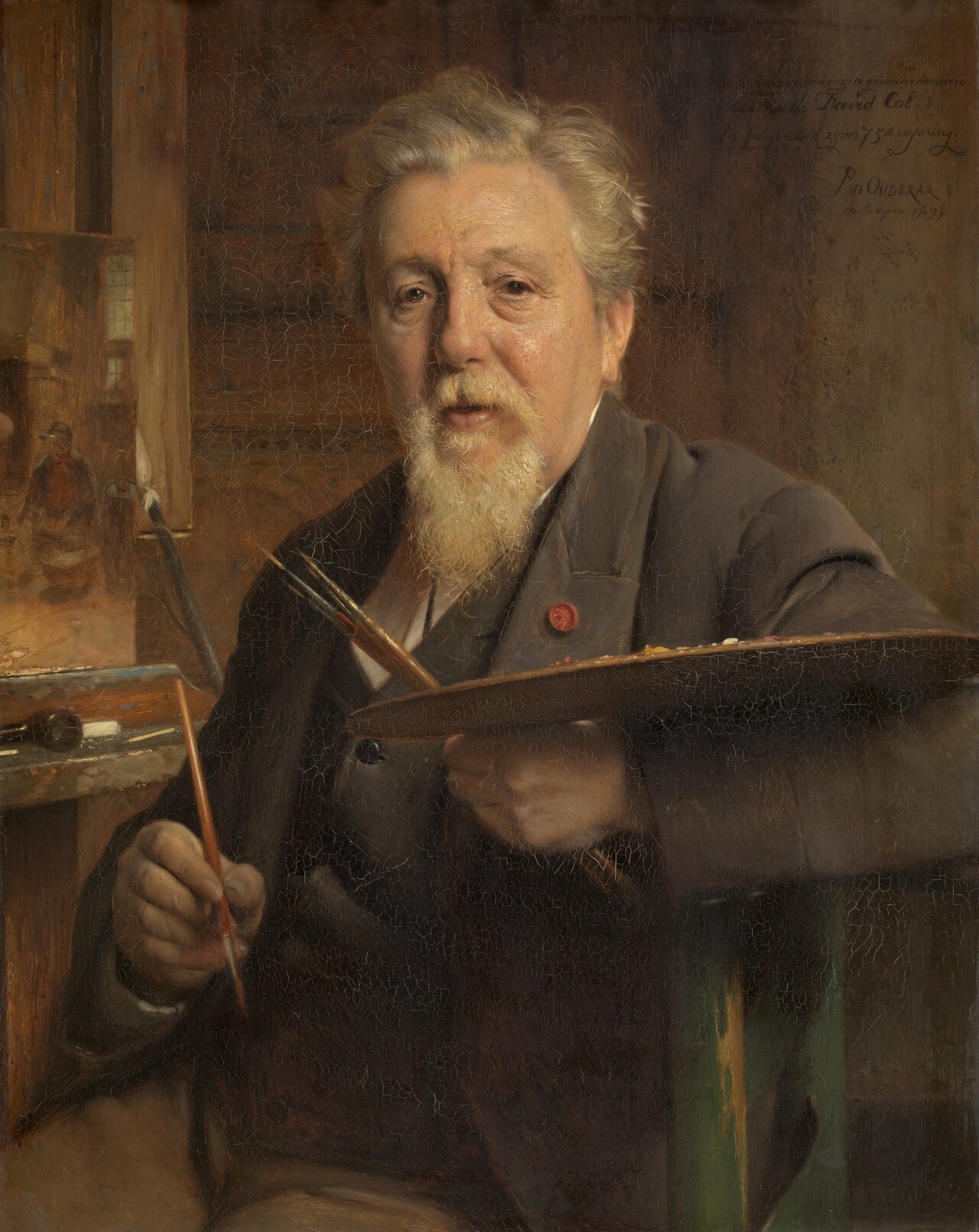
- The Painter Jan David Col (1897) – A portrait of the contemporary artist Jan David Col, this work showcases Van der Ouderaa’s skill in rendering likenesses. The sitter is shown at his easel, palette in hand, with a muted background that emphasises the subject’s focused expression. The painting reflects a mutual respect among Antwerp’s artistic circles and demonstrates Van der Ouderaa’s ability to convey personality within a formal portrait framework.
- Self Portrait (1904) – Executed in his later years, this self‑portrait reveals a mature artist reflecting on his career. The painting is noted for its introspective mood, subdued lighting and the careful rendering of the artist’s aged features. Van der Ouderaa employs his characteristic glazing technique to achieve a soft facial modelling that contrasts with the sharper detail of his attire.
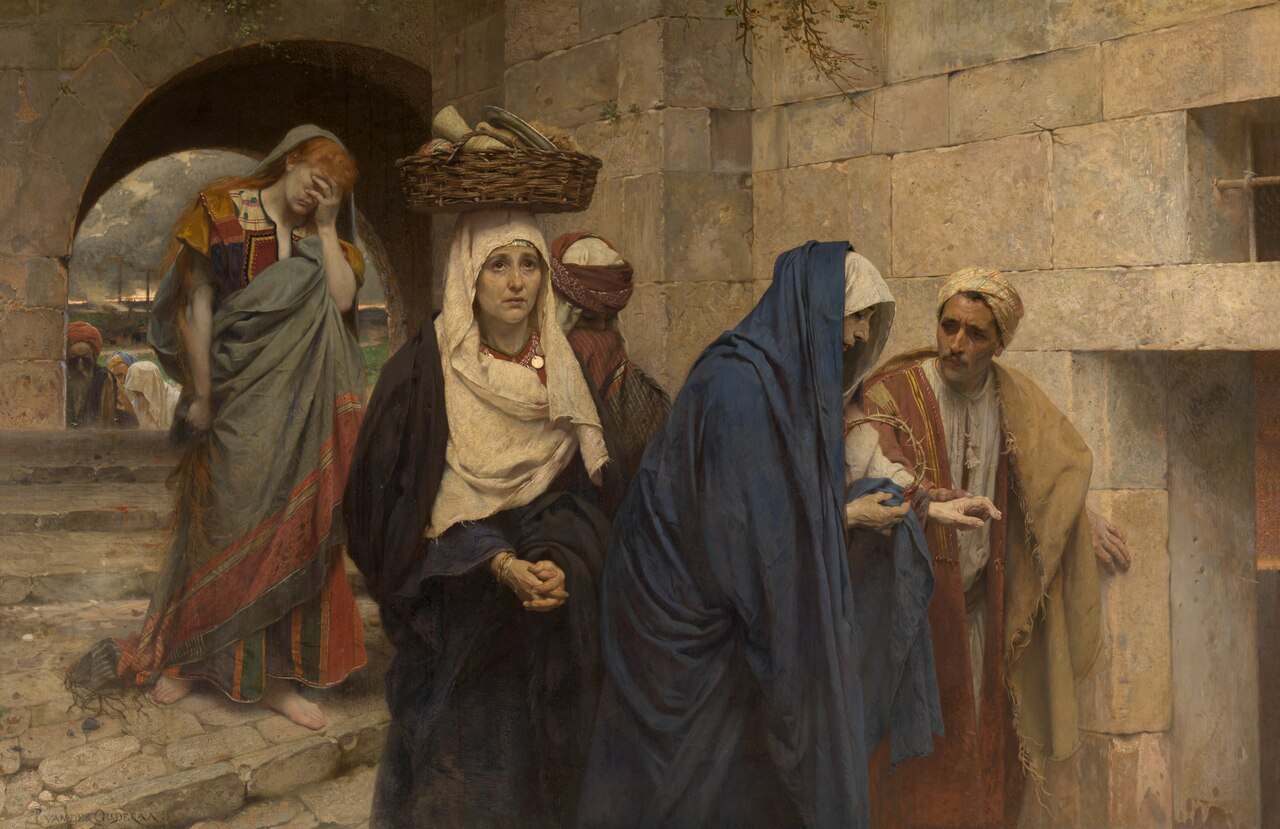
- The Holy Women Returning from Christ’s Grave (1893) – A religious composition, this work presents the biblical women in a moment of solemn reverence. The artist uses a restrained colour scheme of blues and greys to convey grief, while the delicate handling of the women’s garments adds a sense of dignity. The piece exemplifies Van der Ouderaa’s capacity to translate sacred narratives into emotionally resonant visual statements.
- Feest in de Beurs (1866) – One of his earlier genre scenes, this painting captures a festive gathering in a bustling market hall. The lively crowd, illuminated by natural light from high windows, is rendered with precise attention to individual gestures, highlighting Van der Ouderaa’s observational skill. The work remains a valuable record of Antwerp’s commercial life in the mid‑19th century.
Collectively, these works illustrate the breadth of Van der Ouderaa’s interests—from intimate portraiture to communal celebrations—and his consistent commitment to narrative clarity and technical finesse.
Influence and legacy
Although Pieter Van der Ouderaa never achieved the international fame of some of his Belgian contemporaries, his contributions to the visual culture of Antwerp were significant. He served as a bridge between the academic traditions of the mid‑1800s and the emerging modernist sensibilities that began to surface at the turn of the century. His lithographs, in particular, were widely reproduced in local newspapers and illustrated books, helping to disseminate a distinctly Flemish aesthetic to a broader audience.
Van der Ouderaa taught several younger artists in his studio, imparting a disciplined approach to drawing and an appreciation for careful compositional planning. His works are held in the collections of the Royal Museum of Fine Arts Antwerp and smaller regional museums, where they continue to be cited as exemplary models of 19th‑century Belgian realism. Art historians regard his oeuvre as a reliable visual archive of everyday life, religious devotion and the evolving artistic practices of his era. In recent years, renewed scholarly interest in lesser‑known Belgian painters has led to exhibitions that feature Van der Ouderaa’s paintings alongside his contemporaries, reaffirming his place in the nation’s artistic heritage.
Overall, Pieter Van der Ouderaa remains a notable figure for his steadfast dedication to craft, his ability to capture both the sacred and the secular with equal sensitivity, and his role in preserving the visual narrative of 19th‑century Belgium.
Frequently asked questions
Who was Pieter Van der Ouderaa?
Pieter Van der Ouderaa (1841–1915) was a Belgian painter and lithographer from Antwerp, known for religious, genre, portrait and landscape works.
What artistic style or movement is he associated with?
He worked within the academic realist tradition of 19th‑century Belgium and did not align himself with a specific avant‑garde movement.
What are his most famous works?
His best‑known paintings include The Settlement (1879), The Holy Women Returning from Christ’s Grave (1893), The Painter Jan David Col (1897), Self‑Portrait (1904) and the genre scene Feest in de Beurs (1866).
Why does his work matter in art history?
Van der Ouderaa provides a clear visual record of Belgian religious and everyday life in the 19th century, and his disciplined technique bridges academic realism and the nascent modernist tendencies of his time.
How can I recognise a Pieter Van der Ouderaa painting?
Look for a balanced composition, restrained colour palette, careful glazing in oils, and meticulous attention to texture, often combined with narrative clarity in both religious and genre subjects.