Pieter Meulener
1602 – 1654
In short
Pieter Meulener (1602–1654) was a Flemish painter from Antwerp who specialised in vivid battle scenes and lively landscape genre works. He is recognised as one of the leading mid‑17th‑century artists of martial subjects in the Habsburg Netherlands.
Notable works


Early life Pieter Meulener was born in 1602 in Antwerp, a thriving commercial and artistic centre of the Habsburg Netherlands. Little is known about his family background, but the city’s dense network of workshops and guilds would have provided ample opportunity for artistic apprenticeship. Antwerp’s Guild of Saint Luke, which regulated the training of painters, was the most likely venue for his early education, where he would have been exposed to the dominant Flemish Baroque style and the flourishing market for both religious and secular commissions.
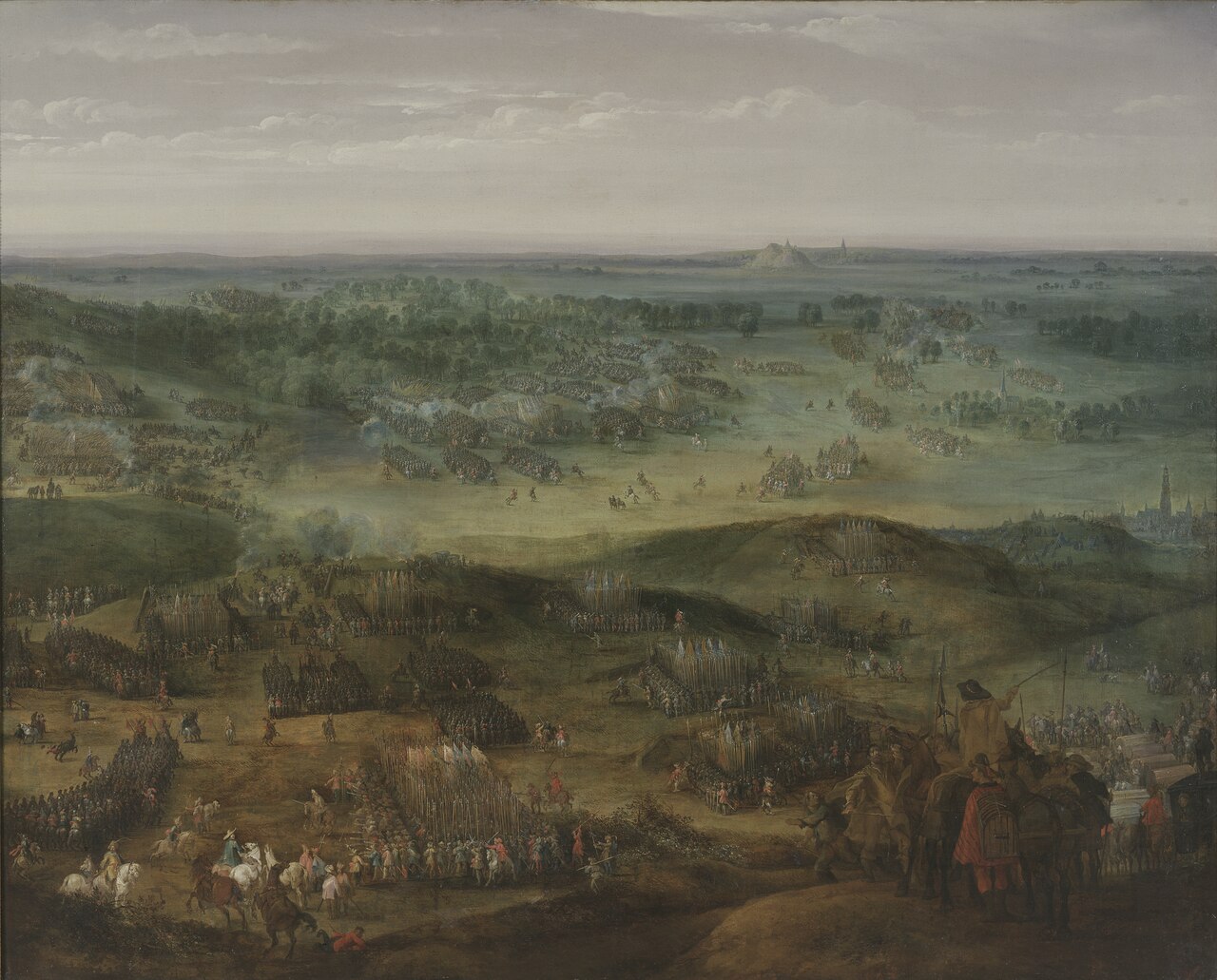
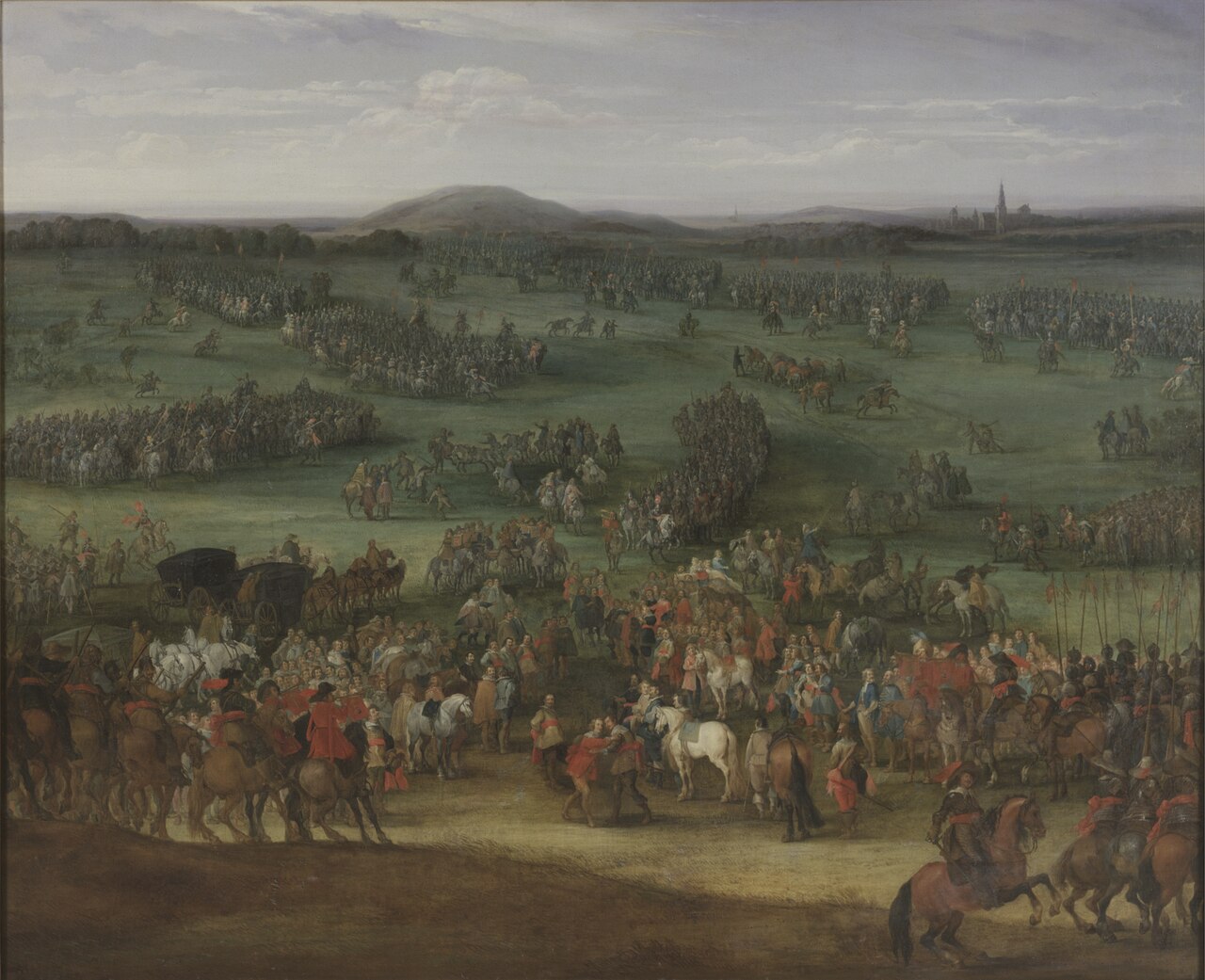
Career and style Meulener emerged as a professional painter in the 1620s, a period when the demand for battle scenes was rising due to the ongoing Thirty Years' War and its aftermath. He positioned himself within a niche that combined the dramatic intensity of military subject matter with the atmospheric qualities of landscape painting. His works display a clear affinity with the battle‑scene tradition established by earlier Flemish masters such as Peter Paul Rubens and later refined by contemporaries like Sebastian Vrancx. Meulener’s canvases are characterised by a balanced composition that juxtaposes the chaotic energy of combat with a measured, often panoramic view of the terrain.
Stylistically, Meulener favoured a muted colour palette of earth tones, ochres and deep greens, punctuated by the occasional flash of red or gold to highlight banners, uniforms or the glint of weaponry. The figures in his battle scenes are rendered with a degree of anonymity, serving the narrative rather than individual portraiture. This approach reinforces the collective nature of warfare while allowing the viewer to focus on the overall movement and rhythm of the composition. In his landscape genre works, he introduced small groups of figures engaged in everyday activities, such as dancing couples or peasants at work, set against bucolic backdrops that convey a sense of tranquillity absent from his martial scenes.
Signature techniques Meulener’s technique relied heavily on layered glazing to achieve depth and atmospheric perspective. He would first sketch the broad outlines of terrain and troop formations in a thin underdrawing, then apply successive layers of thin oil paint, allowing each to dry before adding detail. This method created a luminous effect, especially in skies where he rendered clouds with soft, feathery strokes that suggest the passage of time and weather conditions.
Another hallmark of his practice is the use of chiaroscuro to model the forms of soldiers and horses, giving them a three‑dimensional presence amidst the smoky haze of battle. Small touches of white or yellow paint are employed to depict the gleam of steel and the flicker of fire, adding drama without overwhelming the overall tonal harmony. In his genre landscapes, Meulener often incorporated a foreground of foliage or architectural ruin that frames the central activity, a compositional device that guides the eye and creates a sense of depth.
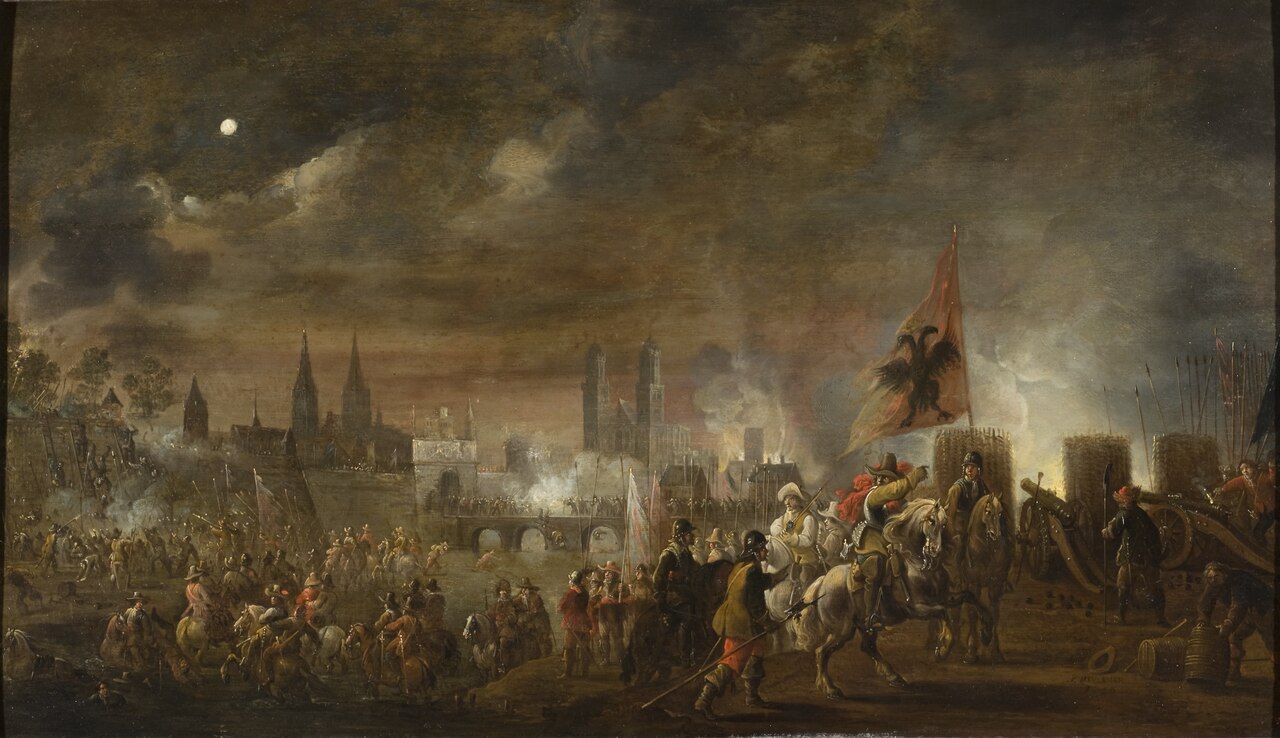
Major works - **Landscape with a Dancing Couple (1645)** – This work exemplifies Meulener’s ability to blend genre scenes with landscape. A lively couple dances in a sun‑lit clearing, surrounded by gently rolling hills and a distant village. The painting’s delicate handling of light and the subtle suggestion of movement capture a fleeting moment of rural festivity. - **The Battle of Nördlingen I (1634)** – One of two versions Meulener produced of this pivotal 1634 encounter, the first depicts the chaotic clash of infantry and cavalry on a rugged plain. The composition is anchored by a smoky sky and a series of broken trees, which serve both as tactical cover and visual markers for the viewer’s orientation. - **The Battle of Nördlingen II (1634)** – The second version offers a slightly altered perspective, focusing more on the mounted units charging across the field. Meulener accentuates the drama with a brighter palette of reds and blues on the banners, while maintaining his characteristic atmospheric depth. - **The Siege of Magdeburg (1631) (1650)** – Although dated later than the event it portrays, this painting reflects Meulener’s continued interest in large‑scale military narratives. The siege is rendered with a panoramic view of the city’s walls, siege engines, and a massed infantry encirclement, all underscored by a foreboding sky that hints at the tragedy of the historical siege. - **Cavalry Battle (1648)** – In this later work, Meulener concentrates on the kinetic energy of a cavalry engagement. The horses are depicted mid‑gallop, their muscles and manes rendered with swift, confident brushwork. The background recedes into a misty horizon, allowing the viewer to focus on the immediacy of the combat.
Each of these pieces demonstrates Meulener’s consistent approach to narrative, composition, and atmospheric rendering, while also showing subtle evolution in his handling of colour and light over the decades of his career.
Influence and legacy Pieter Meulener occupies a distinct place in Flemish art history as a specialist of battle scenes at a time when such subjects were both politically resonant and commercially viable. His works were collected by aristocratic patrons who valued the documentation of contemporary conflicts, and they also appealed to a broader market of art dealers seeking dramatic, narrative‑driven canvases. Though he did not found a formal school, his method of integrating landscape and genre elements into military subjects influenced younger Flemish painters who sought to diversify the thematic range of battle painting.
In later centuries, Meulener’s paintings have been cited as reference points for the accurate depiction of 17th‑century warfare, particularly in scholarly studies of the Thirty Years’ War. The clarity of his compositions, combined with the realistic rendering of armaments and tactics, provides historians with visual evidence that complements textual sources. Moreover, his ability to balance the spectacle of combat with the serene qualities of the natural world prefigures the Romantic fascination with the sublime that would emerge in the 19th century.
Today, Meulener’s canvases can be found in several European museums, including the Royal Museum of Fine Arts Antwerp and the Kunsthistorisches Museum in Vienna. Their continued exhibition underscores his lasting relevance as an artist who captured the turbulence of his age with technical skill and compositional poise. While his name may not be as widely recognised as some of his Baroque contemporaries, scholars and collectors alike acknowledge Pieter Meulener as a pivotal figure in the development of the battle‑scene genre within Flemish painting.
Frequently asked questions
Who was Pieter Meulener?
Pieter Meulener (1602–1654) was a Flemish painter from Antwerp renowned for his vivid battle scenes and landscape genre works.
What artistic style or movement is he associated with?
He worked within the Flemish Baroque tradition, specialising in military subjects while integrating landscape and genre elements.
What are his most famous works?
Key paintings include Landscape with a Dancing Couple (1645), the two versions of The Battle of Nördlingen (1634), The Siege of Magdeburg (1650), and Cavalry Battle (1648).
Why is Pieter Meulener important in art history?
He is considered a leading 17th‑century battle‑scene painter, influencing later Flemish artists and providing valuable visual documentation of the Thirty Years’ War.
How can I recognise a Meulener painting?
Look for panoramic battle compositions with muted earth tones, layered glazing for atmospheric depth, and small, anonymous figures set against detailed, misty landscapes.