Pieter Cornelisz van Soest
1600 – present
In short
Pieter Cornelisz van Soest was a Dutch marine painter active in the mid‑17th century, renowned for vivid naval battle scenes such as the Dutch Attack on the Medway (1667) and the Four Days' Fight (1666). Though details of his personal life are scarce, his work exemplifies the Dutch Golden Age’s fascination with maritime power.
Notable works

_-_Dutch_Attack_on_the_Medway,_June_1667_-_BHC0295_-_Royal_Museums_Greenwich.jpg)
Early life Pieter Cornelisz van Soedst (sometimes rendered van Soest) appears in the historical record only as a name attached to a handful of signed marine paintings. His exact birth year is recorded as 1600, but the place of birth, family background and artistic training remain undocumented. The surname suggests a Dutch origin, and the stylistic affinities of his surviving works place him firmly within the Dutch artistic milieu of the early‑to‑mid‑17th century. Like many of his contemporaries, it is likely that he apprenticed in a workshop that specialised in maritime subjects, a genre that flourished in the Dutch Republic as a reflection of its burgeoning naval and commercial power.
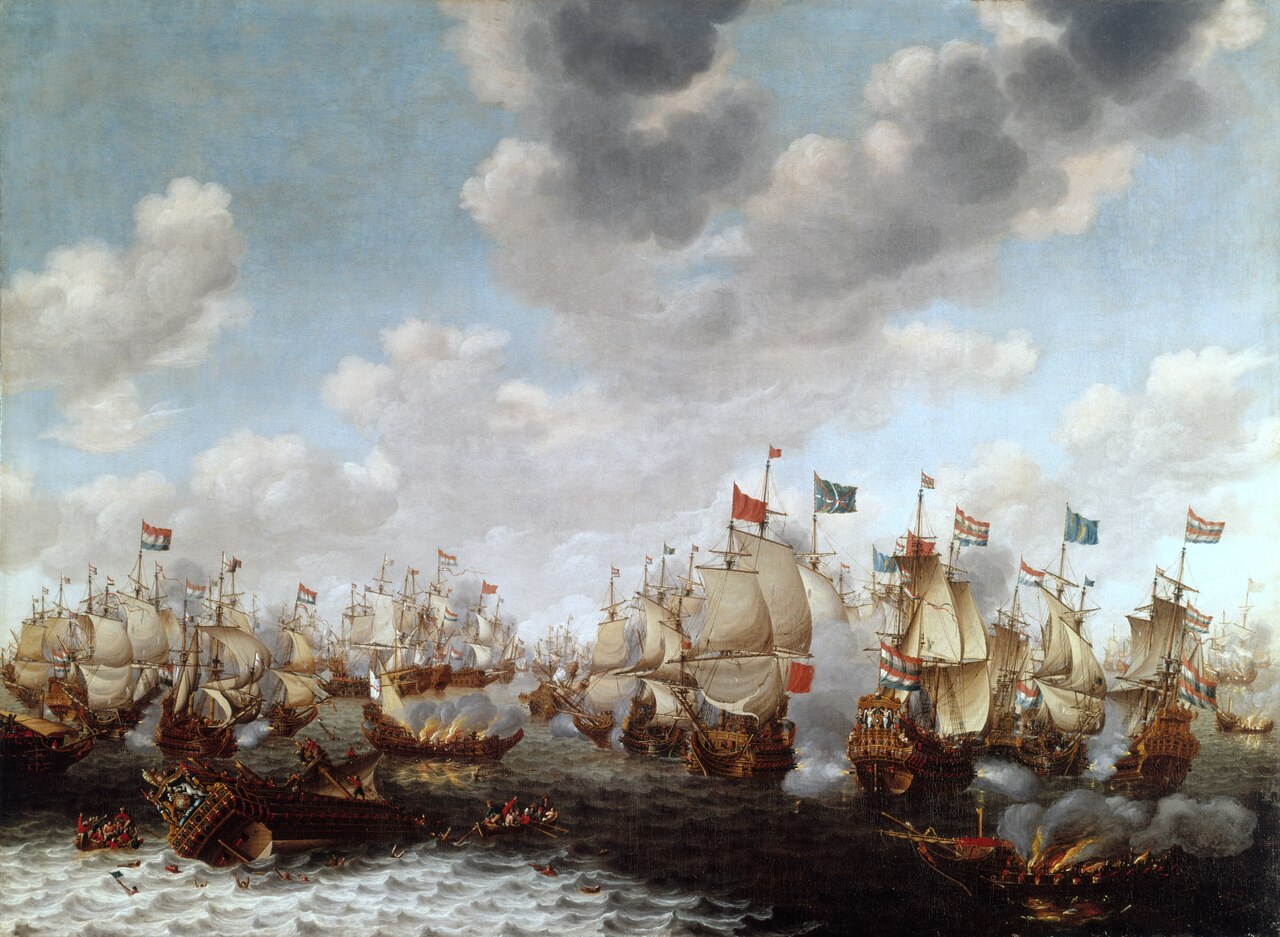
Career and style Van Soest’s career unfolded during the Dutch Golden Age, a period when marine painting evolved from simple ship portraits to complex narratives of naval warfare. His surviving oeuvre concentrates on battle‑pieces, a sub‑genre that demanded a sophisticated grasp of both topographical accuracy and dramatic composition. The artist’s canvases display a keen interest in the interplay of light and atmosphere, often employing a bright, almost luminous sky to heighten the tension of the encounter below.
Stylistically, van Soest aligns with contemporaries such as Jan Abrahamsz. Beerstraaten and Abraham Storck, yet his work is distinguished by a heightened sense of movement. He favoured sweeping diagonal lines that guide the viewer’s eye across the chaos of cannon fire and billowing sails. The palette is dominated by deep blues, slate greys and ochre‑toned hulls, punctuated by the occasional flash of orange‑red from exploding shot. While the artist’s brushwork remains relatively tight in the foreground—allowing for detailed rendering of rigging and weaponry—it becomes looser in the background, suggesting clouds and distant sea.
Signature techniques Van Soest developed a number of recurring techniques that help to identify his hand:
1. Dynamic perspective – He often employed a low, slightly foreshortened viewpoint, placing the viewer at deck level and creating an immersive sense of being amidst the battle. 2. Rigging detail – The ship’s masts, yards and rigging are rendered with meticulous accuracy, reflecting a deep familiarity with contemporary naval architecture. 3. Explosion effects – Small, bright bursts of white and yellow are used to depict cannon smoke and fire, contrasting sharply with the darker hulls and sea. 4. Atmospheric sky – A thin, cloud‑laden sky is a constant backdrop, its subtle colour shifts providing a visual anchor for the tumultuous scene. 5. Narrative annotation – In several works, van Soest includes modest inscriptions or flags that identify the specific engagement, a practice that aids both contemporary patrons and later historians.
Major works
### A Dutch Ship Engaged with Two Spanish Ships (1650) This early dated piece presents a single Dutch vessel locked in combat with two larger Spanish galleons. The composition centres on the Dutch ship’s bow, emphasizing its aggressive thrust forward. Van Soest captures the moment of impact with an explosion of smoke and a spray of sea‑foam, highlighting the skill of the crew as they manoeuvre under fire. The work demonstrates his ability to juxtapose the relative sizes of the ships, underscoring the Dutch’s daring despite being outnumbered.
### The Four Days Fight, 1‑4 June 1666 (1666) One of his most celebrated canvases, this painting records the protracted engagement between the Dutch and English fleets during the Second Anglo‑Dutch War. Van Soest arranges the scene across a broad horizontal plane, allowing multiple ships to be identified. The chaos of battle is conveyed through a dense thicket of masts and a swirling sky filled with smoke. The artist’s attention to the distinctive flag patterns of the opposing sides provides a historical anchor that scholars have used to corroborate the painting’s authenticity.
### Dutch Attack on the Medway, June 1667 (1667) Perhaps the most historically significant of his surviving works, this painting depicts the daring Dutch raid on the English shipyard at Medway. Van Soest portrays the Dutch fleet breaking through the defensive chain, with several ships bearing the Dutch lion flag. The composition captures the moment of triumph, with the Dutch vessels sailing away under a clear sky, while the English ships lie in ruin. The work reflects not only artistic skill but also a patriotic narrative that was popular among Dutch patrons in the aftermath of the raid.
Influence and legacy Although only a limited number of signed works by Pieter Cornelisz van Soest survive, his contribution to the development of marine battle painting is notable. By combining precise ship‑building knowledge with a dramatic visual language, he helped to codify a visual vocabulary that would be employed by later Dutch and Flemish artists. His battle‑scenes served both documentary and propagandistic purposes, reinforcing the Republic’s maritime identity during a period of intense naval rivalry.
The scarcity of his signed paintings has made attribution a challenging task for art historians, leading to occasional misattributions to better‑known marine painters. Nevertheless, scholars recognise the distinct compositional vigor and technical consistency that mark van Soest’s hand. In museum collections, his works are valued for their historical documentation of 17th‑century naval warfare as well as for their aesthetic qualities. Contemporary marine artists continue to study his treatment of light, atmosphere and rigging, ensuring that his legacy endures within the niche of naval art.
Overall, Pieter Cornelisz van Soest occupies a specialised but respected niche within the Dutch Golden Age, bridging the realms of historical record and artistic expression through his vivid depictions of sea battles.
Frequently asked questions
Who was Pieter Cornelisz van Soest?
He was a Dutch marine painter active in the mid‑17th century, best known for his detailed naval battle scenes.
What artistic style or movement is he associated with?
Van Soest worked within the Dutch Golden Age marine painting tradition, focusing on dramatic battle‑pieces.
What are his most famous works?
His most recognised paintings are A Dutch Ship Engaged with Two Spanish Ships (1650), The Four Days Fight (1666) and Dutch Attack on the Medway (1667).
Why is he important in art history?
He helped define the visual language of 17th‑century naval warfare, combining accurate ship details with dynamic composition, influencing later marine artists.
How can I recognise a van Soest painting?
Look for tightly rendered rigging, a low‑level perspective, vivid cannon smoke, and a cloudy sky that frames a chaotic yet precisely detailed naval engagement.