Piet Verhaert
1852 – 1908
In short
Piet Verhaert (1852–1908) was a Belgian painter and etcher renowned for genre scenes, cityscapes and portraits. He taught at the Antwerp Academy and was active in avant‑garde groups such as Les XX and De XIII.
Notable works
_-_Museum_Boijmans_Van_Beuningen.jpg)

Early life Piet Verhaert was born in 1852 in Antwerp, a city with a long artistic tradition. He grew up in a milieu that valued craft and visual culture, and he displayed an early aptitude for drawing. After completing his primary education, Verhaert entered the Royal Academy of Fine Arts in Antwerp, where he received formal training in drawing, composition and the technical aspects of painting and etching.
Career and style Following his studies, Verhaert established himself as a versatile artist, working across a range of subjects that included genre scenes, interiors, cityscapes and portraiture. His style combined a solid academic foundation with a willingness to experiment, reflecting the broader currents of late‑19th‑century Belgian art. While he never adhered to a single manifesto, his work shows affinities with the realist tradition and the emerging Symbolist tendencies of his peers. Verhaert also engaged with decorative design, producing panels for interior decoration that displayed his skill in handling large formats and ornamental motifs.
In the 1880s he became involved with several progressive artist associations that challenged the conservatism of the official salons. He joined Les XX, a group founded in Brussels in 1883, and later De XIII, a similar collective in Antwerp. These memberships placed him in contact with leading avant‑garde artists, encouraging a spirit of experimentation and a commitment to artistic independence.
Verhaert also pursued a teaching career, returning to the Antwerp Academy as a professor. In this role he influenced a new generation of Belgian artists, imparting both technical proficiency and an openness to contemporary artistic developments.
Signature techniques Verhaert’s paintings are characterised by a clear handling of light and a careful observation of everyday life. He frequently employed a muted palette, allowing subtle colour shifts to convey atmosphere. In his etchings, he demonstrated a fine line work that balanced detail with expressive gestural strokes, a technique that gave his prints a lively, narrative quality.
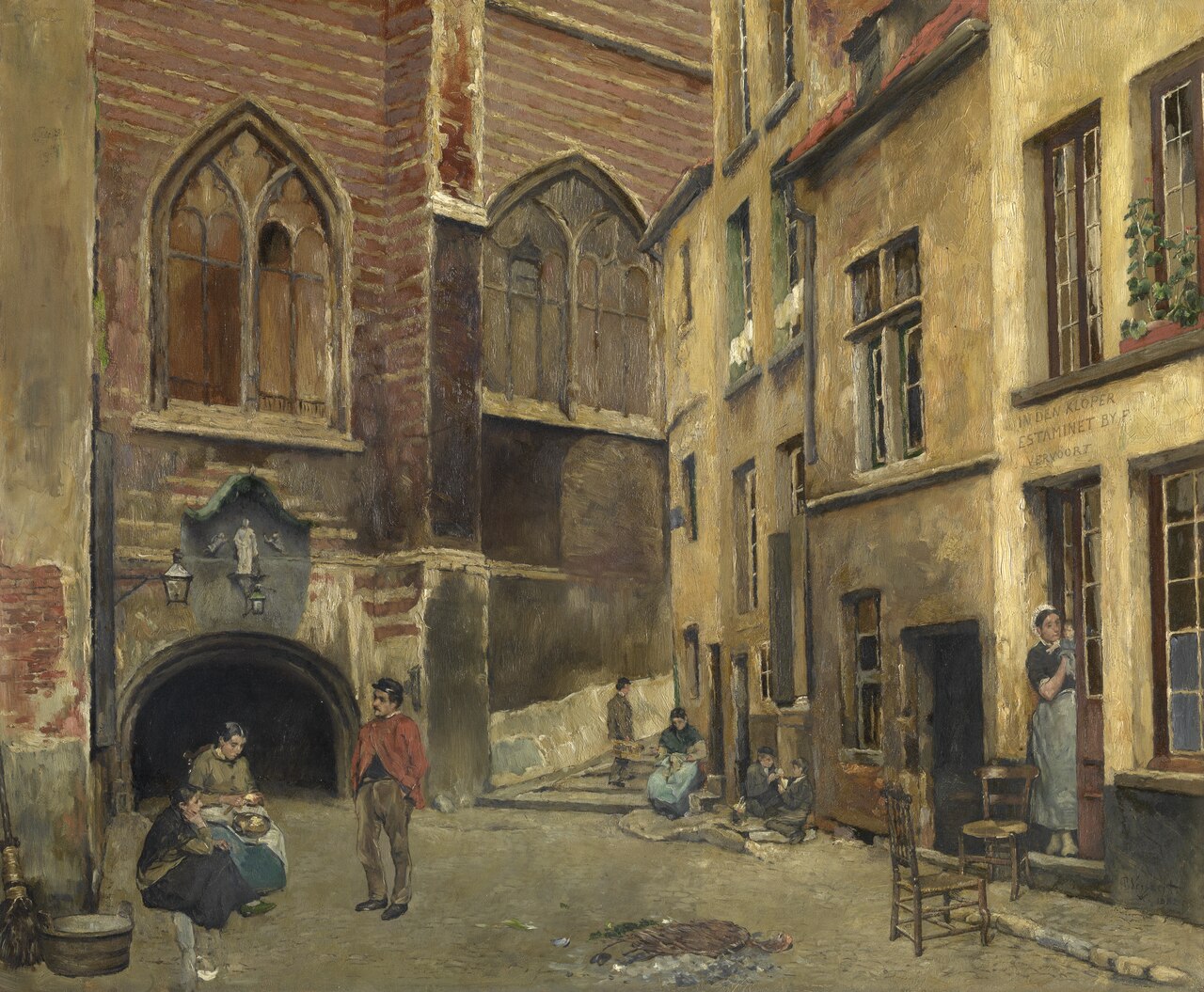
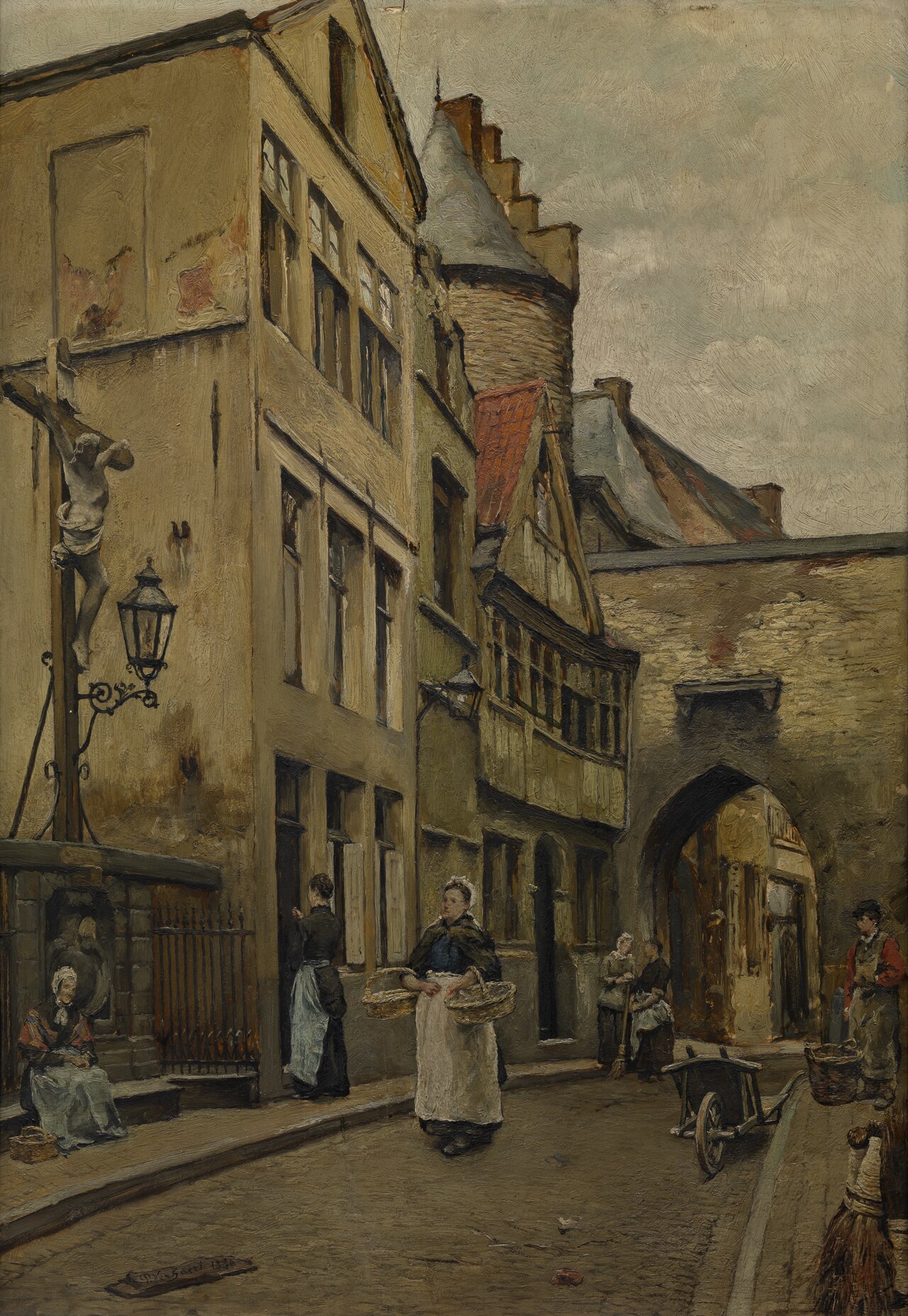
His cityscapes often feature precise architectural rendering combined with an intimate sense of human presence, suggesting both the grandeur of the built environment and the quotidian activities within it. Verhaert also made use of compositional diagonals to guide the viewer’s eye across the canvas, a device evident in many of his interior scenes.
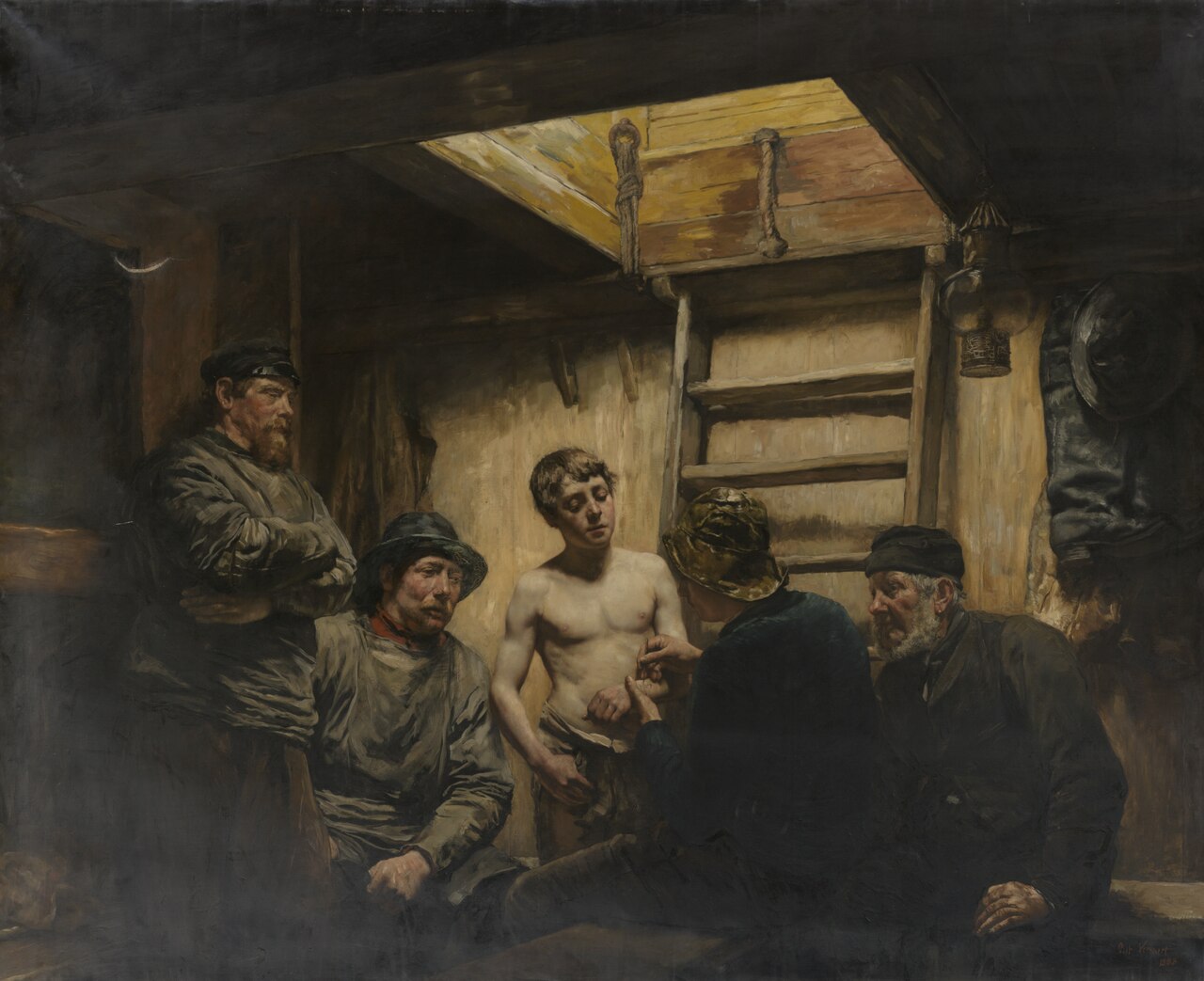
Major works - **Harbour in Goes (1889)** – This oil painting captures the bustling activity of the Dutch port of Goes. Verhaert renders the vessels and dockworkers with a realistic eye, while the sky and water are treated with soft, atmospheric tones that convey the humid, early‑evening light. - **At the Justice's of The Peace (1878)** – An early genre work, this piece depicts a courtroom scene populated by officials and ordinary citizens. Verhaert’s careful study of facial expression and posture reveals his interest in the social dynamics of civic institutions. - **The Seal of the Sailor (1888)** – This work, a decorative panel rather than a conventional canvas, illustrates a maritime emblem surrounded by intricate ornamental motifs. The piece reflects Verhaert’s skill in integrating symbolic imagery with decorative design. - **The Old Antwerp Butcher Hall (1882)** – In this interior scene, Verhaert portrays the historic meat market of Antwerp with a keen eye for architectural detail. The composition balances the solidity of the stone arches with the activity of vendors and shoppers, highlighting his ability to render both space and narrative. - **The Gevangenisbrug (1880)** – Translating to “Prison Bridge,” this painting presents a stark, industrial bridge that spans a canal near a detention facility. Verhaert uses strong linear perspective and a limited colour scheme to emphasise the structure’s imposing presence, while subtle figures suggest the everyday life that continues around it.
These works exemplify Verhaert’s versatility: from bustling harbours to quiet interiors, each painting demonstrates his commitment to observing contemporary life with both technical precision and a subtle atmospheric touch.
Influence and legacy Piet Verhaert’s contribution to Belgian art lies in his synthesis of academic training with the progressive impulses of his time. By participating in Les XX and De XIII, he helped to broaden the acceptance of modernist ideas within the Belgian artistic establishment. His teaching at the Antwerp Academy further extended his impact, as he mentored students who would carry forward his balanced approach to realism and experimentation.
Although he never achieved the international fame of some of his contemporaries, Verhaert’s works remain valuable records of late‑19th‑century urban and social environments. His paintings are held in several Belgian museums and continue to be studied for their nuanced portrayal of everyday scenes and their technical command of light, structure and narrative.
In recent years, art historians have revisited Verhaert’s oeuvre to reassess the role of genre painters in the transition toward modernism. His ability to blend decorative design with fine‑art painting, as well as his involvement in avant‑garde circles, positions him as a bridge figure between the academic tradition and the more experimental currents that would dominate the early twentieth century.
Frequently asked questions
Who was Piet Verhaert?
Piet Verhaert (1852–1908) was a Belgian painter and etcher known for genre scenes, cityscapes and portraits, and later a teacher at the Antwerp Academy.
What style or movement is he associated with?
He worked within a realist framework while engaging with avant‑garde groups such as Les XX and De XIII, blending academic technique with modernist experimentation.
What are his most famous works?
Key works include *Harbour in Goes* (1889), *At the Justice's of The Peace* (1878), *The Seal of the Sailor* (1888), *The Old Antwerp Butcher Hall* (1882) and *The Gevangenisbrug* (1880).
Why does Piet Verhaert matter in art history?
He helped broaden acceptance of progressive ideas in Belgian art, taught at the Antwerp Academy, and left a body of work that documents late‑19th‑century urban life with technical skill.
How can I recognise a Piet Verhaert painting?
Look for precise architectural detail, a muted palette, careful light handling, and narrative scenes of everyday people, often with subtle diagonal compositions.