Pierre-Luc-Charles Ciceri
1782 – 1868
In short
Pierre-Luc-Charles Cicéri (1782–1868) was a French set designer renowned for his work at the Paris Opéra in the early‑19th century, creating influential scenery for ballets and operas such as Manon Lescaut (1830) and Entrée du village des Bains (1831). His innovative use of perspective and atmospheric effects helped shape modern theatrical design.
Notable works


Early life Pierre‑Luc‑Charles Cicéri was born in 1782 in the suburb of Saint‑Cloud, just outside Paris. Little is recorded about his family background, but the proximity to the capital meant that he grew up amid a flourishing artistic environment. His formative years coincided with the tumult of the French Revolution and the subsequent Napoleonic era, a period that saw the rise of public spectacles, opera, and ballet as central components of Parisian cultural life. Cicéri showed an early aptitude for drawing and spatial composition, skills that would later become the foundation of his career as a scenographer.
Career and style Cicéri entered the world of theatrical design in the early 1800s, initially assisting established set painters at the Théâtre de la Porte Saint‑Martin. By 1808 he had secured a position at the Paris Opéra, the pre‑eminent venue for opera and ballet in France. Over the next five decades he rose to become the chief set designer, responsible for the visual world of countless productions. His style blended the grand classicism of the ancien régime with the emerging Romantic sensibility of the 1820s and 1830s. While he never aligned himself with a formal artistic movement, his work reflects the transitional aesthetic that linked Neoclassicism’s disciplined geometry to Romanticism’s emphasis on mood and nature.
Cicéri’s designs were characterised by an elegant balance between architectural precision and atmospheric nuance. He frequently employed painted backdrops that suggested vast natural landscapes, yet he integrated these with meticulously rendered interior spaces—palaces, gardens, or rustic interiors—using linear perspective to create a convincing illusion of depth. This duality allowed audiences to experience both the spectacle of monumental architecture and the intimacy of natural scenery within the same production.
Signature techniques Cicéri’s reputation rested on several technical innovations that were widely adopted by his contemporaries:
1. Advanced perspective systems – He refined the use of one‑point and two‑point perspective on large canvases, enabling seamless transitions between foreground action and distant background. 2. Layered scenery – By constructing multi‑layered set pieces, he could shift lighting and colour to suggest changes in time of day or weather, a technique that added dynamism to static backdrops. 3. Improved stage machinery – Collaborating with engineers, Cicéri helped develop smoother fly‑systems and revolving platforms, allowing rapid scene changes that enhanced narrative flow. 4. Atmospheric effects – He pioneered the use of gauze, painted glass, and subtle colour washes to evoke mist, sunrise, or moonlight, thereby heightening the emotional resonance of the performance. 5. Integration of décor and costume – Recognising the visual dialogue between scenery and costume, he coordinated colour palettes and textures to ensure a cohesive visual experience.
These methods not only elevated the aesthetic quality of productions but also set new standards for efficiency and realism in theatrical design.
Major works Cicéri’s most celebrated productions illustrate the breadth of his talent:
- Manon Lescaut (1830) – Created for a ballet based on the tragic love story, this set combined a sumptuous palace interior with an adjoining garden that dissolved into a mist‑filled lake. The transition between the opulent ballroom and the natural setting showcased Cicéri’s skill in juxtaposing human grandeur with the sublime.
- Entrée du village des Bains (1831) – This scenic design for a popular ballet depicted a lively spa village, complete with winding pathways, steam‑filled baths, and a bustling market square. Cicéri employed layered scenery to convey the bustling atmosphere, while his perspective work gave the illusion of a sprawling village beyond the stage.
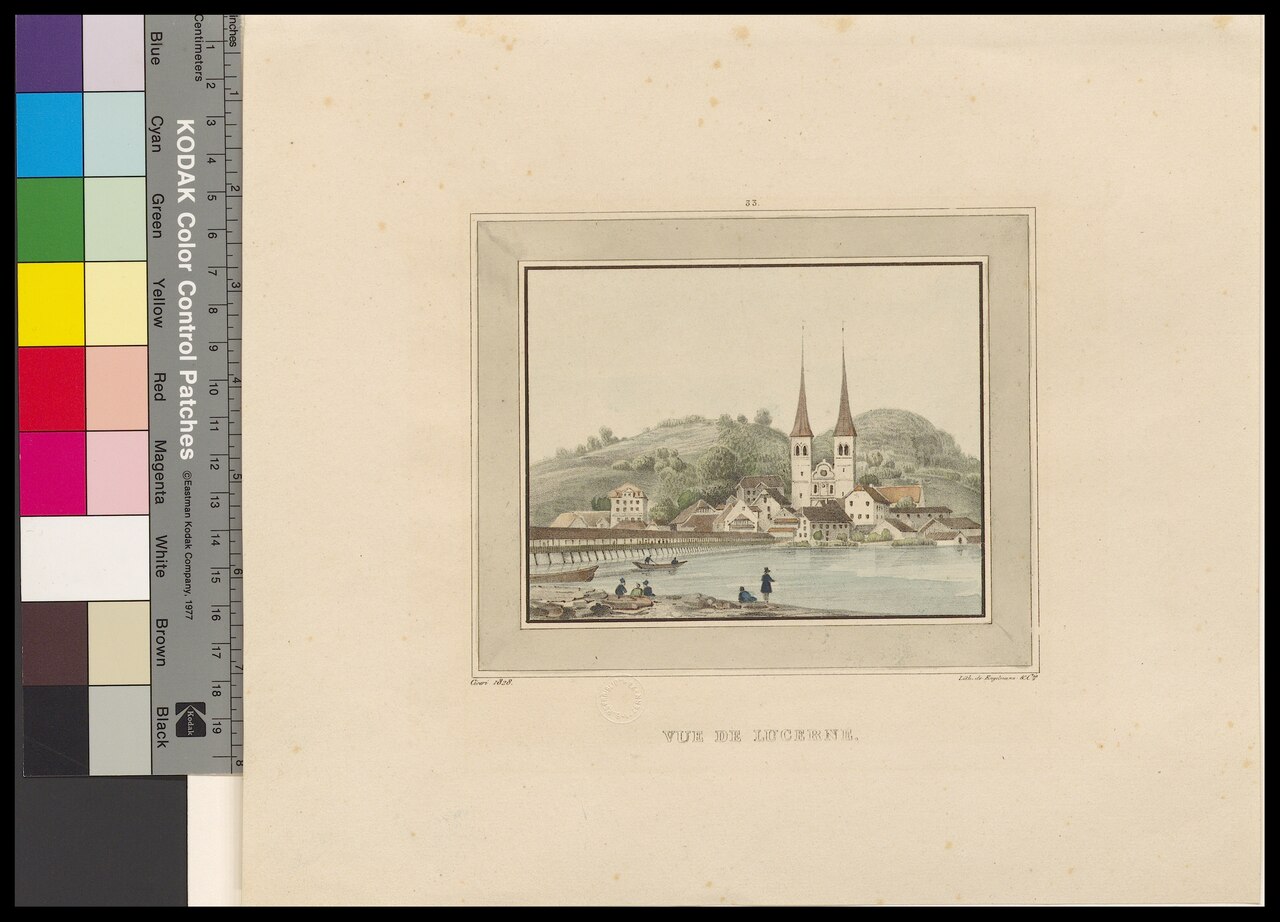
- Vue de Lucerne – A standalone landscape piece, this work captured the Swiss city’s iconic lake and mountains with a delicate balance of colour and light. The set’s atmospheric depth, achieved through delicate gradations of blue and the strategic use of reflective surfaces, became a reference point for later scenic artists seeking to render natural vistas on stage.
In each case, Cicéri’s designs were praised for their ability to transport audiences to distinct locales while maintaining a clear visual focus on the performers.
Influence and legacy Pierre‑Luc‑Charles Cicéri’s contributions resonated far beyond his own productions. By the mid‑19th century, his techniques had become standard practice in European theatres, influencing designers such as Charles‑Louis Cambon and Eugène Lecoq. His emphasis on realistic perspective and atmospheric effects anticipated the later developments of Romantic scenic design and, ultimately, the realism movement in theatre.
Cicéri also mentored a generation of younger scenographers, imparting his knowledge of stage machinery and collaborative workflow. The Opéra’s archives preserve numerous sketches and watercolours attributed to him, offering scholars insight into the creative process behind early‑modern theatrical design.
His legacy is evident in contemporary set design curricula, where his work is studied as a turning point between the static, formulaic sets of the 18th century and the dynamic, immersive environments of the modern stage. Though he died in Saint‑Chéron in 1868, the visual language he established continues to inform the way audiences experience opera and ballet today.
Frequently asked questions
Who was Pierre‑Luc‑Charles Cicéri?
He was a French set designer (1782–1868) best known for his work at the Paris Opéra, where he created influential scenery for ballets and operas.
What artistic style or movement is Cicéri associated with?
Cicéri did not belong to a formal movement, but his work bridges Neoclassicism and early Romanticism, combining classical precision with atmospheric, nature‑inspired effects.
What are his most famous works?
His most recognised productions are the sets for *Manon Lescaut* (1830), *Entrée du village des Bains* (1831) and the landscape design *Vue de Lucerne*.
Why is Cicéri important in art history?
He introduced advanced perspective, layered scenery, and atmospheric lighting to theatrical design, influencing later scenographers and helping to shape modern stagecraft.
How can I recognise a Cicéri set?
Look for carefully rendered perspective, subtle colour washes that suggest mist or sunrise, and a seamless blend of architectural detail with natural landscape.