Pierre-Jacques Volaire
1729 – 1799
In short
Pierre-Jacques Volaire (1729–1799) was a French painter born in Toulon who specialised in marine and landscape scenes, especially dramatic depictions of volcanic eruptions. He worked mainly in Italy, dying in Naples, and is remembered for works such as The Eruption of Vesuvius (1771) and The Shipwreck (1756).
Notable works


Early life Pierre-Jacques Volaire was born in 1729 in Toulon, a port city on the Mediterranean coast of France. Little is recorded about his family background or formal artistic training, but the maritime environment of his hometown would have provided ample visual material for a young artist interested in the sea, ships, and coastal life. In the mid‑18th century, Toulon was a hub of naval activity, and it is likely that Volaire’s earliest sketches were of ships docked in the harbour or fishermen at work along the shoreline. By the time he reached his twenties, Volaire had embarked on a career that would take him beyond the French coast, eventually relocating to Italy where the flourishing artistic circles of Naples offered new patronage opportunities.
Career and style Volaire’s career unfolded during a period when landscape and marine painting were gaining popularity across Europe. Though not formally attached to a specific art movement, his work reflects the broader Enlightenment fascination with nature’s power and the sublime. The artist combined a documentary eye for detail with a dramatic sensibility, portraying natural phenomena—particularly volcanic eruptions—with both accuracy and theatrical flair. His canvases often juxtapose turbulent skies or erupting volcanoes against tranquil sea‑scapes, creating a tension that underscores humanity’s vulnerability before nature. Volaise worked primarily in oil, a medium that allowed him to render the luminous effects of fire, smoke, and moonlight with considerable depth.
Signature techniques A hallmark of Volaire’s technique is his meticulous rendering of atmospheric effects. He achieved luminous skies through layered glazes, building up thin washes of colour to capture the shifting hues of dawn, dusk, or the glow of volcanic ash. In his marine scenes, Volaire employed a restrained palette for the sea, using cool blues and greys to suggest depth, while highlighting the cresting waves with crisp, white impasto that conveys motion. His treatment of light—especially moonlight—relies on subtle contrasts: a cool, silvery illumination on the water’s surface set against darker, shadowed landforms. Volaire also demonstrated a keen eye for architectural detail, rendering lighthouses, harbours, and ship rigging with precision, which lends his compositions a credible sense of place.
Major works **The Eruption of Vesuvius (1771)** – This canvas captures the dramatic moment when Mount Vesuvius expelled a towering column of ash and fire. Volaire places the volcano at the centre of a tumultuous sky, the molten glow reflected in the surrounding clouds. The foreground features a small group of observers, their silhouettes framed against the light, underscoring the human response to the natural disaster.
The Eruption of Mt. Vesuvius (1777) – A later treatment of the same subject, this work shows Volaire’s evolving mastery of atmospheric perspective. The volcanic plume dominates the upper half of the canvas, while the lower portion depicts a coastal village rendered in muted tones, suggesting the lingering impact of the eruption on daily life.
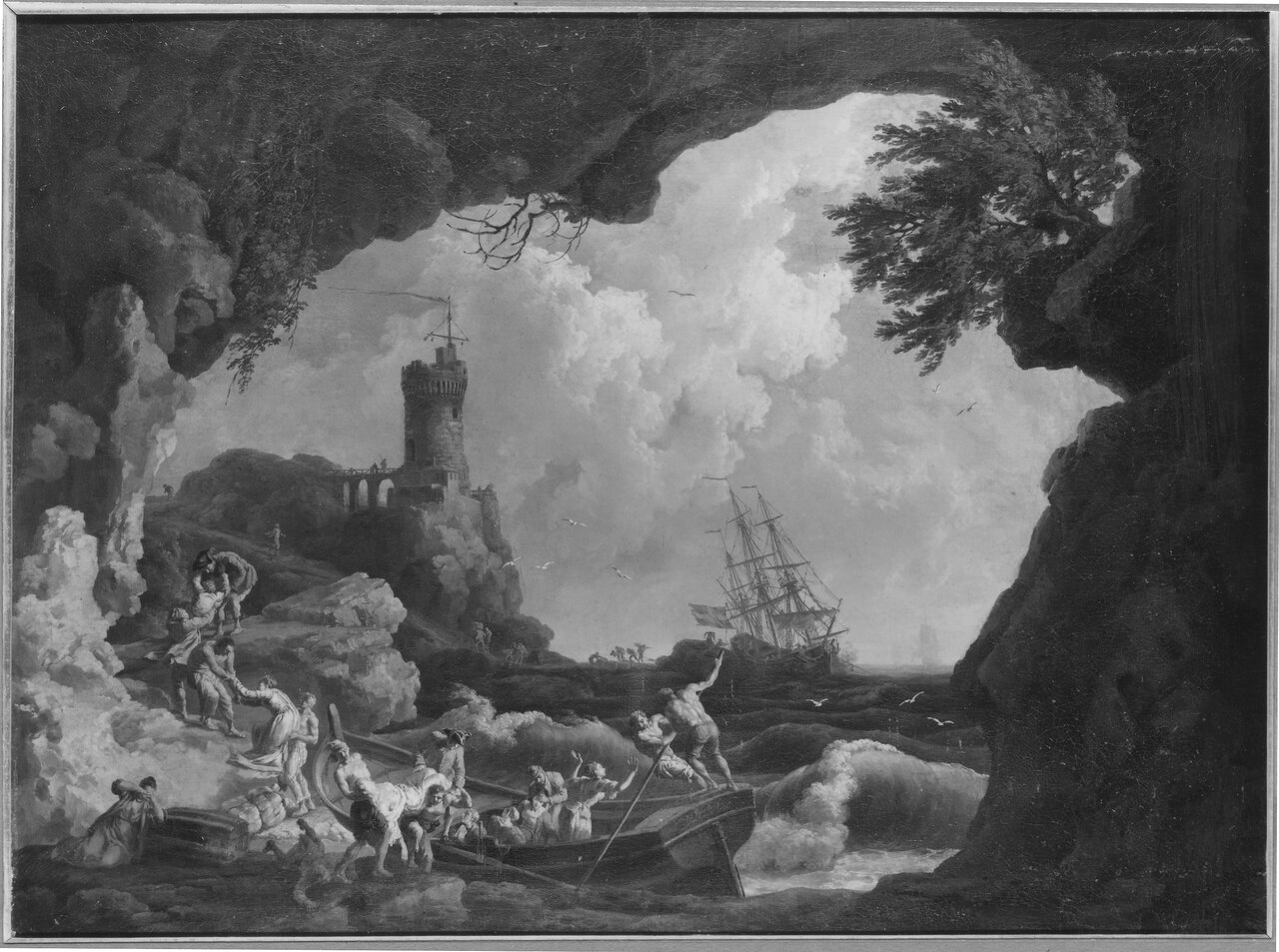
The Shipwreck (1756) – One of Volaire’s earliest known pieces, it portrays a vessel caught in a storm‑tossed sea. The artist’s skill in depicting turbulent water is evident in the swirling foam and the stark contrast between the dark sky and the illuminated wreckage. The work conveys both the peril of seafaring and the resilience of the human spirit.
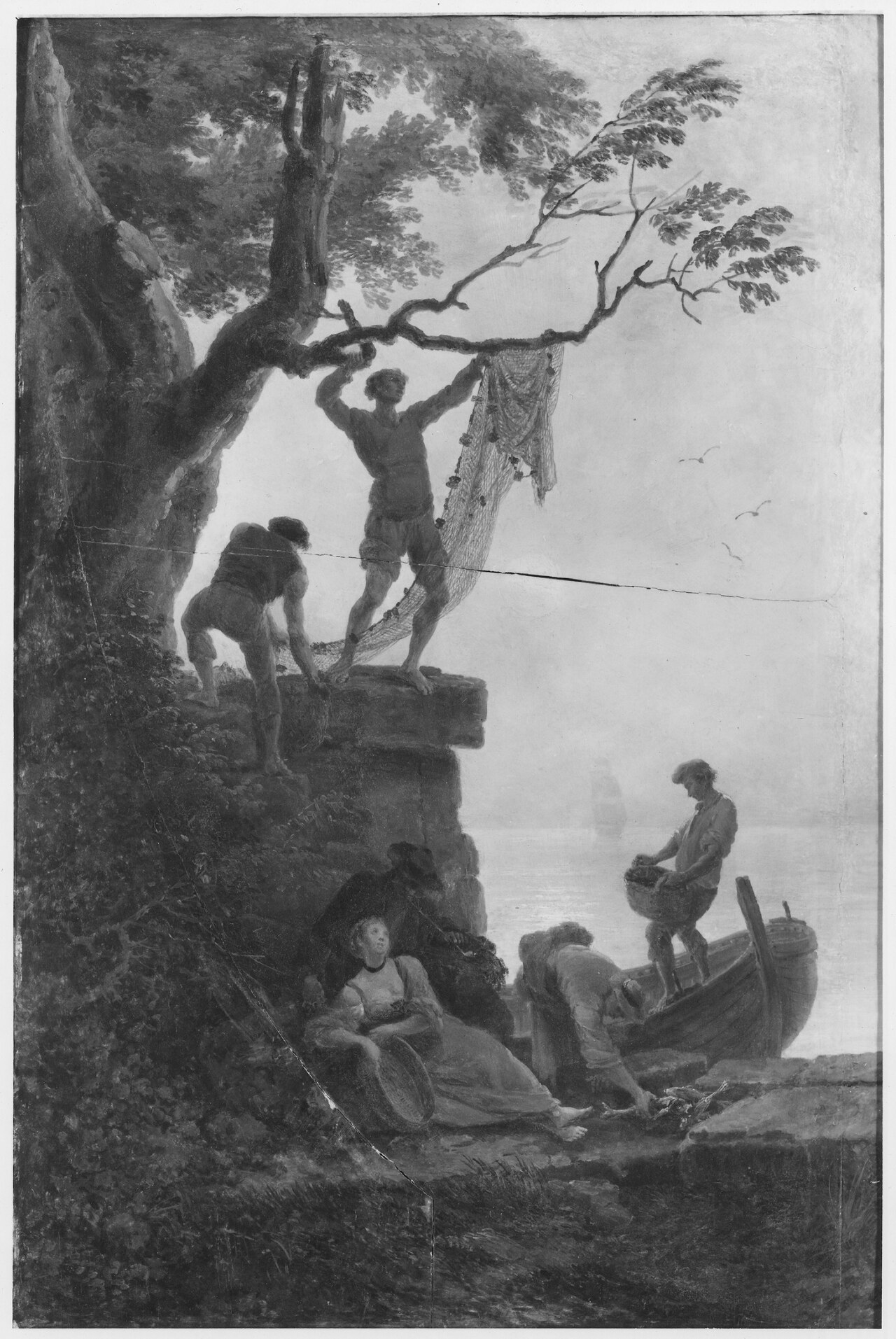
Fishermen at the Shore – This composition shifts focus from disaster to everyday labour. Volaire captures a group of fishermen mending nets and preparing boats at dawn. The soft light of sunrise bathes the scene, and the delicate handling of water and sky creates a tranquil atmosphere that highlights the rhythm of coastal life.
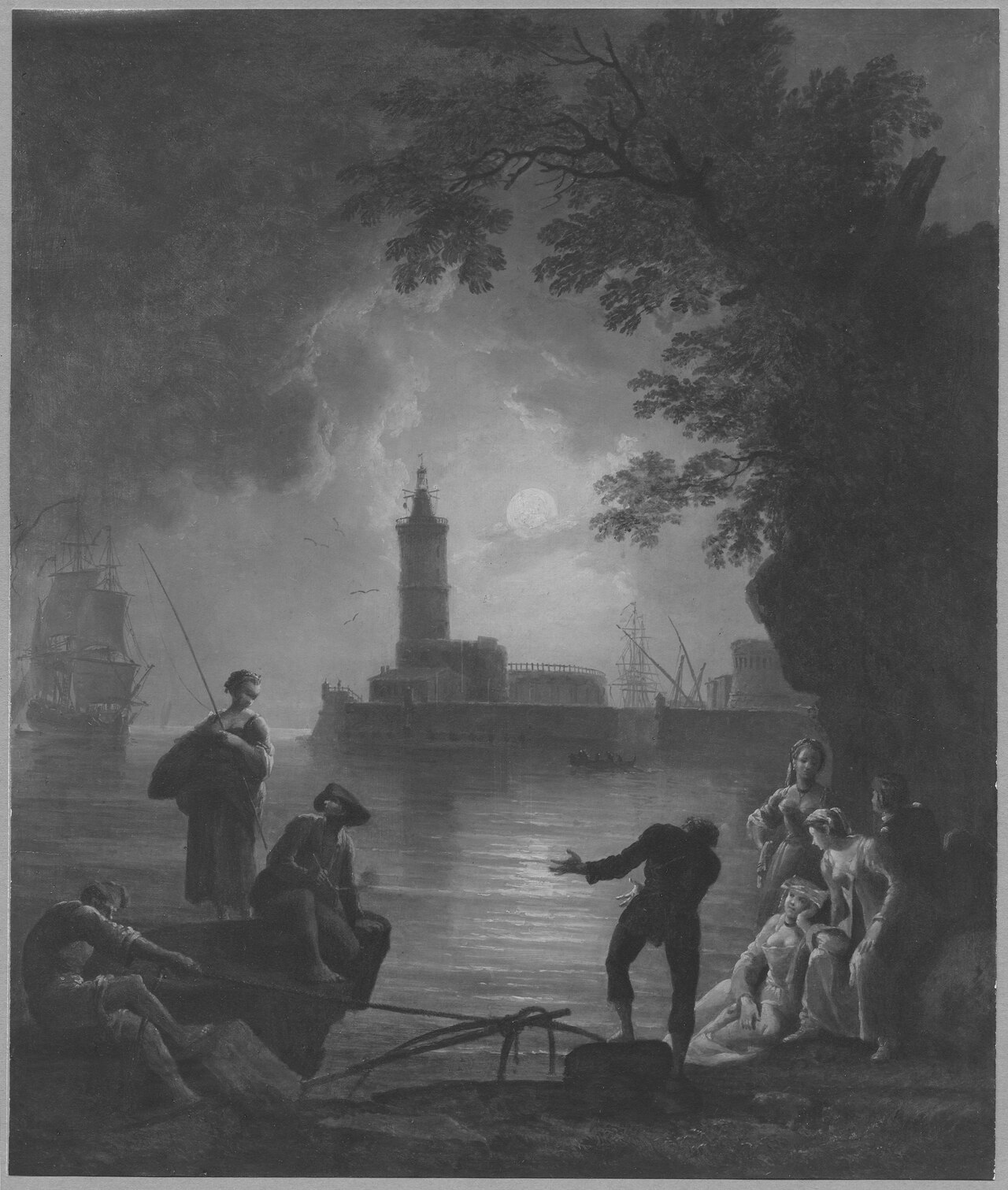
Coast with a Lighthouse in Moonlight – In this nocturnal scene, Volaire demonstrates his mastery of moonlit illumination. A solitary lighthouse stands as a beacon against a dark sea, its light rendered with a subtle, silvery sheen. The composition balances the quiet stillness of the night with the underlying sense of navigation and safety that lighthouses provided to sailors.
Influence and legacy Although Pierre-Jacques Volaire has not been widely cited in mainstream art histories, his work contributes to the broader narrative of 18th‑century European landscape painting. By documenting volcanic eruptions and maritime hazards with both scientific accuracy and emotional intensity, Volaire anticipated later Romantic artists who explored the sublime in nature. His paintings also serve as visual records of the Mediterranean coast in the late Enlightenment, offering scholars insight into contemporary perceptions of natural disaster and seafaring life. Contemporary collectors of French and Italian Baroque and Rococo art value Volaire’s canvases for their technical proficiency and evocative storytelling. In modern museum contexts, his works are often displayed alongside those of contemporaries who examined the interaction between humanity and the natural world, underscoring his enduring relevance to discussions of environmental representation in art.
Volaire’s death in Naples in 1799 marked the end of a career that spanned several decades and geographic regions. While he did not found a distinct school, his paintings continue to be studied for their contribution to the visual language of volcanic and marine subjects, and they remain a testament to the capacity of art to capture both the beauty and the terror of the natural environment.
Frequently asked questions
Who was Pierre-Jacques Volaire?
Pierre-Jacques Volaire (1729–1799) was a French painter born in Toulon, known for his marine and landscape scenes, especially dramatic depictions of volcanic eruptions, and he died in Naples.
What style or movement is Volaire associated with?
Volaire is not linked to a specific art movement; his work reflects the Enlightenment interest in the sublime, combining detailed observation with dramatic, atmospheric effects.
What are his most famous works?
His best‑known paintings include The Eruption of Vesuvius (1771), The Eruption of Mt. Vesuvius (1777), The Shipwreck (1756), Fishermen at the Shore, and Coast with a Lighthouse in Moonlight.
Why does Volaire matter in art history?
He contributed to the 18th‑century tradition of landscape painting, documenting natural disasters with both scientific and emotional depth, and his works anticipate Romantic explorations of the sublime.
How can I recognise a Volaire painting?
Look for meticulous marine detail, luminous atmospheric effects—especially moonlight or volcanic glow—and a balanced composition that juxtaposes dramatic natural phenomena with calm, everyday scenes.