Pier Jacopo Alari Bonacolsi
1460 – 1528
In short
Pier Jacopo Alari Bonacolsi (1460–1528), known as L'Antico, was an Italian Renaissance sculptor celebrated for his finely detailed small bronze statues that echo classical antiquity. His work, characterised by gilt accents and silver‑inlaid eyes, bridges the Renaissance fascination with ancient Greek and Roman art.
Notable works

,_about_1520,_Getty_Center.jpg)

Early life Pier Jacopo Alari Bonacolsi was born in 1460 in Mantua, a city that at the time was a vibrant centre of courtly culture under the Gonzaga family. Details of his family background are scarce, and his nationality is formally recorded as unknown, reflecting the fluid identities of artists who often moved between city‑states. From an early age he would have been exposed to the flourishing humanist environment of the Mantuan court, where classical learning and artistic patronage were intertwined. This milieu provided the intellectual framework that later shaped his fascination with the antique.
Career and style Bonacolsi emerged as a sculptor in the late 15th century, adopting the nickname *L'Antico* (or simply *Antico* in English) for his refined interpretation of classical models. Working primarily in bronze, he produced diminutive statues that were intended for private collections rather than public monuments. His style is marked by a calm, measured classicism that eschews the dramatic dynamism of some of his contemporaries in favour of a restrained elegance. The sculptures often display a smooth, almost porcelain‑like surface, punctuated by gilt highlights that accentuate hair, armor, or drapery, and by eyes set with silver inlays, lending a lifelike presence to the figures.
The artist’s approach aligns with the broader Renaissance revival of antiquity, yet his works possess a distinctive intimacy. By scaling down monumental subjects to tabletop size, he allowed collectors to engage with the ancient world in a personal manner. This practice also reflected the growing market for small, portable bronzes among the aristocracy of northern Italy.
Signature techniques Bonacolsi’s technical repertoire combined traditional lost‑wax casting with meticulous hand‑finishing. After the bronze was cast, he would polish the surface to a high sheen before applying thin layers of gold leaf or gilded paint to select details. The gold accents serve both decorative and symbolic purposes, emphasising the heroic or divine attributes of the subject. Silver inlays were set into the eyes, a technique that required precise carving of the bronze and careful soldering of the metal inserts. These elements together create a vivid contrast between the warm bronze, the cool silver, and the bright gold, enhancing the three‑dimensional effect.
In addition to his material choices, Antico’s compositional choices often mirror classical prototypes. He favoured balanced poses, clear contrapposto, and a restrained gesture that conveys both movement and stillness. The sculptor also paid close attention to surface texture, rendering hair, musculature, and drapery with a subtle realism that suggests a deep study of ancient marble statues.
Major works Among the surviving bronzes attributed to Bonacolsi, several stand out for their exemplary craftsmanship and historical significance:
- Hercules and Antaeus (1500) – This bronze captures the mythic struggle between the hero Hercules and the giant Antaeus. The figures are rendered in a compact format, with Hercules poised to lift Antaeus, whose body is depicted with a muscular tension that conveys the moment of defeat. Gilded details accent the hero’s loincloth and the strap of Antaeus’ armor, while the eyes are set with silver, giving the scene a vivid immediacy.
- Bust of a Young Man (1520) – A later work, this portrait bust reflects Antico’s continued interest in classical portraiture. The young man is depicted with an idealised yet individualized face, a smooth forehead, and a subtle smile. The hair is rendered in fine curls, highlighted with gilt touches that catch the light. The silver‑inlaid eyes lend a penetrating gaze that invites close inspection.
- Paris (1502) – This small bronze represents the Trojan prince Paris at the moment of choosing the golden apple. The figure is rendered with a relaxed posture, a delicate balance of arms, and a modest drapery. Gold accents on the hair and the apple itself underscore the narrative’s connection to the mythic past.
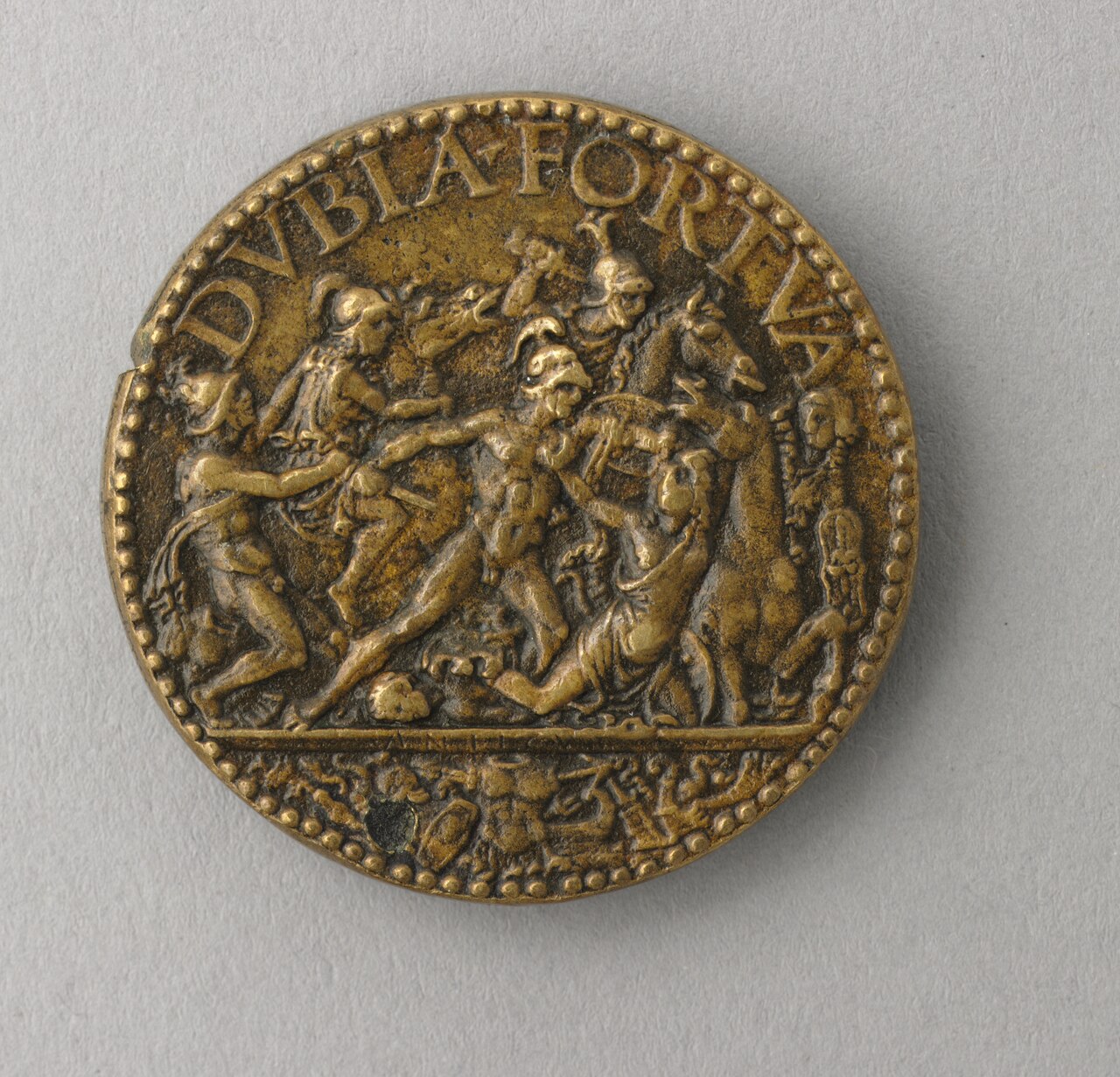
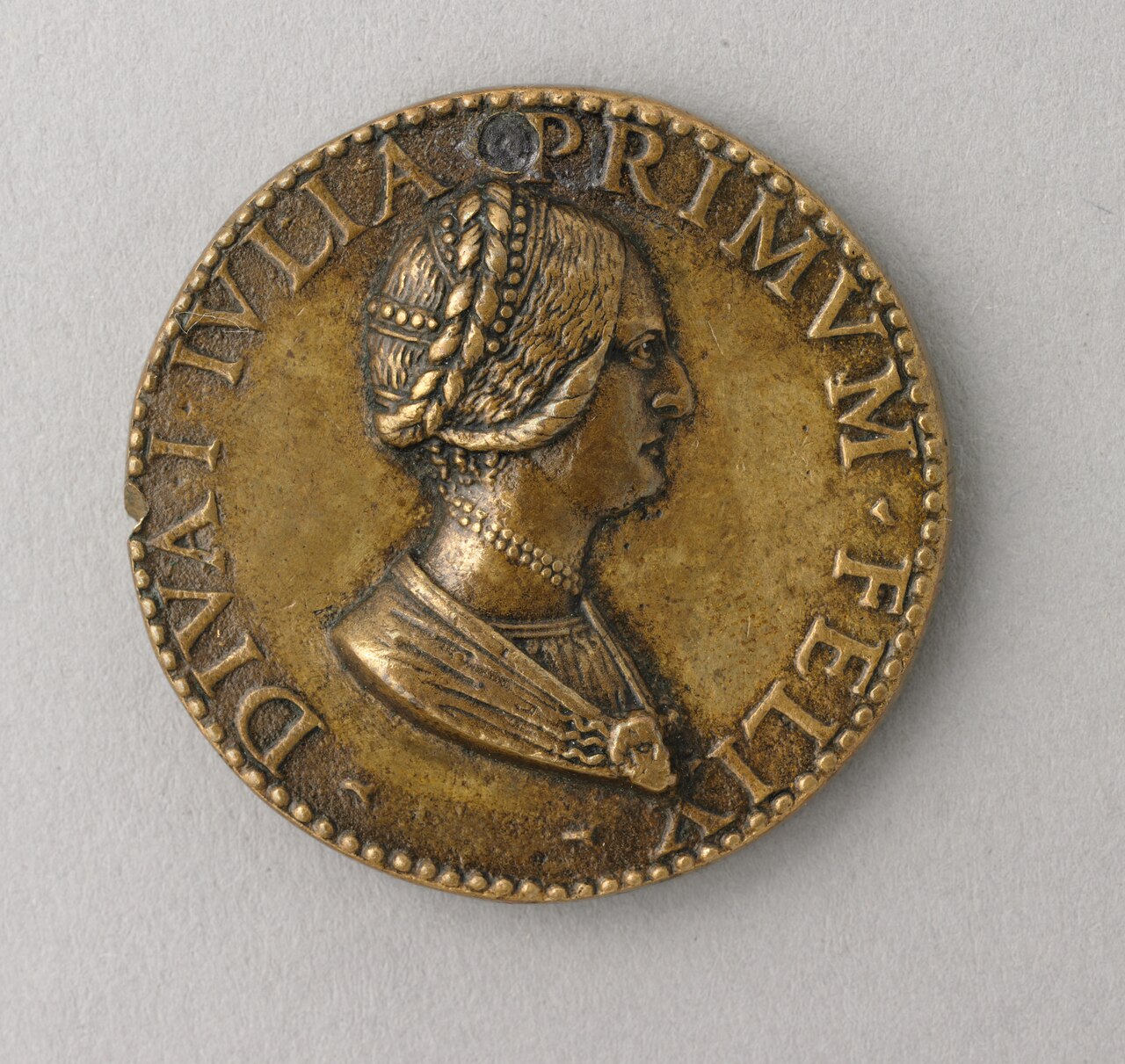
- Dubia Fortuna (reverse) and Diva Julia (obverse) (1490) – These paired bronzes illustrate Antico’s practice of creating two‑sided works that could be displayed together. *Dubia Fortuna* on the reverse side depicts a personification of fortune, while the obverse *Diva Julia* presents a classical goddess figure. Both sides are treated with the same meticulous attention to surface, gilt detailing, and silver‑inlaid eyes, demonstrating the artist’s ability to convey distinct characters within a single medium.
These pieces, together with other surviving bronzes, reveal a consistent commitment to the classical idiom, while also showcasing Antico’s personal refinements that set his work apart from that of his peers.
Influence and legacy Pier Jacopo Alari Bonacolsi’s impact on the Renaissance art world extends beyond his own modest oeuvre. By producing small bronzes that married classical form with contemporary taste, he helped to popularise the collection of antiquarian objects among Italian aristocracy. His meticulous techniques inspired later sculptors who sought to emulate the luminous quality of his gilded surfaces and the striking realism of his silver‑inlaid eyes.
Moreover, Antico’s work contributed to the broader cultural dialogue that positioned the Renaissance as a revival of ancient art, not merely a reinterpretation. The clarity of his classicism offered a model for how artists could engage with antiquity without resorting to mere imitation. Modern scholars often cite his bronzes when discussing the transmission of classical aesthetics into the early modern period, and his pieces continue to be displayed in major museums, where they serve as exemplars of the refined craftsmanship of the Italian Renaissance.
In sum, Bonacolsi’s legacy lies in his ability to distil the grandeur of ancient sculpture into intimate, portable objects that retain a powerful visual presence. His works remain a testament to the Renaissance’s reverence for the past and its capacity for technical innovation.
Frequently asked questions
Who was Pier Jacopo Alari Bonacolsi?
He was a 15th‑ and 16th‑century Italian Renaissance sculptor, known as L'Antico, celebrated for his finely detailed small bronze statues that echo classical antiquity.
What artistic style or movement is he associated with?
Bonacolsi worked within the Renaissance, producing a restrained classicism that blends ancient Greek and Roman motifs with contemporary gilding and silver‑inlaid eyes.
What are his most famous works?
His best‑known pieces include *Hercules and Antaeus* (1500), *Bust of a Young Man* (1520), *Paris* (1502), and the paired bronzes *Dubia Fortuna* (reverse) and *Diva Julia* (obverse) (1490).
Why is he important in art history?
He pioneered the production of small, collectible bronzes that combined classical form with luxurious finishes, influencing later artists and shaping the Renaissance fascination with antiquity.
How can I recognise a work by Bonacolsi?
Look for diminutive bronze figures with smooth surfaces, gilded accents on hair or armor, and eyes set with silver inlays—features that together create a luminous, classicising appearance.