Philippe Wolfers
1858 – 1929
In short
Philippe Wolfers (1858–1929) was a Belgian silversmith, jeweller, sculptor and designer whose work epitomised Art Nouveau and later transitioned to Art Deco. He is renowned for his exquisite ‘exemplaire unique’ jewellery and a range of decorative objects in precious materials.
Notable works
,_KBS-FRB.jpg)
_02.jpg)
.jpg)
Early life Philippe Wolfes was born in 1858 in Brussels, the capital of Belgium. He grew up in a family with commercial ties to the metal‑working trades, which gave him early exposure to the craft of silversmithing. After completing his basic education, Wolfers entered an apprenticeship with a local silversmith workshop, where he acquired the technical skills that would underpin his later artistic career. By the late 1870s he was already producing small metal objects, and his talent attracted the attention of the burgeoning Belgian design community.
Career and style In the 1880s Wolfers established his own studio in Brussels, initially focusing on traditional silverware and medals. The rise of Art Nouveau across Europe soon influenced his aesthetic, and he began to experiment with sinuous lines, natural motifs and the integration of precious stones. Throughout the 1890s his output shifted toward a more avant‑garde direction, placing him among the leading Belgian proponents of the style. Wolfers was particularly noted for his willingness to combine materials—silver, bronze, ivory, marble, glass and faience—creating objects that were simultaneously decorative and sculptural.
The turn of the century saw Wolfers’ work become increasingly refined. While his contemporaries such as René Lalique were producing larger volumes of jewellery, Wolfers concentrated on a limited series of one‑of‑a‑kind pieces, known as the *exemplaire unique* series. These items were characterised by meticulous hand‑crafting, the use of high‑quality gemstones and an emphasis on artistic expression rather than commercial mass production. In the 1910s and 1920s his style gradually incorporated the geometric simplifications of Art Deco, reflecting broader shifts in European design. Even as his aesthetic evolved, Wolfers retained a commitment to superb material quality and a sculptural sensibility that distinguished his work from that of many peers.
Signature techniques Wolfers’ hallmark was his mastery of mixed‑media techniques. In metalwork he combined repoussé, chasing and casting to achieve intricate surface textures. He often employed enamel in subtle hues to accentuate organic forms, particularly in his jewellery. For larger decorative objects he used bronze casting with patination to highlight depth and movement. Ivory carving and marble relief were also integral to his practice, allowing him to explore naturalistic motifs with a tactile richness. In glass and faience, Wolfers collaborated with specialised ateliers, ensuring that the colour palette and finish matched his overall design vision. The consistency of fine material, hand‑finished detail and a fluid, nature‑inspired vocabulary became recognizable features of his oeuvre.
Major works Among Wolfers’ most celebrated pieces are several sculptural jewellery and decorative objects produced between 1897 and 1902. **Civilisation et Barbarie (1897)** juxtaposes a refined, classical figure with a more primitive, animalistic form, embodying the tension between cultured society and untamed nature. **Pavots Bats and Poppies (1898)** presents a striking arrangement of poppy flowers interwoven with stylised bat wings, rendered in enamel‑filled bronze and set with garnets, exemplifying his skill in marrying flora and fauna.
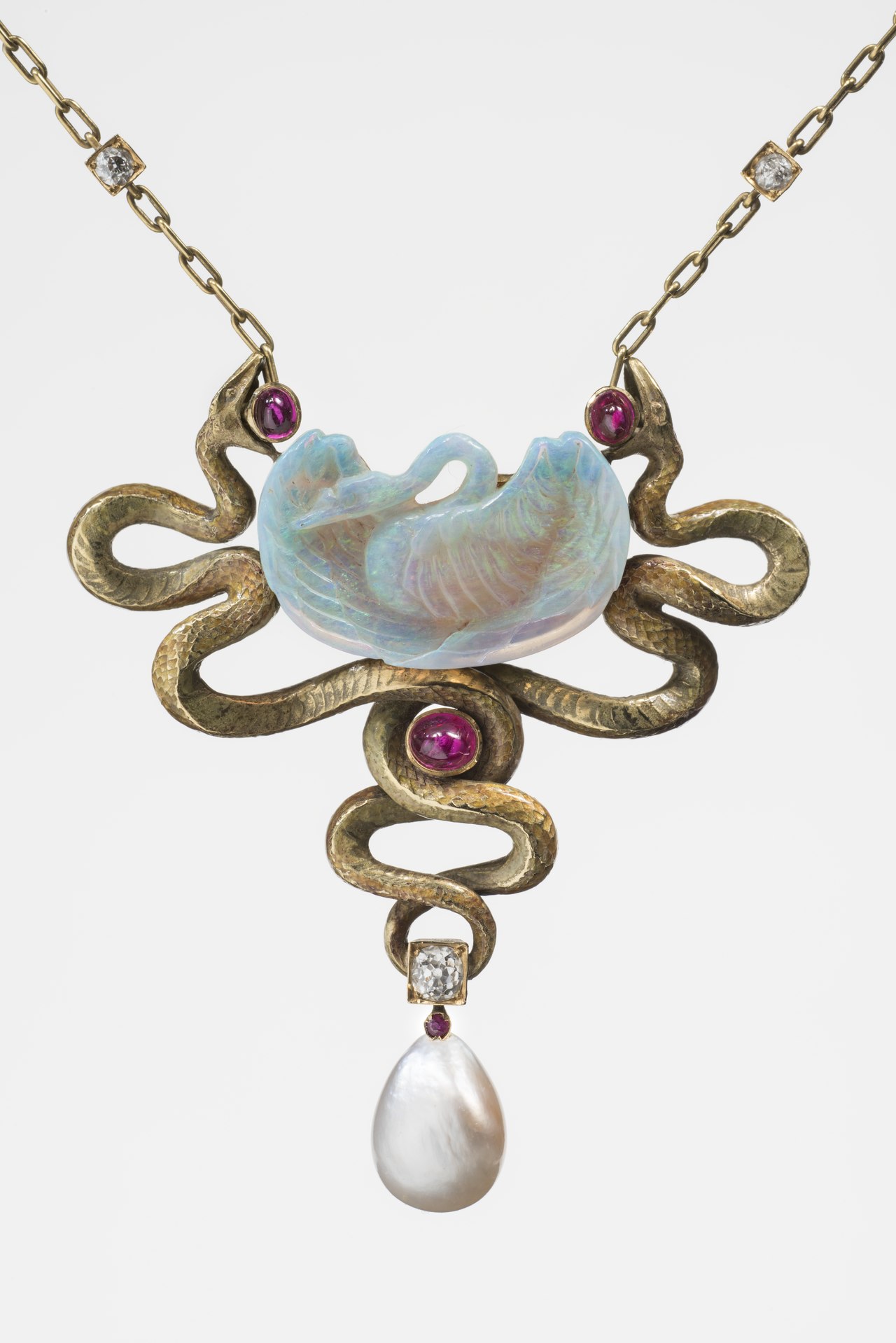
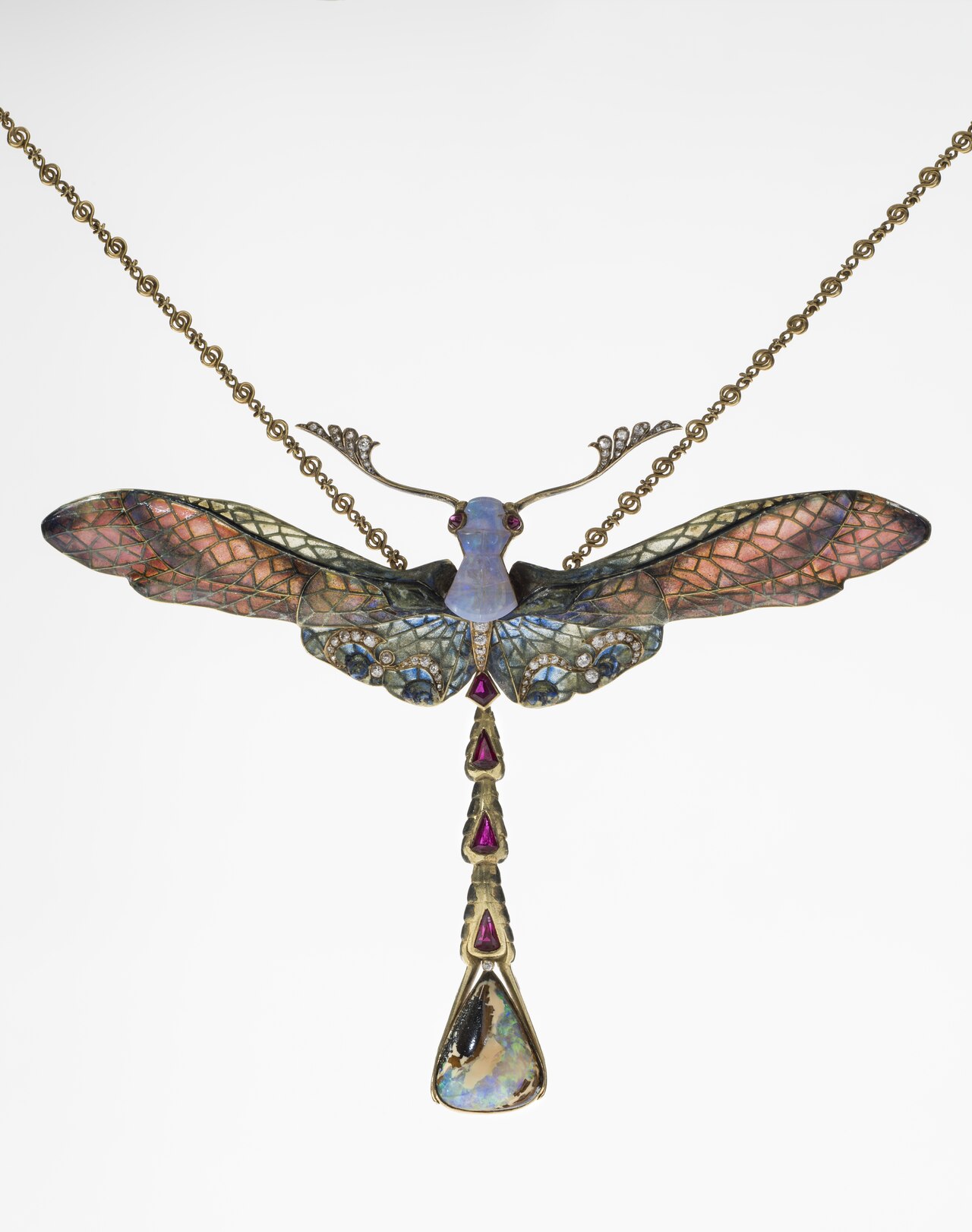
Birds and Irises (1899) showcases delicate bird motifs perched among irises, executed in silver with enamel accents and a cascade of diamonds, highlighting his ability to render lightness and movement. The companion piece Swan and Snakes (1899) contrasts the elegance of a swan with the sinuous threat of snakes, a study in opposites that uses contrasting finishes to emphasise tension. Finally, Dragonfly (1902) captures the fleeting grace of an insect in flight, employing a combination of gold, opal and fine engraving to convey transparency and speed. Each of these works reflects Wolfers’ fascination with natural forms, his technical virtuosity and his commitment to creating objects that transcend mere ornamentation.
Influence and legacy Philippe Wolfers occupies a distinctive place in the history of decorative arts. Although less prolific than some French contemporaries, his *exemplaire unique* jewellery set a benchmark for artistic jewellery that continues to inspire contemporary designers. His integration of multiple materials and his sculptural approach to functional objects anticipated later trends in modernist design, particularly the emphasis on craftsmanship seen in the Bauhaus and later Art Deco movements.
Wolfers’ works are held in major museum collections, including the Musée des Arts Décoratifs in Paris and the Royal Museums of Fine Arts of Belgium, where they are studied for their technical excellence and aesthetic innovation. Collectors prize his pieces for their rarity and the seamless blend of artistry and material mastery. In academic circles, Wolfers is often cited as a key figure who helped bridge the ornamental exuberance of Art Nouveau with the streamlined elegance of Art Deco, making his career a valuable case study in the evolution of early‑20th‑century design.
Today, exhibitions of Art Nouveau and Art Deco frequently feature Wolfers’ creations, and his name appears in auction catalogues as a mark of high quality. His legacy endures not only through the objects he left behind but also through the influence he exerted on subsequent generations of jewellers, silversmiths and decorative artists who seek to combine artistic vision with the highest standards of craft.
Frequently asked questions
Who was Philippe Wolfers?
Philippe Wolfers (1858–1929) was a Belgian silversmith, jeweller, sculptor and designer, best known for his Art Nouveau jewellery and decorative objects.
What artistic style or movement is he associated with?
His mature work belongs to Art Nouveau, and in his later years he embraced the emerging Art Deco style.
What are his most famous works?
Key pieces include *Civilisation et Barbarie* (1897), *Pavots Bats and Poppies* (1898), *Birds and Irises* (1899), *Swan and Snakes* (1899) and *Dragonfly* (1902).
Why is Philippe Wolfers important in art history?
He set a high standard for artistic jewellery through his *exemplaire unique* series and pioneered a sculptural approach to decorative objects, influencing the transition from Art Nouveau to Art Deco.
How can I recognise a genuine Philippe Wolfers piece?
Look for meticulous hand‑finished detail, a blend of precious metals with enamel or gemstones, natural motifs rendered in flowing lines, and a signature emphasis on material quality that distinguishes his work.