Peter Wtewael
1596 – 1660
In short
Peter Wtewael (1596–1660) was a Dutch Golden Age painter from Utrecht, known for religious and mythological scenes such as The Adoration of the Shepherds and Mercury, Io and Argus.
Notable works


_-_Kristus_i_Emmaus_-_NG.M.00408_-_National_Museum_of_Art,_Architecture_and_Design.jpg)
Early life Peter Wtewael was born in 1596 in the city of Utrecht, a vibrant centre of artistic activity in the Dutch Republic. Little is recorded about his family background, but Utrecht’s thriving workshop environment would have provided ample opportunity for an aspiring painter to apprentice with established masters. The city’s artistic community was strongly influenced by both Flemish Baroque and the emerging Dutch realism, a blend that later shaped Wtewael’s own visual language.
Career and style Wtewael began his professional career in the early seventeenth century, a period when Utrecht was transitioning from a predominantly religious art market to one that also embraced secular subjects. He produced works for both ecclesiastical patrons and private collectors, navigating the shifting tastes of a post‑Reformation audience. His paintings display a synthesis of the dramatic chiaroscuro associated with Caravaggio’s followers in Utrecht and the meticulous detail favoured by Dutch genre painters. This hybrid approach placed him among the lesser‑documented but stylistically significant artists who bridged the gap between the highly emotive Baroque and the more restrained Dutch classicism.
Signature techniques Wtewael’s technique is characterised by several recurring elements: - **Controlled lighting**: He often employed a single, strong light source to model figures, creating a sense of three‑dimensionality while also directing the viewer’s focus toward the narrative centre. - **Fine brushwork**: Close inspection of his canvases reveals a delicate handling of textures, especially in fabrics and foliage, which adds realism without sacrificing the overall compositional harmony. - **Narrative clarity**: Whether depicting biblical episodes or mythological tales, Wtewael arranged his figures in clear, readable groups, allowing the story to unfold without visual confusion. - **Colour palette**: His palette is dominated by earth tones punctuated with richer reds and blues, a choice that underscores both the solemnity of religious subjects and the vibrancy of mythic scenes.
Major works Wtewael’s extant oeuvre includes a handful of works that exemplify his range:
- The Adoration of the Shepherds (1625) – This painting captures the intimate moment of the nativity with a modest shepherd cohort gathered around the infant Christ. The composition balances a soft, golden illumination with meticulous attention to the shepherds’ weathered garments, illustrating Wtewael’s skill in rendering both sacred reverence and human texture.
- Mercury, Io and Argus (1620) – A mythological tableau that demonstrates the artist’s facility with classical narratives. Mercury, poised with his caduceus, prepares to intervene in the dramatic encounter between Io and the watchful Argus. The work’s dynamic pose and controlled lighting reflect the influence of Utrecht’s Caravaggisti while retaining a distinctly Dutch compositional order.
- Kristus i Emmaus (1620) – Also known as the *Christ in Emmaus*, this piece presents the biblical moment when the resurrected Christ reveals himself to his disciples at a dinner table. Wtewael’s handling of the domestic interior, the subtle gestures of the figures, and the interplay of candlelight showcase his capacity to convey spiritual revelation within an everyday setting.
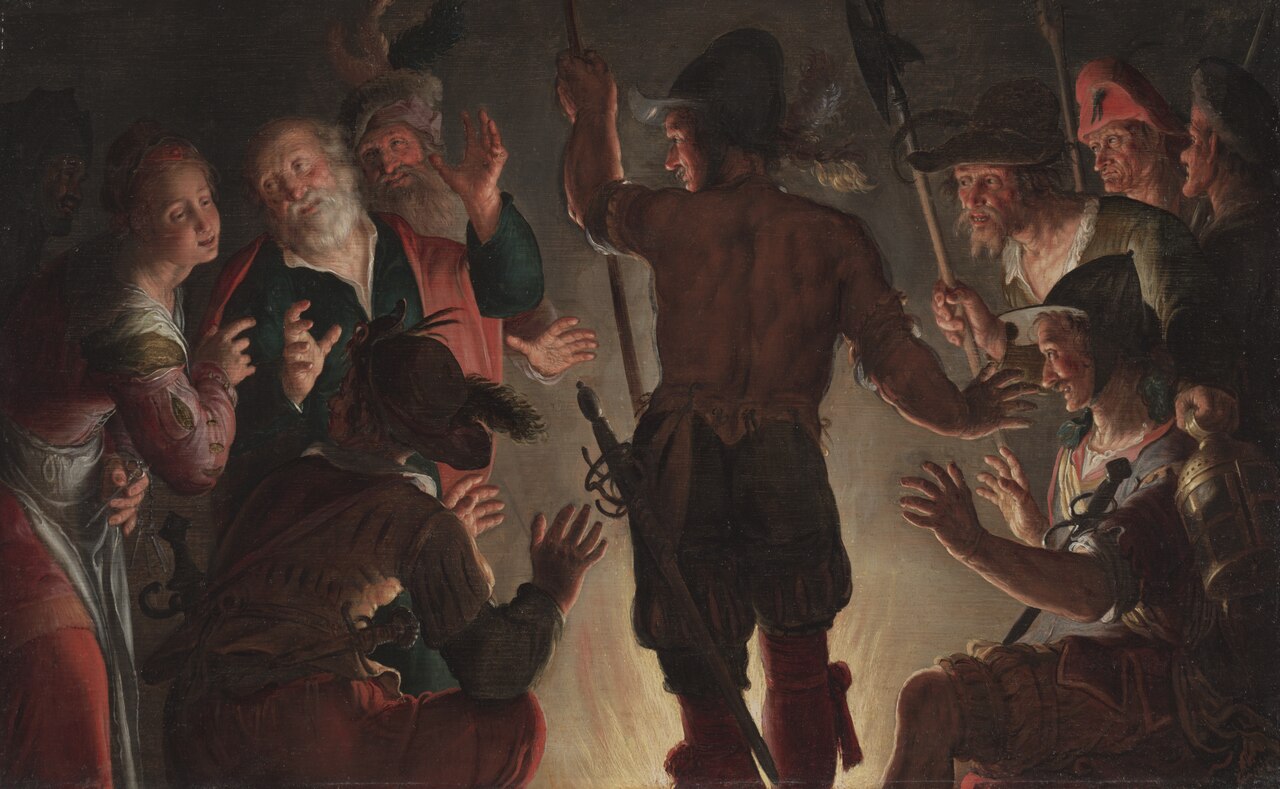
- The Denial of Peter (1626) – Depicting the apostle Peter’s moment of denial, the painting is marked by a tense, almost theatrical atmosphere. The stark contrast between the illuminated foreground and the shadowed background heightens the emotional stakes, a hallmark of Wtewael’s narrative technique.
- Kitchen Scene (1909) – The listed date of 1909 post‑dates Wtewael’s lifetime by more than two centuries, suggesting a cataloguing error or a later copy of an original composition. The subject matter—a domestic kitchen interior—aligns with the genre scenes that were popular in Utrecht during his career, and its inclusion in modern references underscores the lasting interest in his thematic choices.
These works collectively illustrate Wtewael’s versatility, ranging from sacred to secular, and his ability to adapt the dramatic intensity of Baroque influences to the measured realism of Dutch painting.
Influence and legacy Although Peter Wtewael has not attained the fame of contemporaries such as Rembrandt or Vermeer, his contributions enrich the broader narrative of the Dutch Golden Age. His blending of Caravaggesque lighting with Dutch naturalism provided a template for later Utrecht painters who sought to reconcile emotional depth with disciplined composition. Moreover, his religious works continued to be reproduced in ecclesiastical settings throughout the Netherlands, ensuring that his visual interpretations of biblical stories remained part of the devotional landscape well into the eighteenth century.
Modern scholarship often treats Wtewael as a representative figure of the transitional generation that linked the early Utrecht Caravaggisti with the more restrained classicism of the mid‑seventeenth century. While the scarcity of surviving documentation limits a full appraisal of his career, the surviving paintings attest to a competent and adaptable artist who navigated the complex artistic currents of his time. His oeuvre, therefore, offers valuable insight into the stylistic negotiations that defined Dutch art during a period of religious, cultural, and economic change.
In contemporary art‑history circles, Wtewael’s work is frequently cited in discussions of regional variations within the Dutch Golden Age, particularly in relation to the synthesis of international Baroque trends with local tastes. Exhibitions of Utrecht painters often include his pieces as illustrative examples of the city’s unique artistic identity, and his paintings continue to attract scholarly attention for their technical proficiency and narrative clarity.
Frequently asked questions
Who was Peter Wtewael?
Peter Wtewael (1596–1660) was a Dutch Golden Age painter from Utrecht, known for religious and mythological works such as The Adoration of the Shepherds and Mercury, Io and Argus.
What artistic style or movement is he associated with?
He worked in a hybrid style that combined the dramatic chiaroscuro of the Utrecht Caravaggisti with the detailed realism of Dutch genre painting, reflecting both Baroque and classicist tendencies.
What are his most famous works?
His most recognised paintings include The Adoration of the Shepherds (1625), Mercury, Io and Argus (1620), Kristus i Emmaus (1620), and The Denial of Peter (1626).
Why is Peter Wtewael important in art history?
He illustrates the transitional phase of Utrecht’s art scene, bridging early Caravaggesque influences with later Dutch classicism, and his works contribute to understanding regional variations within the Golden Age.
How can I recognise a painting by Peter Wtewael?
Look for controlled, single‑source lighting, fine brushwork on fabrics and foliage, a muted earth‑tone palette punctuated by richer hues, and clear narrative composition that balances drama with restraint.