Peeter Gijsels
1621 – 1690
In short
Peeter Gijsels (1621–1690) was a Flemish Baroque painter from Antwerp, known for his detailed landscapes, architectural scenes, and still‑life compositions that echoed the style of Jan Brueghel the Elder.
Notable works


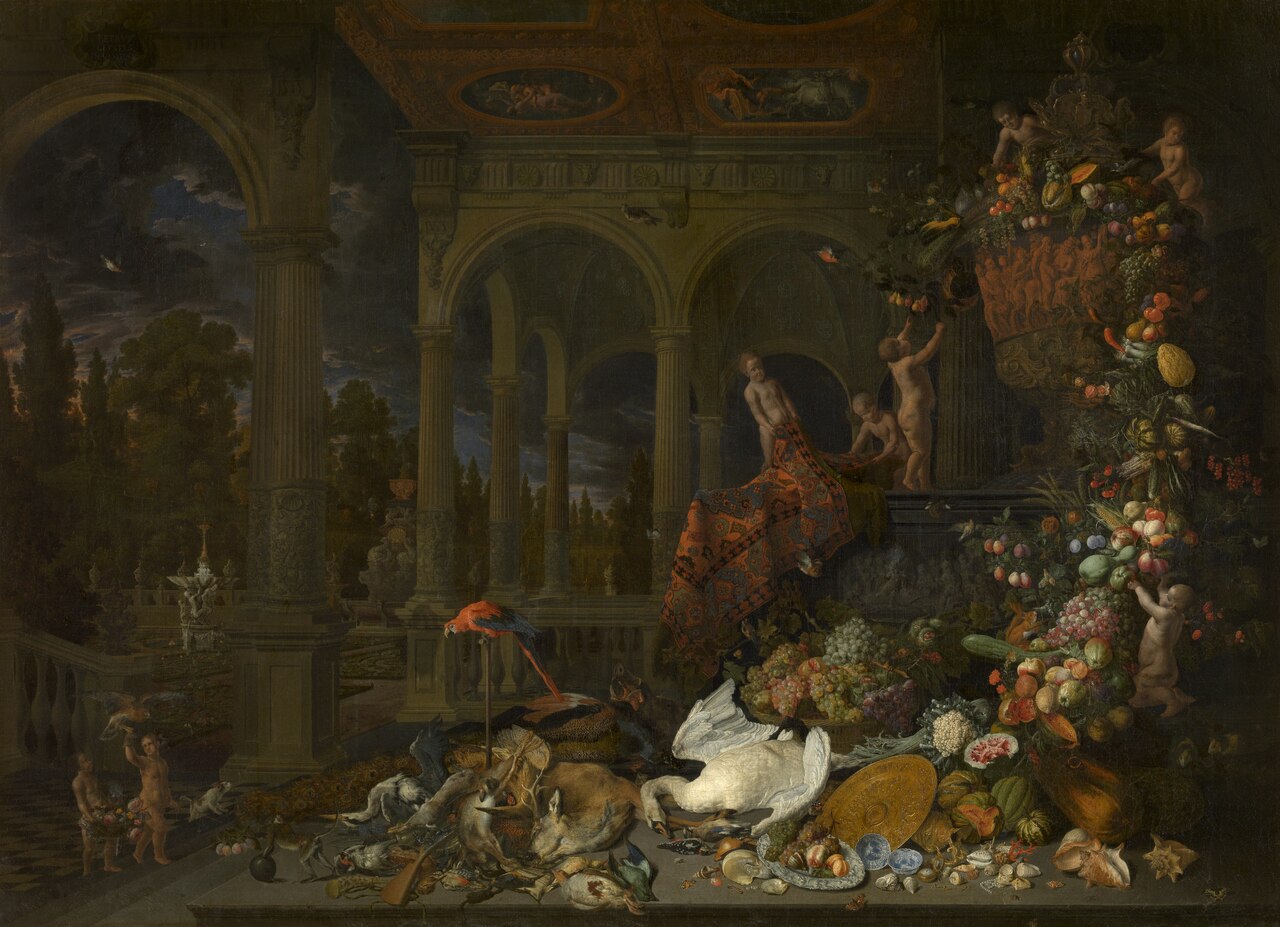
Early life Peeter Gijsels was born in 1621 in Antwerp, a thriving centre of artistic production in the Spanish Netherlands. Little is recorded about his family background, but he grew up in a city where the Guild of Saint Luke regulated artistic training and where the legacy of the 16th‑century masters continued to shape apprenticeships. It is highly probable that Gijsels entered the guild’s apprenticeship system as a teenager, receiving instruction in drawing, oil painting, and the handling of colour that were hallmarks of Flemish Baroque practice.
Career and style Gijsels established himself as a versatile painter in the mid‑17th century, producing works that catered to the tastes of both local collectors and the broader European market. His style is characterised by a meticulous attention to detail, a luminous palette, and a compositional clarity that recalls the earlier work of Jan Brueghel the Elder. While he did not align himself with any formal movement, his output fits comfortably within the Baroque tradition, blending naturalistic observation with a decorative elegance. He specialised in three main genres: bucolic landscapes populated with figures, architectural vedute that showcase the orderly beauty of cityscapes and interiors, and still‑life arrangements that juxtapose flora, fruit, and occasionally small animals.
Signature techniques Gijsels employed a fine, almost stippled brushwork for foliage and textures, allowing him to render the delicate veins of leaves, the ripples of water, and the intricate surfaces of stone. His palette often featured bright greens, warm ochres, and deep reds, creating a vibrant yet balanced visual effect. In his still‑life paintings, he used a layered glazing technique to achieve a luminous depth, especially in the depiction of glass, metal, and fruit skins. Light is frequently sourced from a high, diffuse direction, casting soft shadows that enhance the three‑dimensionality of objects while maintaining a harmonious overall composition.
Major works Among Gijsels’s documented works, *Flemish Village* (c. 1650) presents a lively market scene where merchants and townsfolk mingle beneath a canopy of trees, the architecture rendered with precise linear perspective. *Still Life near a Fountain* (1680) showcases a tranquil outdoor setting where a stone fountain serves as a focal point for an arrangement of fruit, flowers, and a small bird perched on the rim, exemplifying his skill in integrating natural and man‑made elements. *Still Life with Fruit and Birds* (1663) is notable for its meticulous rendering of ripe fruit alongside a pair of birds, highlighting his ability to capture texture and movement within a static composition. In the same year, Gijsels painted *Village at a River*, a panoramic view that combines a winding waterway with a bustling village, employing atmospheric perspective to convey depth. Finally, the generic titled *Still Life* (1680) reinforces his continued interest in domestic subjects, featuring a balanced composition of porcelain, glassware, and produce that reflects the taste for luxury items among his patrons.
Influence and legacy Peeter Gijsels’s oeuvre contributed to the sustained popularity of the Brueghel‑type landscape in the late 17th century. By adapting the refined detail of his predecessor to contemporary tastes, he helped preserve a visual language that bridged the High Renaissance and the emerging Rococo sensibility. Although he never achieved the fame of Rubens or Van Dyck, his works were collected by affluent merchants and noble families, ensuring a steady demand for his paintings during his lifetime. Modern scholarship recognises Gijsels as a competent, if not groundbreaking, figure whose paintings provide valuable insight into the domestic and rural visual culture of the Spanish Netherlands. His paintings remain in European museum collections and occasionally appear in auction houses, where they are appreciated for their technical finesse and historical charm.
In summary, Peeter Gijsels exemplifies the industrious Flemish painter of the Baroque era, whose disciplined technique and adaptable subject matter secured his place within the artistic fabric of 17th‑century Antwerp.
Frequently asked questions
Who was Peeter Gijsels?
Peeter Gijsels was a Flemish Baroque painter (1621–1690) from Antwerp, recognised for his detailed landscapes, architectural scenes, and still‑life works.
What style or movement is he associated with?
He worked within the Baroque tradition, producing works that echo the refined detail of Jan Brueghel the Elder rather than belonging to a specific movement.
What are his most famous works?
Key paintings include *Flemish Village* (c. 1650), *Still Life near a Fountain* (1680), *Still Life with Fruit and Birds* (1663), *Village at a River* (1663), and *Still Life* (1680).
Why does he matter in art history?
Gijsels helped sustain the popularity of the Brueghel‑type landscape in the late 17th century, offering a bridge between High Renaissance detail and later decorative tastes.
How can I recognise a Peeter Gijsels painting?
Look for finely stippled brushwork, a bright yet balanced palette, careful rendering of texture, and compositions that combine natural elements with orderly architectural or still‑life arrangements.