Paolo Porpora
1617 – 1673
In short
Paolo Porpora (1617–1673) was a late‑Baroque painter active in Naples and Rome, best known for his detailed floral and animal still‑lifes. He trained under Giacomo Recco, worked with Aniello Falcone, and taught artists such as Giovan Battista Ruoppolo.
Notable works



Early life Paolo Porpora was born in 1617 in Naples, a city that was at the time a vibrant centre of artistic activity in the Kingdom of Naples. Little is recorded about his family background, and his exact nationality is not documented, though his career was firmly rooted in the Italian artistic milieu of the 17th century. Porpora entered the workshop of Giacomo Recco, a recognised specialist in still‑life painting, where he received his initial training in the handling of botanical subjects and the meticulous observation of natural forms.
Career and style After completing his apprenticeship, Porpora is known to have worked under the guidance of Aniello Falcone, a prominent figure in Neapolitan Baroque painting who was especially noted for battle scenes. This association broadened Porpora’s exposure to dramatic chiaroscuro and dynamic composition, elements that later appeared in his own still‑life arrangements. In 1656 Porpora moved to Rome, where he gained admission to the Accademia di San Luca, the city’s principal artists’ guild, and remained a member until 1658. While in Rome he encountered the work of Netherlandish still‑life painters, whose precise rendering of texture and colour palette left a lasting imprint on his own visual language.
Porpora’s mature style is characterised by a meticulous attention to detail, a luminous colour scheme, and a balanced yet often theatrical composition. He combined the Italian Baroque sensibility for dramatic lighting with the Northern European fascination for the scientific study of flora and fauna. His canvases typically present a rich assortment of birds, reptiles, insects and marine shells arranged on a rustic surface, each rendered with a vivid sense of materiality. The overall effect is both decorative and didactic, reflecting contemporary interests in natural history and the symbolism of the natural world.
Signature techniques Porpora’s technique rests on several recurring devices:
* Layered glazing – He built up colour through thin, translucent layers of oil, achieving a depth of hue that gives the subjects a near‑luminescent quality. * Precise modelling of textures – Whether depicting the glossy sheen of a bird’s feather, the fragile translucency of a butterfly’s wing, or the rough surface of a shell, Porpora employed fine brushwork and subtle shifts in tone to convey tactile realism. * Controlled chiaroscuro – Light often falls from a single, off‑centre source, casting deep shadows that heighten the three‑dimensionality of the objects and create a sense of intimacy within the tableau. * Symbolic grouping – Porpora frequently assembled creatures that carried complementary symbolic meanings—such as the juxtaposition of a snake with a turtle to suggest the tension between danger and longevity—thereby adding an allegorical layer to his paintings.
These techniques, combined with a disciplined compositional balance, enabled Porpora to produce works that were both visually striking and intellectually engaging.
Major works Porpora’s oeuvre includes a number of still‑lifes that have survived in museum collections and private holdings. Among the most frequently cited are:
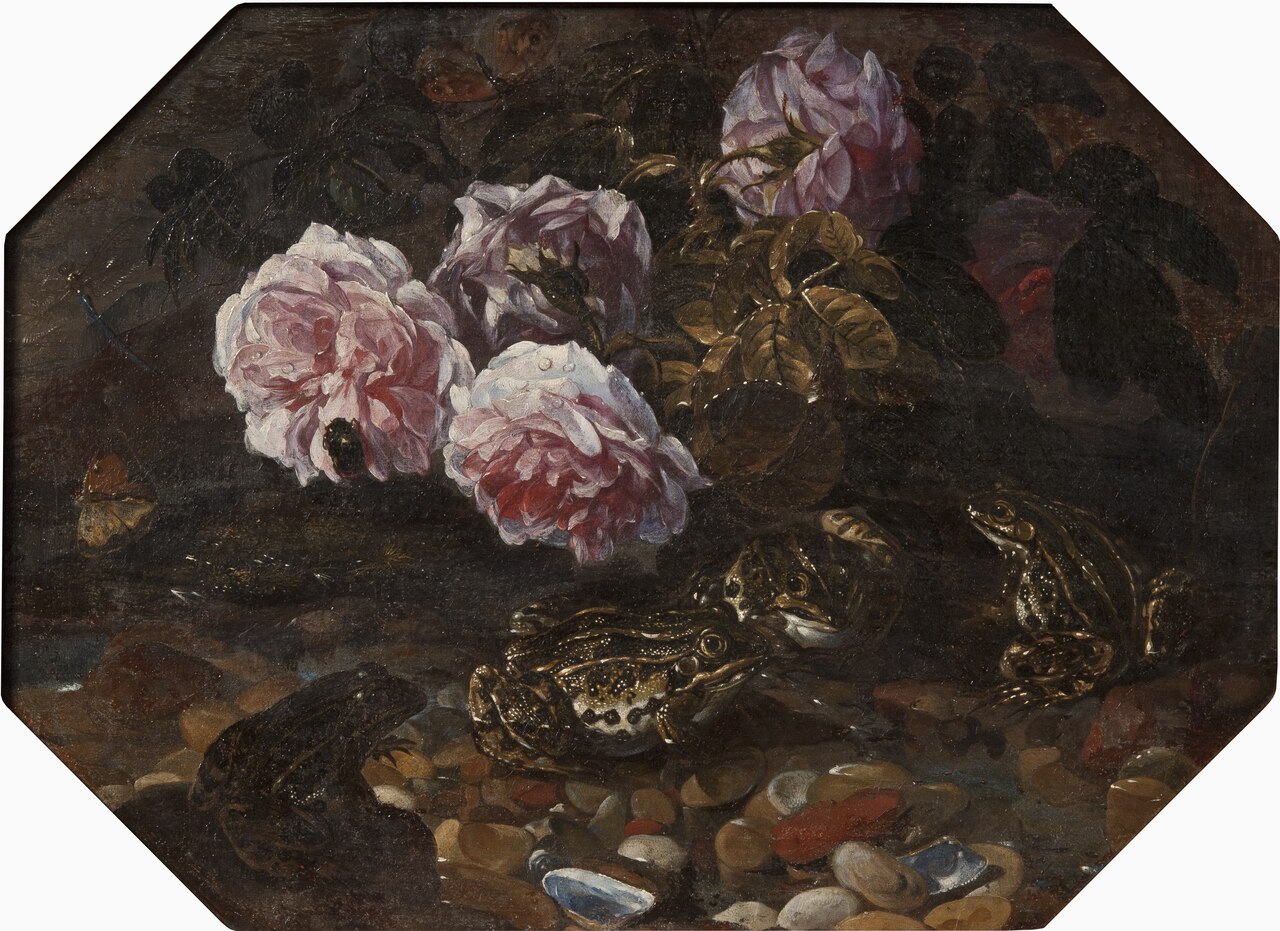
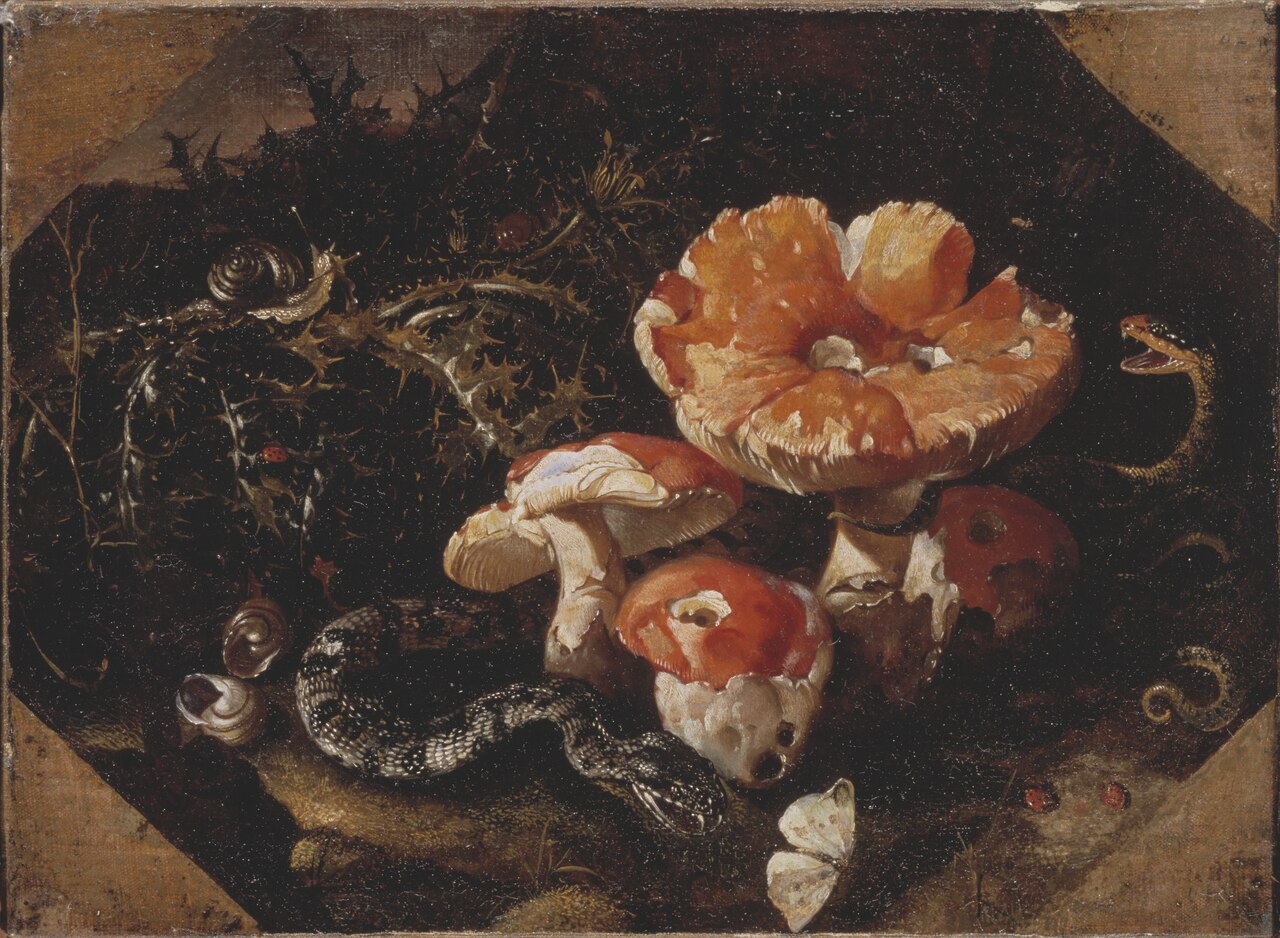
* Still‑Life with Quails, an Owl and a White Stilt (1680) – Though dated after Porpora’s death, this work is traditionally attributed to his workshop and illustrates his continued interest in avian subjects. The composition features a carefully staged gathering of game birds, rendered with a striking realism that highlights the textures of plumage and feather. * Frogs, Wild Roses, Shells and Butterflies (1654) – This painting demonstrates Porpora’s skill in juxtaposing amphibian life with delicate botanical elements. The vivid green of the frogs contrasts with the soft pink of the roses, while the butterflies lend a fleeting sense of movement. * Serpents, Fly Agarics and Thistles (1654) – Here Porpora explores the interplay of poisonous and edible motifs, arranging serpents alongside brightly coloured fly‑agaric mushrooms and sharp thistles to evoke a subtle warning about the dangers of the natural world. * Still life with a snake, frogs, tortoise and a lizard (1650) – A complex tableau that showcases Porpora’s ability to render a range of reptilian skins and surfaces, each depicted with meticulous attention to scale and colour. * Forest ground with a crab, butterflies, frogs and shells (1650) – This work captures a slice of coastal biodiversity, combining marine and terrestrial creatures on a textured forest floor, underscoring Porpora’s fascination with the interdependence of ecosystems.
These pieces collectively illustrate Porpora’s thematic preoccupations: the study of natural forms, the symbolic resonance of animal subjects, and a compositional harmony that unifies disparate elements into a coherent visual narrative.
Influence and legacy Porpora’s impact on the development of still‑life painting in Southern Italy was significant. He trained a generation of artists, most notably Giovan Battista Ruoppolo, who went on to become a leading still‑life painter in Naples, and Onofrio Loth, another Neapolitan practitioner. Through his pupils, Porpora’s approach to colour, texture and symbolic composition disseminated across the region, shaping the visual vocabulary of Baroque still‑life.
His integration of Netherlandish techniques into an Italian Baroque framework contributed to a cross‑cultural dialogue that enriched both traditions. Modern scholars regard Porpora as a pivotal figure in the transition from the purely decorative still‑life to a more observational and allegorical mode of representation. Though his name is less widely known than some of his contemporaries, his works continue to be studied for their technical brilliance and their insight into 17th‑century attitudes toward nature.
In recent decades, exhibitions of Baroque still‑life have revived interest in Porpora, and his paintings are now featured in major European collections, where they serve as exemplars of the period’s fascination with the natural world and its symbolic potential.
Frequently asked questions
Who was Paolo Porpora?
Paolo Porpora (1617–1673) was a late‑Baroque painter active in Naples and Rome, renowned for his detailed still‑life paintings of flowers, birds, reptiles and shells.
What style or movement is he associated with?
He worked within the Baroque tradition, blending Italian dramatic lighting with Netherlandish still‑life realism.
What are his most famous works?
Key works include *Frogs, Wild Roses, Shells and Butterflies* (1654), *Serpents, Fly Agarics and Thistles* (1654) and *Still‑Life with Quails, an Owl and a White Stilt* (attributed, 1680).
Why does Paolo Porpora matter in art history?
He helped establish a sophisticated still‑life genre in Southern Italy, influencing pupils such as Giovan Battista Ruoppolo and integrating Northern European techniques into Italian Baroque art.
How can I recognise a Paolo Porpora painting?
Look for meticulous texture, layered glazing, dramatic chiaroscuro, and a composition that juxtaposes a variety of natural elements—often birds, reptiles and shells—rendered with vivid colour and symbolic grouping.