Ottmar Elliger
1633 – 1679
In short
Ottmar Elliger (1633–1679) was a German-born painter who worked in the Flemish Baroque tradition, specialising in highly detailed still‑life compositions of flowers, fruit and insects. He is best known for a handful of meticulously rendered works created in the mid‑17th century, now held in European collections.
Notable works


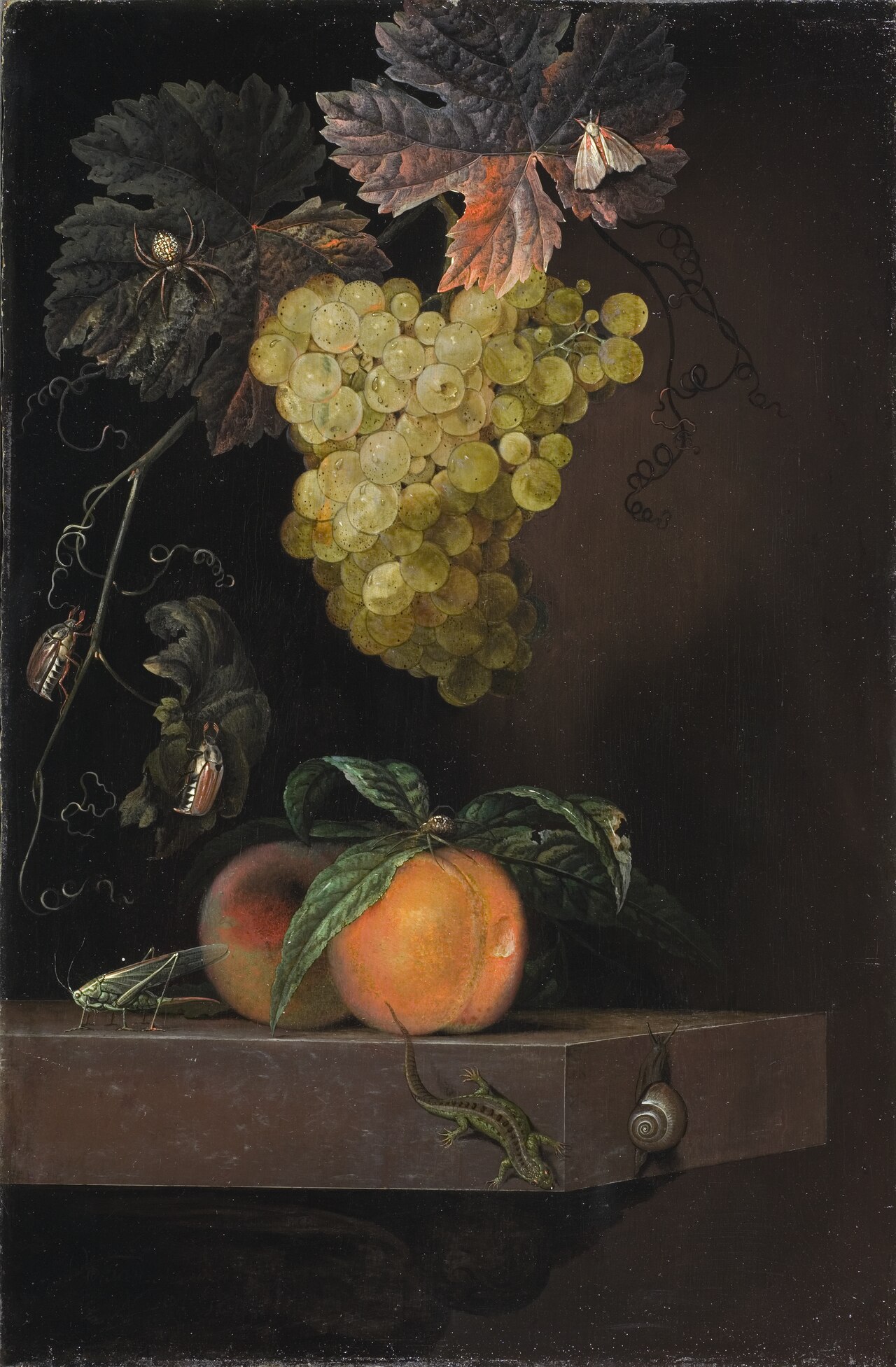

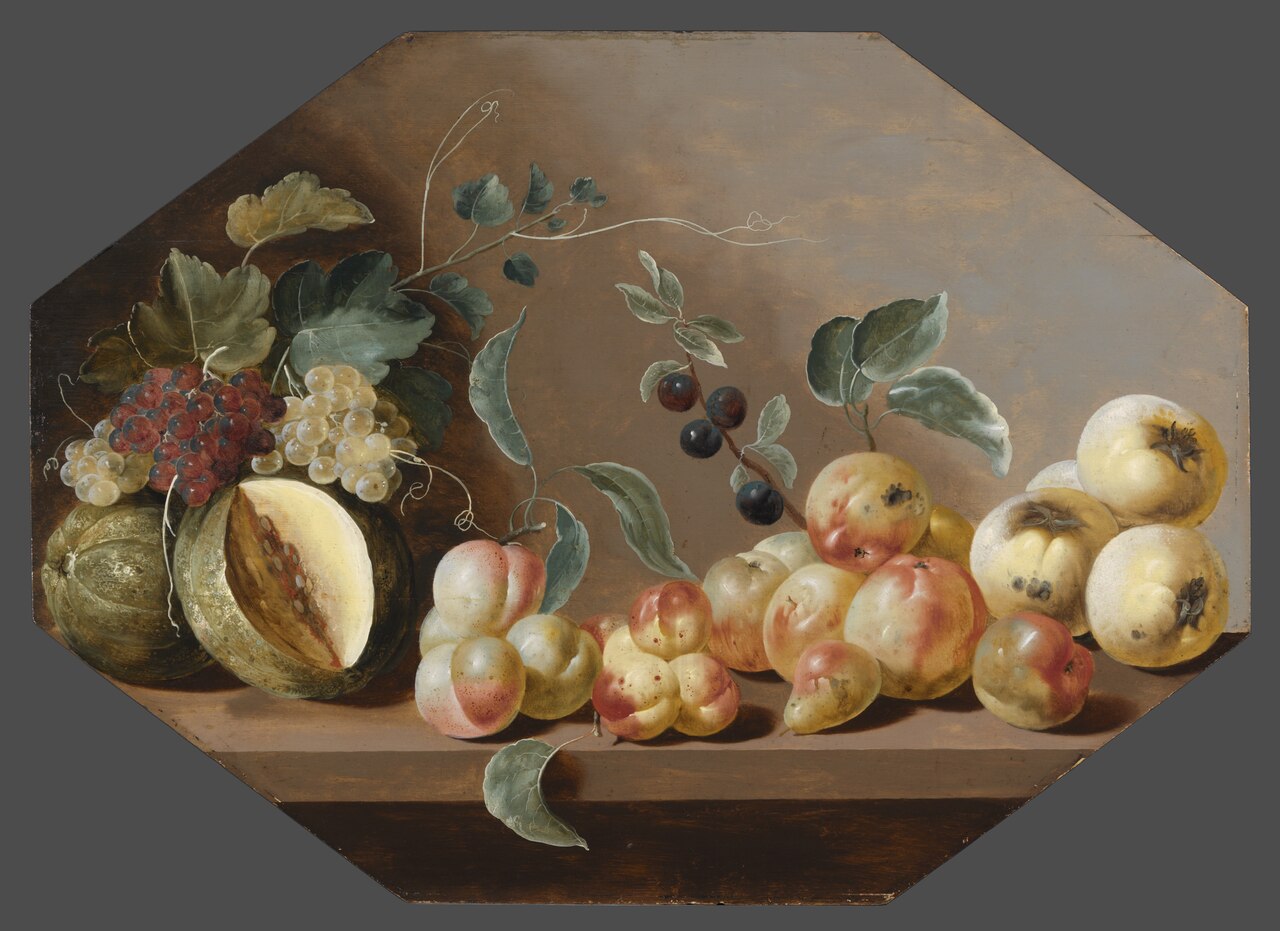
Early life Ottmar Elliger was born in 1633 in Gothenburg, a port city that at the time lay on the border of Swedish and German cultural spheres. His family was of German origin, and the young Elliger was exposed to a mix of Northern European artistic influences. Little is recorded about his formative years, but the commercial vibrancy of Gothenburg’s harbor likely provided early exposure to imported luxury goods, including exotic botanical specimens that would later dominate his subject matter.
In the 1650s, Elliger is believed to have travelled to the Low Countries, a common route for aspiring artists from the German lands seeking apprenticeship in the thriving artistic centres of Antwerp and Amsterdam. There, he would have encountered the flourishing Flemish Baroque workshop system, which emphasized meticulous draftsmanship, a rich colour palette, and the integration of symbolic motifs within still‑life compositions.
Career and style By the early 1660s Elliger had established himself as a specialist in flower and fruit still lifes, a genre that enjoyed high demand among the mercantile elite of the Dutch Republic and the German principalities. His work reflects the opulent visual language of the Flemish Baroque, characterised by dramatic lighting, lush textures, and a careful balance between naturalistic detail and decorative excess.
Elliger’s paintings frequently juxtapose vibrant blossoms with ripe fruit, often accompanied by insects, reptiles or small objects that introduce a narrative element of transience. This reflects the contemporary vanitas tradition, which used the ephemerality of beauty to comment on the fleeting nature of life. While his exact workshop affiliations remain undocumented, stylistic analysis places him alongside contemporaries such as Jan Davidsz. de Heem and Abraham van Beyeren, whose influence is evident in his compositional structure and colour harmonies.
Signature techniques Elliger’s technique is distinguished by several recurring hallmarks:
1. Layered glazing – He applied multiple translucent layers of oil paint to achieve depth in petals and fruit skins, allowing underlying colours to shine through and creating a luminous effect. 2. Fine brushwork – Minute, almost invisible brushstrokes render the delicate veining of leaves and the tiny hairs on flower stems, contributing to a convincing tactile realism. 3. Chiaroscuro lighting – A strong directional light source illuminates the central bouquet while casting peripheral elements into shadow, enhancing three‑dimensionality. 4. Inclusion of fauna – Small creatures such as lizards, insects and spiders are rendered with anatomical accuracy, serving both decorative and symbolic purposes. 5. Rich, saturated palette – Vibrant reds, deep blues, and golden yellows dominate his canvases, often contrasted with dark, almost black backgrounds that heighten visual impact.
These methods collectively produce works that are both visually sumptuous and intellectually engaging, inviting viewers to contemplate the intersection of natural beauty and mortality.
Major works Elliger’s surviving oeuvre is modest but includes several notable pieces that exemplify his mastery:
- Still Life with Flowers and Fruit (1671) – This composition presents a lavish arrangement of blossoms, citrus fruits, and a scattering of grapes, set against a dark backdrop. The interplay of light across the varied surfaces showcases Elliger’s skillful glazing technique.
- Still Life with Flowers (1673) – A more focused study, this painting isolates a bouquet of roses, tulips and lilies, highlighting the artist’s ability to render delicate petals with extraordinary precision.
- Still Life with Fruit, Lizard and Insects (1664) – Perhaps the most emblematic of his vanitas interests, the work juxtaposes luscious fruit with a crawling lizard and a swarm of insects, underscoring the theme of decay beneath apparent abundance.
- Still Life (1667) – This untitled piece features a balanced arrangement of pomegranate, figs, and a vase of flowers, demonstrating Elliger’s compositional harmony and his use of contrasting textures.
- Fruktstycke – Though the title suggests a Swedish origin, the painting aligns with Elliger’s broader oeuvre, depicting a still‑life of assorted fruit rendered with meticulous detail and a subtle, restrained colour scheme.
Each of these works reflects a consistent visual language while allowing Elliger to experiment with variations in colour, light and symbolic content.
Influence and legacy Ottmar Elliger’s career unfolded at a time when the market for decorative still lifes was at its height. Although he did not achieve the fame of some Dutch contemporaries, his paintings contributed to the diffusion of the Flemish Baroque aesthetic into German territories, particularly in Berlin where he spent his final years.
His meticulous approach to botanical representation anticipated the later scientific illustration movement, while his integration of symbolic fauna prefigured the more narrative-driven still lifes of the early 18th century. Modern scholars regard Elliger as a bridge figure who merged the technical rigor of Flemish workshops with the emerging tastes of German patrons.
Elliger died in Berlin in 1679, leaving a body of work that, while limited in number, offers valuable insight into the cross‑cultural artistic exchanges of the mid‑17th century. Today, his paintings are studied for their exemplary execution of Baroque still‑life conventions and for their role in the broader narrative of Northern European art history.
Frequently asked questions
Who was Ottmar Elliger?
Ottmar Elliger (1633–1679) was a German-born painter who worked in the Flemish Baroque style, specialising in highly detailed still‑life paintings of flowers, fruit and insects.
What artistic movement or style is he associated with?
He is associated with the Flemish Baroque tradition, particularly the decorative still‑life genre that combined lush colour, dramatic lighting and vanitas symbolism.
What are his most famous works?
His most recognised pieces include *Still Life with Flowers and Fruit* (1671), *Still Life with Flowers* (1673), *Still Life with Fruit, Lizard and Insects* (1664), *Still Life* (1667) and the work titled *Fruktstycke*.
Why is Ottmar Elliger important in art history?
Elliger helped transmit the Flemish Baroque still‑life aesthetic into German artistic circles, and his meticulous botanical detail foreshadowed later scientific illustration, making him a key figure in the cross‑regional exchange of 17th‑century art.
How can I recognise an Ottmar Elliger painting?
Look for richly coloured bouquets and fruit rendered with fine, layered glazing, strong chiaroscuro, and the inclusion of small insects or reptiles that add symbolic depth to the composition.