Nicaise de Keyser
1813 – 1887
In short
Nicaise de Keyser (1813–1887) was a Belgian painter noted for his history paintings and portraits, and a central figure of the Belgian Romantic‑historical school.
Notable works
,_hertog_van_W%C3%BCrtemberg_als_pelgrim_in_het_Heilige_Land_Rijksmuseum_SK-C-290.jpeg)


Early life Nicaise de Keyser was born in 1813 in the city of Antwerp, a major centre of artistic activity in the United Kingdom of the Netherlands and later Belgium. He grew up in a milieu where the visual arts were strongly supported by local guilds and academies. From a young age he displayed a talent for drawing, which led him to enrol at the Royal Academy of Fine Arts in Antwerp. There he received formal training in drawing, anatomy and the study of classical sculpture, a curriculum that shaped his later interest in historical subjects.
Career and style After completing his studies, de Keyser established himself as a history painter, a genre that enjoyed official patronage in 19th‑century Belgium. He combined the dramatic narrative of Romanticism with a meticulous approach to period detail, a blend that appealed to both academic juries and a growing bourgeois audience. Throughout his career he received commissions from the Belgian royal family and from civic institutions, which allowed him to produce large‑scale canvases depicting pivotal moments from European history. His portraits, while less grandiose than his historical scenes, reveal a keen psychological insight and a refined handling of colour.
De Keyser’s style reflects the broader Romantic‑historical movement that flourished in Belgium after independence in 1830. The movement sought to forge a national visual identity by celebrating historic episodes and heroic figures. In de Keyser’s work, this ambition is evident in the careful rendering of costumes, architecture and landscape, all of which serve to situate the narrative within a recognisable historical context. He also incorporated elements of the emerging Realist tendency, particularly in the rendering of human expression and the texture of surfaces.
Signature techniques De Keyser’s technical repertoire was rooted in the academic tradition. He employed a layered underpainting to establish tonal values before applying successive glazes of oil, a method that produced depth and luminosity. His brushwork varied according to the subject: tight, controlled strokes for architectural elements and looser, more expressive handling for figures in motion. Light was often used symbolically, highlighting the focal point of the narrative while casting peripheral details in softer shadows. In portraiture, he favoured a restrained palette to foreground the sitter’s complexion and the subtle play of light across the face.
Another hallmark of his practice was the rigorous preparation of historical research. Before starting a canvas, de Keyser would study contemporary accounts, costume sketches and archaeological reports to ensure authenticity. This scholarly approach contributed to the credibility of his historical scenes and set a standard for later Belgian artists.
Major works - **Eberhard (1445‑96), Duke of Würtemberg, as a Pilgrim in the Holy Land (1846)** – This canvas depicts the 15th‑century duke on a pilgrimage, a subject that allowed de Keyser to explore exotic landscapes and richly detailed oriental costumes. The work demonstrates his skill in rendering both the solemnity of the pilgrim’s devotion and the vibrant atmosphere of the Holy Land.
- François Ier visiting Benvenuto Cellini's workshop while he were workkin on a woman model (1854) – In this composition, the French king is shown observing the renowned Italian sculptor at work. De Keyser captures the interaction between patron and artist with a keen eye for the workshop’s cluttered interior, the sculptor’s tools, and the nude model, illustrating his interest in the creative process itself.
- King Willem II Making his Last Will (1849) – This historical tableau presents the Dutch monarch in a moment of personal gravity. De Keyser sets the scene with a modest interior, using subdued lighting to convey the seriousness of the act while still maintaining a sense of regal dignity.
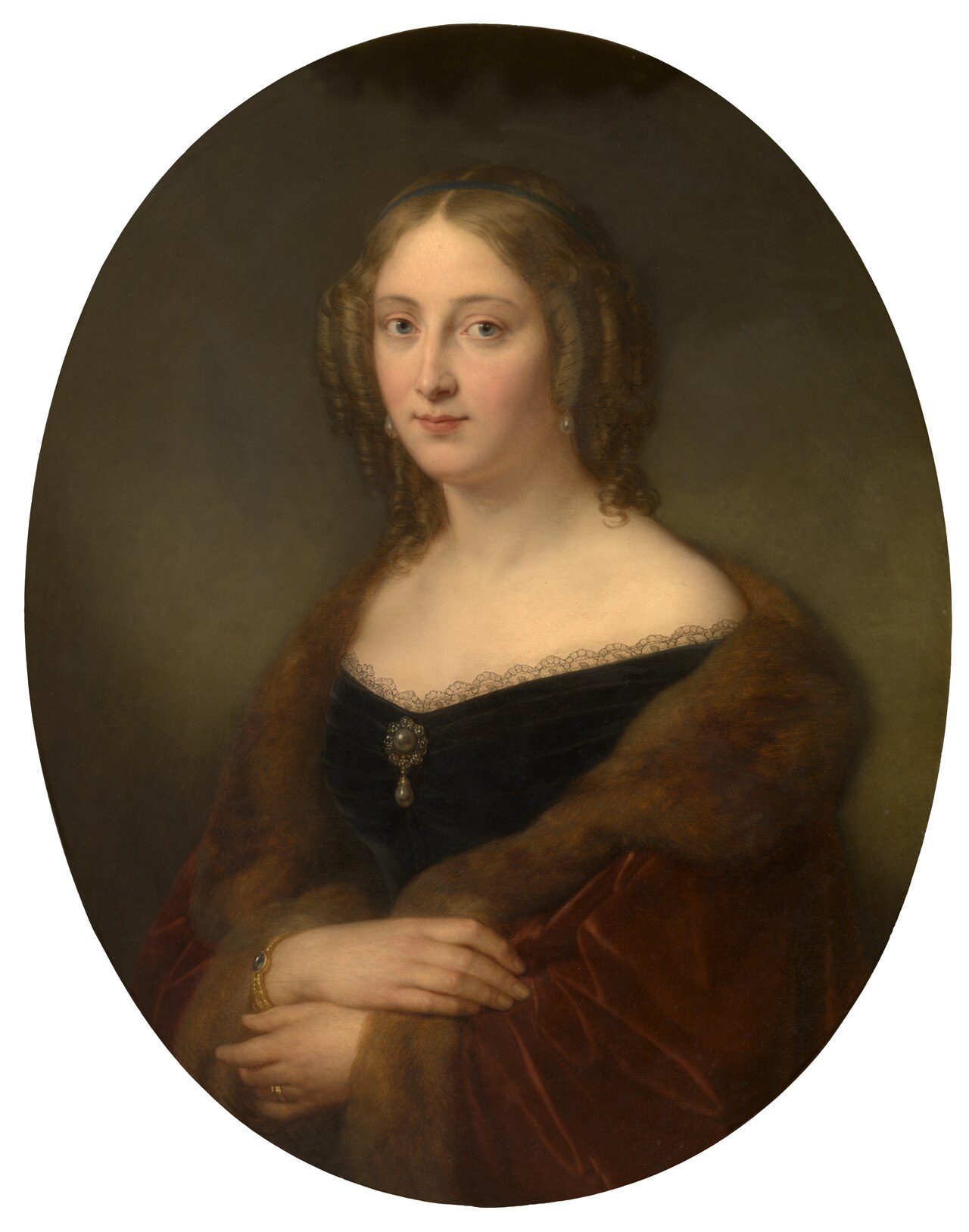
- Baroness Adelaïde Vanden Hecke‑Baut de Rasmon (1862) – A portrait of the baroness exemplifies de Keyser’s ability to blend aristocratic elegance with psychological depth. The sitter is rendered in a richly textured gown, with delicate handling of fabric and a subtle play of light that highlights her facial features.
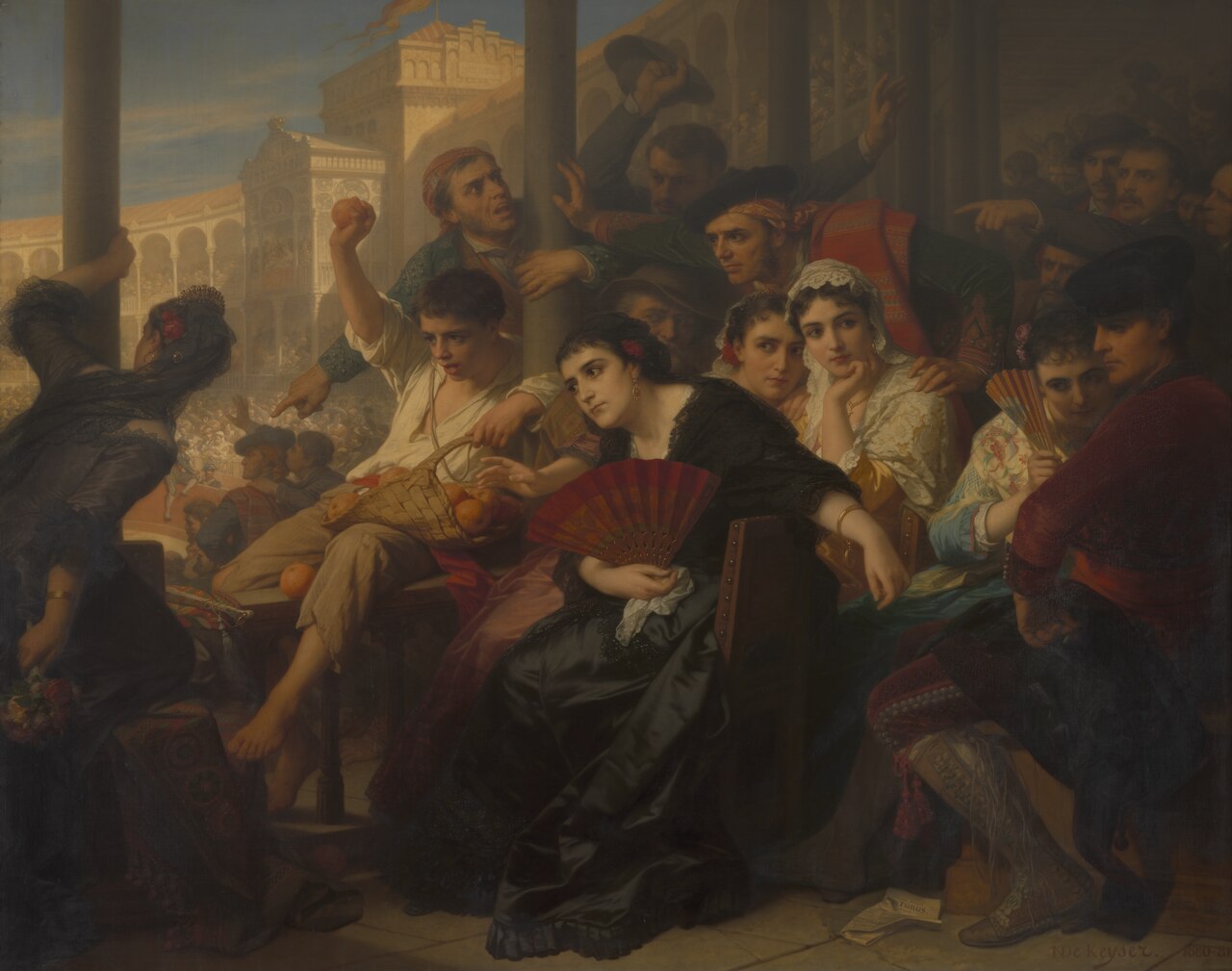
- Bravo torero! (1880) – This later work departs from strictly historical subjects, portraying a bullfighter in a moment of triumph. The painting showcases de Keyser’s continued interest in dynamic movement and dramatic lighting, and it reflects the broader European fascination with spectacle and exoticism in the late 19th century.
Influence and legacy Nicaise de Keyser helped define the visual language of Belgian Romantic‑historical painting. By combining rigorous historical research with the emotive power of Romanticism, he set a precedent for artists seeking to balance national narrative with academic standards. His works were exhibited at the Salon in Brussels and earned him recognition from both the royal court and the public. Later generations of Belgian painters, particularly those associated with the so‑called “School of Antwerp,” cited de Keyser as an example of how to integrate scholarly authenticity into compelling visual storytelling.
Beyond his own canvases, de Keyser contributed to the training of younger artists through his involvement in the Antwerp Academy, where he shared his techniques and his emphasis on historical accuracy. Although the rise of Impressionism and Symbolism eventually shifted artistic tastes away from grand historical painting, de Keyser’s oeuvre remains a valuable record of mid‑19th‑century Belgian cultural identity. His paintings continue to be displayed in museums across Belgium and are referenced in scholarly works on European Romantic art.
Today, Nicaise de Keyser is recognised as a pivotal figure who bridged the Neoclassical legacy of the early 19th century with the burgeoning Romantic‑historical sensibility that characterised Belgium’s post‑independence artistic output. His legacy endures in the way contemporary historians view the visual articulation of national narratives, and his works are frequently cited as exemplars of the period’s technical mastery and narrative ambition.
Frequently asked questions
Who was Nicaise de Keyser?
Nicaise de Keyser (1813–1887) was a Belgian painter renowned for his history paintings and portraits, and a leading figure of the Belgian Romantic‑historical school.
What style or movement is he associated with?
He worked within the Belgian Romantic‑historical movement, blending dramatic Romantic narrative with meticulous historical detail.
What are his most famous works?
Among his best‑known paintings are *Eberhard, Duke of Würtemberg as a Pilgrim in the Holy Land* (1846), *François Ier visiting Benvenuto Cellini's workshop* (1854), *King Willem II Making his Last Will* (1849), the portrait *Baroness Adelaïde Vanden Hecke‑Baut de Rasmon* (1862) and *Bravo torero!* (1880).
Why is he important in art history?
He helped define the visual vocabulary of Belgian Romantic‑historical painting, influencing later artists and contributing to the formation of a national artistic identity after Belgium’s independence.
How can I recognise a painting by Nicaise de Keyser?
Look for a polished academic technique, careful historical costume and architectural detail, dramatic lighting that highlights the narrative centre, and a blend of Romantic emotion with realistic texture.