Michel-François Dandré-Bardon
1700 – 1783
In short
Michel-François Dandré-Bardon (1700–1783) was a French history painter and etcher, born in Aix‑en‑Provence and later active in Paris. He is best known for large‑scale mythological and historical canvases such as *Tullia Running Her Chariot over the Body of Her Father* (1735) and *The Adoration of the Skulls* (1733).
Notable works



Early life
Michel‑François Dandré‑Bardon was born in 1700 in the Provençal city of Aix‑en‑Provence, a region that in the early eighteenth century was a vibrant centre of artistic activity. His family was not among the aristocracy, but local records suggest that his father was a craftsman with an appreciation for the visual arts. Growing up amid the baroque churches and the burgeoning public fêtes of Aix, Dandré‑Bardon was exposed early to the dramatic narratives that would later dominate his oeuvre. He received his first drawing lessons from a regional master who taught the fundamentals of drawing from plaster casts, a standard curriculum for aspiring painters of the period. By his late teens he had secured a place in the atelier of a Parisian history painter, a move that was common for provincial talents seeking the patronage and training available in the capital.
Career and style
After relocating to Paris, Dandré‑Bardon entered the competitive world of the Académie royale de peinture et de sculpture. Although official admission records are sparse, it is clear that he was influenced by the academic emphasis on classical antiquity and the moralising power of history painting. His style reflects a synthesis of French Rococo elegance and the more sober, didactic approach of the earlier French Baroque. He favoured a restrained palette of warm ochres, muted blues and occasional vermilion highlights, allowing the narrative content to dominate the visual field. The compositional arrangements in his canvases often employ a pyramidal structure, guiding the viewer’s eye toward a central focal point where the moral or emotional climax occurs. This approach aligns him with contemporaries such as Charles-Joseph Natoire and Jean-Marc Nattier, though Dandré‑Bardon retained a distinctive emphasis on psychological tension rather than pure decorative charm.
Throughout his career Dandré‑Bardon worked for a mix of private patrons and public institutions. His commissions for the Parlement of Aix‑en‑Provence demonstrate his ability to navigate the expectations of civic representation, while his mythological subjects reveal a fascination with ancient narratives that could be read as allegories for contemporary virtues. The artist also produced a series of etchings, an activity that allowed him to disseminate his designs beyond the limited audience of oil paintings. These prints, characterised by fine hatching and clear line work, served both as pedagogical tools for younger artists and as collectible items for connoisseurs of the burgeoning print market.
Signature techniques
Dandré‑Bardon’s technique is marked by a careful handling of chiaroscuro that balances dramatic illumination with subtle modelling. In oil, he layered thin glazes over an underpainting, a method that produced a luminous surface where flesh tones and drapery appeared to glow from within. His brushwork varies according to the narrative function: crisp, decisive strokes delineate architectural elements and armor, while softer, almost invisible strokes render the delicate flesh of mythic figures. In his etchings, he employed a combination of drypoint and line engraving, allowing him to achieve both the sharpness required for architectural detail and the velvety tones needed for atmospheric effects. The artist’s draftsmen’s eye is evident in the precise anatomy of his figures, even when the poses are exaggerated for dramatic effect.
Major works
* *Tullia Running Her Chariot over the Body of Her Father* (1735) – This monumental canvas depicts the Roman legend of Tullia, who, in a display of ruthless ambition, drives her chariot over her father’s corpse. Dandré‑Bardon captures the violent motion through a dynamic diagonal composition, with the chariot’s wheels carving a path across a blood‑stained floor. The painting’s stark chiaroscuro heightens the moral tension, presenting the episode as both a cautionary tale and a study of unchecked power.
* *The Adoration of the Skulls* (1733) – A macabre yet contemplative work, this painting shows a group of scholars gathered around a skull, reminiscent of the memento mori tradition. Dandré‑Bardon uses muted earth tones to create a somber atmosphere, while the illuminated faces of the figures suggest an intellectual reverence for mortality. The work reflects Enlightenment preoccupations with the transience of life and the pursuit of knowledge.
* *Diana and Endymion* (1726) – In this mythological scene the moon‑goddess Diana watches the sleeping shepherd Endymion from a moonlit summit. The delicate interaction between light and shadow, together with the ethereal rendering of Diana’s robes, exemplifies Dandré‑Bardon’s capacity to blend sensuality with classical restraint.
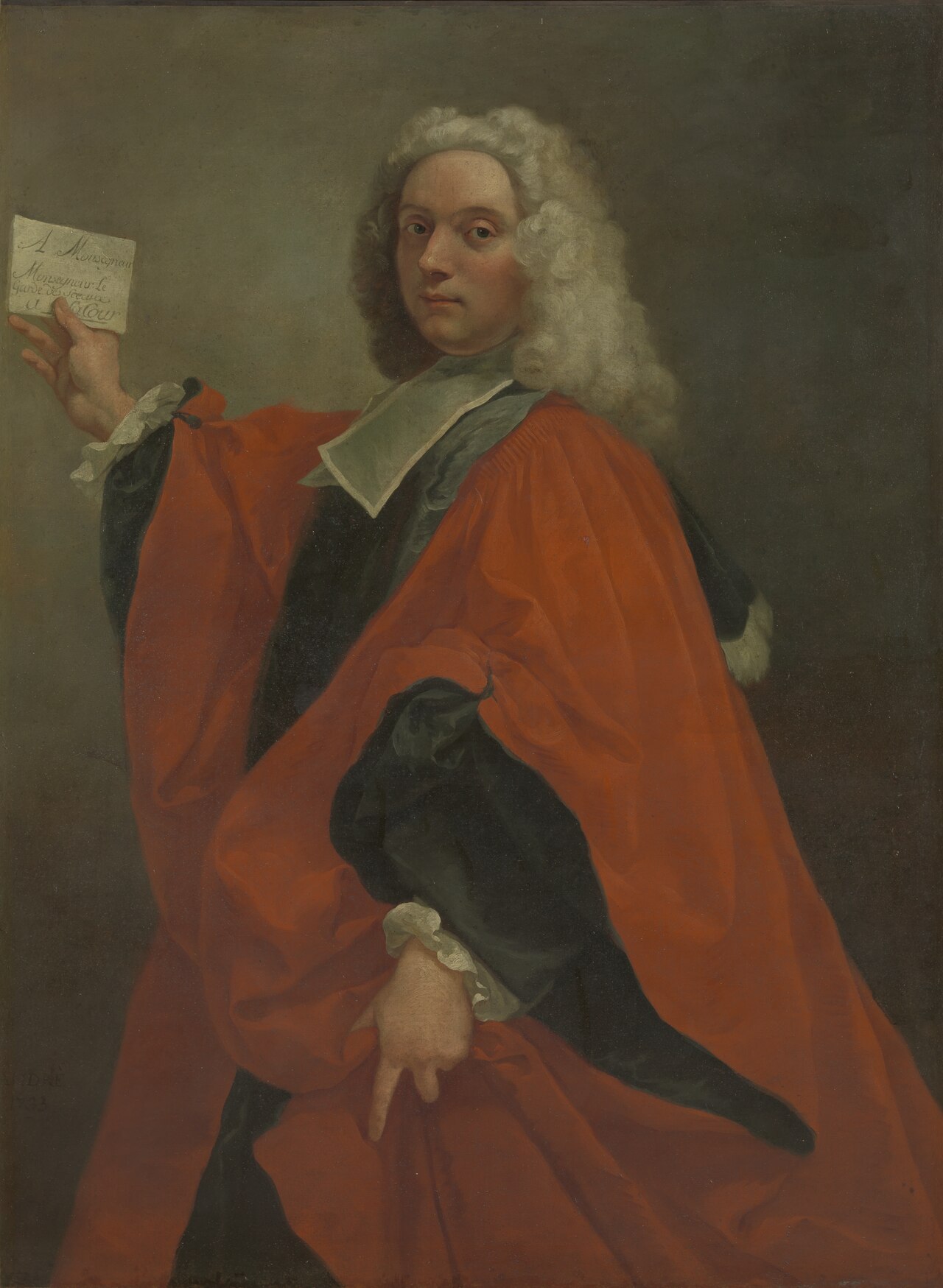
* *Counsellor of the Aix‑en‑Provence Parliament* (1733) – A formal portrait of a regional magistrate, this work demonstrates Dandré‑Bardon’s skill in capturing the gravitas of civic authority. The counsellor is rendered in sober attire, his posture upright, and the background includes subtle references to the parliament’s architecture, underscoring the sitter’s institutional role.
* *Young Man* – Though the exact date is uncertain, this single figure study showcases Dandré‑Bardon’s ability to render a youthful subject with a naturalistic approach. The painting’s loose brushwork and attention to the play of light across the subject’s cheek suggest an early interest in portraiture that would later inform his larger historical compositions.
Influence and legacy
Michel‑François Dandré‑Bardon occupies a modest but significant niche in French art history. While he never achieved the fame of contemporaries such as François Boucher, his commitment to the moralising potential of history painting contributed to the gradual shift toward a more intellectual approach in the late Rococo period. His works were exhibited at the Salons of the Académie, where they were noted for their narrative clarity and technical proficiency. Later French artists, particularly those working in the transitional phase toward Neoclassicism, drew on Dandré‑Bardon’s balanced handling of drama and restraint. Moreover, his etchings circulated widely among art students, providing a model of disciplined drawing and compositional planning. Today, his paintings are held in several French regional museums, where they serve as exemplars of eighteenth‑century French academic art and as visual documents of the cultural concerns of his time.
In scholarly discourse, Dandré‑Bardon is often referenced when discussing the evolution of French history painting between the high Baroque of the seventeenth century and the emerging Neoclassical ideals of the late eighteenth century. His ability to fuse narrative intensity with a measured aesthetic makes his oeuvre a valuable case study for understanding the complexities of artistic production in a period marked by both decorative exuberance and growing intellectual rigor.
Frequently asked questions
Who was Michel‑François Dandré‑Bardon?
He was a French history painter and etcher (1700–1783) born in Aix‑en‑Provence who worked mainly in Paris, producing large narrative canvases and prints.
What style or movement is he associated with?
Dandré‑Bardon worked within the French academic tradition, blending Rococo elegance with the more sober, moralising approach of late Baroque history painting.
What are his most famous works?
His best‑known paintings include *Tullia Running Her Chariot over the Body of Her Father* (1735), *The Adoration of the Skulls* (1733), and *Diana and Endymion* (1726).
Why does he matter in art history?
He exemplifies the transition from decorative Rococo to a more intellectual, narrative‑driven style that paved the way for Neoclassicism, and his etchings influenced subsequent generations of French artists.
How can I recognise a Dandré‑Bardon painting?
Look for a balanced composition with a clear narrative centre, restrained colour palette, careful chiaroscuro, and fine, almost invisible brushwork that renders both drama and subtle emotional nuance.