Matthieu van Plattenberg
1606 – 1660
In short
Matthieu van Plattenberg (1606–1660) was a Flemish Baroque painter from the Spanish Netherlands who specialised in marine scenes, particularly dramatic stormy seascapes. After formative periods in Italy and Paris, he became a pivotal figure in the emergence of French maritime painting.
Notable works
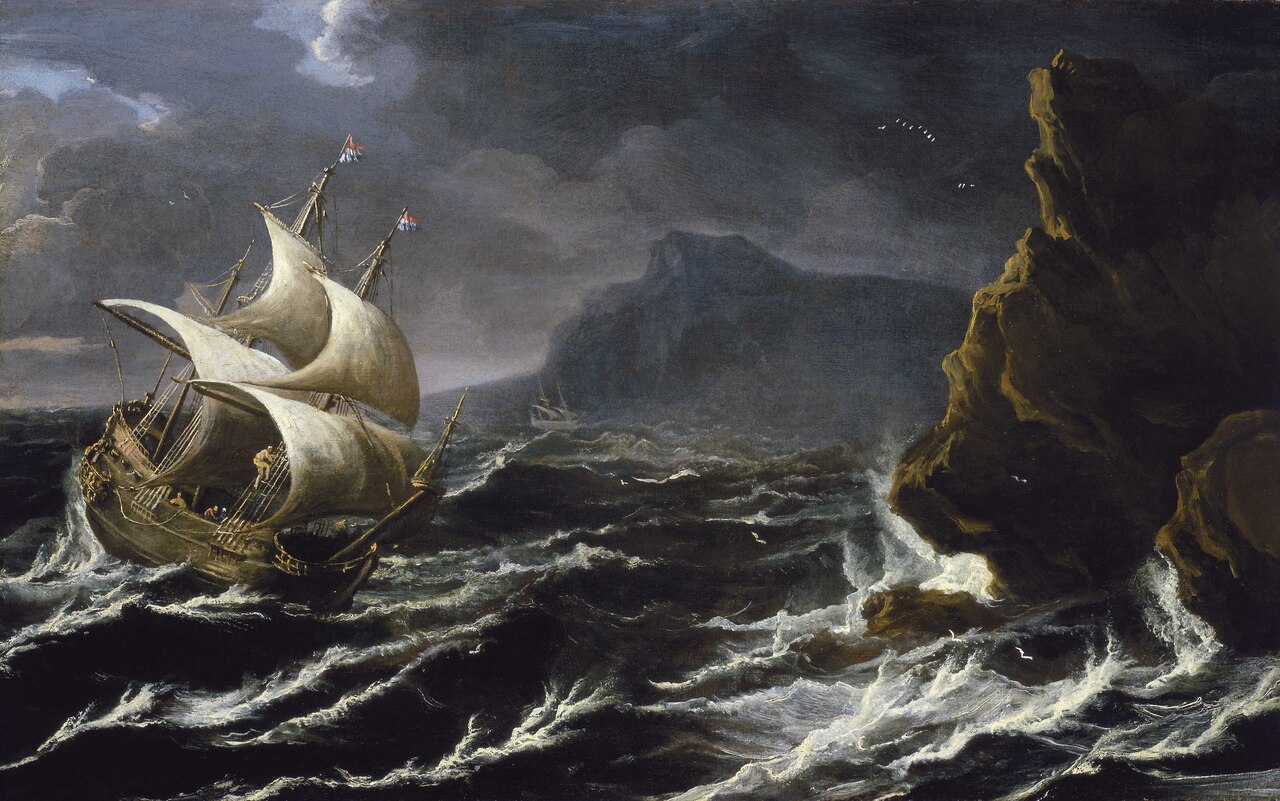
_-_A_Ship_and_a_Galley_Wrecked_on_a_Rocky_Coast_-_BHC0797_-_Royal_Museums_Greenwich.jpg)

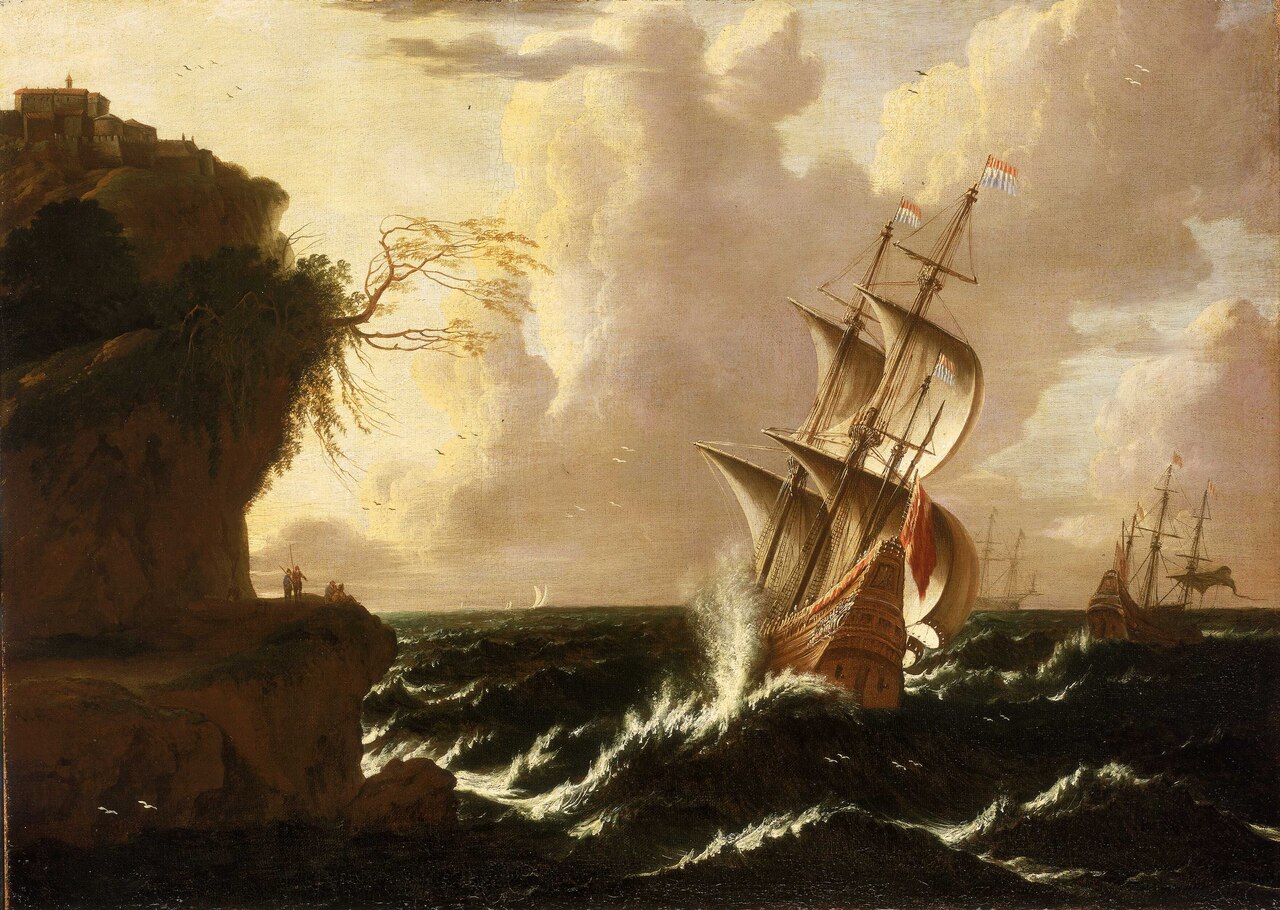

Early life Matthieu van Plattenberg was born in 1606 in Antwerp, a thriving artistic centre of the Spanish Netherlands. Little is recorded about his family or early education, but the city's vibrant guild system suggests that he likely apprenticed with a local master, possibly a painter familiar with the burgeoning genre of marine art that was gaining popularity in the Low Countries. Antwerp's bustling port would have provided ample visual material—ships, tides, and the interplay of light on water—that later informed his lifelong fascination with the sea.
Career and style In the early 1630s van Plattenberg left Antwerp for Italy, a customary pilgrimage for Northern artists seeking exposure to the classical tradition and the dramatic chiaroscuro of the Baroque. While in Italy he encountered the work of artists such as Claude Lorrain and the emerging Italian marine painters, absorbing their compositional strategies for rendering atmospheric effects. By the mid‑1630s he had moved to Paris, where his talent attracted the attention of French patrons. In Paris he adopted the French name Matthieu de Plattemontagne and began to receive commissions for both paintings and prints. His style merged Flemish attention to detail with the French taste for grand, theatrical landscapes. He favoured a palette of deep blues, muted ochres, and occasional flashes of amber to suggest sunrise or sunset, often foregrounding turbulent seas against distant horizons.
Signature techniques Van Plattenberg’s works are distinguished by several recurring technical approaches. Firstly, he employed a vigorous brushstroke to model breaking waves, creating a sense of kinetic energy that conveys the sea’s power. Secondly, he used chiaroscuro not only for figures but also to sculpt the landscape, allowing storm clouds to cast dramatic shadows across the water. Thirdly, his compositions frequently incorporate a low horizon line, which expands the sky and heightens the feeling of vastness. In addition to painting, he was an accomplished draughtsman and etcher; his prints often feature fine, cross‑hatching to suggest foaming surf and the delicate rigging of ships. These prints helped disseminate his visual language throughout Europe.
Major works Among van Plattenberg’s most celebrated paintings are several that exemplify his mastery of maritime drama. *A Dutch Ship Running onto a Rocky Coast* depicts a vessel forced onto jagged cliffs by a relentless swell, the crew’s desperate gestures captured in stark silhouette against a storm‑filled sky. *A Ship and a Galley Wrecked on a Rocky Coast* expands the narrative, juxtaposing a sleek Dutch merchantman with an older galley, both succumbing to the same unforgiving coastline, thereby commenting on the universality of nature’s wrath. *Shipping in a River Estuary* offers a calmer scene, where a fleet of barges navigates a tranquil estuary under a soft, overcast light, demonstrating the artist’s ability to render both turbulence and repose. *A Dutch Ship in a Storm* intensifies the drama with towering waves and a sky pierced by lightning, the ship’s masts bending under the gale. Finally, the dated work *Sea Storm* (1650) stands as a hallmark of his later period, where the composition reaches a near‑pictorial climax: dark, roiling clouds dominate the upper field, while a solitary ship battles the sea’s fury, its lanterns barely visible. Together these works illustrate his consistent focus on the interaction between human endeavour and the elemental forces of the ocean.
Influence and legacy Matthieu van Plattenberg’s impact on French art was profound. By introducing a heightened sense of drama to marine painting, he helped lay the groundwork for later French masters such as Claude Lorrain’s followers and the 18th‑century marine specialist Joseph Vernet. His prints circulated widely, influencing not only painters but also shipbuilders and cartographers who sought realistic depictions of vessels and coastlines. Though his name is less familiar today than some of his contemporaries, art historians recognise him as a bridge between the Flemish tradition of meticulous marine detail and the French Baroque’s appetite for theatrical spectacle. His works remain valuable resources for scholars studying the evolution of seascape painting and for collectors appreciating the power of storm‑laden horizons.
Frequently asked questions
Who was Matthieu van Plattenberg?
Matthieu van Plattenberg (1606–1660) was a Flemish Baroque painter, draughtsman, etcher and engraver renowned for his marine paintings and stormy seascapes.
What style or movement is he associated with?
He worked within the Baroque tradition, blending Flemish detail with the dramatic, atmospheric qualities that later defined French marine painting.
What are his most famous works?
Key works include *A Dutch Ship Running onto a Rocky Coast*, *A Ship and a Galley Wrecked on a Rocky Coast*, *Shipping in a River Estuary*, *A Dutch Ship in a Storm* and the dated *Sea Storm* (1650).
Why is he important in art history?
Van Plattenberg helped pioneer the genre of stormy seascapes in France, influencing subsequent generations of marine painters and expanding the visual vocabulary for depicting the sea’s power.
How can I recognise a van Plattenberg painting?
Look for low horizons, dramatic cloud formations, vigorous brushwork on breaking waves, and a focus on ships caught in turbulent weather—often rendered with a palette of deep blues and contrasting amber highlights.