Marie-Anne Fragonard
1745 – 1823
In short
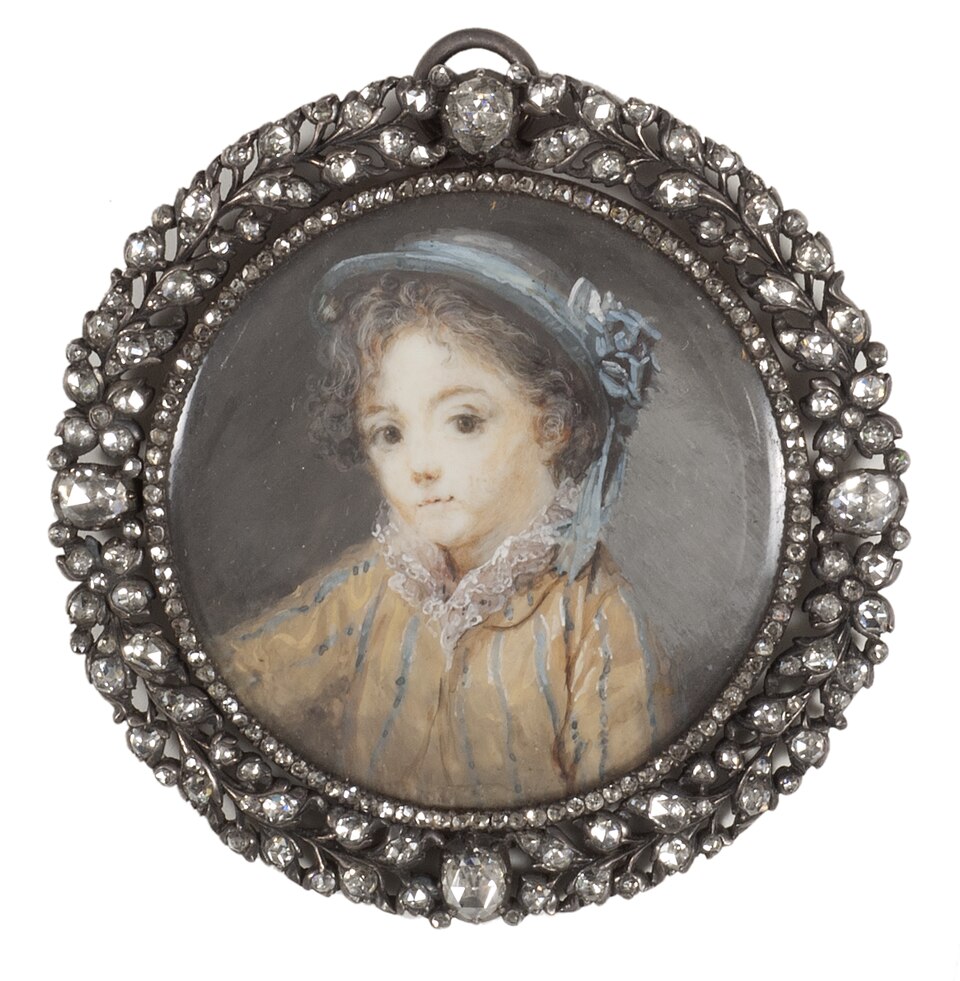
Marie-Anna Fragonard (1745–1823) was a French painter who specialised in portrait miniatures, creating delicate, finely rendered works for private patrons. Her most recognised pieces include Portrait of a Boy (1775) and the miniature titled Young Girl.
Notable works


Early life Marie‑Anne Fragonard was born in 1745 in the town of Grasse, a centre of perfume production in the south of France. Little is recorded about her family background, but the artistic climate of the region – which boasted a number of courtly and bourgeois patrons – offered a fertile environment for a young woman with an interest in drawing. Training for women artists in the mid‑eighteenth century was often informal, relying on family connections, private tutors, or the occasional apprenticeship with an established painter. It is probable that Fragonard received her foundational instruction in drawing and colour through such channels, perhaps within a family workshop or from a local master who recognised her aptitude for fine detail.
In the 1760s, she moved to Paris, the cultural heart of the French kingdom, where she could access a broader market for portrait commissions. Paris was also home to a thriving community of miniature painters, a genre that catered to the aristocracy’s demand for portable, intimate likenesses. The city’s salons, academies, and artistic societies provided both exposure and competition, shaping the ambitions of artists like Fragonard who sought professional recognition.
Career and style Fragonard established herself as a portrait miniaturist in the 1770s, a period when miniature painting enjoyed considerable popularity among the French elite. Her work reflects the prevailing aesthetic of the late Rococo transitioning into early Neoclassicism, characterised by an emphasis on elegance, refined colour palettes, and a focus on the sitter’s expression rather than elaborate background settings. Unlike large‑scale oil portraits, miniatures required a heightened attention to minute detail; Fragonard’s style is marked by a subtle modelling of flesh tones, delicate brushwork, and a restrained use of decorative elements that draw the viewer’s eye to the face.
The artist’s clientele comprised primarily members of the upper middle class and minor aristocracy, who commissioned miniatures as personal keepsakes, gifts, or as part of marriage negotiations. Her reputation grew through word‑of‑mouth and the occasional exhibition of miniatures in Parisian salons, where collectors could appraise the technical skill and emotional resonance of her work. Though she did not align herself with a specific artistic movement, her output mirrors the broader trends of French portraiture, balancing the grace of Rococo with the emerging sobriety of Neoclassicism.
Signature techniques Fragonard’s miniatures are distinguished by several technical hallmarks. She worked chiefly on vellum or ivory substrates, materials prized for their smooth surface and capacity to hold fine pigment. Using a fine sable brush, she applied water‑based pigments mixed with gum arabic, allowing for translucent layers that produce a luminous skin quality. Her approach to shading often employed a delicate glazing technique: successive thin washes built up depth without sacrificing the miniature’s overall lightness.
Another notable feature is her treatment of hair and textiles. Fragonard rendered hair with fine, flowing strokes that suggest movement while retaining a sense of volume. Fabrics are suggested through subtle variations in tone and the strategic placement of highlights, rather than through exhaustive pattern work. This restraint underscores the intimacy of the portrait, keeping the focus on the sitter’s gaze and expression. Finally, she occasionally incorporated a faint, decorative border of gold leaf or stippled pigment, framing the image without overwhelming it.
Major works Among Fragonard’s extant pieces, three miniatures stand out for their historical documentation and artistic merit.
* Portrait of a Boy (1775) – This miniature, dated 1775, depicts a young male sitter with a contemplative expression. The work exemplifies Fragonard’s skill in rendering youthful skin tones and the subtle play of light on the boy’s hair. The background is a muted beige, allowing the sitter’s face to dominate the composition. The piece was likely commissioned as a family keepsake, a common practice for children of the period.
* Young Girl – Though undated, the miniature titled Young Girl showcases Fragonard’s sensitivity to feminine grace. The sitter’s soft gaze and the delicate handling of her veil demonstrate the artist’s ability to convey both innocence and poise. The use of a restrained colour palette, with pastel blues and creams, aligns the work with the late Rococo’s preference for gentle, decorative hues.
* Gossporträtt – Translating roughly to “goat portrait,” this work is unusual within Fragonard’s oeuvre, suggesting a commission that required a whimsical or allegorical subject. The miniature presents a stylised goat rendered with the same meticulous brushwork as her human portraits, indicating her versatility and willingness to adapt her technique to unconventional themes. While the exact provenance is unclear, the piece reflects the broader eighteenth‑century fascination with animal symbolism in portraiture.
These works collectively illustrate Fragonard’s consistency in technique while allowing for variation in subject matter, demonstrating both her adaptability and the market’s diverse demands.
Influence and legacy Marie‑Anne Fragonard’s career unfolded at a time when women artists faced significant institutional barriers. Her success as a miniature painter contributed to the gradual recognition of female talent within the French art world. Although she did not achieve the fame of her male contemporaries, her surviving miniatures are valuable records of eighteenth‑century portraiture and provide insight into the private visual culture of the era.
In later decades, scholars of miniature painting have cited Fragonard as an exemplar of the genre’s technical excellence. Her works are held in several European collections, where they are studied for their fine brushwork and the subtle emotional resonance they convey. While the miniature itself fell out of fashion with the rise of photography in the nineteenth century, recent renewed interest in intimate portraiture has prompted a re‑evaluation of artists like Fragonard, positioning her as a noteworthy figure in the transition between Rococo intimacy and Neoclassical restraint.
Overall, Marie‑Anne Fragonard represents the skilled, often under‑documented class of women artists who operated within the decorative arts, leaving a legacy of refined, personal artworks that continue to inform our understanding of eighteenth‑century French visual culture.
Frequently asked questions
Who was Marie‑Anne Fragonard?
Marie‑Anne Fragonard (1745–1823) was a French painter specialising in portrait miniatures, active in Paris during the late eighteenth and early nineteenth centuries.
What artistic style or movement is she associated with?
She did not belong to a formal movement, but her work reflects the transition from Rococo elegance to early Neoclassical restraint within French portrait miniatures.
What are her most famous works?
Her most recognised miniatures include Portrait of a Boy (1775), Young Girl, and the whimsical Gossporträtt.
Why is she important in art history?
Fragonard exemplifies the high technical skill of miniature painting and highlights the contributions of women artists in a period when they were often marginalised.
How can I recognise a Marie‑Anne Fragonard miniature?
Look for finely glazed water‑based pigments on vellum or ivory, delicate modelling of skin, restrained decorative borders, and a focus on the sitter’s expressive gaze.