Louis Carrogis Carmontelle
1717 – 1806
In short
Louis Carrogis Carmontelle (1717–1806) was a French dramatist, painter, architect and garden designer whose portraiture, theatrical set designs and pioneering work on the French landscape garden at Parc Monceau made him a key figure in 18th‑century art and cultural innovation.
Notable works

_jouant_%C3%A0_Paris_avec_son_p%C3%A8re_Jean..._-_Google_Art_Project.jpg)
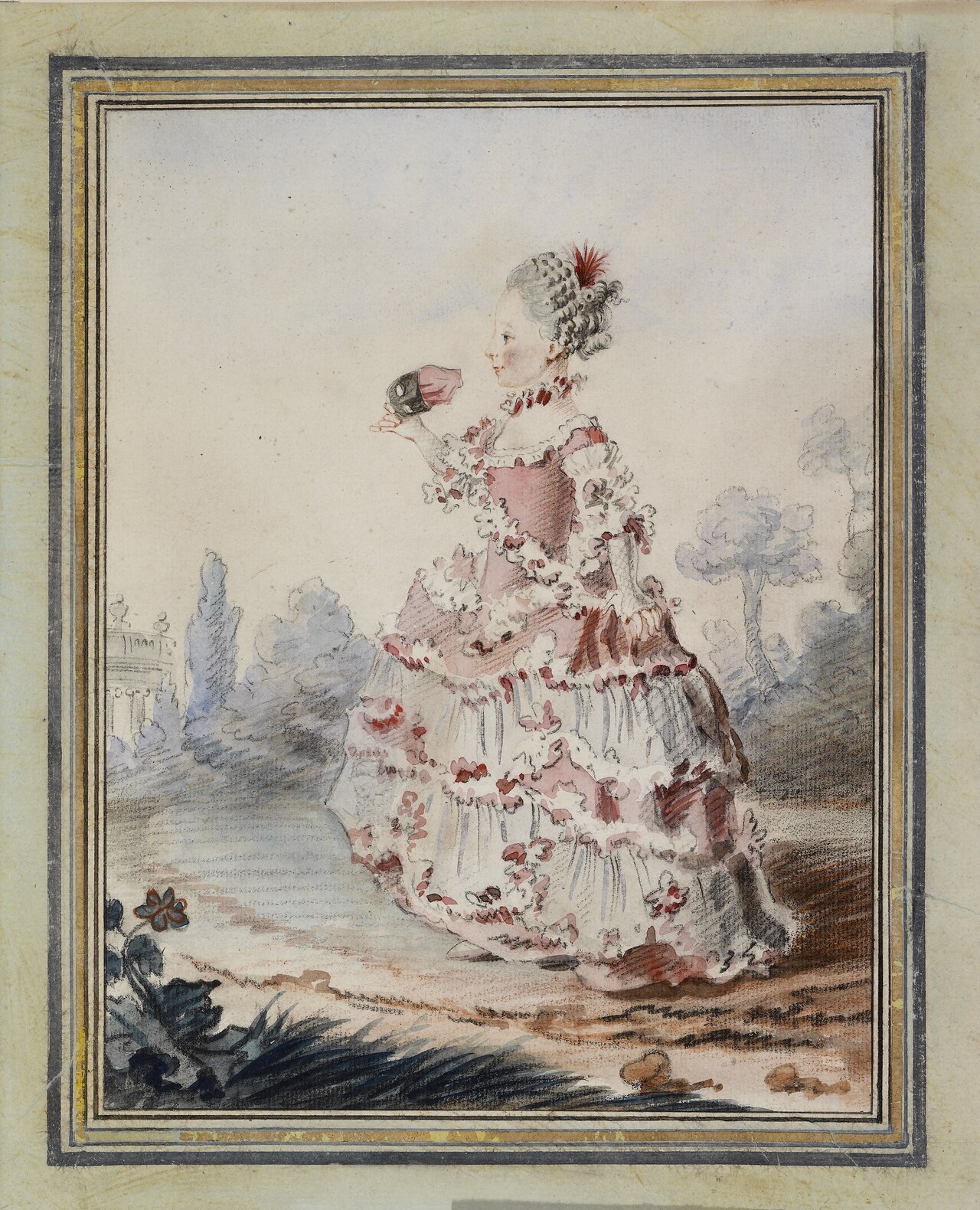
![[Daniel-Charles Trudaine] BOYER 2455 by Louis Carrogis Carmontelle](https://commons.wikimedia.org/wiki/File:BOYER_2455_-_-Daniel-Charles_Trudaine-.jpg)
Early life Louis Carrogis Carmontelle was born in Paris in 1717 to a modest but culturally engaged family. His father, a minor civil servant, recognised his son's early talent for drawing and encouraged a classical education. Carmontelle attended the Académie Royale de Peinture et de Sculpture, where he received formal training in drawing, composition and the principles of the French Baroque tradition. The vibrant theatrical life of Paris in the early 18th century left a lasting impression on him, and he began to attend performances at the Comédie-Française from a young age. These experiences shaped his later dual career as both a visual artist and a stage designer.
Career and style Carmontelle’s professional life unfolded across several artistic domains. In the 1740s he secured a position as a set designer for the Comédie-Française, where his skill in creating atmospheric perspectives earned him a reputation for theatrical ingenuity. Simultaneously, he cultivated a portrait practice that blended the refined elegance of French Rococo with a nascent naturalism. His portraits are noted for their psychological acuity, capturing sitters in unguarded moments rather than in the stiff conventions of court portraiture.
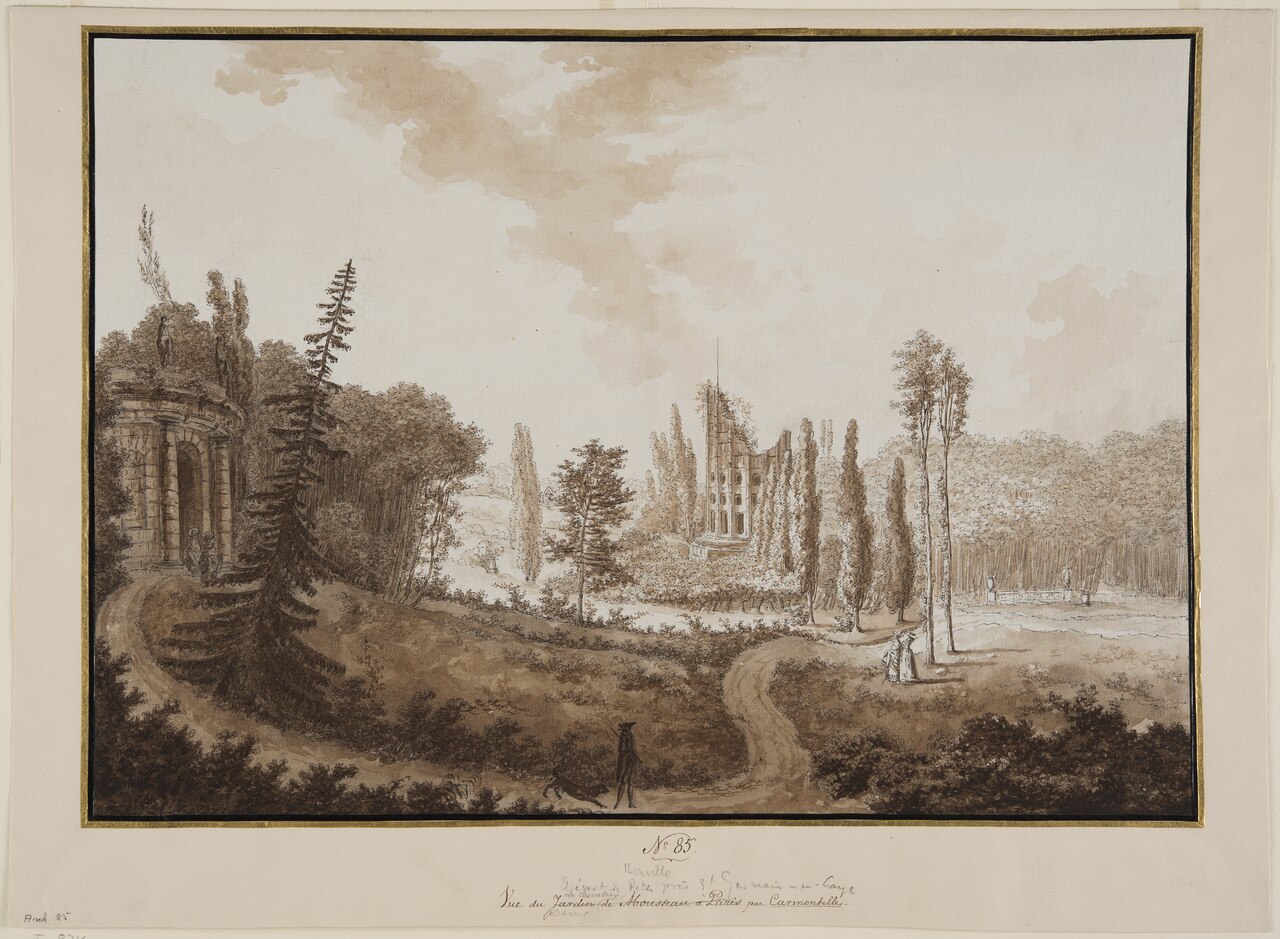
Beyond painting, Carmontelle pursued architecture and garden design. He was commissioned to design private follies and pavilions for aristocratic patrons, integrating architecture with landscape in a manner that anticipated the English landscape garden. His most celebrated landscape project, the early layout of Parc Monceau in Paris, combined winding paths, ornamental temples and water features to create a theatrical experience in open space. This approach reflected his belief that art should engage the viewer’s imagination as much as their eye.
Throughout his career Carmontelle remained a prolific writer, producing memoirs, travel sketches and reflections on artistic practice. His writings reveal a mind deeply interested in the mechanics of perception, an interest that culminated in his invention of the "transparent"—a device that projected moving bands of painted landscape, an antecedent of the magic lantern and later motion pictures.
Signature techniques Carmontelle’s visual language is characterised by several recurring techniques:
* Theatrical perspective: Drawing on his set‑design background, he employed exaggerated vanishing points and staged compositions to give his interiors and garden scenes a sense of drama. * Chiaroscuro with subtlety: While not as stark as Caravaggio, Carmontelle used light and shadow to model forms gently, allowing facial features and architectural details to emerge with a soft three‑dimensionality. * Narrative portraiture: Rather than static poses, his portraits often show subjects engaged in an activity—reading, playing an instrument, or simply looking away—suggesting a moment in time. * Integration of architecture and nature: In his garden designs, he positioned pavilions, temples and grottoes so that they framed specific vistas, turning the landscape itself into a series of living paintings. * Early optical experimentation: The "transparent" employed a series of painted strips moved behind a translucent screen, creating the illusion of motion. This device reflects his fascination with how the eye perceives change.
Major works
* Temple de l’Amour, Neuilly‑sur‑Seine (c. 1760s): This neoclassical garden pavilion, commissioned by the Marquis de Montmirail, exemplifies Carmontelle’s ability to fuse architectural elegance with pastoral charm. Its circular plan and Corinthian columns echo classical temples, while its location within a landscaped garden creates a romantic tableau of intimacy and contemplation.
* Portrait of Leopold Mozart and his two children, Wolfgang Amadeus and Marie‑Anne (1763): Executed in oil on canvas, this group portrait captures the Mozart family in a domestic interior. Carmontelle’s handling of light, the relaxed pose of the children, and the subtle inclusion of musical scores underscore his skill in portraying both likeness and atmosphere.
* Mlle Dazincourt (c. 1760): A single portrait of the celebrated actress Françoise‑Marie‑Thérèse Dazincourt, the work highlights Carmontelle’s theatrical sensibility. The actress is depicted in a simple yet elegant costume, with a faint stage curtain suggested in the background, hinting at her profession without overt theatricality.
* [Daniel‑Charles Trudaine] BOYER 2455 (mid‑18th century): Although the exact title is obscure, this work is believed to be a portrait of the prominent French administrator Daniel‑Charles Trudaine. Carmontelle rendered Trudaine in a dignified pose, emphasizing his status through fine detailing of attire and a restrained colour palette.
* Kolonnhuset och Pantemplet i Désert de Retz (c. 1770s): These two follies on the estate of the Marquis de la Saussaye illustrate Carmontelle’s fascination with exotic and historicist architecture. The Kolonnhuset, a mock‑colonial house, and the Pantemplet, a small classical temple, were positioned to frame specific sight‑lines across the landscaped grounds, turning the estate into a theatrical stage.
* Parc Monceau (1760‑1775): While not a single object, the early design of this Parisian park remains Carmontelle’s most influential landscape project. He introduced a series of artificial ruins, a pyramidal obelisk and a "temple of love" that together created a series of picturesque scenes, each designed to evoke a particular emotional response.
Influence and legacy Louis Carrogis Carmontelle occupies a distinctive niche in art history as a true polymath whose work bridged visual art, theatre, architecture and early visual technology. His portraiture anticipated the more intimate, psychologically driven approaches of later 18th‑century French artists such as Jean‑Baptiste Greuze. In garden design, his contribution to Parc Monceau laid groundwork for the French landscape garden, influencing later designers like André‑Le Nôtre’s successors and the Romantic garden movement.
Carmontelle’s "transparent" is recognised by historians of optics as a precursor to the magic lantern, an apparatus that would dominate public entertainment in the 19th century and ultimately evolve into cinema. By experimenting with moving painted bands, he demonstrated an early understanding of sequential visual storytelling, a principle that underpins modern motion pictures.
Today, Carmontelle’s works are held in the collections of the Musée du Louvre, the Musée des Arts Décoratifs and various regional museums across France. His garden follies continue to attract scholars interested in the interplay of architecture and landscape, while his theatrical designs inform studies of 18th‑century stagecraft. In sum, Carmontelle’s interdisciplinary achievements reflect the Enlightenment’s spirit of curiosity, and his legacy endures in the fields of portraiture, garden design and the early history of visual media.
---
Frequently asked questions
Who was Louis Carrogis Carmontelle?
Louis Carrogis Carmontelle (1717–1806) was a French dramatist, painter, architect and garden designer renowned for his portraiture, theatrical set designs, and pioneering work on the early French landscape garden at Parc Monceau.
What artistic style or movement is he associated with?
Carmontelle worked during the Rococo period but his style blended Rococo elegance with emerging naturalism, and his garden designs foreshadowed the later Romantic landscape movement.
What are his most famous works?
His most celebrated works include the Temple de l’Amour in Neuilly‑sur‑Seine, the 1763 portrait of Leopold Mozart with his children, the portrait of actress Mlle Dazincourt, the Kolonnhuset and Pantemplet at Désert de Retz, and his early layout of Parc Monceau.
Why does he matter in art history?
Carmontelle is important for advancing portraiture toward greater psychological depth, for shaping the French landscape garden, and for inventing the "transparent," an early optical device that prefigured the magic lantern and modern cinema.
How can I recognise a Carmontelle painting or design?
Look for a soft chiaroscuro, theatrical composition, and an emphasis on narrative moments; his garden designs often feature miniature classical temples or exotic follies positioned to create framed vistas.