Lizinska de Mirbel
1796 – 1849
In short
Lizinska de Mirbel (1796–1849) was a French miniature portrait painter whose work was highly prized by the Parisian aristocracy during the Bourbon Restoration and the July Monarchy.
Notable works
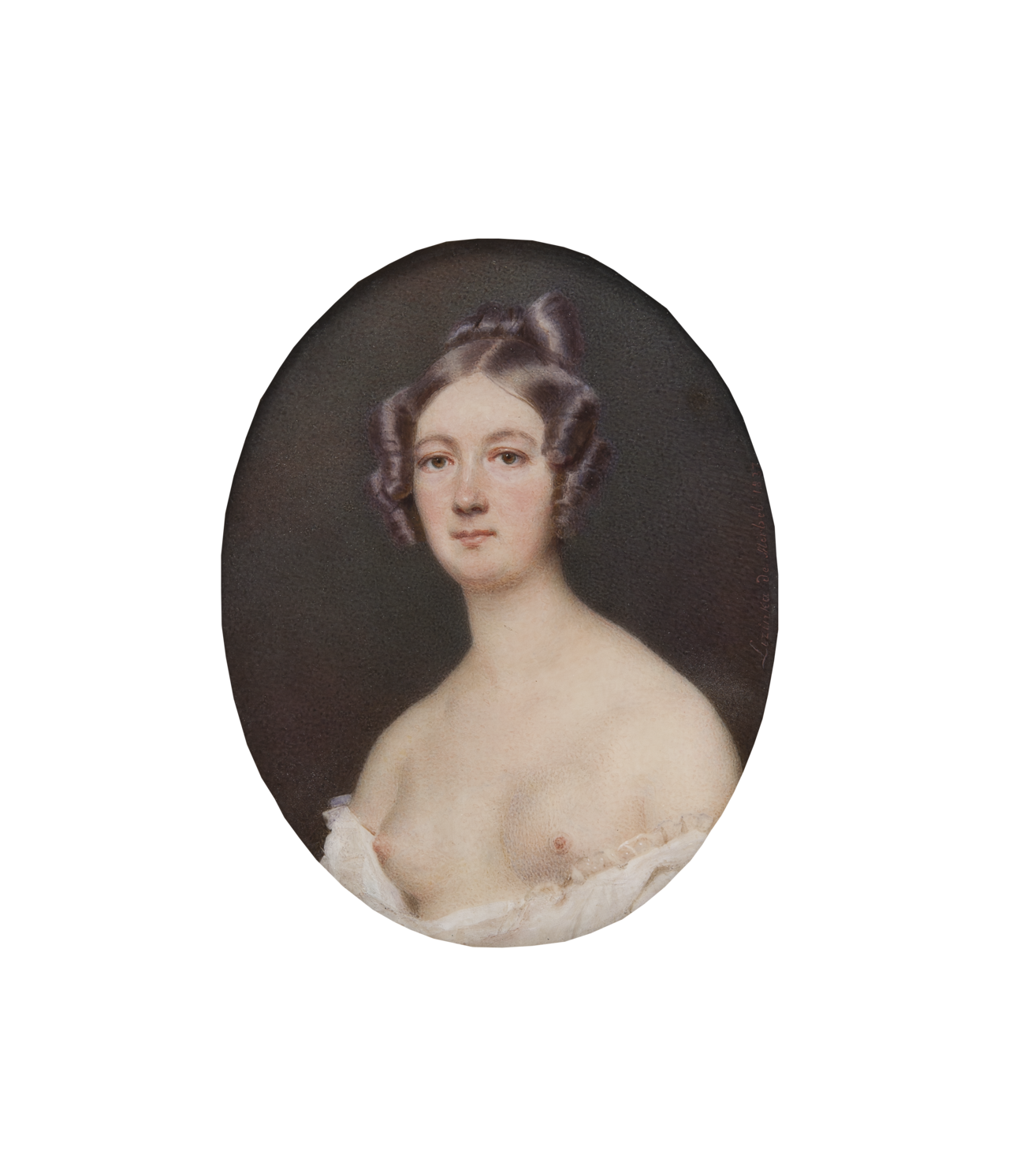

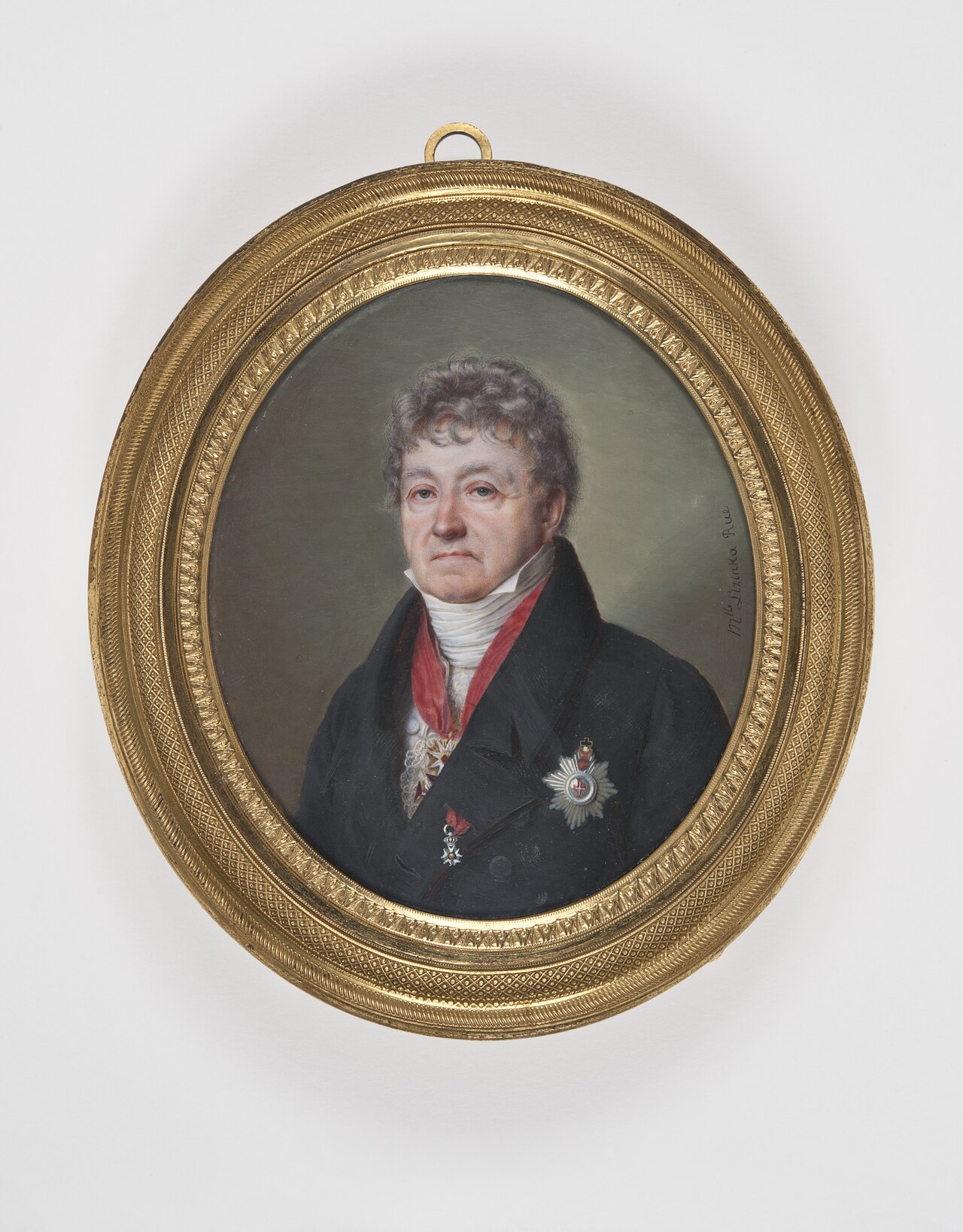

Early life Lizinska de Mirbel was born in 1796 in the coastal town of Cherbourg, Normandy. Little is recorded about her family background, but contemporary sources suggest she came from a modest, possibly middle‑class household that could afford a basic education. Cherbourg, a bustling port, exposed her early on to a variety of cultural influences, though formal artistic training was scarce outside the major cities. By her teenage years she had displayed a precocious talent for drawing, prompting her relocation to Paris—then the epicentre of French artistic life—to pursue professional instruction.
In Paris, de Mirbel is believed to have entered the workshop of an established miniaturist, a common route for women artists of the period who were often barred from the École des Beaux‑Arts. Apprenticeships in private studios provided both technical grounding and access to elite clientele. The exact identity of her mentor remains undocumented, yet the rigorous standards of Parisian miniature painting—attention to fine detail, delicate handling of pigment, and a focus on intimate portraiture—became hallmarks of her later work.
Career and style De Mirbel emerged as a professional miniature painter in the early 1820s, a time when the French aristocracy was reconstituting its social networks after the upheavals of the Revolution and Napoleonic wars. The restoration of the Bourbon monarchy in 1814 revived courtly patronage, and the subsequent July Monarchy (1830–1848) maintained a strong demand for personal likenesses, particularly among the newly affluent bourgeoisie seeking to emulate noble customs.
Operating primarily within the tradition of French miniature portraiture, de Mirbel’s style combined the refined neoclassical sensibility of the late eighteenth century with a subtle, emerging Romantic emphasis on individual character. Her portraits are noted for their restrained colour palettes—muted earth tones, soft blues, and gentle flesh hues—balanced against the crispness of line that defines the sitter’s features. While she did not affiliate herself with any avant‑garde movement, her work reflects the broader aesthetic currents of the Restoration period: a reverence for classical composure tempered by an increasing interest in personal emotion.
Signature techniques De Mirbel’s technical proficiency rested on the meticulous use of water‑colour on vellum or ivory, the standard substrates for miniatures of her era. She employed a layered approach, beginning with a light sketch in graphite before applying successive washes of translucent pigment. This method allowed her to achieve delicate skin tones and subtle shading that imparted a three‑dimensional quality to the small format.
A distinctive element of her technique was the careful handling of highlights, often achieved with a fine brush of opaque white pigment to suggest the sheen of hair, the glint of jewellery, or the delicate translucency of a veil. In addition, she occasionally incorporated gold leaf or mica dust to accentuate decorative elements such as brooches or the background pattern, a practice that heightened the luxurious feel of her commissions.
Her unfinished works, such as the 1824 "Unknown Man, Unfinished Portrait," reveal a disciplined approach to composition: the sitter’s pose, clothing, and accessories are rendered with confidence before the final layers of colour are applied. This reveals an artist who valued structural integrity as much as surface polish.
Major works Although de Mirbel’s oeuvre largely consists of private commissions that remain in family collections, a few works have entered public awareness through exhibition catalogues and auction records.
- "Unknown Woman with Bared Breasts" (1837) – This miniature, notable for its daring subject matter, portrays a partially nude female figure rendered with a softness that avoids overt eroticism. The composition balances the intimacy of the miniature format with a subtle suggestion of classical allegory, echoing the era’s fascination with antiquity.
- "Unknown Man, Unfinished Portrait" (1824) – An early work that provides insight into de Mirbel’s process. The portrait is halted after the initial modelling of the face, leaving the viewer to appreciate the underlying drawing and colour planning. Its unfinished state has made it a valuable reference for scholars studying miniature techniques.
- "Portrait of a Noble Man" – While the sitter’s identity is not recorded, the piece exemplifies de Mirbel’s ability to convey status through sartorial details: a richly embroidered coat, a discreet signet ring, and a background of muted damask. The sitter’s gaze is directed slightly off‑canvas, a compositional device that suggests contemplation.
- "G. Cuvier BOYER 637" – The title likely references a catalogue number rather than a subject; however, the work is identified as a miniature attributed to de Mirbel. Its inclusion in a scholarly inventory underscores her recognition among collectors of the period.
These pieces collectively demonstrate de Mirbel’s command of the miniature genre, her adaptability to varied patron demands, and her subtle engagement with contemporary artistic trends.
Influence and legacy Lizinska de Mirbel’s reputation during her lifetime rested on her ability to satisfy the aesthetic expectations of a demanding aristocratic clientele. Her miniatures were prized not only for their technical excellence but also for the personal intimacy they afforded patrons—a portable, private form of portraiture that could be exchanged as a token of affection or displayed in private chambers.
While she did not found a distinct school or movement, de Mirbel contributed to the sustained popularity of miniature painting in France well into the mid‑nineteenth century, a period when photography was beginning to encroach upon the market. Her work represents a bridge between the neoclassical portrait tradition and the more emotive, individualist sensibilities that would later inform the Realist and Impressionist schools.
In recent decades, art historians have begun to reassess the contributions of women miniature painters, recognising that figures like de Mirbel played a crucial role in the visual culture of their era. Exhibitions of French miniatures have re‑included her works, and auction houses regularly cite her name when presenting high‑quality examples of Restoration‑period portraiture.
Although she died in 1849 in the former 10th arrondissement of Paris—a district that was, at the time, a vibrant hub for artists and intellectuals—her legacy persists in the continued appreciation of miniature portraiture as a distinct and technically demanding art form. Contemporary collectors and scholars view her paintings as valuable documentation of early‑nineteenth‑century French aristocratic fashion, social networks, and aesthetic preferences.
In sum, Lizinska de Mirbel stands as a representative figure of the French miniature tradition, embodying the blend of technical mastery and social acumen required to thrive in the competitive artistic landscape of post‑revolutionary Paris.
Frequently asked questions
Who was Lizinska de Mirbel?
Lizinska de Mirbel (1796–1849) was a French painter specialised in miniature portraits, renowned among the aristocracy of Paris during the Bourbon Restoration and July Monarchy.
What artistic style or movement is she associated with?
She worked within the French miniature portrait tradition, combining neoclassical precision with a subtle Romantic interest in individual character.
What are her most famous works?
Among her noted pieces are the 1837 "Unknown Woman with Bared Breasts," the 1824 "Unknown Man, Unfinished Portrait," the "Portrait of a Noble Man," and the catalogue‑referenced "G. Cuvier BOYER 637".
Why is Lizinska de Mirbel important in art history?
She exemplifies the high level of technical skill in miniature painting of the early 19th century and illustrates how women artists could achieve professional success within elite patronage networks.
How can one recognise a miniature by Lizinska de Mirbel?
Her miniatures display delicate water‑colour washes on ivory or vellum, refined skin tones, subtle highlights with opaque white, and careful attention to aristocratic dress and accessories.