Lievin de Winne
1821 – 1880
In short
Lievin de Winne (1821–1880) was a Belgian portrait painter from Ghent, best known for his official portrait of King Leopold I that inspired Belgium's first postage stamp. He worked chiefly in Brussels, producing refined, academic portraits of notable figures of his time.
Notable works
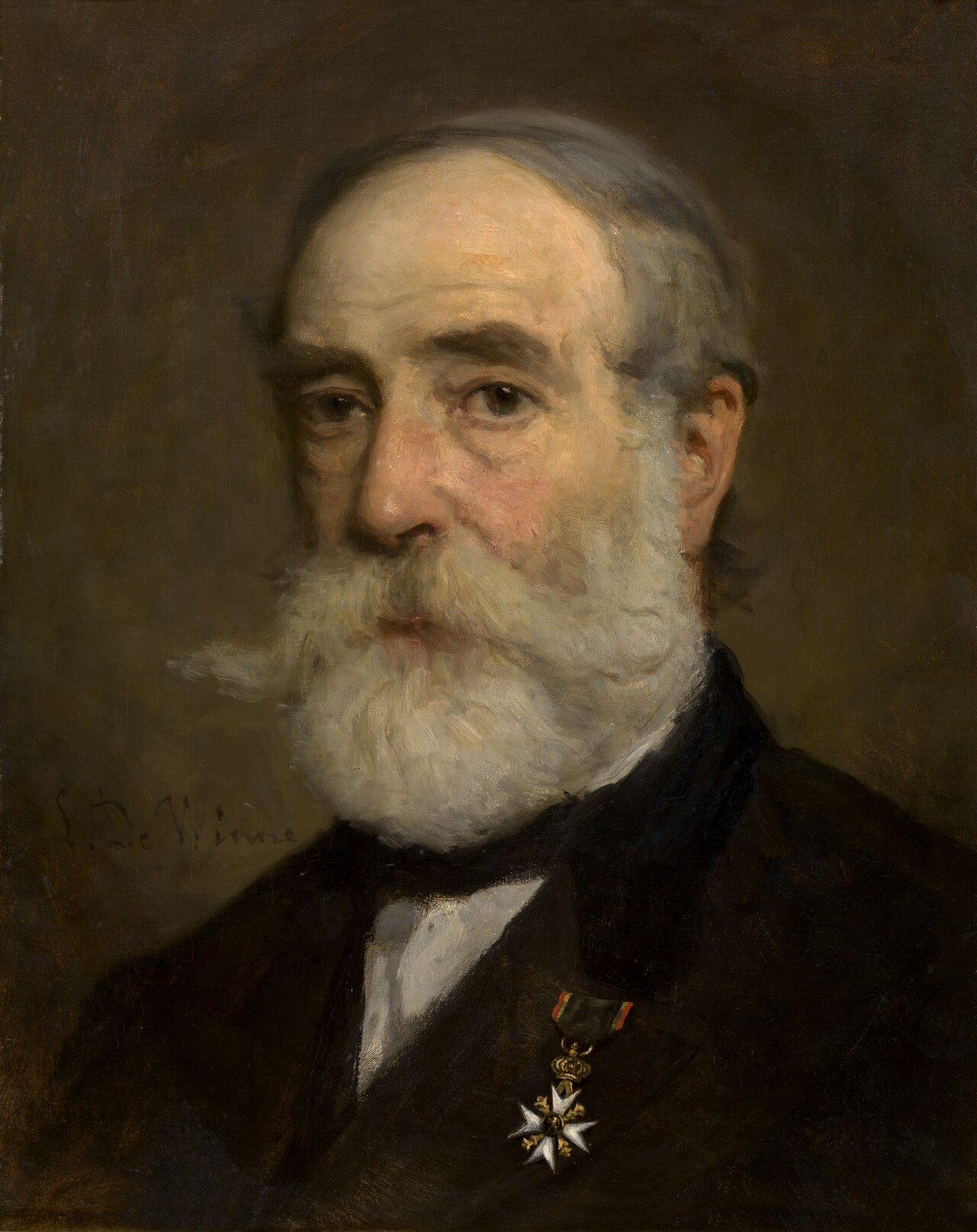
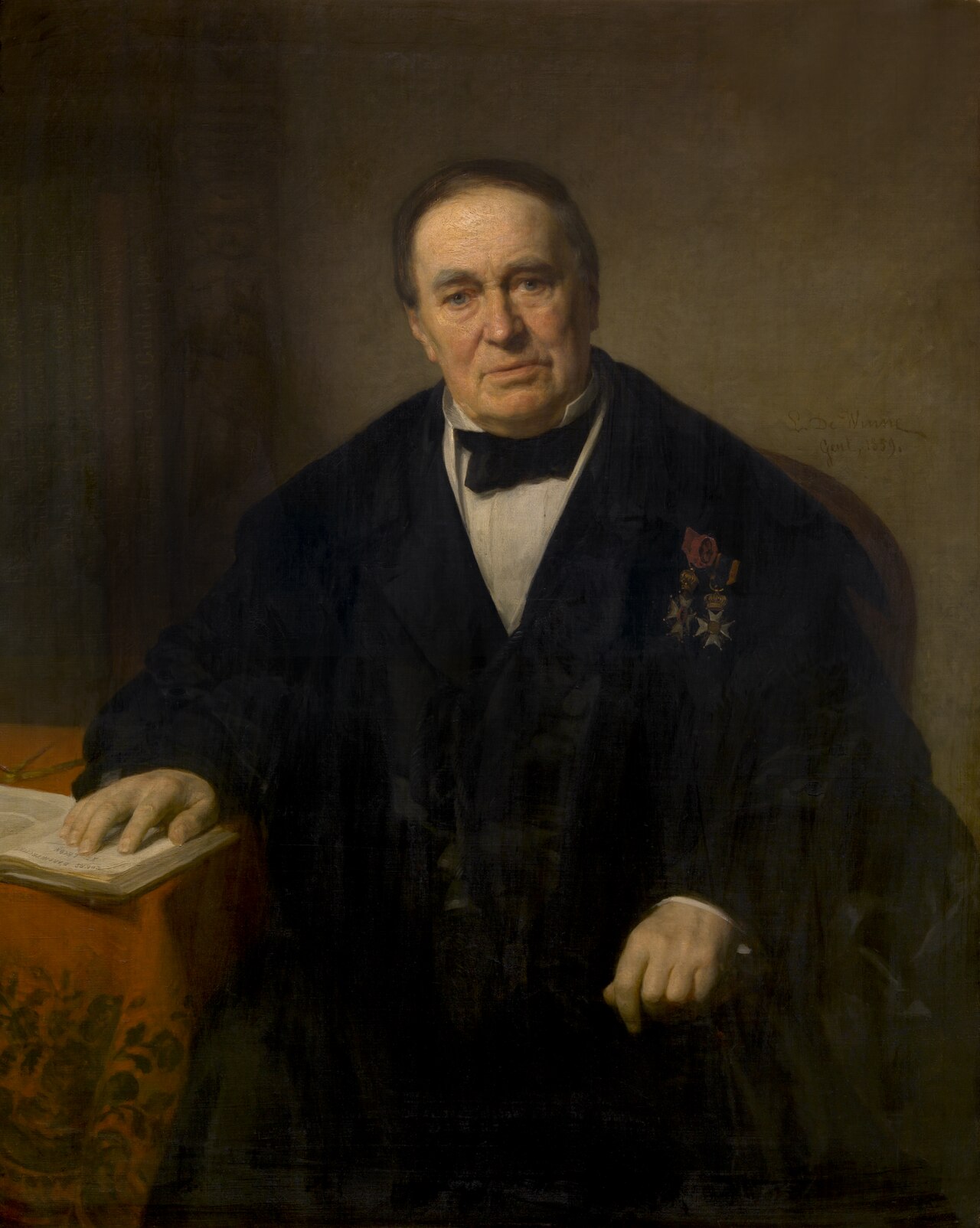
.jpg)
.jpg)
.jpg)
Early life Liévin de Winne was born in 1821 in Ghent, a city with a strong artistic tradition and home to the Royal Academy of Fine Arts. While specific records of his family background are scarce, it is known that he received formal training in drawing and painting at the Academy, where the curriculum emphasized classical techniques, life‑drawing, and the study of the Old Masters. This education laid the foundation for his later focus on portraiture, a genre that demanded both technical skill and a keen sense of character.
Career and style After completing his studies, de Winne moved to Brussels, the cultural and political centre of Belgium. There, he established a studio that quickly attracted commissions from the emerging bourgeoisie, the aristocracy, and the royal court. His work aligns with the academic realism that dominated mid‑nineteenth‑century European painting. Though not formally attached to a specific avant‑garde movement, de Winne’s portraits display a disciplined approach to composition, a balanced colour palette, and an emphasis on the sitter’s status and personality.
De Winne’s clientele included military officers, architects, physicians, and members of the royal family. The demand for his work was driven by the growing Belgian nation‑state, which sought visual representations of its leaders and elites. His portraits were often displayed in public buildings, private salons, and later reproduced in prints, reinforcing his reputation as a leading portraitist of his generation.
Signature techniques De Winne’s technique is characterised by several recurring elements:
* Chiaroscuro modelling – He employed subtle gradations of light and shadow to give his figures a three‑dimensional presence, particularly in the rendering of facial features and drapery. * Fine brushwork – Textural details such as silk, lace, and polished wood are depicted with delicate, layered strokes that convey material quality without overwhelming the overall composition. * Controlled colour harmony – A restrained palette of earthy tones, muted blues, and warm ochres creates an atmosphere of dignity and formality, allowing the sitter’s expression to dominate. * Psychological depth – Beyond surface likeness, de Winne captured a sitter’s demeanor through nuanced eye contact, posture, and the inclusion of symbolic objects that hint at the subject’s profession or status.
These methods combined to produce portraits that were both technically proficient and emotionally resonant, a balance prized by his patrons.
Major works The following works illustrate de Winne’s range and his role in documenting Belgian society:
* Captain Van de Woestijne – This portrait presents the military officer in a uniform of dark blue, with a crisp white shirt and gold epaulettes. The captain’s gaze is steady, and the background is a muted landscape that subtly references his service abroad. * The Architect Lodewijk Jozef Adriaan Roelandt (1859) – Completed in 1859, this painting portrays the celebrated architect holding a set of plans. The composition balances the architect’s dignified posture with the architectural drawings, underscoring his professional identity. * Portrait of King Leopold I – De Winne’s official portrait of Belgium’s first king became the visual basis for the nation’s inaugural postage stamp. While some catalogues list a later reproduction date, the original sitting occurred during Leopold I’s reign, and the portrait’s dignified pose and regal attire reflect the monarch’s status. * Portrait of the Physician Auguste‑François Vermeulen – In this work, the physician is depicted in a dark coat with a stethoscope draped over his shoulder, a book of medical notes on a nearby table, and a calm expression that conveys both competence and compassion. * Portrait of Delphine Vermeulen‑Huyttens, the Wife of August‑François Vermeulen – Complementing the portrait of her husband, this painting captures Delphine in a modest yet elegant dress, with a soft focus on her hands, suggesting domestic refinement and the supportive role of women in professional households.
Each of these paintings demonstrates de Winne’s ability to adapt his style to the sitter’s social rank while maintaining a consistent visual language.
Influence and legacy Lievin de Winne’s legacy rests on his contribution to the visual identity of nineteenth‑century Belgium. By providing an official portrait of King Leopold I that was reproduced on the first Belgian postage stamp, he helped cement the monarch’s image in the public consciousness. His portraits also serve as valuable historical documents, offering insight into the clothing, insignia, and interior settings of the period.
Later Belgian portraitists, such as Léon Frédéric and Charles Van der Stappen, drew upon de Winne’s disciplined approach to realism, ensuring that the academic tradition persisted even as newer artistic movements emerged. Although his name is less widely known outside specialist circles, de Winne remains a reference point for scholars studying the intersection of art, national identity, and portraiture in Belgium.
In museum collections and private holdings, his works continue to be exhibited for their technical merit and their role in chronicling the nation’s formative decades. Contemporary exhibitions on Belgian art often include de Winne’s portraits to illustrate the country’s early visual culture and to highlight the importance of portrait painting in shaping public perception of leaders and professionals alike.
Frequently asked questions
Who was Lievin de Winne?
Lievin de Winne (1821–1880) was a Belgian portrait painter from Ghent, best known for his official portrait of King Leopold I that inspired Belgium’s first postage stamp.
Which artistic style or movement is he associated with?
He worked within the academic realism of mid‑nineteenth‑century Europe, producing technically precise, formally composed portraits without affiliation to a specific avant‑garde movement.
What are his most famous works?
His most notable paintings include the official Portrait of King Leopold I, Captain Van de Woestijne, The Architect Lodewijk Jozef Adriaan Roelandt (1859), the Portrait of the Physician Auguste‑François Vermeulen, and the Portrait of Delphine Vermeulen‑Huyttens.
Why does Lievin de Winne matter in art history?
His portraits document Belgium’s early national figures and his portrait of Leopold I was used for the country’s first postage stamp, linking visual art with the formation of Belgian national identity.
How can I recognise a Lievin de Winne painting?
Look for finely rendered fabrics, subtle chiaroscuro, a restrained colour palette, and a dignified, psychologically nuanced portrayal of the sitter, often accompanied by objects indicating their profession or status.