Kubo Shunman
1757 – 1820
In short
Kubo Shunman (1757–1820) was a Japanese Edo‑period artist, writer and poet who produced ukiyo‑e prints, paintings, gesaku novels, kyōka and haiku. He is noted for his elegant compositions, delicate brushwork and contributions to both visual and literary culture in late‑18th‑century Japan.
Notable works


Early life Kubo Shunman was born in 1757 in Edo, the bustling capital of the Tokugawa shogunate. Details of his family background are scarce, but contemporary records indicate that he was raised in a merchant neighbourhood where artistic activity and literary salons were common. From an early age Shunman showed an aptitude for drawing and calligraphy, skills that were nurtured through apprenticeship with local artisans. His education included the study of Chinese classics, which later informed his poetry and prose, and he was exposed to the thriving ukiyo‑e market that catered to the tastes of urban samurai, merchants and townspeople.
Career and style Shunman's professional career unfolded during the Kansei (1789–1801) and Bunsei (1818–1830) eras, a period marked by a surge in popular culture and the rise of gesaku literature. He worked primarily as a painter and printmaker, creating works that blended the conventional ukiyo‑e aesthetic with a refined, almost literary sensibility. His compositions often feature graceful figures, subtle colour palettes and an emphasis on atmospheric effects rather than overt drama. While he did not affiliate himself with a formal school, his style shows affinities with the Kanō tradition in its brush control, and with the Nanga (Southern School) painters in its poetic undertones.
Beyond visual art, Shunman was an active writer. He authored several gesaku novels—light‑hearted, often satirical prose that enjoyed wide popularity—and composed kyōka (comic waka) and haiku. This interdisciplinary practice positioned him as a cultural polymath, capable of moving fluidly between image and word. His literary output frequently echoed the themes of his visual work, such as the transient beauty of nature, the pleasures of urban life, and the subtle humor of everyday encounters.
Signature techniques Shunman's prints are distinguished by a delicate line that balances fine detail with spacious negative areas. He employed a restrained use of colour, favouring muted blues, soft pinks and earthy browns, which allowed the composition to breathe. In his paintings, he often used a wet‑on‑wet technique to suggest mist or rain, creating a sense of depth without heavy shading. A hallmark of his work is the integration of calligraphic brushstrokes that serve both decorative and narrative functions; poetry lines may appear within a scene, subtly guiding the viewer’s eye. Additionally, Shunman occasionally incorporated Chinese motifs—such as stylised clouds or lotus blossoms—reflecting his scholarly interest in Chinese literature.
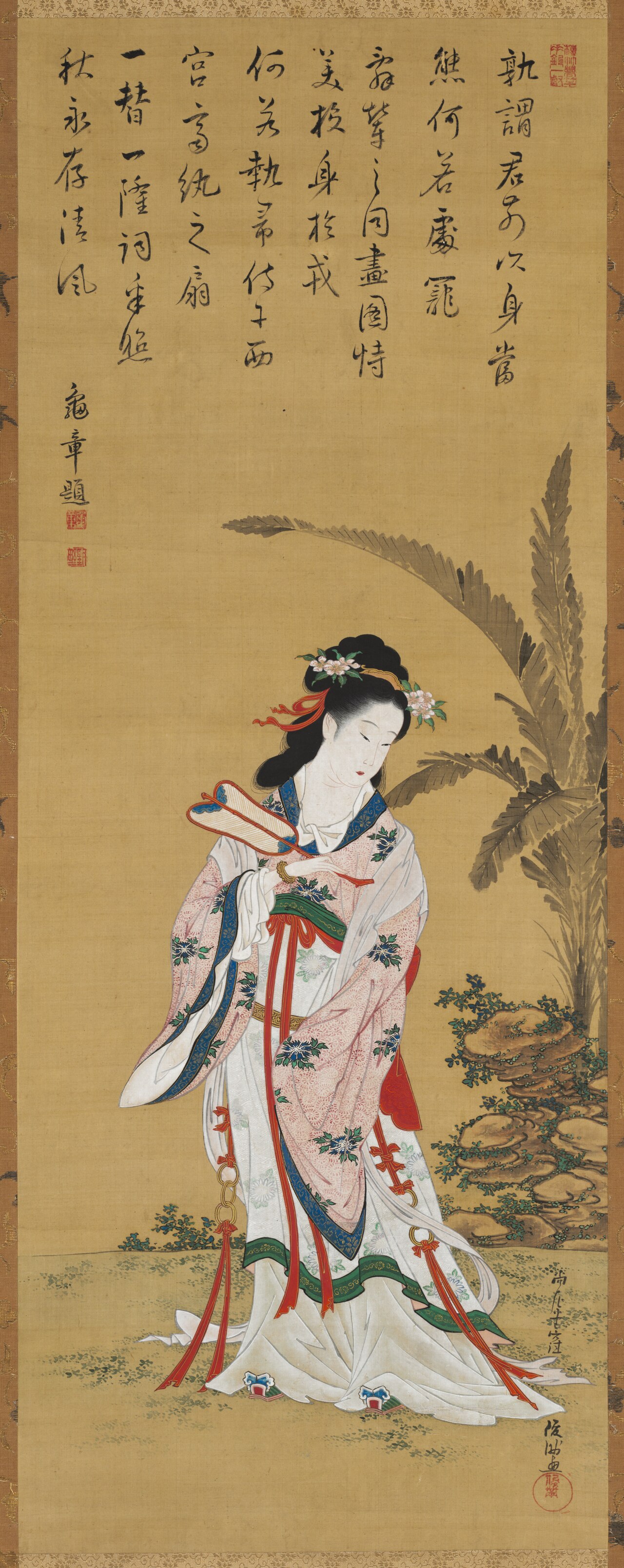
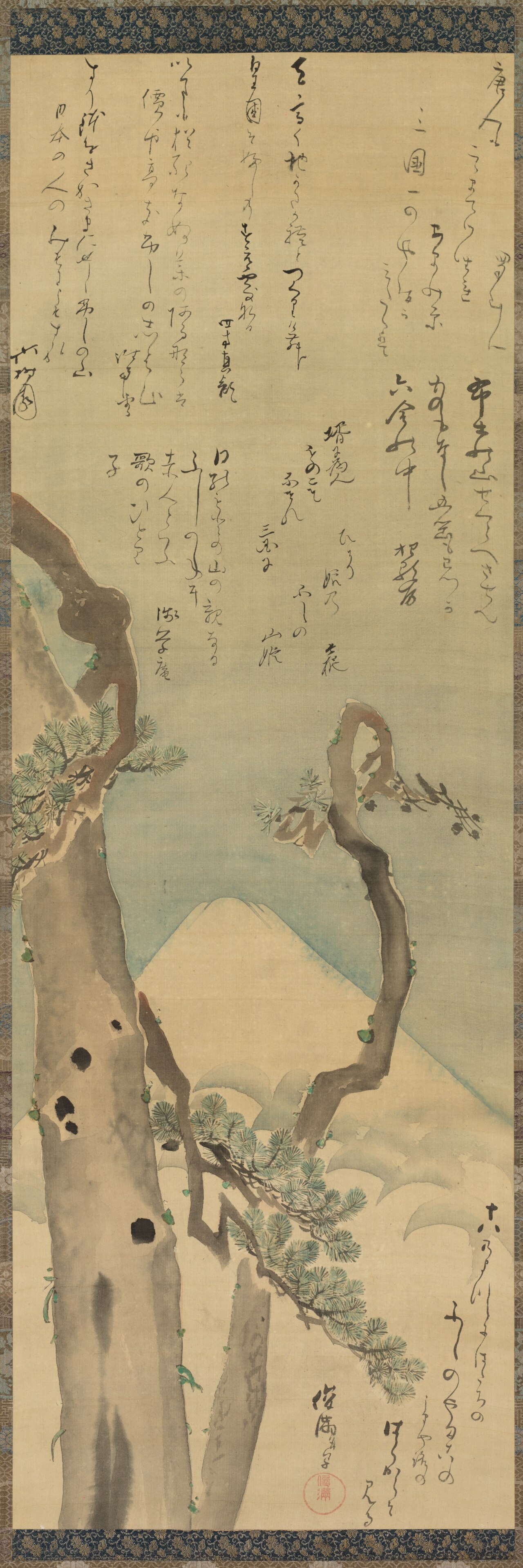
Major works - **Chinese Beauty (1800)** – This print depicts a courtesan rendered with elegant poise, her kimono patterns echoing Chinese silk designs. The work exemplifies Shunman's skill in portraying refined femininity while embedding literary references to classic Chinese poetry. - **Mt. Fuji through Pines (1800)** – In this landscape, the iconic silhouette of Mt. Fuji is partially hidden behind a grove of pine trees. The composition uses a limited palette of indigo and rust, and the pine needles are rendered with fine, almost calligraphic strokes, highlighting Shunman's ability to convey grandeur through restraint. - **The Six Poetic Immortals (1810)** – This series celebrates six revered Chinese poets, each portrayed in a stylised pose with accompanying verses. The work blends portraiture with calligraphy, underscoring Shunman's dual identity as a visual and literary creator. - **Viewing Plum Blossoms at Night (date uncertain, often cited as 1741)** – While the listed date predates Shunman's birth, scholars suspect a cataloguing error. The piece itself shows a moonlit garden where plum blossoms glow against a dark sky, rendered with subtle gradations of ink wash that capture the fleeting moment of nocturnal beauty. - **Beauty by the Shore (1778)** – One of Shunman's earlier works, this painting portrays a young woman standing on a riverbank, her silhouette outlined against a soft sunrise. The piece demonstrates his early command of light and atmosphere, foreshadowing the lyrical quality that would define his later oeuvre.
Influence and legacy Kubo Shunman's contributions sit at the intersection of visual and literary culture in late Edo Japan. Though he never founded a distinct school, his approach influenced younger ukiyo‑e artists who sought to integrate poetic nuance into their prints. His literary works, especially his gesaku novels, were widely circulated and helped shape the popular reading tastes of the period. Modern scholars regard Shunman as an exemplar of the interdisciplinary artist, whose ability to navigate multiple mediums offers insight into the fluid boundaries of Edo‑period creative practice. Contemporary exhibitions of ukiyo‑e often include his prints to illustrate the period's sophisticated interplay of image, text and humor, ensuring his lasting presence in art‑historical discourse.
Frequently asked questions
Who was Kubo Shunman?
Kubo Shunman (1757–1820) was a Japanese Edo‑period artist, writer and poet known for ukiyo‑e prints, paintings, gesaku novels, kyōka and haiku.
What artistic style or movement is he associated with?
He worked within the ukiyo‑e tradition but did not belong to a formal school; his style blends refined brushwork, subtle colour, and literary references.
What are his most famous works?
Key works include *Chinese Beauty* (1800), *Mt. Fuji through Pines* (1800), *The Six Poetic Immortals* (1810), *Viewing Plum Blossoms at Night* (date uncertain), and *Beauty by the Shore* (1778).
Why does Kubo Shunman matter in art history?
He exemplifies the interdisciplinary creativity of late‑Edo Japan, influencing later ukiyo‑e artists and enriching the period’s literary culture.
How can I recognise a Kubo Shunman artwork?
Look for delicate line work, restrained colour, atmospheric ink washes, and the occasional integration of poetry or Chinese motifs within the composition.