Katsukawa Shun'ei
1762 – 1819
In short
Katsukawa Shun'ei (1762–1819) was a Japanese ukiyo‑e artist active in Edo (modern Tokyo). He is best known for his actor prints, book illustrations and a few dramatic scenes such as the pirate Watonai subduing a tiger.
Notable works

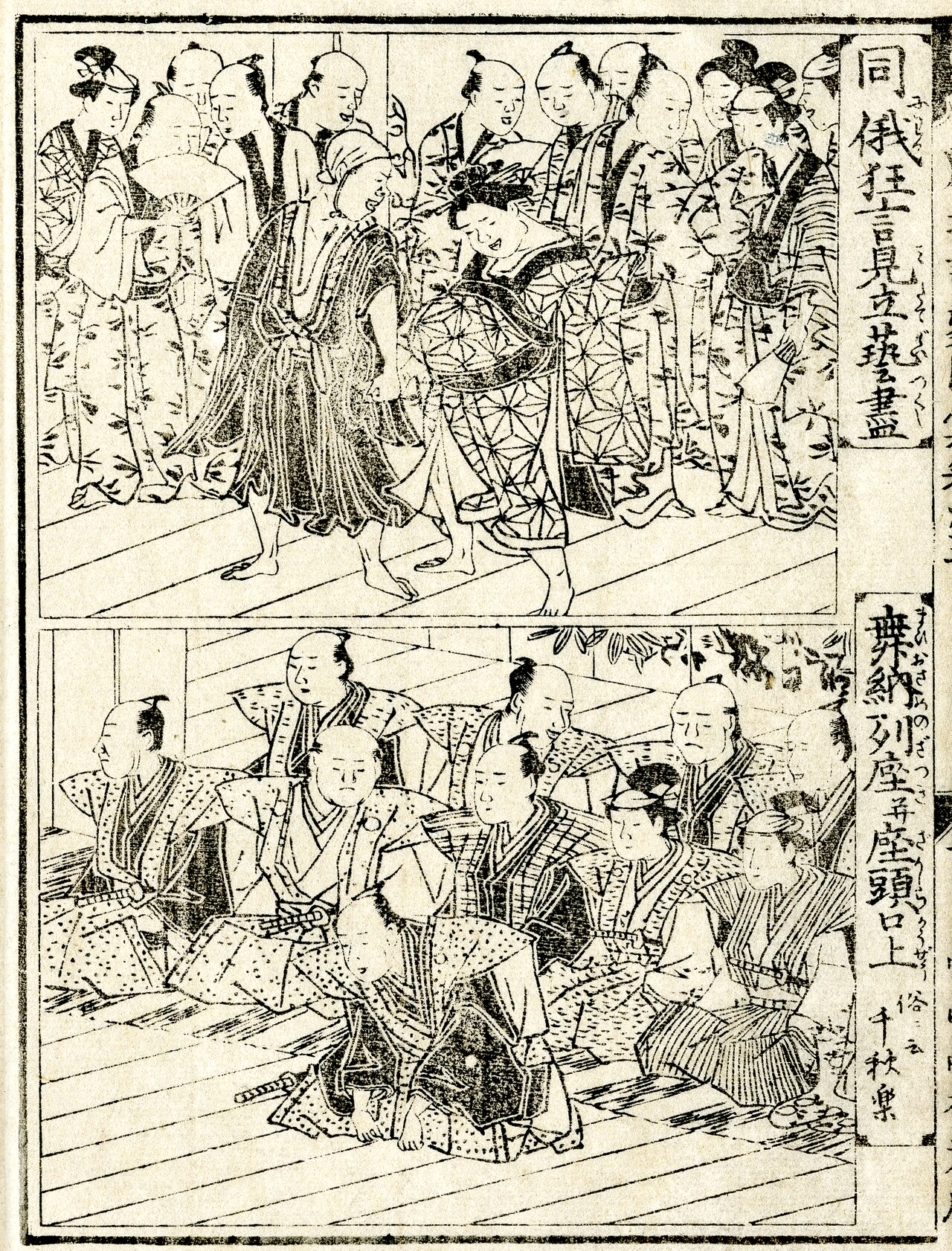
.jpg)
Early life Katsukawa Shun'ei was born in 1762 in Edo, the bustling capital of the Tokugawa shogunate, which is today Tokyo. Little is recorded about his family background, but like many ukiyo‑e practitioners of his generation he entered the artistic world through apprenticeship. He became a disciple of Katsukawa Shunshō, the founder of the Katsukawa school, a workshop that specialised in realistic portraiture of kabuki actors and other theatrical subjects. The rigorous training he received under Shunshō equipped him with the technical skills of woodblock carving and the compositional sensibilities that would define his mature work.
Career and style Shun'ei emerged as an independent artist in the late 1780s, a period when ukiyo‑e was expanding beyond its earlier focus on courtesans and landscapes to embrace the popular world of kabuki theatre. He continued the Katsukawa school's emphasis on actor prints (yakusha‑e), but he also explored narrative scenes drawn from folklore and contemporary literature. His style is characterised by a balance between bold line work and delicate colour washes, allowing him to capture both the dynamism of stage performance and the subtlety of interior scenes. While the exact artistic movement of his time is difficult to label, his oeuvre sits comfortably within the late‑18th‑century ukiyo‑e tradition that valued immediacy, popular culture and a keen eye for human expression.
Signature techniques Shun'ei employed several techniques that became hallmarks of his prints. He favoured the use of *kaizuri* (gradient shading) to model the faces of actors, giving them a three‑dimensional presence on a flat surface. In many of his works he applied *bokashi* (colour gradation) to backgrounds, creating atmospheric depth without sacrificing the flat decorative quality typical of ukiyo‑e. His line work is often described as ‘clean and precise’, a legacy of Shunshō’s disciplined draftsmanship. When illustrating books, Shun'ei used fine, detailed line engraving to render complex scenes, and he sometimes incorporated *kirazuri* (gold dust) to highlight important elements such as swords or theatrical masks.
Major works Among Shun'ei’s most celebrated prints is **The Actor Morita Kanya VIII as Tatsugorō**, which captures the famed kabuki performer in a dramatic pose, his costume rendered in vivid reds and golds. The piece exemplifies Shun'ei’s ability to convey both the actor’s charisma and the narrative context of the role. Another significant contribution is his illustration for **Shinbai Kinmo Zui (The Illustrated Encyclopedia of the Theatre)**, specifically volumes 2, 3 and 5 (published in 1803). These volumes contain a series of detailed woodblock plates that document stage costumes, set designs and actor biographies, serving as an invaluable visual record of Edo‑period theatre. Finally, the print **The pirate Watonai subduing a tiger** showcases Shun'ei’s capacity for dynamic storytelling beyond the theatre. In this composition the pirate, rendered with muscular vigor, confronts a ferocious tiger, a scene that blends action, folklore and an impressive command of perspective.
Influence and legacy Katsukawa Shun'ei’s work contributed to the solidification of the actor‑portrait genre, influencing subsequent artists such as Sharaku and Toyokuni. His careful attention to facial expression and costume detail helped set a standard for realism within the decorative constraints of ukiyo‑e. Although the Katsukawa school eventually waned in favour of the burgeoning *Utagawa* school, Shun'ei’s prints remain a primary source for scholars studying the visual culture of Edo‑period theatre. Modern exhibitions of Japanese prints often include his works to illustrate the transition from early stylised portraiture to a more naturalistic approach. His legacy endures in the continued appreciation of ukiyo‑e as a window into the social and performative life of early modern Japan.
Frequently asked questions
Who was Katsukawa Shun'ei?
Katsukawa Shun'ei (1762–1819) was a Japanese ukiyo‑e artist from Edo, best known for his actor prints and illustrated books.
What artistic style or movement is he associated with?
He worked within the late‑18th‑century ukiyo‑e tradition, particularly the Katsukawa school, which focused on realistic portraits of kabuki actors.
What are his most famous works?
His most notable pieces include the print of the actor Morita Kanya VIII as Tatsugorō, illustrations for the Shinbai Kinmo Zui encyclopedia (volumes 2, 3 and 5), and the dramatic scene The pirate Watonai subduing a tiger.
Why is Katsukawa Shun'ei important in art history?
He helped refine the actor‑portrait genre, providing a realistic visual record of Edo‑period theatre that influenced later masters like Sharaku and contributed to the study of Japanese cultural history.
How can I recognise a work by Shun'ei?
Look for clean, precise line work, subtle colour gradation (bokashi), and detailed rendering of theatrical costumes, often with a focus on the expressive faces of actors.