Karel Škréta
1610 – 1674
In short
Karel Škréta (1610–1674) was a Bohemian‑born painter active in the Baroque era, best known for his portraiture and religious altarpieces. He worked in Prague, Saxony and Italy, navigating the upheavals of the Thirty Years' War while developing a distinctive, dramatic style.
Notable works
.jpg)


Early life Karel Škréta was born in 1610 in Prague, the capital of the Kingdom of Bohemia. Little is recorded about his family background, but contemporary sources identify him as a member of the Škréta Šotnovský lineage, a name associated with the region of Závořice. His formative years coincided with the mounting religious tensions that would erupt into the Thirty Years' War (1618–1648). As a Protestant in a city increasingly dominated by Catholic authority, Škréta experienced personal and professional hardships that ultimately forced him to leave his native city.
Career and style Škréta’s artistic career began in the tumultuous environment of early‑17th‑century Prague. The war disrupted patronage networks, prompting him to seek commissions beyond Bohemia. By the early 1630s he had relocated to Saxony, where he encountered the courtly tastes of German aristocracy. A subsequent sojourn in Italy exposed him to the mature Baroque idiom of artists such as Caravaggio and the Carracci, whose dramatic lighting and vigorous compositions left a lasting imprint on his work.
Returning to Prague after the war’s end, Škréta emerged as one of the city’s leading portrait painters. His style blended the Italianate chiaroscuro with a distinctly Central European sensibility: a careful rendering of fabrics, jewellery and insignia that emphasised the social status of his sitters. In religious contexts he applied the same dramatic intensity to altarpieces, producing works that combined theatrical narrative with devotional purpose. Throughout his career he remained rooted in the Baroque aesthetic, favouring dynamic movement, strong contrasts of light and shadow, and a rich palette of deep reds, golds and earthy tones.
Signature techniques Škréta’s paintings are recognisable through several recurring technical choices:
* Chiaroscuro – He employed stark light sources to model his figures, often illuminating faces while casting backgrounds into deep shadow. This technique heightened the psychological presence of his portrait subjects. * Textural detail – Fine brushwork captures the sheen of silk, the luster of metal armour, and the subtle folds of drapery, reflecting his meticulous observation of material culture. * Dynamic composition – Figures are frequently placed off‑centre, with diagonal lines that guide the viewer’s eye across the canvas. This creates a sense of movement and narrative tension. * Colour saturation – Škréta favoured saturated reds, ochres and blues, balanced by muted earth tones. The colour schemes often convey both opulence and spiritual gravitas. * Symbolic iconography – In his religious works, he integrated traditional Christian symbols—such as halos, crucifixes and saints’ attributes—within a realistic setting, thereby bridging the sacred and the everyday.
Major works Škréta’s surviving oeuvre includes several hallmark pieces that illustrate his range:
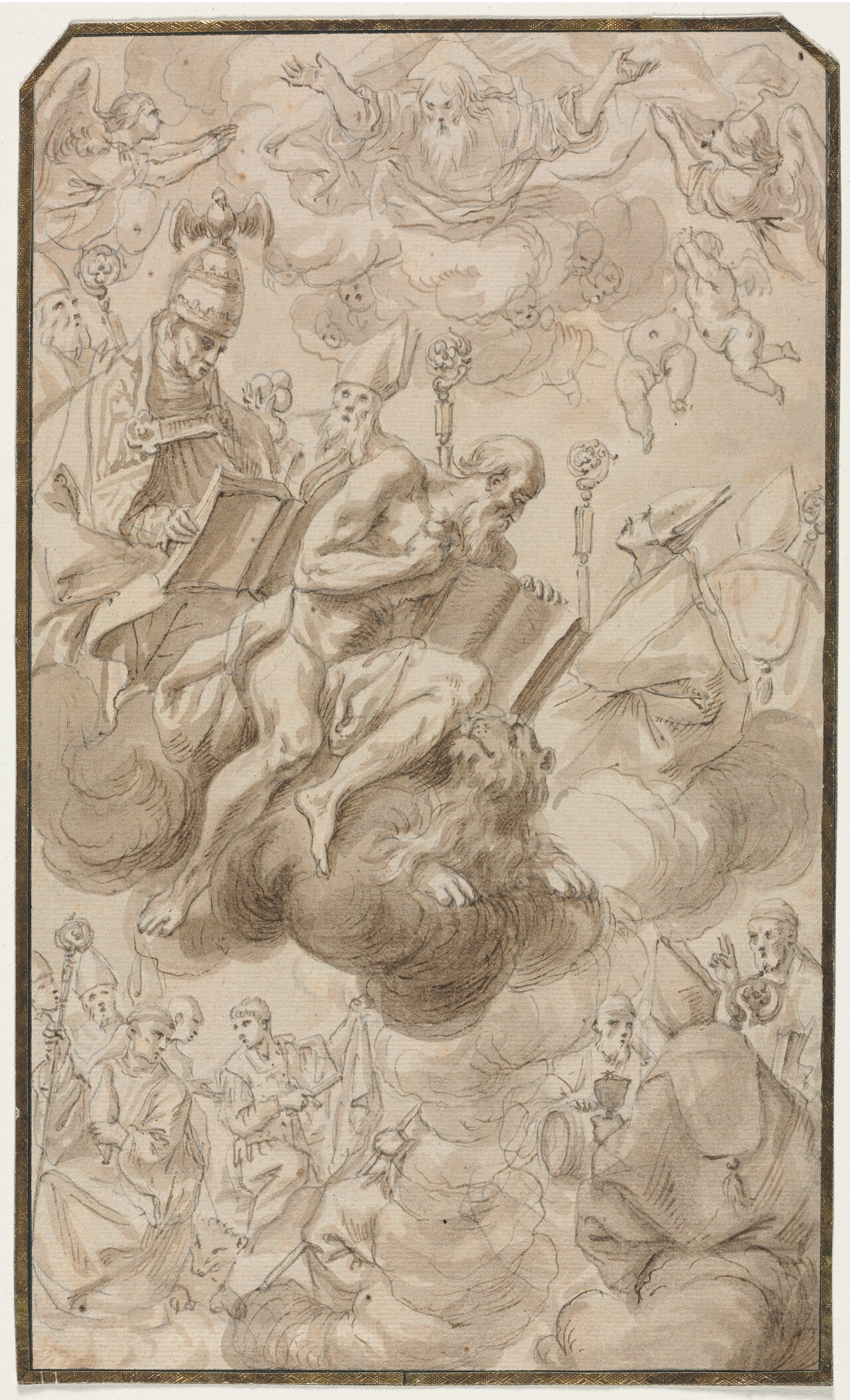
* Portrait of the Gem‑Cutter Dionysius Miseroni and His Family (1653) – This group portrait showcases Škréta’s skill in rendering varied textures, from the polished metal of tools to the soft fabrics of the sitters’ clothing. The composition balances individual character studies with a cohesive family tableau. * Saint Wenceslaus (1650) – Executed for a Prague chapel, the work presents the patron saint of Bohemia in a moment of divine revelation. Škréta’s use of luminous gold and deep chiaroscuro underscores the saint’s sanctity while maintaining a tactile realism. * The Mocking of Christ (1630) – An early religious commission, this painting demonstrates Škréta’s developing Baroque sensibility. The figures are arranged in a tight, emotionally charged space, with the central Christ figure illuminated against a darkened crowd. * Portrait of the so‑called Mathematician with his Wife (1640) – Here Škréta captures an intellectual portrait, portraying a scholar surrounded by books and scientific instruments. The careful rendering of the objects reflects his interest in the material culture of learning. * Ascension of Saint Jerome – Though undated, this altarpiece follows the same compositional vigor as his other religious works. Saint Jerome is depicted ascendant, bathed in heavenly light, surrounded by a swirling cloud that conveys both movement and spiritual elevation.
Each of these works illustrates Škréta’s capacity to blend portraiture’s psychological depth with the narrative drama of Baroque religious painting.
Influence and legacy Karel Škréta occupies a pivotal position in the development of Bohemian Baroque art. By integrating Italian Baroque techniques with local traditions, he helped forge a visual language that would dominate Czech ecclesiastical and courtly commissions for the remainder of the 17th century. His portraiture set a benchmark for realism and status representation, influencing younger painters such as Michael Willmann and later Czech masters who sought to emulate his compositional vigor.
Beyond his immediate circle, Škréta’s works contributed to the broader European Baroque movement by demonstrating how artists from the peripheries could absorb and reinterpret dominant styles. The surviving paintings, many of which remain in Prague’s churches and museums, continue to be studied for their technical mastery and as visual documentation of Bohemian society during a period of religious and political upheaval.
In contemporary scholarship, Škréta is recognised not only for his artistic achievements but also for the way his career reflects the mobility of artists during the Thirty Years' War. His ability to adapt to new artistic centres while retaining a distinct personal voice underscores the resilience of cultural production in times of conflict.
--- Overall, Karel Škréta’s oeuvre stands as a testament to the Baroque’s capacity to combine dramatic visual storytelling with meticulous observation, securing his place as a foundational figure in Central European art history.
Frequently asked questions
Who was Karel Škréta?
Karel Škréta (1610–1674) was a Bohemian-born Baroque painter known for his portraits and religious altarpieces, active in Prague, Saxony and Italy.
What artistic style or movement is he associated with?
He worked in the Baroque style, employing dramatic lighting, rich colour, and dynamic composition.
What are his most famous works?
Key works include the Portrait of the Gem‑Cutter Dionysius Miseroni and His Family (1653), Saint Wenceslaus (1650), The Mocking of Christ (1630), Portrait of the so‑called Mathematician with his Wife (1640), and the Ascension of Saint Jerome.
Why is Karel Škréta important in art history?
He helped establish a distinct Central European Baroque idiom, influencing later Czech painters and demonstrating how artists adapted to the upheavals of the Thirty Years' War.
How can I recognise a painting by Škréta?
Look for strong chiaroscuro, meticulous texture in fabrics and metal, saturated reds and golds, and a composition that balances dramatic narrative with precise portraiture.