Jozef Van Lerius
1823 – 1876
In short
Jozef Van Lerius (1823–1876) was a Belgian painter acclaimed for his Romantic‑Historical genre scenes. Working mainly in Antwerp and Mechelen, he produced narrative works such as Lady Godiva and Brides of Venice that exemplify his detailed, emotive style.
Notable works


Early life Jozef Van Lerius was born in Antwerp in 1823, the son of a modest family that recognised his artistic talent early on. He enrolled at the Royal Academy of Fine Arts in Antwerp, where he received formal training in drawing, composition and the classical techniques that underpinned the Romantic movement. The Academy’s emphasis on history painting and meticulous draftsmanship shaped Van Lerius’s later affinity for narrative subjects.
Career and style After completing his studies, Van Lerius established a studio in his native city and quickly attracted commissions for both private patrons and public exhibitions. His work is best described as Romantic‑Historical, a style that combined the dramatic storytelling of Romanticism with the careful rendering of historical detail. He favoured subjects drawn from legend, literature and everyday life, presenting them with a sense of moral earnestness and emotional resonance. Though he never aligned himself with a formal avant‑garde movement, his paintings reflect the broader mid‑nineteenth‑century European fascination with historicism and the exotic.
Signature techniques Van Lerius employed several hallmarks that make his paintings recognisable. He used a refined chiaroscuro to model figures, creating a soft yet clearly defined contrast between light and shadow. His palette tended toward warm, earthy tones punctuated by richer reds and blues, lending his scenes a tactile realism. Precise, often delicate brushwork characterises the textures of clothing, foliage and architectural elements, while his compositional arrangements frequently place the principal figure at the centre of a balanced, almost theatrical setting. These techniques together convey both narrative clarity and visual elegance.
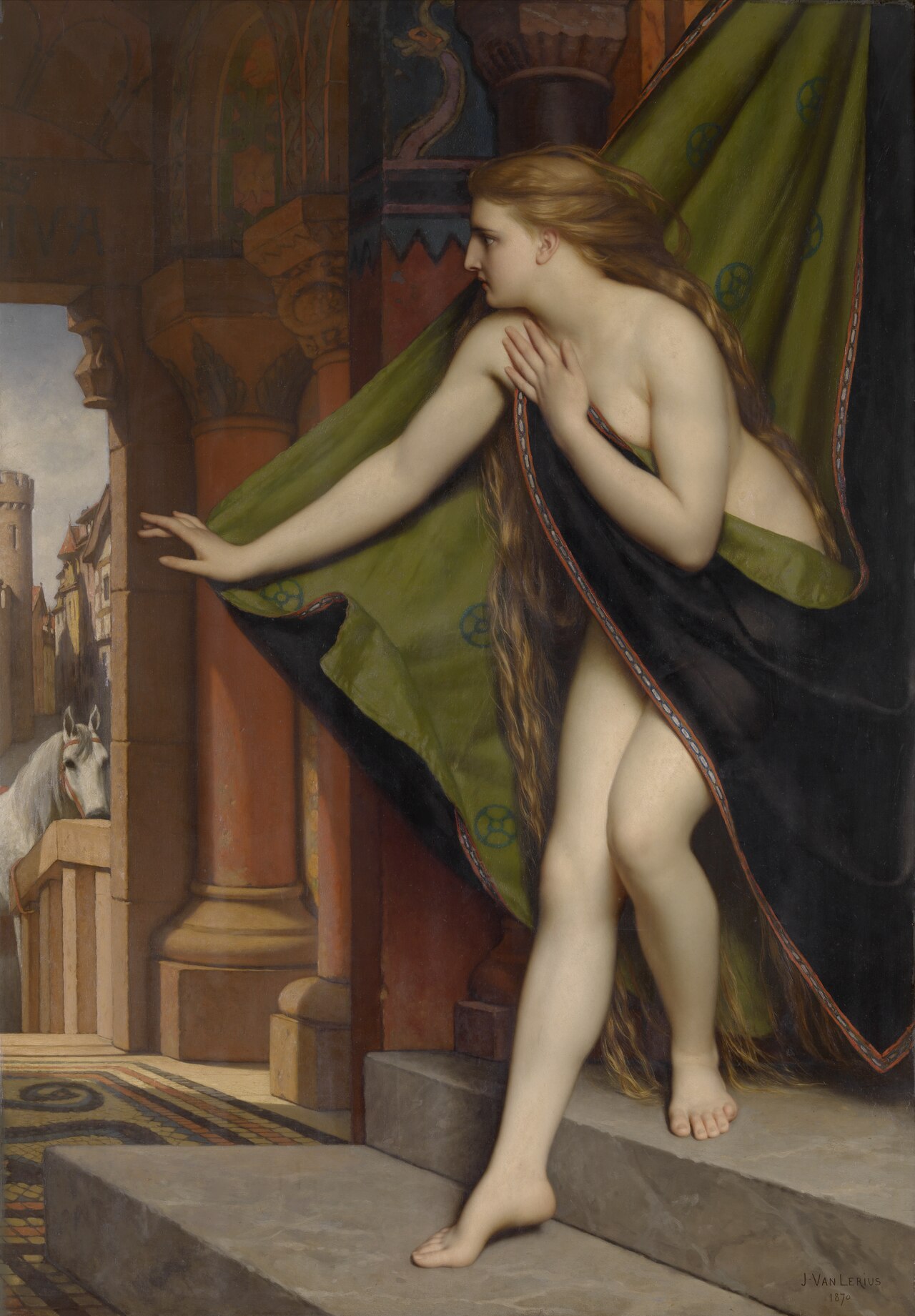
Major works - **Lady Godiva (1870)** – This large‑scale canvas depicts the legendary English noblewoman riding unclothed through the streets of Coventry. Van Lerius captures the drama of the moment through the contrast of the heroine’s bare form against the dark, rain‑slicked cobbles, while the surrounding townspeople are rendered with muted, compassionate expressions. The work exemplifies his skill in marrying historical myth with a compassionate human focus.
- Young Girl from the Hotzenwald (1852) – A genre scene set in the Black Forest region, the painting shows a modestly dressed girl holding a basket of berries. Van Lerius’s attention to the texture of the girl’s clothing and the dappled forest light demonstrates his ability to portray everyday life with the same narrative weight as his more overtly historical subjects.
- Brides of Venice (1871) – In this composition, a bridal procession winds through a Venetian canal, illuminated by the golden glow of lanterns. The artist’s meticulous rendering of the intricate lacework and the reflective water surface showcases his technical virtuosity and his fascination with exotic locales.
- Self‑portrait (1852) – Van Lerius presents himself with a calm, introspective demeanor, his gaze directed toward the viewer. The portrait’s subtle colour scheme and the careful modelling of his facial features reveal the painter’s confidence in his own artistic identity.
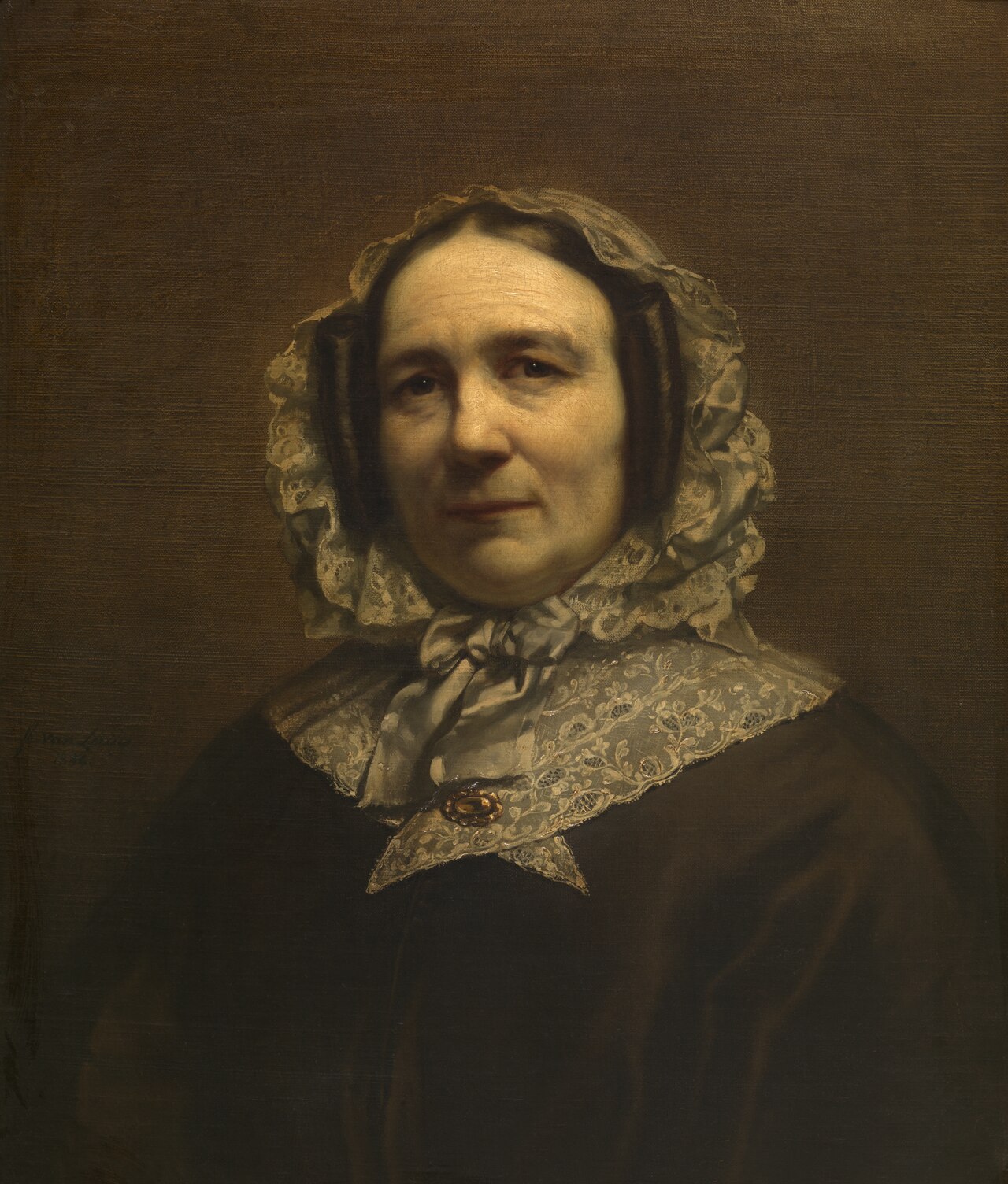
- Madame LeDelier (1854) – A portrait of a fashionable lady, this work highlights Van Lerius’s talent for capturing the elegance of 19th‑century bourgeois society. The sitter’s sumptuous dress, the soft rendering of her skin, and the delicate background combine to create a harmonious whole that reflects both personal likeness and social status.
These works collectively illustrate Van Lerius’s range—from mythic history to intimate portraiture—while maintaining a consistent visual language rooted in Romantic‑Historical sensibilities.
Influence and legacy Jozef Van Lerius remained active in the Belgian art world until his death in Mechelen in 1876. Although he never achieved the fame of contemporaries such as Gustave Courbet, his paintings were regularly exhibited at the Salon of Brussels and attracted patrons throughout Belgium and the Netherlands. His careful synthesis of narrative content and technical finesse influenced a generation of Belgian genre painters who sought to balance romantic storytelling with realistic detail. Today, his works are held in several European museum collections and continue to be referenced in studies of 19th‑century Belgian art, offering insight into the period’s intersection of historical imagination and everyday life.
Frequently asked questions
Who was Jozef Van Lerius?
Jozef Van Lerius (1823–1876) was a Belgian painter known for his Romantic‑Historical genre scenes, active mainly in Antwerp and Mechelen.
What style or movement is he associated with?
He worked in a Romantic‑Historical style, blending dramatic storytelling with meticulous historical detail, without belonging to a formal avant‑garde movement.
What are his most famous works?
His most recognised paintings include Lady Godiva (1870), Young Girl from the Hotzenwald (1852), Brides of Venice (1871), his self‑portrait (1852) and the portrait Madame LeDelier (1854).
Why does Jozef Van Lerius matter in art history?
He exemplifies the mid‑19th‑century Belgian synthesis of romantic narrative and realistic technique, influencing later genre painters and contributing to the country’s artistic identity.
How can I recognise a painting by Van Lerius?
Look for soft chiaroscuro, warm earthy colours, detailed textures in clothing and surroundings, and compositions that foreground a single, emotionally charged figure within a balanced, often historic or genre‑type setting.