Josephus Laurentius Dyckmans
1811 – 1888
In short
Josephus Laurentius Dyckmans (1811–1888) was a Belgian painter renowned for his highly detailed genre scenes and portraits, earning him the nickname ‘the Belgian Gerard Dou.’ He worked mainly in Antwerp, producing works such as The Blind Beggar and The Lace Maker.
Notable works


Early life Josephus Laurentius Dyckmans was born in 1811 in the Flemish town of Lier, a centre of trade and craft in the southern Netherlands. Little is recorded about his family, but the artistic climate of the region—steeped in the traditions of the Flemish Baroque—provided a fertile background for his early interest in drawing. As was common for aspiring painters of his generation, Dyckmans likely began his formal training at a local drawing school before moving to the Royal Academy of Fine Arts in Antwerp, the pre‑eminent institution for art education in Belgium during the early nineteenth century. The Academy’s curriculum emphasized drawing from the antique, life‑model studies, and a disciplined approach to composition, all of which would shape Dyckmans’ meticulous technique.
Career and style Dyckmans established his professional base in Antwerp, a city that, by the mid‑nineteenth century, had become a hub for both commercial and academic art. He specialised in genre scenes—intimate depictions of everyday life—as well as portraiture. His work is characterised by an almost photographic exactness, a quality that earned him the moniker ‘the Belgian Gerard Dou,’ referencing the Dutch Golden Age master known for his fine brushwork and subtle lighting. Dyckmans’ paintings often portray domestic interiors, street markets, and humble occupations, rendered with a calm, almost reverential tone. Though the broader art world was moving towards Romanticism and later Realism, Dyckmans remained committed to a refined, detailed realism that foregrounded the dignity of ordinary subjects.
Signature techniques The hallmark of Dyckmans’ oeuvre is his painstaking attention to surface detail. He employed a layered glazing technique, applying thin, translucent colours over a finely rendered underpainting to achieve depth and luminosity. This method allowed him to model light with a soft, diffused quality reminiscent of Dutch interior painters. His brushwork is exceptionally smooth; visible strokes are virtually eliminated, giving his canvases a polished finish. Dyckmans also demonstrated a keen eye for texture, rendering fabrics, metal, and wood with a tactile realism that invites close inspection. The compositional balance in his works often relies on a quiet, central grouping of figures, with secondary elements placed to guide the viewer’s eye without disrupting the overall harmony.
Major works Dyckmans’ public commissions and easel paintings illustrate the range of his practice.
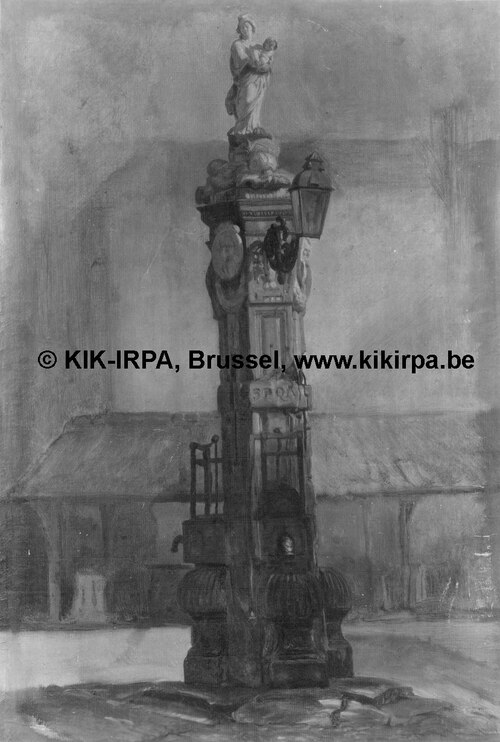
- Public Water Pump on the Old Fish Market in Antwerp (1840) – This oil painting captures a bustling market scene centred on a stone water pump. The composition combines architectural detail with a crowd of merchants and shoppers, each rendered with individual specificity. The work demonstrates Dyckmans’ ability to integrate civic architecture into genre narrative, highlighting the everyday vitality of Antwerp’s commercial life.
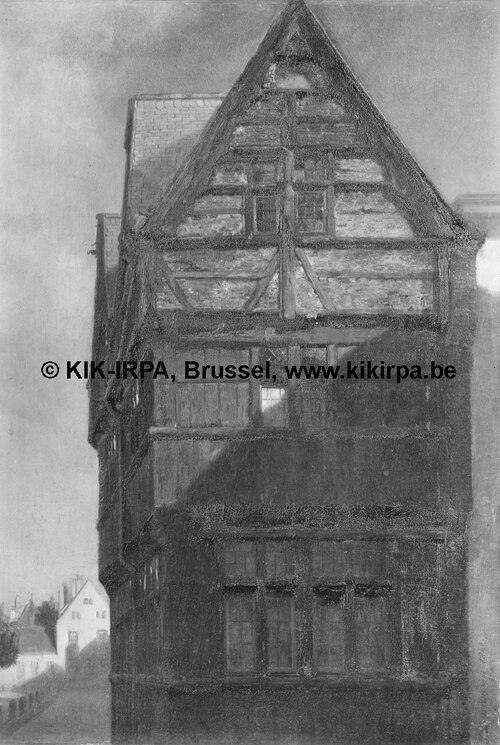
- Sixteenth‑Century Wooden Façade on Groenplaatsstraat in Antwerp (1840) – In this piece Dyckmans turns his focus to historic architecture, depicting an ornate wooden façade that once graced a street on the Groenplaats. The painting serves both as a document of urban heritage and as an exercise in rendering intricate woodwork, showcasing his skill in reproducing texture and pattern.
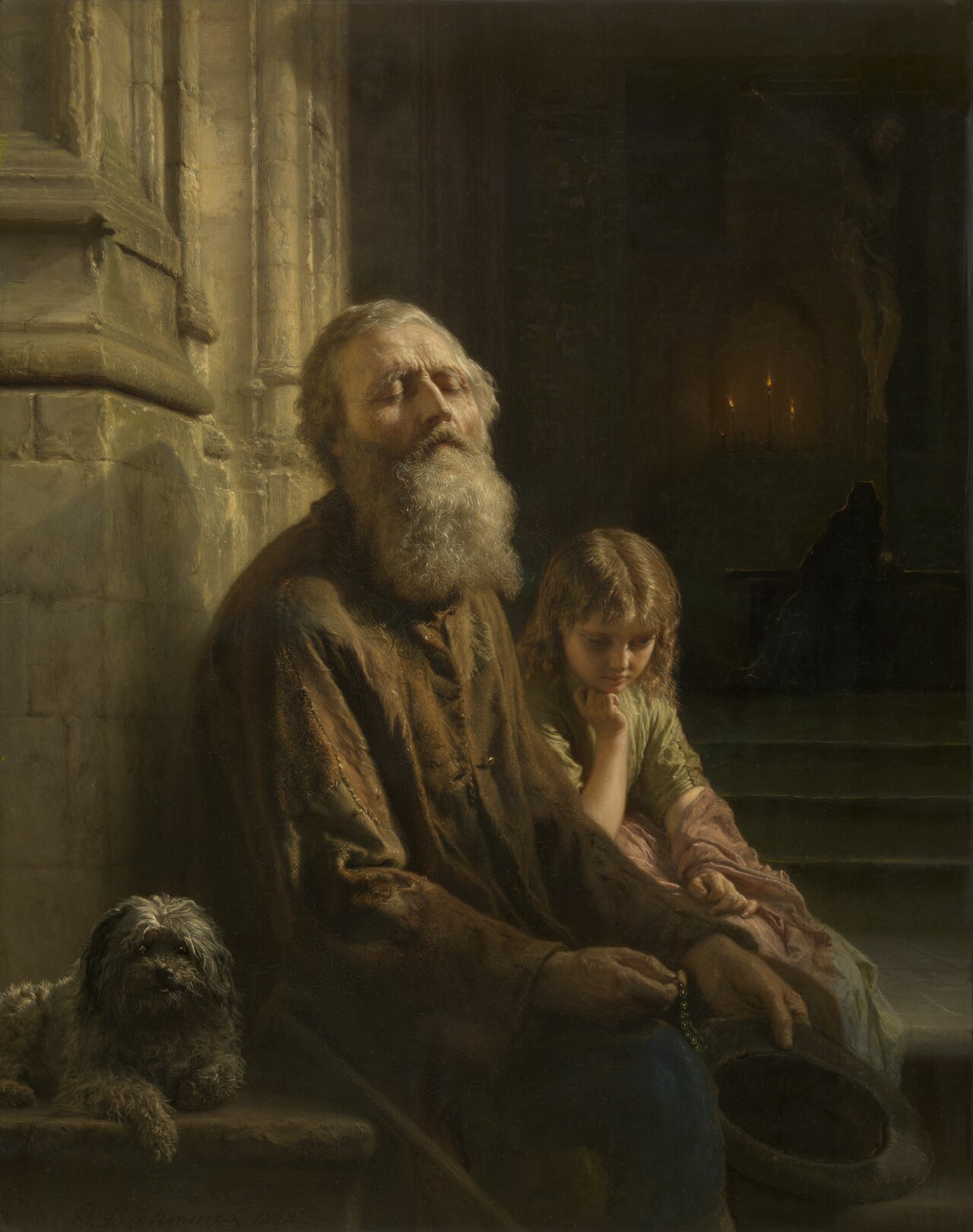
- The Blind Beggar (1852) – A poignant portrait of a beggar whose sight has failed him, this work exemplifies Dyckmans’ empathetic approach to marginalised figures. The subject is placed against a muted background, allowing the viewer to concentrate on the expressive face and the tactile details of his clothing. Subtle chiaroscuro highlights the folds of the garment and the texture of the beggar’s skin, reinforcing the painting’s emotional impact.
- The Lace Maker (1853) – This composition presents a young woman absorbed in the delicate craft of lace making. Dyckmans captures the intricate patterns of the lace and the gentle concentration of the artisan, employing his characteristic smooth brushwork to convey the softness of the fabric and the light falling across the scene. The painting is often cited as a prime example of the artist’s capacity to elevate a modest domestic activity to a subject of quiet dignity.
- De pompe op de oude vismarkt van Antwerpen (1840) – The Dutch‑language counterpart to the earlier water‑pump work, this painting reinforces Dyckmans’ interest in Antwerp’s urban landscape. The repeated focus on the same motif in two languages underscores the work’s importance in his catalogue and its relevance to both local and international audiences.
Influence and legacy During his lifetime, Dyckmans enjoyed a respectable reputation among collectors and the Antwerp art establishment. Though he never aligned himself with a specific avant‑garde movement, his dedication to refined realism provided a counterpoint to the more dramatic Romantic tendencies of his contemporaries. His meticulous technique influenced a number of younger Belgian painters who sought to emulate his polished finish and his capacity to render everyday subjects with a sense of reverence.
After his death in Antwerp in 1888, Dyckmans’ works entered several public and private collections, including the Royal Museum of Fine Arts in Antwerp. Art historians have continued to view his paintings as valuable records of nineteenth‑century Belgian urban life and craftsmanship, as well as exemplars of a lineage that traces back to Dutch Golden Age masters. Contemporary exhibitions of Belgian genre painting often include Dyckmans to illustrate the continuity of detailed, intimate representation across centuries. While his name may not be as widely recognised as some of his more flamboyant peers, his contribution to the preservation of everyday visual culture remains an important chapter in the narrative of Belgian art history.
Frequently asked questions
Who was Josephus Laurentius Dyckmans?
He was a Belgian painter (1811–1888) known for highly detailed genre scenes and portraits, active mainly in Antwerp.
What artistic style or movement is Dyckmans associated with?
Dyckmans worked in a refined realism that echoes the Dutch Golden Age, especially the meticulous style of Gerard Dou, rather than aligning with a specific nineteenth‑century movement.
What are his most famous works?
Key works include Public Water Pump on the Old Fish Market (1840), Sixteenth‑Century Wooden Façade on Groenplaatsstraat (1840), The Blind Beggar (1852), and The Lace Maker (1853).
Why is Dyckmans important in art history?
He provides a detailed visual record of mid‑nineteenth‑century Belgian life and demonstrates a masterful technique that links Flemish Baroque precision with later realist concerns.
How can I recognise a Dyckmans painting?
Look for an exceptionally smooth surface, fine glazing, precise textures, and a calm, intimate portrayal of ordinary subjects, often with subtle chiaroscuro reminiscent of Dutch genre masters.