Joseph Théodore Coosemans
1828 – 1904
In short
Joseph Théodore Coosemans (1828–1904) was a Belgian landscape painter from the Brussels area, known for atmospheric scenes of the Kempen region and other Flemish locales. His work is characterised by subtle light effects and a quiet, naturalistic approach to rural vistas.
Notable works
.jpg)
.jpg)

Early life Joseph Théodore Coosemans was born in 1828 within the Brussels metropolitan area, a region that was, at the time, a vibrant centre for artistic activity in Belgium. Little is recorded about his family background or early education, but the cultural climate of Brussels in the mid‑19th century provided ample opportunity for exposure to the visual arts. The city’s academies and salons attracted painters, sculptors and architects, and it is likely that Coosemans received some formal training in drawing and painting, as was customary for aspiring artists of his generation.
Career and style Coosemans established himself as a landscape painter, a genre that enjoyed considerable popularity in Belgium during the 19th century. His career coincided with a period when Belgian artists were increasingly interested in depicting the natural world with a sense of realism tempered by personal observation. Though specific records of his affiliations with artistic societies are scarce, his work aligns with the broader currents of naturalism that emphasized truthful representation of light, atmosphere and topography.
Coosemans favoured subjects drawn from the Flemish countryside, particularly the Kempen (Campine) region, a low‑lying area straddling the border between Belgium and the Netherlands. His canvases often capture the muted tones of early morning, twilight or winter, suggesting a preoccupation with the fleeting qualities of light. The painter’s palette tends toward earthy browns, soft greens and subdued blues, allowing the viewer to feel the quiet stillness of the scenes he rendered.
Signature techniques Coosemans employed a restrained brushwork that conveyed texture without overt detail. He often used thin, layered washes to build atmospheric depth, allowing distant elements to recede into a hazy background while keeping foreground details crisp. This technique creates a sense of spatial recession that is especially effective in his depictions of expansive skies and open fields.
Another hallmark of his practice is the subtle modulation of colour to suggest weather conditions—cool, bluish‑gray tones for winter scenes, warm ochres for sunsets, and muted greens for overcast afternoons. The balance between light and shadow in his compositions demonstrates a keen observation of natural illumination, often achieved through delicate gradations rather than stark contrasts.
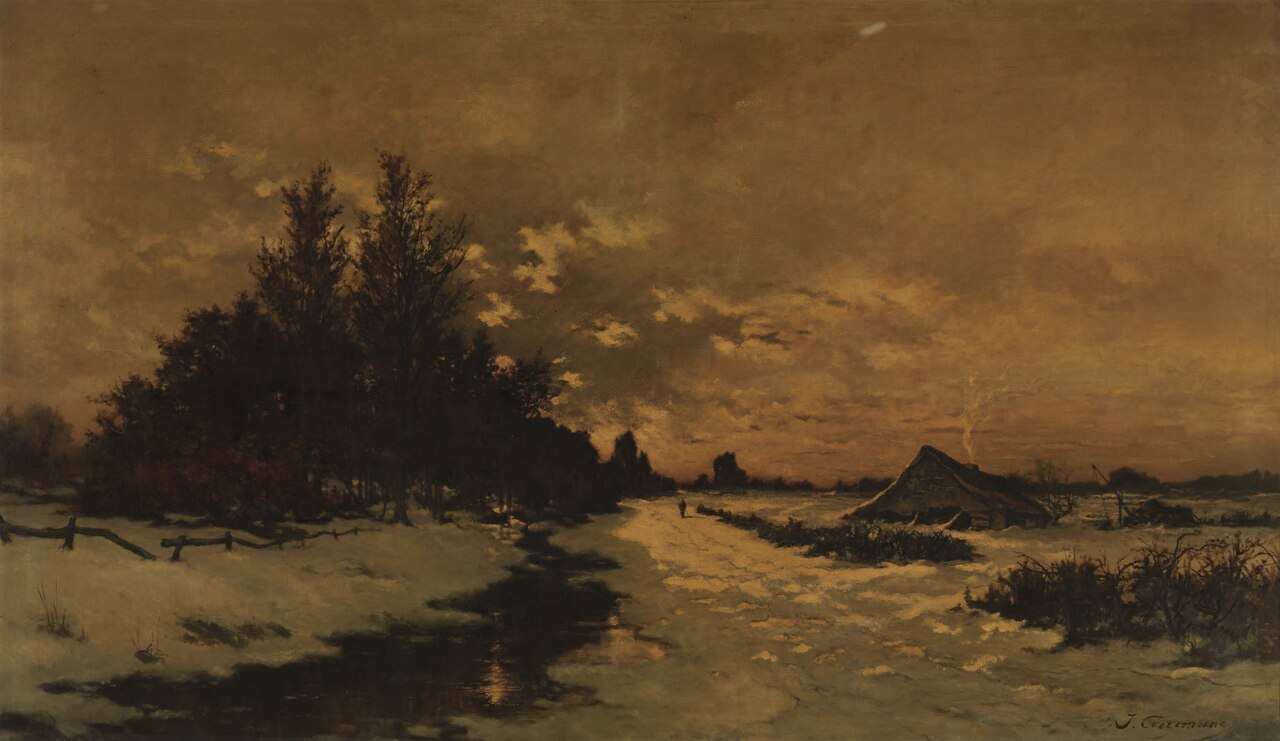
Major works Among Coosemans’ most recognised paintings are several that illustrate his affinity for the Kempen landscape. **"A Winter's Day in the Kempen" (1879)** portrays a snow‑covered plain under a low, overcast sky, with a small cluster of trees providing a focal point. The work exemplifies his skill at rendering the quiet austerity of winter, using a limited colour range to convey the chill of the season.
"Evening in the Limburg Kempen" continues this theme, depicting the same region at dusk. The canvas is dominated by a soft, amber‑tinged light that filters through a gentle mist, highlighting the interplay between natural light and the low‑lying terrain.
In "Sunset in the Kempen", Coosemans captures the fleeting moments of a day’s end, with warm, saturated hues that contrast against the darker silhouettes of trees and distant hills. The painting’s composition balances a luminous sky with a tranquil foreground, underscoring the painter’s ability to convey mood through colour.
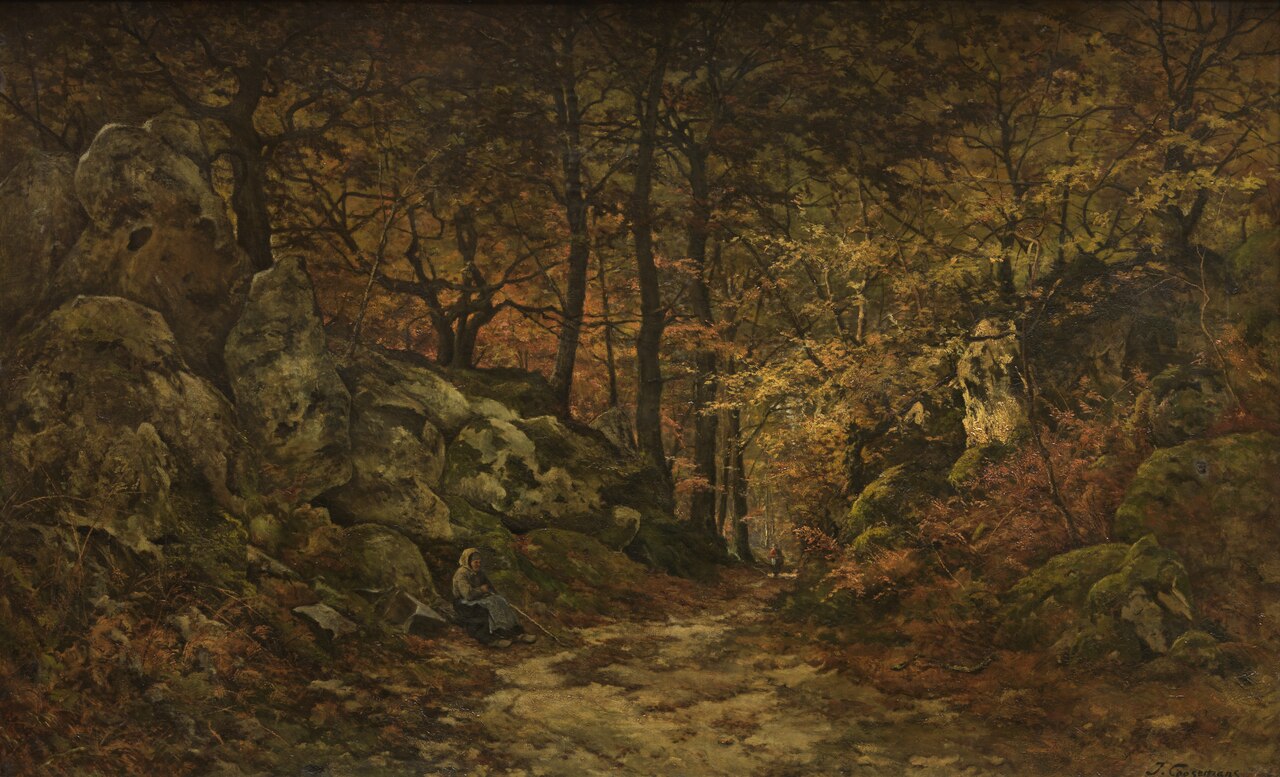
Outside the Kempen, Coosemans rendered "The Gorge aux Loups in Fontainebleau", a landscape situated in the French forest of Fontainebleau. Here the artist demonstrates his capacity to adapt his atmospheric approach to a more rugged, wooded environment, employing deeper greens and richer earth tones.
His "The Ghent‑Terneuzen Canal in Ghent" (1880) offers a view of a bustling waterway, integrating human activity with natural surroundings. While still rooted in his characteristic subtlety, this piece introduces a narrative element, showing vessels and the infrastructure of the canal against a softly lit sky.
These works collectively illustrate Coosemans’ dedication to capturing the everyday beauty of the Low Countries’ countryside, while also revealing his willingness to explore varied locales and subjects.
Influence and legacy Joseph Théodore Coosemans did not achieve the fame of some of his contemporaries, yet his paintings contribute to the broader understanding of 19th‑century Belgian landscape art. By focusing on ordinary rural scenes and employing a restrained, atmospheric style, he helped to cement the visual vocabulary associated with the Kempen region. His works are valuable to scholars tracing the evolution of naturalistic landscape painting in Belgium, particularly as they bridge the gap between the early Romantic depictions of nature and the later, more impressionistic approaches that emerged at the turn of the century.
Coosemans’ paintings can be found in regional museums and private collections, where they continue to be appreciated for their quiet lyricism and technical finesse. Although he is not widely cited as a leading figure in any specific movement, his oeuvre offers insight into the everyday visual culture of his time and provides a reference point for later Belgian artists who sought to depict the interplay of light, atmosphere and the Flemish countryside.
In contemporary art‑historical discourse, Coosemans is recognised as a competent practitioner whose works exemplify the steady, observational approach that characterised much of Belgian landscape painting in the late 1800s. His legacy endures through the continued exhibition of his paintings and the scholarly interest they attract as examples of regional naturalism.
---
Frequently asked questions
Who was Joseph Théodore Coosemans?
Joseph Théodore Coosemans (1828–1904) was a Belgian painter known for his landscape works, especially scenes of the Kempen region.
What style or movement is Coosemans associated with?
He worked within a naturalistic landscape tradition, focusing on realistic light and atmosphere rather than aligning with a specific avant‑garde movement.
What are his most famous works?
Key paintings include "A Winter's Day in the Kempen" (1879), "Evening in the Limburg Kempen", "Sunset in the Kempen", "The Gorge aux Loups in Fontainebleau" and "The Ghent‑Terneuzen Canal in Ghent" (1880).
Why does Coosemans matter in art history?
His quiet, atmospheric depictions of Flemish countryside provide valuable insight into 19th‑century Belgian naturalism and help define the visual character of the Kempen region.
How can I recognise a Coosemans painting?
Look for subdued colour palettes, delicate gradations of light, and serene rural scenes that emphasise atmospheric effects over dramatic detail.