Joseph-Nicolas Robert-Fleury
1797 – 1890
In short
Joseph-Nicolas Robert-Fleury (1797–1890) was a French painter born in Cologne, renowned for his academic history and portrait paintings such as Scène de la saint‑Barthélemy (1833) and Bernard Palissy in His Workshop (1843). He taught at the École des Beaux‑Arts and helped shape the French academic tradition of the 19th century.
Notable works



Early life Joseph-Nicolas Robert-Fleury was born in 1797 in Cologne, a city that lay on the cultural frontier between Germanic and French influences. His family moved to Paris during his childhood, a migration that placed him at the heart of the French artistic world. Growing up in the capital, he was exposed early to the thriving salon culture and the rigorous training offered by the École des Beaux‑Arts. Although precise records of his apprenticeship are scarce, it is clear that he received a solid academic grounding, mastering drawing, anatomy, and the classical canon that dominated French art education at the turn of the century.
Career and style Robert‑Fleury emerged as a professional painter in the 1820s, a period when the French Academy still dictated artistic standards. He specialised in large‑scale history paintings, a genre prized for its moral and didactic potential. His style reflects the academic classicism of his time: careful modelling of the human figure, balanced composition, and a muted palette that emphasises narrative over overt colouristic experimentation. While he never aligned himself with a specific avant‑garde movement, his work demonstrates an awareness of Romantic drama, particularly in the emotional intensity of his scenes. Throughout his career he exhibited regularly at the Paris Salon, gaining official recognition and commissions from both private patrons and public institutions.
Signature techniques Robert‑Fleury’s technique is characterised by a disciplined approach to drawing and a layered painting process. He began with a detailed charcoal or graphite sketch, refining anatomical accuracy before transferring the design onto canvas. In the studio, he employed a traditional underpainting—often a tonal grisaille—to establish values, then built up colour in thin glazes that allowed underlying tones to shine through. This method produced a luminous surface that enhanced the three‑dimensionality of his figures. He also favoured a restrained palette of earth tones, ochres, and muted blues, reserving vivid reds and golds for focal points such as crowns, textiles, or symbolic objects. His handling of light is subtle, using soft chiaroscuro to model faces and convey atmospheric depth.
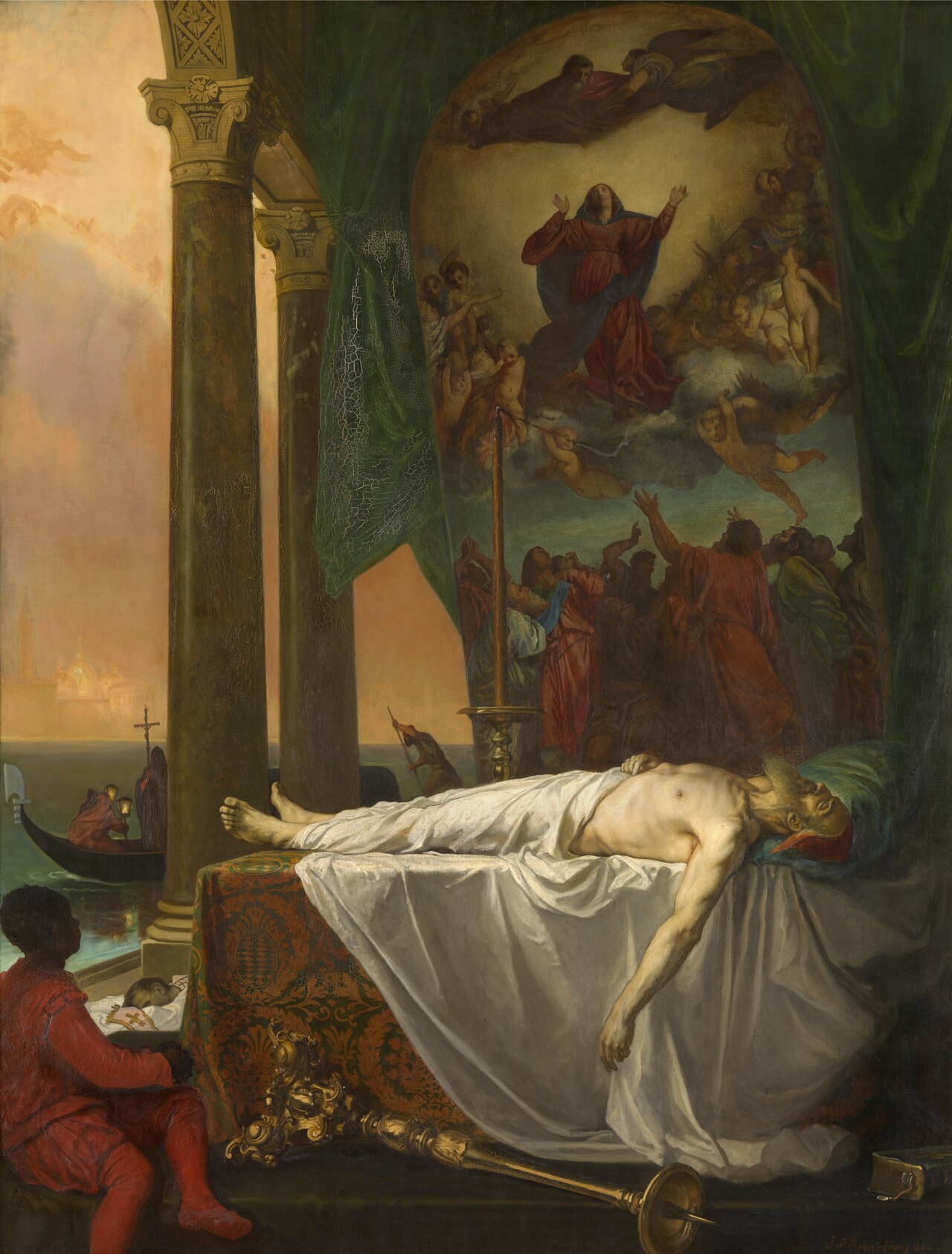
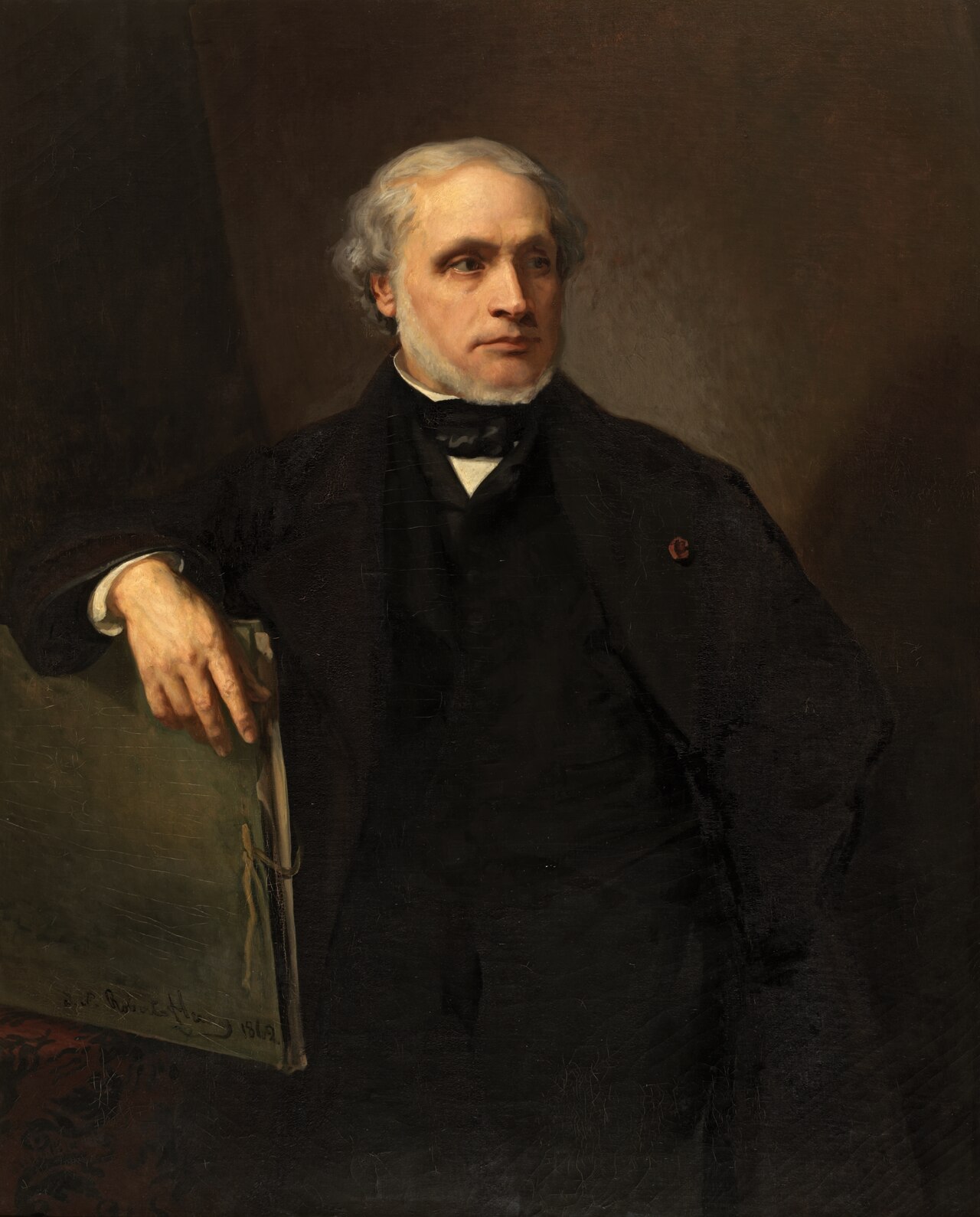
Major works Among Robert‑Fleury’s most celebrated pieces is **Scène de la saint‑Barthélemy** (1833), a dramatic rendering of the 1572 massacre in Paris. The painting captures the chaos of the event with a carefully composed crowd, each figure rendered with individual expression, illustrating the artist’s skill in narrative detail. Ten years later, he produced **Bernard Palissy In His Workshop** (1843), a homage to the 16th‑century French potter and inventor. Here Robert‑Fleury combines meticulous interior architecture with a portrait‑like focus on Palissy, highlighting the craftsman’s dedication to his art. In 1862 he turned to portraiture with **Titian Lying in State at the Palazzo Barbarigo**, a respectful, almost reverential depiction of the Venetian master after death, showcasing Robert‑Fleury’s capacity to convey solemnity. The same year he painted a **Self Portrait**, offering a personal glimpse into his own visage and studio environment. Earlier, **Portrait of a Young Man** (1826) demonstrates his early command of likeness and texture, foreshadowing the mature confidence evident in his later historical canvases.
Influence and legacy Robert‑Fleury’s long career, spanning more than six decades, positioned him as a bridge between the neoclassical tradition of the early 19th century and the emerging academic realism of the later period. As a professor at the École des Beaux‑Arts, he taught generations of young artists, imparting the disciplined drawing techniques and compositional rigour that defined French academic art. Although his name is less prominent today than that of his more avant‑garde contemporaries, his works remain valuable exemplars of the official Salon style, illustrating how narrative, technique, and moral purpose were woven together in the French artistic establishment. Contemporary scholars cite his paintings when discussing the visual culture of historic memory in France, and his works continue to be displayed in museum collections, offering insight into the aesthetic ideals that dominated French art before the rise of Impressionism.
Frequently asked questions
Who was Joseph-Nicolas Robert-Fleury?
He was a French painter (1797–1890) known for academic history and portrait works, born in Cologne and active mainly in Paris.
What style or movement is he associated with?
Robert-Fleury worked within the French academic tradition, combining classicist composition with Romantic drama, but he did not belong to a distinct avant‑garde movement.
What are his most famous works?
His best‑known paintings include Scène de la saint‑Barthélemy (1833), Bernard Palissy In His Workshop (1843), Titian Lying in State at the Palazzo Barbarigo (1862), and his Self Portrait (1862).
Why does he matter in art history?
He exemplifies the 19th‑century French academic approach to history painting, taught at the École des Beaux‑Arts, and influenced later generations of French artists through his technique and pedagogy.
How can I recognise a Robert-Fleury painting?
Look for meticulous drawing, a muted colour palette, layered glazes that create a luminous surface, and careful composition that foregrounds narrative detail and subtle chiaroscuro.