Jean-Urbain Guérin
1761 – 1836
In short
Jean-Urbain Guérin (1761–1836) was a prominent French draughtsman and miniaturist. Alongside contemporaries like Jean-Baptiste Isabey and Jacques Augustin, he is recognized as one of the leading miniaturists of his era, known for his detailed portraits and decorative art.
Notable works
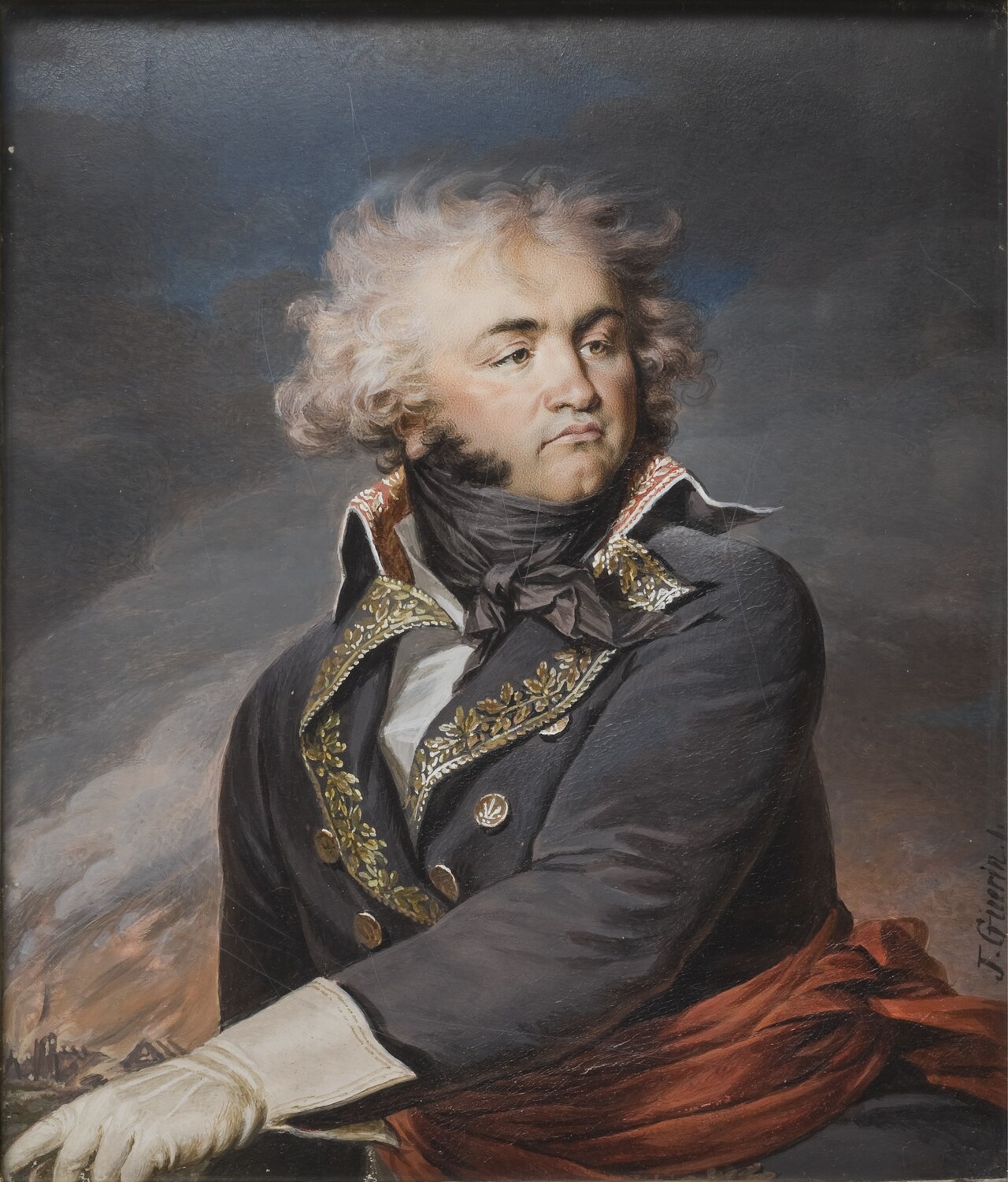

,_Comte_de_Lameth_MET_DP327726.jpg)
_-_Portrait_of_a_Young_Woman_in_White_-_2008.293.a_-_Cleveland_Museum_of_Art.jpg)
_-_Portrait_of_a_Young_Woman_in_White_-_2008.293.b_-_Cleveland_Museum_of_Art.jpg)
Early life Jean-Urbain Guérin was born in Strasbourg, France, in 1761. Little is documented about his early life and artistic training, but his later career suggests a solid foundation in drawing and portraiture. He was active during a period of significant artistic and political upheaval in France, from the late Ancien Régime through the Napoleonic era and into the Bourbon Restoration.
Career and style Guérin established himself as a skilled draughtsman and, most notably, a miniaturist. His work is characterized by precision, delicate handling of materials, and a keen ability to capture likeness. While his specific art movement affiliation is not definitively stated, his output aligns with the Neoclassical and Empire styles prevalent during his active years, particularly in portraiture and decorative arts. He worked in a tradition that valued meticulous detail and refined execution, catering to a clientele that appreciated both artistic skill and the preciousness of the medium.
His subjects often included prominent figures of his time, indicating a successful and recognized practice. The genre of miniature painting, which flourished in the late 18th and early 19th centuries, provided a canvas for artists like Guérin to demonstrate their mastery of small-scale, highly detailed works, often intended for personal adornment or as keepsakes.
Signature techniques Guérin's technique as a miniaturist was marked by exceptional control and a refined palette. He was adept at rendering fine details, such as the textures of fabrics, the nuances of facial features, and the subtle play of light and shadow, all within a very small format. His drawings, often preparatory studies or finished works in their own right, would have showcased a similar precision and sensitivity. The materials he employed, typical for miniature painting of the period, likely included watercolors or gouache on ivory or vellum, allowing for luminous and detailed finishes. The execution of portraits, in particular, would have required a delicate touch to capture the sitter's likeness and character with accuracy and grace. The decorative elements often present in his work, such as the embellishments on snuff boxes, demonstrate an understanding of ornamental design and its integration with portraiture.
Major works Among Jean-Urbain Guérin's notable works is the portrait of **General Jean Baptiste Kléber**, a significant figure during the French Revolution and the Napoleonic Wars. This portrait likely captures the military leader with the gravitas befitting his status.
His Portrait of a Woman (1815) exemplifies his skill in capturing female likeness with sensitivity and detail, characteristic of portrait miniatures from the period.
The Alexandre Théodore Victor (1760–1829), Comte de Lameth (1789), represents a portrait of a nobleman from the late Ancien Régime, possibly commissioned before the most turbulent revolutionary years. The date 1789 places it at a pivotal moment in French history.
Guérin also applied his artistic talents to decorative objects, such as the Snuff Box (1805) and the Cover for a Snuff Box with a Portrait of a Young Woman (1805). These works showcase his ability to integrate portraiture with functional art, creating objects of both personal and aesthetic value. The inclusion of a portrait on a snuff box cover demonstrates the intimate and personal nature of miniature art during this era, often serving as a cherished possession.
Influence and legacy Jean-Urbain Guérin's legacy rests on his contributions to the art of miniature painting during a golden age for the genre. Alongside contemporaries like Jean-Baptiste Isabey and Jacques Augustin, he is remembered as one of the most accomplished miniaturists of his time. His works provide valuable visual records of individuals and the aesthetic sensibilities of the late 18th and early 19th centuries in France. While perhaps not as widely known today as some of his peers, his meticulous craftsmanship and artistic skill secure his place within the history of French art, particularly in the specialized field of portrait miniatures and decorative arts. His output reflects the enduring demand for finely executed, portable portraits and decorative items among the elite and those of means during the period.
Frequently asked questions
Who was Jean-Urbain Guérin?
Jean-Urbain Guérin (1761–1836) was a French draughtsman and miniaturist, recognized as one of the leading artists in miniature painting during his time.
What art movement is Jean-Urbain Guérin associated with?
While not definitively aligned with a single movement, Guérin's work falls within the Neoclassical and Empire styles prevalent during the late 18th and early 19th centuries, particularly in his precise portraiture and decorative art.
What are Jean-Urbain Guérin's most famous works?
Notable works include portraits such as General Jean Baptiste Kléber and Alexandre Théodore Victor, Comte de Lameth, as well as decorative pieces like a Snuff Box with a Portrait of a Young Woman.
Why is Jean-Urbain Guérin considered important?
He is considered important for his significant contributions to the art of miniature painting, demonstrating exceptional skill and precision in a genre highly valued during his era.
How can one recognize a work by Jean-Urbain Guérin?
Works by Guérin are typically recognized by their meticulous detail, refined execution, and precise rendering of likenesses, often found in small-scale portraits or decorative items like snuff boxes.