Jean Restout
1692 – 1768
In short
Jean Restout (1692–1768) was a French Rococo painter born in Rouen and active mainly in Paris, known for religious and mythological compositions such as Orpheus in Hades Asking for Eurydice and The Generosity of Scipio.
Notable works

_-_The_Generosity_of_Scipio_-_83.3_-_Gem%C3%A4ldegalerie.jpg)
.jpg)

Early life Jean Restout was born in 1692 in the city of Rouen, a regional centre with a strong tradition of religious art. He came from a family of artisans; his father, also an artist, provided the young Jean with early training in drawing and the fundamentals of composition. The Restout household was steeped in the Catholic culture of Normandy, and this religious environment would shape the thematic choices of his later career. By his teenage years Restout had moved to Paris, the epicentre of French artistic life, where he entered the studio of a prominent master and began to absorb the emerging Rococo sensibility.
Career and style Restout established himself in Paris during the early 18th century, a period when the Rococo style—characterised by lightness, elegance, and a decorative approach—was gaining favour at court and among the bourgeoisie. While many of his contemporaries pursued secular subjects, Restout retained a strong affinity for sacred narratives, producing altarpieces and devotional works that combined the fluidity of Rococo with the solemnity of Counter‑Reformation iconography. His paintings demonstrate a balanced palette of pastel tones, softened chiaroscuro, and a graceful handling of drapery, reflecting both the influence of the French academic tradition and the more playful visual language of his era.
Signature techniques Restout’s technique was marked by a meticulous approach to drawing, evident in the precise contours of his figures. He employed a layered glazing method, building colour through thin, translucent layers that gave his surfaces a luminous quality. In his religious compositions, Restout often used a subtle foreshortening to create depth, while maintaining a calm, contemplative atmosphere. The artist’s handling of light was restrained; rather than dramatic chiaroscuro, he preferred a gentle illumination that highlighted the spiritual content of the scene. Additionally, Restout’s brushwork was fine and controlled, allowing for delicate details in fabrics, foliage, and architectural elements.
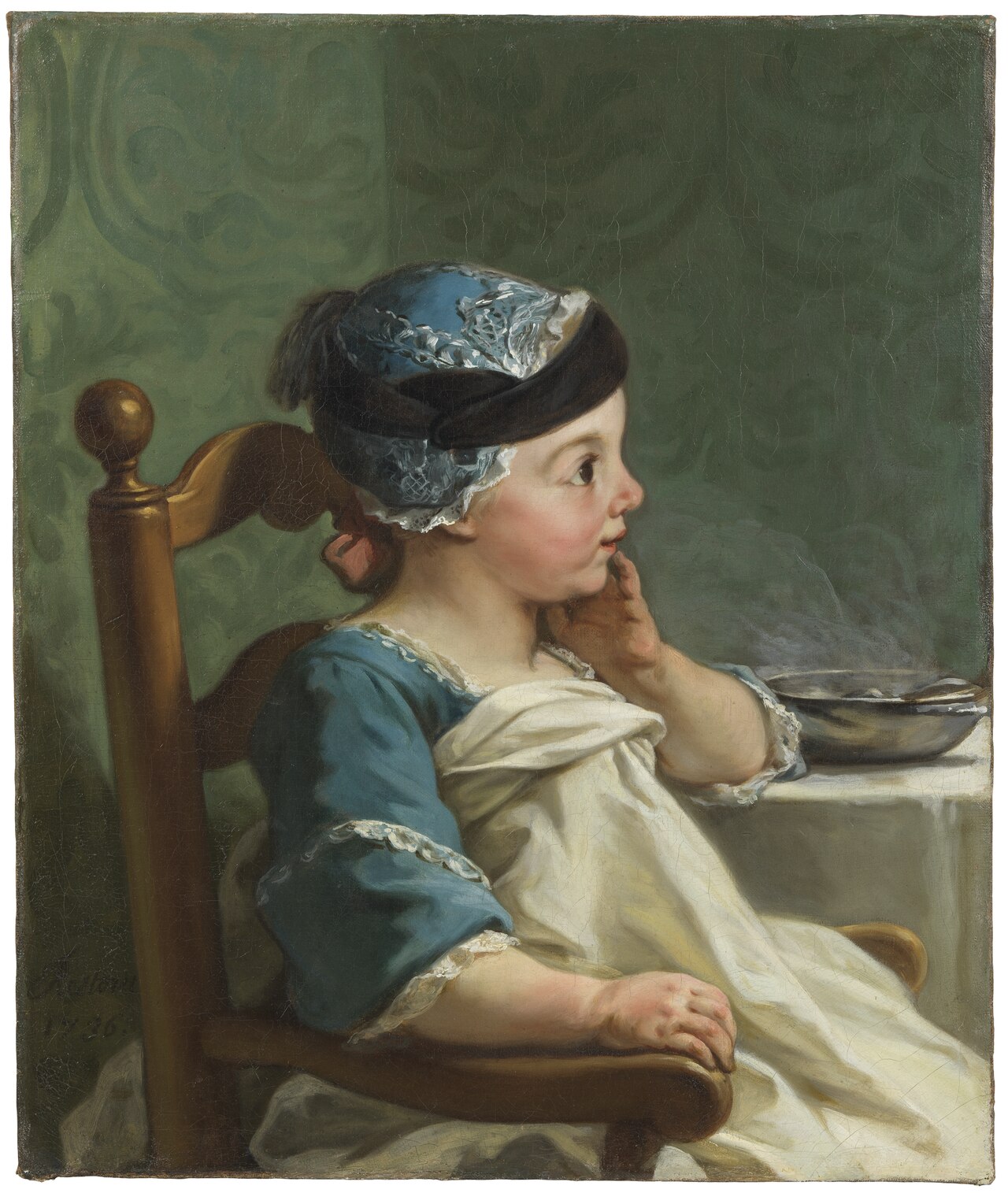
Major works - **Portrait of a Carthusian Monk (1715)** – One of Restout’s earliest signed works, this portrait captures a monk in his habit with a serene, introspective gaze. The restrained colour scheme and careful rendering of the monk’s habit illustrate Restout’s early mastery of texture and his sensitivity to the spiritual character of his subjects. - **Venus Ordering Arms from Vulcan for Aeneas (1717)** – In this mythological scene, Restout demonstrates his ability to translate classical narratives into the Rococo idiom. The composition balances the sensuality of Venus with the industriousness of Vulcan, using soft lighting and elegant poses to convey both drama and decorum. - **The Generosity of Scipio (1728)** – This historical painting depicts the Roman general Scipio returning captured women to their families. Restout’s treatment of the episode reflects his interest in moral virtue; the work is characterised by a calm arrangement of figures, a muted palette, and a clear narrative focus that aligns with the didactic goals of religious art. - **Boy in a Child's Chair (1736)** – A departure from his larger narrative pieces, this genre work shows a young boy perched in an oversized chair. The painting is noted for its tender observation of childhood, the subtle play of light on the boy’s clothing, and a gentle humour that reveals Restout’s versatility. - **Orpheus in Hades Asking for Eurydice (1763)** – Completed near the end of Restout’s career, this composition presents the tragic myth of Orpheus pleading with Hades. The work combines a somber palette with luminous accents on the figures, underscoring the emotional intensity of the moment while retaining the compositional harmony typical of Rococo aesthetics.
Influence and legacy Although Restout never achieved the fame of contemporaries such as François Boucher or Jean-Honoré Fragonard, his oeuvre was respected by peers and patrons for its refined execution and devotional sincerity. His paintings were exhibited at the Académie royale de peinture et de sculpture, and his reputation as a reliable provider of religious art secured commissions for churches in Paris and the provinces. Restout’s approach to integrating Rococo elegance with ecclesiastical subjects offered a model for later French artists who sought to reconcile the decorative trends of the period with the demands of sacred art. Modern scholarship, while still limited, recognises Restout as a bridge between the Baroque grandeur of the 17th century and the lighter, more intimate visual language of the mid‑18th century. His works remain in museum collections across Europe, providing insight into the nuanced ways Rococo aesthetics could serve both secular and sacred narratives.
Frequently asked questions
Who was Jean Restout?
Jean Restout (1692–1768) was a French Rococo painter from Rouen who worked mainly in Paris, known for his religious and mythological paintings.
What artistic movement did Restout belong to?
He painted in the Rococo style, integrating its lightness and decorative flair with the solemnity of religious subjects.
What are Restout’s most famous works?
His most cited pieces include Orpheus in Hades Asking for Eurydice (1763), The Generosity of Scipio (1728), Boy in a Child's Chair (1736), Venus Ordering Arms from Vulcan for Aeneas (1717), and Portrait of a Carthusian Monk (1715).
Why does Restout matter in art history?
Restout exemplifies how Rococo aesthetics could be applied to sacred art, influencing later French painters who combined decorative style with devotional content.
How can I recognise a painting by Jean Restout?
Look for finely drawn figures, a pastel palette, gentle illumination, and a calm composition that often merges elegant Rococo details with a focus on moral or religious narrative.