Jean-Baptiste Jacques Augustin
1759 – 1832
In short
Jean‑Baptiste Jacques Augustin (1759–1832) was a French miniature painter who worked in the late 18th and early 19th centuries, producing finely detailed portrait miniatures of leading political and cultural figures, including Napoleon and Louis XVIII.
Notable works


Early life Jean‑Baptiste Jacques Augustin was born in 1759 in the town of Saint‑Dié‑des‑Vosges, a modest settlement in the Vosges department of eastern France. Little is recorded about his family background, but the region’s proximity to the cultural centres of Lorraine and Alsace meant that he was exposed to a variety of artistic traditions from an early age. As a teenager, Augustin moved to Paris, the epicentre of French artistic life, to pursue formal training. In the capital he entered the ateliers that catered to aspiring painters, where he received instruction in drawing, composition and the specialised techniques required for miniature painting.
Career and style By the 1790s Augustin had established himself as a professional miniature painter. The period was marked by political upheaval – the French Revolution, the rise of Napoleon, and the subsequent Restoration – and the demand for intimate portraiture among the aristocracy, the emerging bourgeoisie and the new political elite was high. Augustin’s work reflects the neoclassical sensibility that dominated French art at the time: a restrained palette, clear modelling of forms, and an emphasis on dignified, idealised representation. Yet his miniatures also reveal a personal attention to surface texture and colour subtlety that set his work apart from larger‑scale portraiture.
Signature techniques Augustin worked almost exclusively in watercolor on vellum, a traditional support for miniature painting that allowed for delicate translucency. He employed a fine sable brush to render facial features with a precision that approached the realism of engraving while preserving the softness of paint. Light was often introduced through a subtle gradation of washes, creating a three‑dimensional effect within a space no larger than a few centimetres. Augustin’s colour palette favoured muted earth tones, restrained blues and the occasional use of gold leaf for highlights, particularly in clothing or decorative elements. His compositions typically centre the sitter’s head and shoulders, set against a neutral or lightly patterned background that avoids distraction from the portrait’s psychological depth.
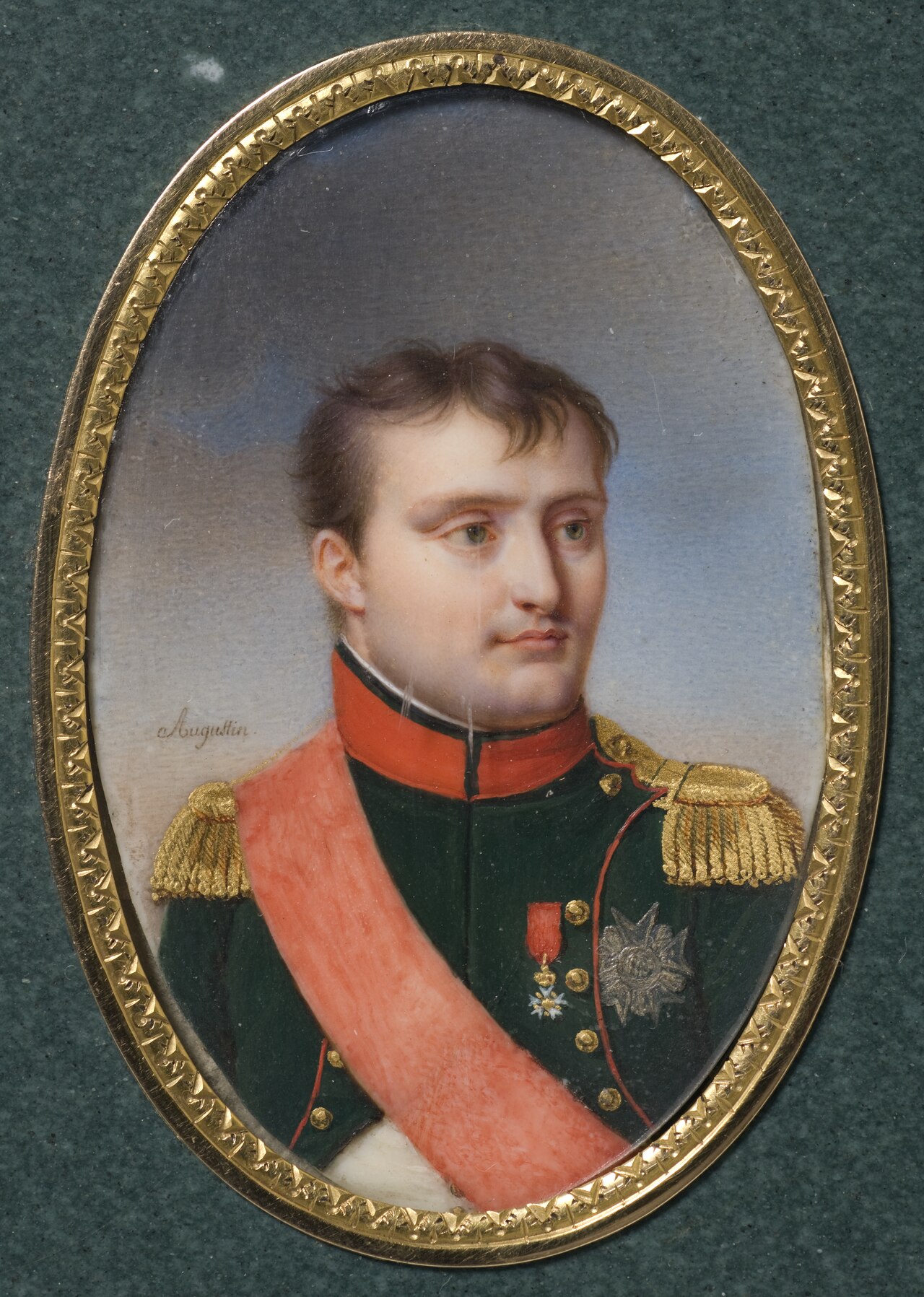
Major works Among Augustin’s most celebrated miniatures is his portrait of Napoleon I Bonaparte. Executed during the emperor’s rise to power, the work captures the young leader’s authoritative gaze and the crisp uniform detail that signalled his military status. The piece demonstrates Augustin’s skill in rendering the texture of fabric and the subtle play of light on Napoleon’s face, achievements that made the miniature a favourite among collectors of the period.
Another notable work is *A Gentleman* (1798). The sitter, an anonymous member of the French elite, is depicted in a dark coat with a cravat, his expression contemplative. The miniature’s restrained background and the careful rendering of the subject’s hair and skin tones illustrate Augustin’s ability to convey personality within the confined format.
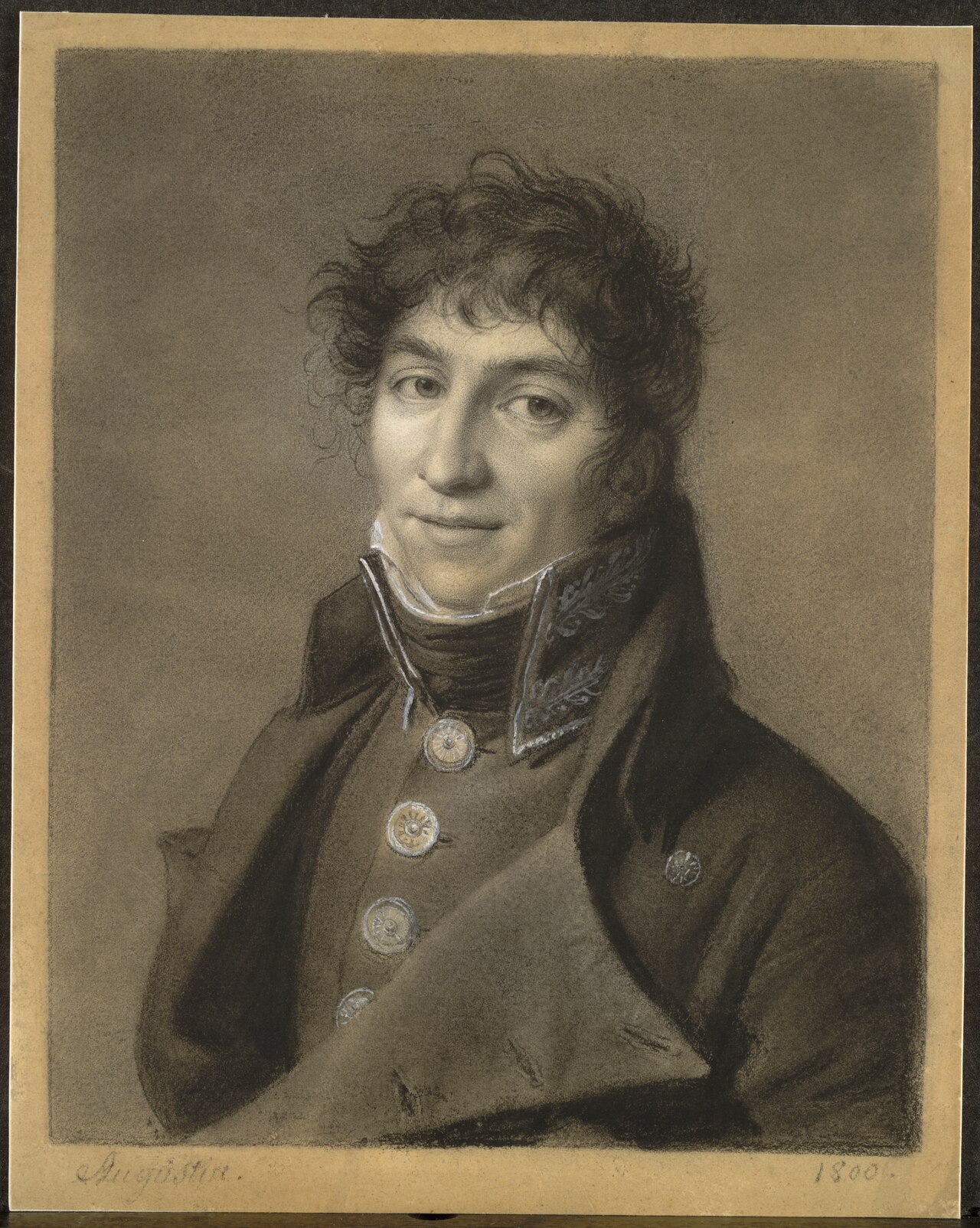
*Portrait of a Man* (1800) follows a similar approach, presenting a middle‑aged gentleman with a direct gaze and a modestly decorated background. The work’s subtle colour modulation and the delicate handling of light on the subject’s cheekbones are characteristic of Augustin’s mature style.
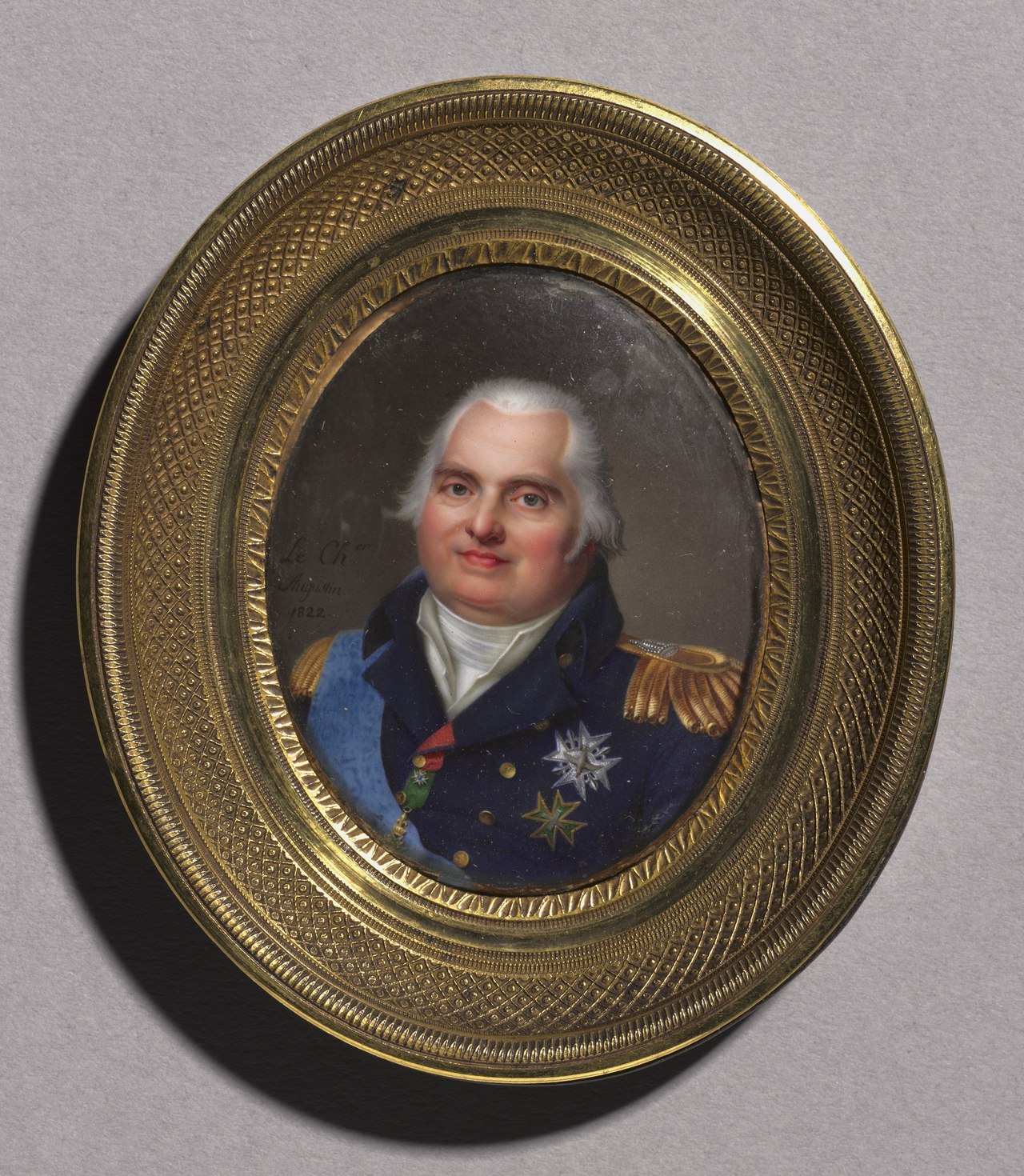
In the Restoration era, Augustin painted *Portrait of Louis XVIII* (1822). This miniature shows the restored monarch in regal attire, the gold embroidery rendered with meticulous attention to reflect the opulence of the restored court. Augustin’s rendering of the king’s facial features balances the need for royal dignity with a naturalistic touch that avoids overt flattery.
Lastly, the *Portrait of Fanny Charrin* (1807) provides a glimpse into Augustin’s capacity to capture feminine grace. The sitter, later known as a patron of the arts, is presented with a soft smile, her hair delicately rendered, and a faintly hinted background that suggests a domestic interior. The work’s gentle colour scheme and the subtle modelling of the face underscore Augustin’s sensitivity to both the sitter’s personality and the conventions of portrait miniatures.
Influence and legacy Jean‑Baptiste Jacques Augustin’s career spanned a transformative period in French history, and his miniatures serve as visual documents of that era’s political and social shifts. While miniature painting declined in popularity with the advent of photography, Augustin’s works remained highly prized by collectors throughout the 19th century. His meticulous technique and his ability to fuse neoclassical restraint with personal expression influenced a generation of French miniaturists, who looked to his portraits as exemplars of the medium’s potential.
In modern scholarship, Augustin is recognised as a master of the French miniature tradition. His portraits are frequently cited in studies of portraiture for their technical excellence and for the way they encapsulate the aspirations of their patrons. Museums across Europe, including the Musée du Louvre and the Victoria and Albert Museum, hold examples of his work, ensuring that his contribution to the visual culture of post‑revolutionary France remains accessible to scholars and the public alike. Though the medium has largely fallen out of mainstream practice, Augustin’s legacy endures through the continued appreciation of his finely wrought miniatures, which remain among the finest examples of French portraiture from the turn of the nineteenth century.
Frequently asked questions
Who was Jean‑Baptiste Jacques Augustin?
He was a French painter (1759–1832) specialising in miniature portraiture, active during the late 18th and early 19th centuries.
What style or movement is his work associated with?
His miniatures reflect the neoclassical aesthetic of his time, combining restrained composition with a highly detailed, realistic rendering of the sitter.
What are his most famous works?
Among his best‑known pieces are the miniature portraits of Napoleon I Bonaparte, a Gentleman (1798), Portrait of a Man (1800), Portrait of Louis XVIII (1822) and Portrait of Fanny Charrin (1807).
Why does Augustin matter in art history?
He exemplifies the technical mastery of French miniature painting and provides a visual record of key figures and fashions during a period of major political change.
How can I recognise an Augustin miniature?
Look for a small watercolor on vellum, finely brushed facial features, muted earth tones, subtle light modelling, and a composition that centres the sitter’s head and shoulders against a neutral background.