Jan Swart van Groningen
1490 – 1553
In short
Jan Swart van Groningen (1490–1553) was a Dutch Renaissance painter born in Groningen and active in Antwerp. He is noted for religious and genre scenes such as the Life of Christ and the Adoration of the Magi, and his work reflects the Northern Renaissance’s blend of detailed realism and emerging humanist themes.
Notable works




Early life Jan Swart van Groningen was born in 1490 in the city of Groningen, a commercial centre in the northern Netherlands. Little is recorded about his family background, but the city’s thriving trade routes would have exposed him to a range of visual influences, from local wood‑carving traditions to the imported prints of the Italian Renaissance. By the turn of the century, young Jan likely began an apprenticeship in a local workshop, where the fundamentals of panel painting, tempera preparation, and the emerging oil technique were taught. The paucity of surviving documentation means that his formative years are reconstructed mainly from the stylistic affinities he later displayed, suggesting a solid grounding in the Northern artistic milieu.
Career and style Around the 1520s Swart moved southward, first to the artistic hub of Haarlem and later to Antwerp, which was then the most vibrant commercial and cultural centre of the Low Countries. In Antwerp he joined a circle of painters who were experimenting with the oil medium to achieve greater depth of colour and atmospheric effects. Swart’s style aligns with the late Northern Renaissance, characterised by meticulous attention to detail, a balanced compositional structure, and an emphasis on narrative clarity. While he never attached himself to a formal movement, his work exhibits the influence of contemporaries such as Albrecht Dürer, whose prints circulated widely, and the Flemish masters who prized naturalistic textures. Swart combined these influences with a distinctly Dutch sensibility, maintaining a sober palette that foregrounds the human figures rather than lavish decorative excess.
Signature techniques Swart’s paintings are distinguished by three recurring technical approaches. First, his handling of oil paint reveals a layered glazing method: thin translucent layers are built up to achieve luminous skin tones and a subtle modelling of cloth. Second, he employs a fine, almost calligraphic brushstroke for architectural elements and background foliage, a technique that creates a sense of depth without overwhelming the central narrative. Third, his compositions often incorporate a modest use of gold leaf or metallic pigments in halos and decorative objects, a nod to the earlier medieval tradition but applied sparingly to enhance focal points. These techniques together produce works that are both richly detailed and compositionally restrained.
Major works Swart’s oeuvre, though not extensive, includes several works that illustrate his thematic range and technical skill.
- The Multiplication of Loaves and Fishes (1528) – This early altarpiece demonstrates Swart’s mastery of crowd composition. The miracle is rendered with a clear foreground of the disciples, while the background recedes in soft atmospheric perspective, highlighting the supernatural element without sacrificing realism.
- Bathsheba receives an invitation from David (1537) – A rare biblical subject for a Dutch painter of the period, this work showcases Swart’s ability to convey psychological tension. Bathsheba is depicted with a contemplative pose, her drapery rendered in delicate folds, while the surrounding architecture is rendered with precise linear perspective.
- Scenes from the Life of Christ (1540) – This series of narrative panels reflects Swart’s devotion to didactic storytelling. Each scene is composed with a clear focal point, and the use of colour shifts subtly to differentiate moments of suffering from those of triumph.
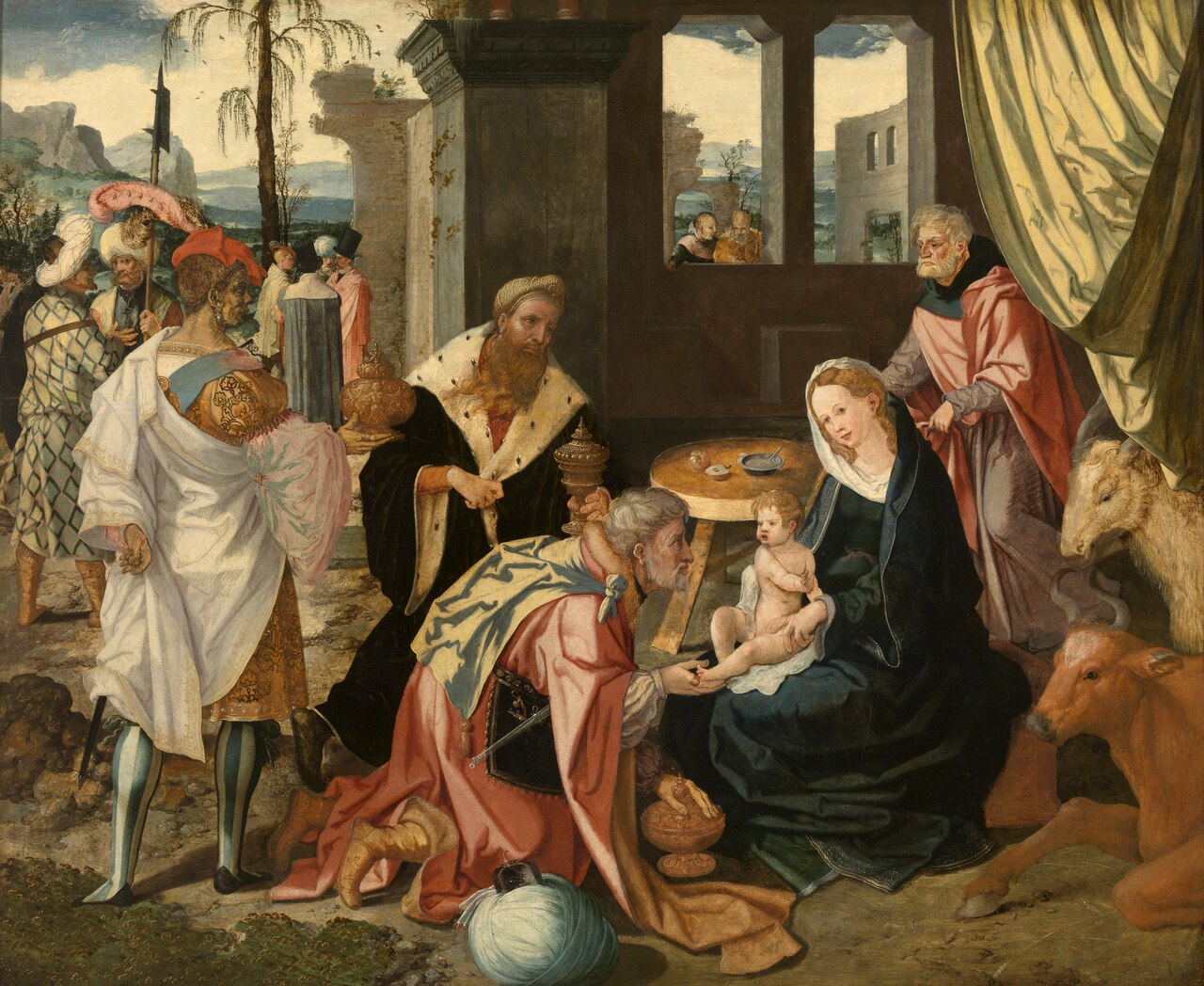
- The Adoration of the Magi (1549) – In this later work Swart achieves a harmonious balance between the exotic costumes of the Magi and the humble setting of the stable. The painting’s luminous background, achieved through multiple glazes, underscores the celestial significance of the event.
- The month July (1555) – Part of a calendar series, this piece illustrates agricultural activity associated with July. Swart’s attention to the texture of wheat, the sheen of workers’ tools, and the play of summer light exemplifies his capacity to render everyday life with the same reverence he afforded religious subjects.
These works collectively reveal Swart’s evolving approach to narrative, his willingness to explore both sacred and secular themes, and his consistent emphasis on clear, didactic composition.
Influence and legacy Jan Swart van Groningen occupies a modest yet significant place in Dutch art history. Though he never achieved the fame of contemporaries such as Pieter Bruegel the Elder, his paintings contributed to the diffusion of Renaissance techniques in the northern Netherlands. By integrating Italianate oil glazing with a distinctly Dutch attention to detail, he helped bridge the gap between the early Netherlandish tradition and the later Golden Age. His modest output also served as a reference for later genre painters who sought to depict everyday life with a moralising undertone. Modern scholarship regards Swart as a representative figure of the transitional period, illustrating how regional artists adapted broader European currents to local tastes. His surviving works are held in several European collections, where they continue to inform studies of Northern Renaissance narrative painting.
Frequently asked questions
Who was Jan Swart van Groningen?
Jan Swart van Groningen (1490–1553) was a Dutch Renaissance painter born in Groningen who worked mainly in Antwerp and is known for religious and genre scenes.
What artistic style or movement is he associated with?
He is associated with the Northern Renaissance, blending detailed realism, oil‑glazing techniques, and emerging humanist themes, though he did not belong to a specific formal movement.
What are his most famous works?
His most notable works include the *Multiplication of Loaves and Fishes* (1528), *Bathsheba receives an invitation from David* (1537), *Scenes from the Life of Christ* (1540), *The Adoration of the Magi* (1549), and the calendar piece *The month July* (1555).
Why is Jan Swart van Groningen important in art history?
He exemplifies the transition from early Netherlandish painting to the later Dutch Golden Age, showing how Renaissance techniques were adapted in the north and influencing subsequent genre painters.
How can I recognise a painting by Jan Swart van Groningen?
Look for finely layered oil glazes, restrained colour palettes, meticulous detail in clothing and architecture, and a clear, narrative focus that often combines religious themes with subtle everyday realism.