Jacob Grimmer
1525 – 1590
In short
Jacob Grimmer (1525–1590) was a Flemish landscape painter and draughtsman from Antwerp who helped shift 16th‑century Netherlandish landscape art from fantastical world views toward more realistic, atmospheric depictions of rural life.
Notable works

_Ruine_in_Waldlandschaft.jpg)
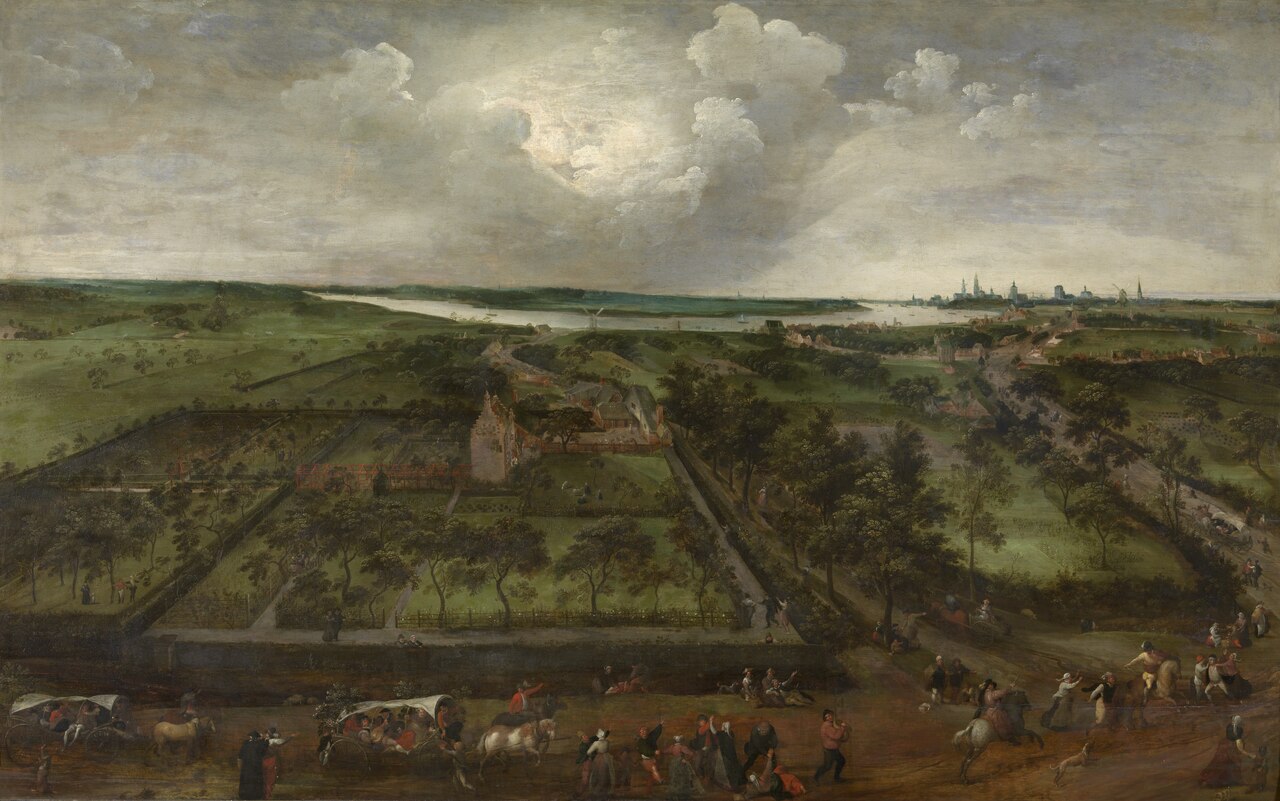
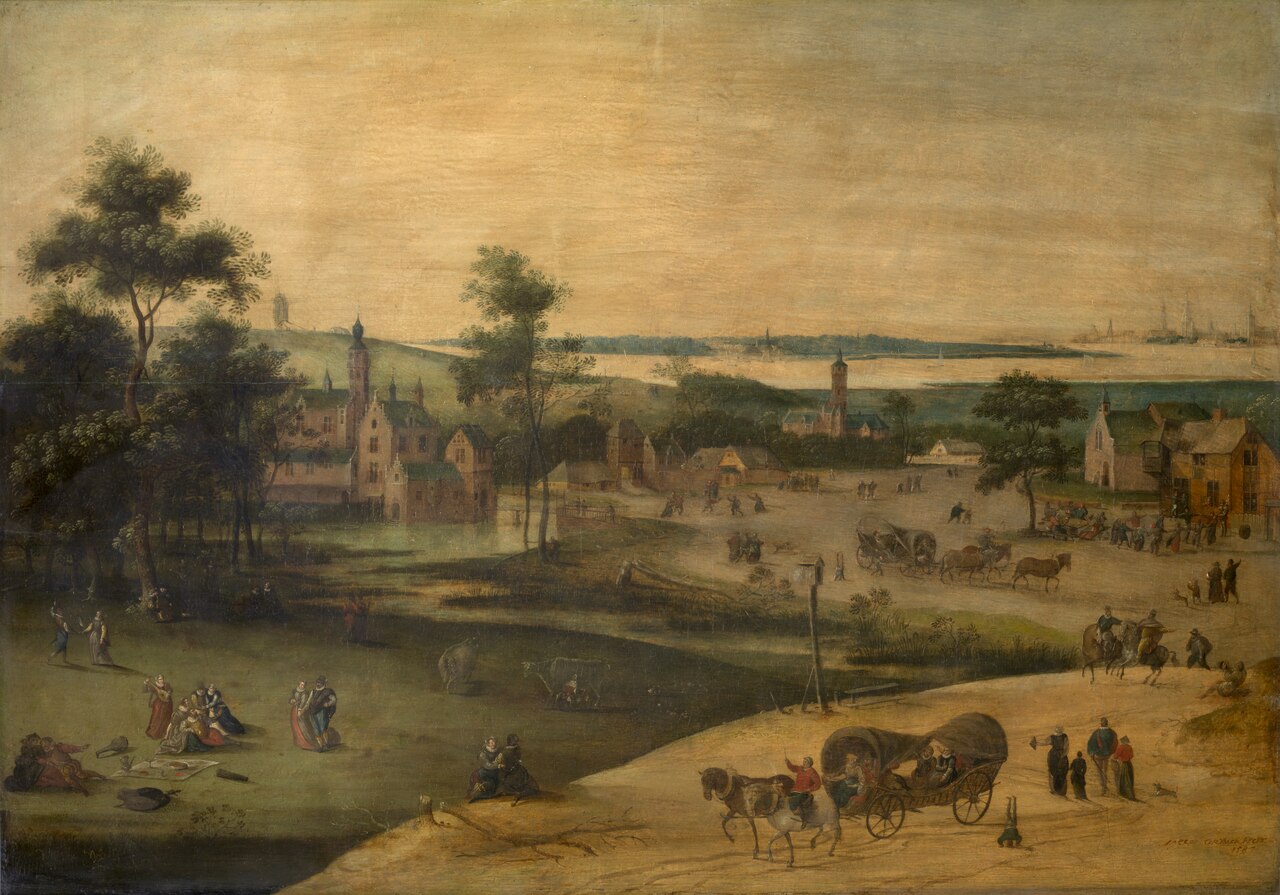

Early life Jacob Grimmer was born in 1525 in the bustling port city of Antwerp, then part of the Habsburg Netherlands. Little is known about his family background, but the city's vibrant artistic milieu offered ample opportunities for a young talent to encounter the workshops of established painters and the influx of prints from Italy and the Low Countries. Antwerp in the early 16th century was a centre of commerce and culture, and its guild system provided a structured path for apprenticeships. Grimmer likely began his training in a local workshop, where he would have learned drawing, colour handling, and the practicalities of producing works for a market that increasingly demanded both religious commissions and secular subjects.
Career and style Grimmer emerged as a professional painter in the mid‑1500s, a period when Flemish art was still dominated by the grand, imaginary "world landscape" tradition pioneered by artists such as Joachim Patinir. Unlike his predecessors, Grimmer turned his attention to the immediate countryside surrounding Antwerp. His canvases display a restrained compositional logic, favouring modest village settings, gentle hills, and riverbanks over the dramatic, mythic vistas of earlier masters. The shift is evident in his handling of space: he arranges elements in a shallow, almost planar manner that still conveys depth through atmospheric perspective and careful colour modulation.
Grimmer’s colour palette is noted for its subtlety. He favoured muted earth tones punctuated by the occasional bright hue – for instance, the warm ochres of a thatched roof or the crisp green of cultivated fields. This restrained approach allowed him to capture the changing light of early morning or late afternoon with convincing realism. Moreover, his works often convey a quiet, contemplative mood, reflecting a growing interest in everyday life and the natural environment that would later blossom in the Dutch Golden Age.
Signature techniques Grimmer’s technique combines careful draughtsmanship with a delicate handling of paint. His preparatory drawings, many of which survive as sketches, reveal a meticulous line that defines the structure of trees, buildings, and waterways before colour is introduced. In the painting process, he typically applied thin glazes of oil paint, building up atmospheric effects layer by layer. This glazing method produced a luminous quality, especially in sky and water, where the underlying tones subtly shine through the surface.
Another hallmark of Grimmer’s style is his treatment of foliage. Rather than rendering each leaf individually, he suggests foliage through a series of short, rhythmic strokes that convey texture without overwhelming detail. This approach contributes to the overall sense of harmony, as the foliage integrates seamlessly with the surrounding landscape. Additionally, Grimmer often employed a modest compositional scale: villages and figures appear small within the broader environment, reinforcing the primacy of nature over human activity.
Major works - **A Flemish Village (1587)** – This painting exemplifies Grimmer’s mature style. A clustered settlement sits beside a winding road, with modest houses clustered under a low sky. The subtle gradations of colour convey the hazy light of late afternoon, while the gentle recession of the fields creates a sense of depth without resorting to dramatic perspective. - **Ruins in a Forest (1550)** – One of his earlier works, this piece shows a forgotten stone structure half‑overgrown by trees. Grimmer’s handling of the forest canopy demonstrates his evolving skill in rendering foliage, while the muted tones suggest a melancholic atmosphere that hints at the passage of time. - **Kiel near Antwerp (1579)** – In this landscape, Grimmer turns his eye to a specific locale along the Scheldt river. The composition balances the water’s reflective surface with the surrounding low hills, and a small fleet of boats anchors human activity within the natural setting. - **Village at the Scheldt (1587)** – Similar in date to the Flemish Village, this work places a modest settlement directly on the banks of the Scheldt. The river dominates the composition, its gentle curve guiding the viewer’s eye toward the horizon, while the village’s rooftops and chimney smoke add a narrative of everyday life. - **A Winter Landscape with a Village, Skaters on a Frozen River, and Hunters in the Foreground** – Though untitled in historic records, this complex composition combines several genre elements. A frozen river hosts figures on skates, while hunters on horseback move through a snow‑covered foreground. The work showcases Grimmer’s ability to integrate multiple activities within a single, cohesive winter scene, using a cool palette and careful light handling to capture the crisp atmosphere.
These works collectively illustrate Grimmer’s dedication to portraying the lived environment of the Low Countries, moving away from the fantastical panoramas of his predecessors toward a more observational approach.
Influence and legacy Jacob Grimmer’s contribution to Flemish landscape painting lies in his pioneering shift toward realism and atmospheric subtlety. By focusing on the everyday countryside, he laid groundwork that later artists such as Joos de Momper, Gillis van Coninxloo, and the early Dutch masters would expand upon. His colour harmonies and glazing technique informed the developing visual language of landscape painting, encouraging a move away from symbolic, allegorical scenery toward depictions that reflected genuine observation.
Although he is not associated with a formal movement, Grimmer occupies an important transitional position. His works were collected by wealthy patrons who appreciated the novelty of a landscape that resembled their own surroundings. Contemporary art historians credit him with helping to define the “Flemish landscape” genre that would dominate the 17th century. Grimmer’s legacy persists in the way modern scholars view the evolution of Northern European art: as a gradual, often subtle, negotiation between tradition and the emerging desire to capture the natural world faithfully.
In summary, Jacob Grimmer’s career demonstrates a quiet but decisive re‑orientation of Flemish art, from the grandiose mythic visions of the early Renaissance to the intimate, atmospheric scenes that foreshadowed the Dutch Golden Age’s fascination with light, weather, and the everyday landscape.
Frequently asked questions
Who was Jacob Grimmer?
Jacob Grimmer (1525–1590) was a Flemish landscape painter and draughtsman from Antwerp who helped shift 16th‑century Netherlandish art toward realistic rural scenes.
What style or movement is Jacob Grimmer associated with?
He is not linked to a formal movement, but his work marks a transition from the fantastical world‑landscape tradition to a more naturalistic, atmospheric Flemish landscape style.
What are Jacob Grimmer’s most famous works?
Key works include A Flemish Village (1587), Ruins in a Forest (1550), Kiel near Antwerp (1579), Village at the Scheldt (1587), and a winter scene featuring skaters and hunters.
Why is Jacob Grimmer important in art history?
He pioneered a realistic approach to landscape painting, influencing later Flemish and Dutch artists and helping to establish the genre of everyday countryside scenes.
How can I recognise a Jacob Grimmer painting?
Look for modest village settings, subtle colour palettes, delicate glazing, and a focus on atmospheric light rather than dramatic, mythic compositions.