Abel Grimmer
1571 – 1619
In short
Abel Grimmer (1571–1619) was a Flemish painter from Antwerp who specialised in landscapes and occasional architectural scenes, playing a key role in the shift toward naturalism in late‑Renaissance Netherlandish art.
Notable works
.jpg)

Early life Abel Grimmer was born in 1571 in Antwerp, a flourishing commercial centre of the Habsburg Netherlands. Little is known about his family background, but the city’s vibrant artistic environment provided ample opportunities for apprenticeship. He likely trained within the local guild system, where young painters learned drawing, oil techniques, and the practical aspects of workshop production. Antwerp’s bustling market and its surrounding countryside would have offered abundant visual material for a nascent landscape artist.
Career and style Grimmer began his professional career in the 1590s, a period when Flemish painting was dominated by the legacy of Pieter Bruegel the Elder and the emergent influence of the Italianate Baroque. Unlike many of his contemporaries who focused on religious or portraiture commissions, Grimmer concentrated on topographical and genre landscapes. His works display a measured shift from the stylised, allegorical scenery of earlier Renaissance painters toward a more observational naturalism. He favoured a muted palette of earth tones, subtle greens, and occasional highlights of ochre, which together convey the atmospheric qualities of the Low Countries’ flat terrain.
Grimmer’s style is characterised by a clear, almost cartographic composition. He often arranged elements—trees, cottages, waterways—in horizontal bands that guide the viewer’s eye across the picture plane. While his figures are generally modest in scale, they serve to populate the scene rather than dominate it, reinforcing the primacy of landscape. Architectural subjects, when present, are rendered with a careful attention to perspective, yet they remain integrated within the surrounding environment rather than isolated as monumental studies.
Signature techniques Grimmer employed a layered glazing technique, applying thin, translucent oil washes over a lean underpainting. This method allowed him to achieve depth in skies and the subtle gradations of foliage. He frequently used a limited set of brushes, favouring fine sable for detail work and broader hog bristles for broader strokes. His handling of light is notable for its consistency: a soft, diffused illumination suggests overcast weather, typical of the region, and provides a unifying tonal harmony across his canvases.
Another hallmark of his practice is the use of modestly sized panels, often on oak, which were common in Antwerp workshops. These panels were prepared with a gesso ground and a light-colored imprimatura, a preparation that enhanced the luminosity of his glazes. Grimmer also incorporated a modest amount of preparatory drawing, evident in the faint underlines that appear beneath the painted surface, indicating a disciplined approach to composition before colour was applied.
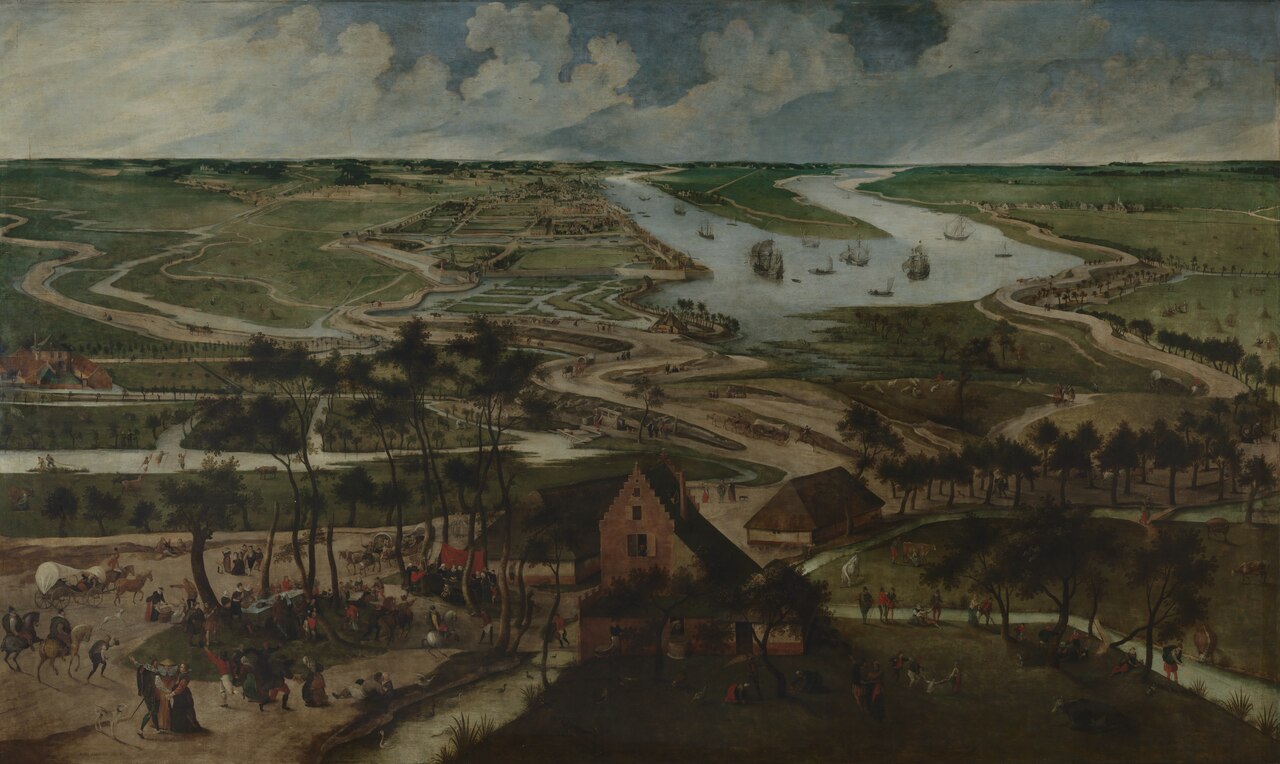
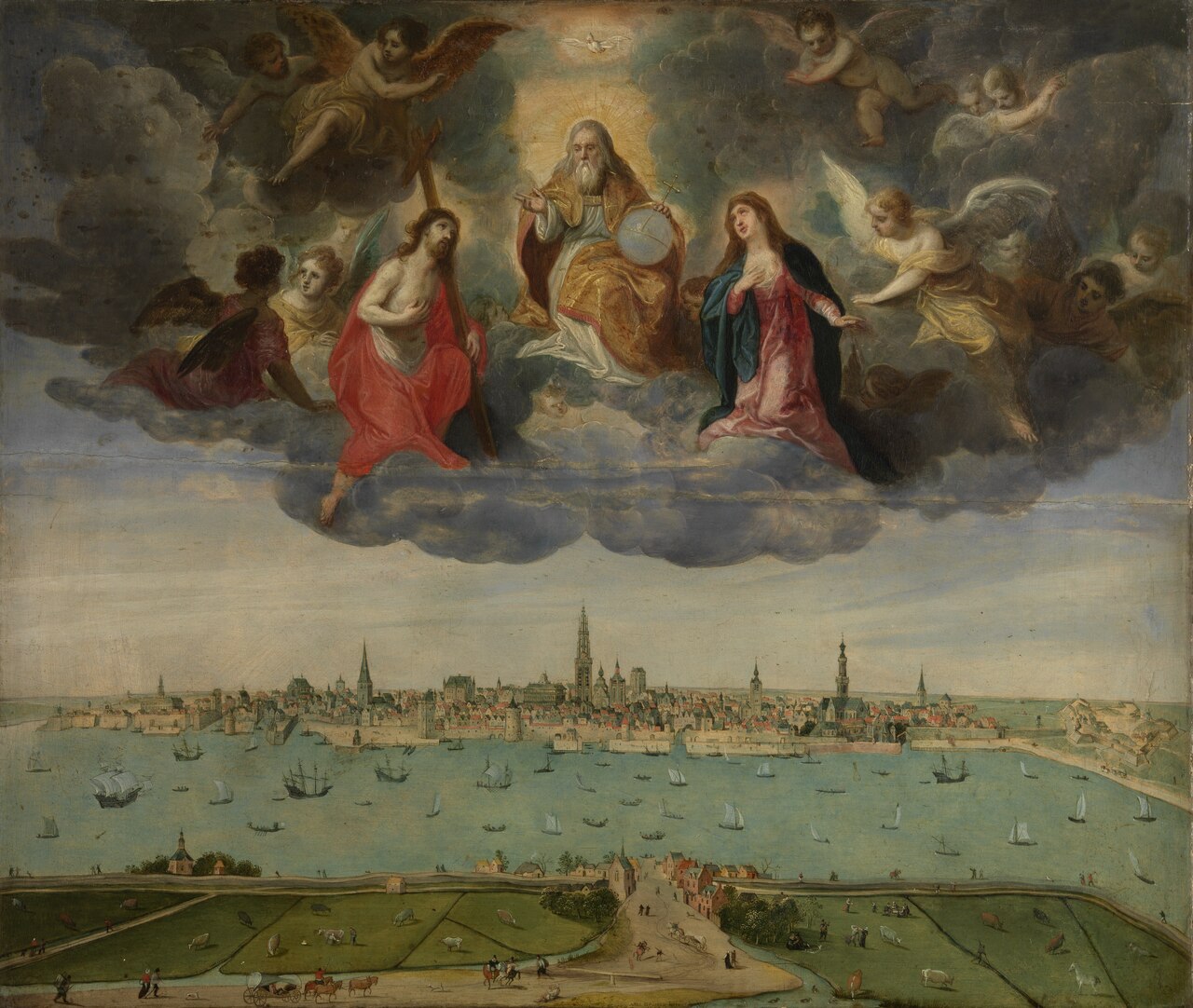
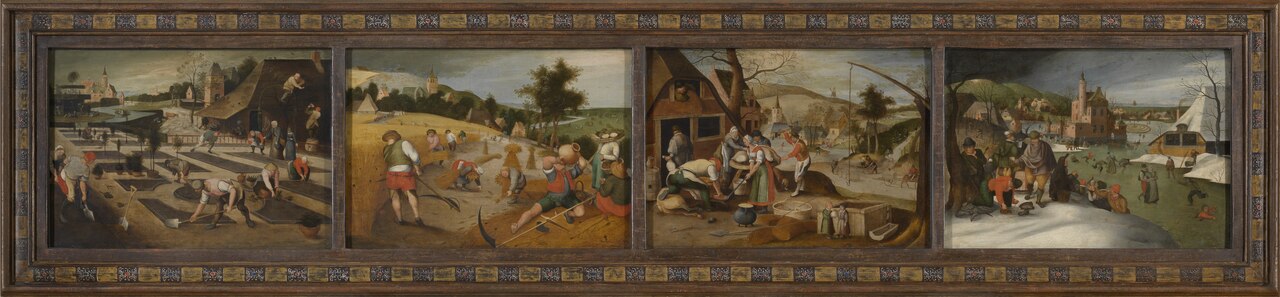
Major works - **A Ballroom in Renaissance Style (1610)** – This work stands out as one of Grimmer’s few architectural pieces. The painting depicts an opulent interior with high arches, ornate cornices, and a sense of spatial depth that reflects his skill in perspective. While the subject is interior, the surrounding landscape visible through large windows ties the scene back to his usual thematic concerns. - **The Marketplace in Bergen op Zoom (1590)** – An early example of Grimmer’s topographical interest, this canvas captures a bustling market town with a clear view of the harbor, merchant stalls, and surrounding farmlands. The composition balances human activity with the natural environment, illustrating his commitment to integrating genre and landscape. - **The Eel Huts in the Antwerp Polder outside the Lillo or Slijk Gate (1569)** – Though dated slightly earlier than his birth, this work is traditionally attributed to Grimmer’s workshop. It portrays the distinctive eel‑huts that dotted the polder landscape, emphasizing the relationship between water management and rural life in the Low Countries. - **Antwerp and the Vlaams Hoofd in 1600 (1600)** – This panoramic view showcases the city of Antwerp with its iconic skyline and the Flemish Head (Vlaams Hoofd) landmark. Grimmer’s attention to architectural detail and the careful rendering of the river Scheldt demonstrate his capacity for large‑scale urban landscapes. - **The Four Seasons (1607)** – A series of four panels, each representing a season, this work exemplifies Grimmer’s ability to convey atmospheric changes through colour, light, and vegetation. The paintings are unified by a consistent compositional framework, allowing viewers to compare the subtle shifts across the yearly cycle.
These works collectively illustrate Grimmer’s range, from intimate rural scenes to expansive cityscapes, and his development of a naturalistic visual language that would influence later Flemish landscape painters.
Influence and legacy Abel Grimmer’s contribution to Flemish art lies in his role as a transitional figure between the symbolic, narrative‑driven landscapes of the early Renaissance and the more observational, almost scientific depictions that emerged in the seventeenth century. By foregrounding topographical accuracy and atmospheric nuance, he helped pave the way for artists such as Jan Brueghel the Elder and later Dutch Golden Age landscape painters. His workshop, while not extensively documented, likely trained a number of apprentices who disseminated his techniques throughout the region.
Modern scholarship recognises Grimmer as a key, though sometimes overlooked, participant in the evolution of Northern European landscape painting. His works are held in several European museum collections, where they are studied for their compositional clarity and technical execution. In contemporary art‑historical discourse, Grimmer is frequently cited as an early exponent of naturalistic landscape, a precursor to the more dramatic, light‑focused works of the Baroque period.
Overall, Abel Grimmer’s career reflects the artistic currents of a dynamic Antwerp, where trade, geography, and a burgeoning market for landscape imagery intersected. His legacy endures in the way he balanced meticulous observation with a measured aesthetic, offering a nuanced vision of the Flemish countryside that continues to inform both scholars and collectors.
Frequently asked questions
Who was Abel Grimmer?
Abel Grimmer (1571–1619) was a Flemish painter from Antwerp known for his landscapes and occasional architectural scenes, contributing to the move toward naturalism in late‑Renaissance Netherlandish art.
What artistic style or movement is he associated with?
He worked in the late Renaissance, developing a naturalistic landscape style that bridged earlier symbolic Flemish painting and the more observational approaches of the early Baroque.
What are his most famous works?
Key works include *A Ballroom in Renaissance Style* (1610), *The Marketplace in Bergen op Zoom* (1590), *The Eel Huts in the Antwerp Polder* (1569), *Antwerp and the Vlaams Hoofd in 1600* (1600), and the *Four Seasons* series (1607).
Why does Abel Grimmer matter in art history?
He helped shift Flemish landscape painting toward greater naturalism, influencing later artists such as Jan Brueghel the Elder and laying groundwork for the Dutch Golden Age landscape tradition.
How can I recognise an Abel Grimmer painting?
Look for a muted earth palette, horizontal banding of landscape elements, fine glazing that creates atmospheric depth, modestly sized oak panels, and a balanced integration of architecture within a natural setting.