Israel Silvestre
1621 – 1691
In short
Israel Silvestre (1621–1691) was a French draftsman, etcher and print dealer renowned for his topographical and perspective drawings of historic buildings and gardens. He produced detailed engravings that documented French and European architecture in the 17th century.
Notable works



Early life Israel Silvestre was born in 1621 in Nancy, a city in the Lorraine region of France. He came from a family of artisans; his father, also named Israel Silvestre, worked as a draughtsman and taught his son the fundamentals of drawing and engraving. Growing up in a workshop environment gave the younger Silvestre early exposure to the technical skills required for printmaking. By his late teens he had moved to Paris, the cultural hub of France, where he sought patronage and further training. The vibrant artistic scene of Paris in the mid‑17th century, characterised by royal commissions and an expanding market for illustrated books, provided a fertile ground for his development.
Career and style In Paris, Silvestre established himself as a prolific producer of topographical views. He worked closely with publishers and the French court, creating detailed plates that illustrated the architecture of castles, churches, and gardens. His output was largely driven by the demand for visual documentation of royal estates and historic monuments, a trend that resonated with the growing interest in antiquarian studies. Silvestre’s style is distinguished by a precise, almost scientific rendering of space combined with a clear, linear drawing technique. He favoured a balanced composition that placed architectural elements within a coherent perspective, allowing viewers to appreciate both the grandeur of the subject and its spatial relationships.
Signature techniques Silvestre’s prints are characterised by several recurring technical approaches. First, he employed a meticulous line‑etching process that captured fine architectural detail while retaining a lightness of hand. Second, he often used a bird‑s‑eye or elevated viewpoint, which gave the viewer a comprehensive overview of a site—a method particularly suited to garden and cityscape subjects. Third, his use of hatching and cross‑hatching created subtle tonal variations that suggested depth without obscuring structural clarity. Finally, Silvestre sometimes incorporated decorative cartouches and brief textual captions, linking his images to the scholarly publications for which they were intended.
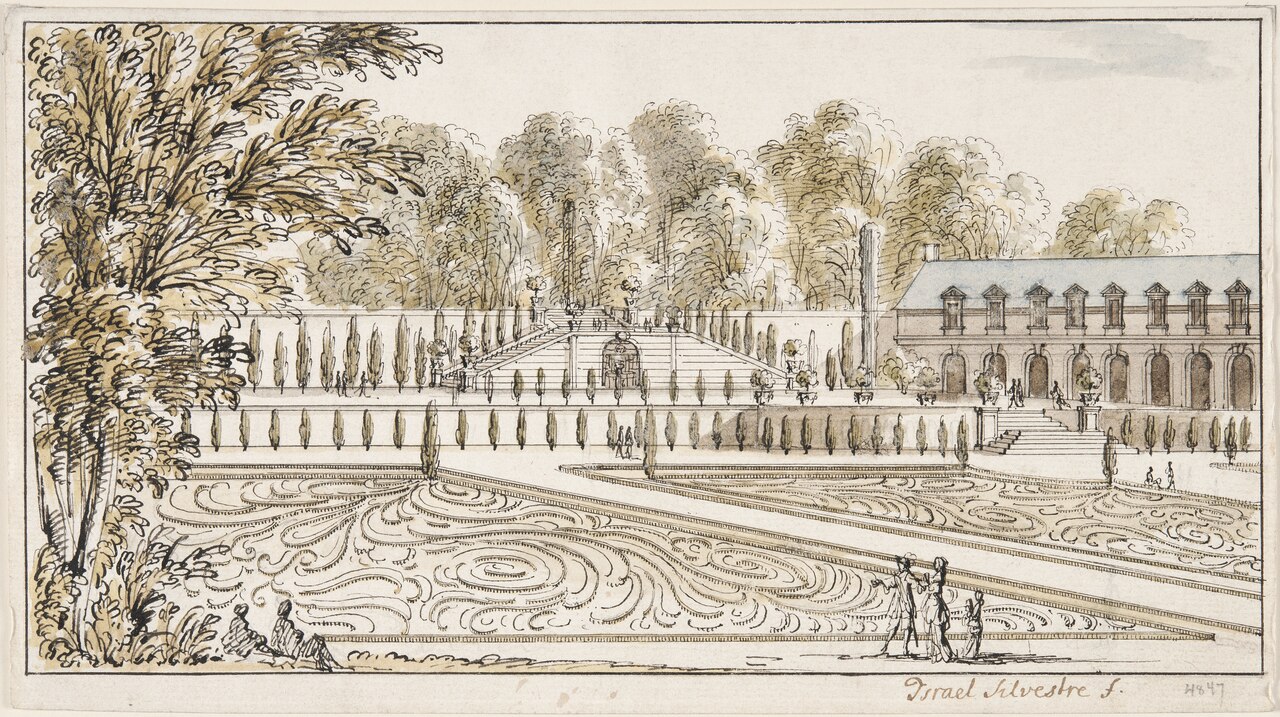
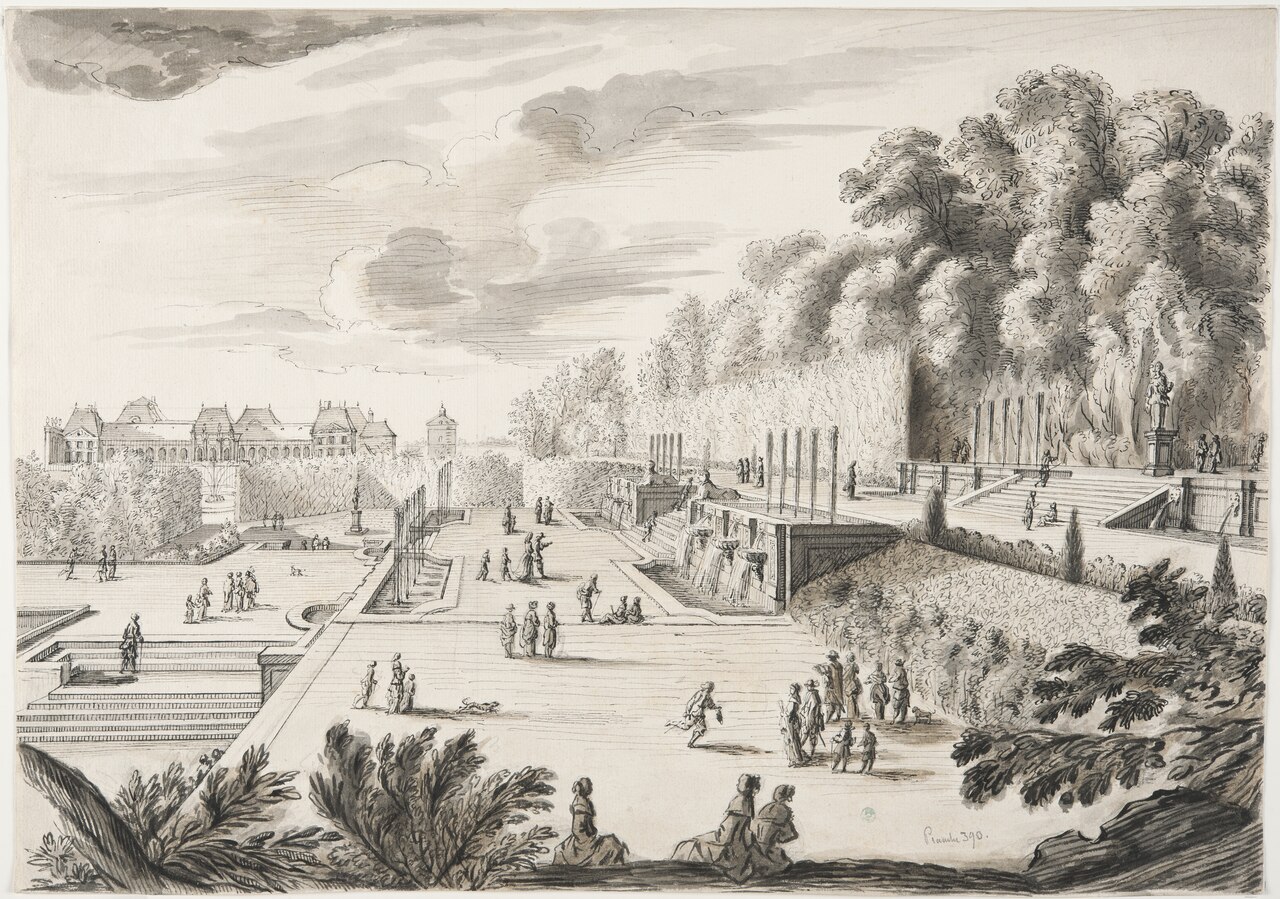
Major works Silvestre’s most celebrated pieces include a series of engravings that document notable European sites. *L'Eglise Saincte Sophie de Constantinople, bastie par Constantin le Grand; a present Mosquée du Grand seigneur* (1640) presents a detailed view of Hagia Sophia before its conversion into a mosque, highlighting the building’s Byzantine architecture alongside early Ottoman additions. *Parterre de Broderie Identified as the North Part of the East Garden at Saint‑Cloud* depicts a meticulously designed garden layout, illustrating the intricate parterre patterns that were fashionable in French royal gardens. *The Small Cascades in the Gardens of Vaux‑le‑Vicomte* captures the ornamental water features of Nicolas Fouquet’s celebrated estate, emphasizing the harmonious integration of water and sculpture. *Castle under Siege* offers a dramatic narrative scene, showing a fortified structure under attack, rendered with careful attention to the geometry of walls and the dynamics of the siege. Finally, his portrait engraving *Cardinal Jules Mazarin* (1656) provides a rare glimpse of the powerful minister, portraying him with a dignified pose and a finely rendered drapery that underscores Silvestre’s skill in portraiture.
Influence and legacy Israel Silvestre’s work contributed significantly to the visual culture of 17th‑century France. By producing accurate and aesthetically appealing records of architectural and garden designs, he helped establish a visual reference that informed later architectural treatises and the development of the French formal garden. His prints circulated widely among aristocrats, scholars, and collectors, shaping contemporary perceptions of historic sites across Europe. Moreover, Silvestre’s method of combining topographical precision with artistic composition influenced subsequent generations of draughtsmen and etchers, including the celebrated French engraver Jacques Callot. Though he is not associated with a specific avant‑garde movement, Silvestre’s oeuvre stands as a testament to the enduring value of documentary art, bridging the gap between scholarly illustration and fine art.
Frequently asked questions
Who was Israel Silvestre?
Israel Silvestre (1621–1691) was a French draftsman, etcher and print dealer known for his detailed topographical views of historic buildings and gardens.
What style or movement is he associated with?
He is not linked to a single artistic movement; his work reflects the 17th‑century French tradition of precise architectural illustration and the emerging interest in documentary art.
What are his most famous works?
Key works include the 1640 engraving of Hagia Sophia, the garden view of Saint‑Cloud’s Parterre de Broderie, the Small Cascades at Vaux‑le‑Vicomte, the Castle under Siege scene, and the 1656 portrait of Cardinal Jules Mazarin.
Why does Israel Silvestre matter in art history?
His prints provided accurate visual records of important architectural sites, influencing later architectural publications and establishing a model for the combination of documentary precision with artistic composition.
How can I recognise an Israel Silvestre print?
Look for finely etched line work, elevated perspectives, clear architectural detail, and often accompanying cartouches or captions that link the image to a printed publication.