Hippolyte Boulenger
1837 – 1874
In short
Hippolyte Boulenger (1837–1874) was a Belgian landscape painter, often called the "Belgian Corot" for his lyrical depictions of nature influenced by the French Barbizon school.
Notable works
.jpg)
Early life Hippolyte Emmanuel Boulenger was born in 1837 in the historic city of Tournai, Belgium. Little is recorded about his family background, but the artistic climate of his native region was already vibrant, with a growing interest in plein‑air painting and the study of natural light. Boulenger showed an early aptitude for drawing, and by his teenage years he was attending local drawing schools where he received a solid grounding in academic techniques. His formative years coincided with the rise of the French Barbizon school, whose members such as Jean‑Baptiste‑Camille Corot and Théodore Rousseau were redefining landscape painting through direct observation of the countryside.
Career and style In the early 1850s Boulenger moved to Brussels, the cultural hub of Belgium, to pursue a professional artistic career. He became associated with a circle of Belgian painters who were receptive to the Barbizon aesthetic, integrating its emphasis on atmosphere, tonal subtlety, and a restrained palette into their own work. While he never formally aligned himself with a specific movement, Boulenger’s landscapes are characterised by a quiet, contemplative mood that mirrors the lyrical realism of Corot. He preferred modest, rural subjects—fields, woods, and modest farm scenes—rendered with a delicate handling of light that suggests early morning or the soft glow after a storm.
Throughout the 1860s Boulenger exhibited regularly at the Brussels Salon and other regional exhibitions. Critics praised his capacity to evoke the emotional resonance of the Belgian countryside without resorting to overt dramatism. Contemporary accounts describe his studio as a modest space where he would work from sketches made during walks in the Ardennes and the environs of Brussels, later developing those studies into finished oil paintings in his studio.
Signature techniques Boulenger’s technique combined a disciplined underdrawing with a fluid application of oil paint. He often began with a light sketch in charcoal or graphite to map the composition, then applied a thin, semi‑transparent glaze to build atmospheric depth. His colour palette tended toward muted earth tones—soft greens, warm ochres, and subdued blues—allowing the interplay of light and shadow to dominate the visual effect. A notable hallmark of his style is the use of delicate, almost invisible brushstrokes to suggest foliage and distant forms, a method that creates a sense of distance and invites the viewer’s eye to wander across the canvas.
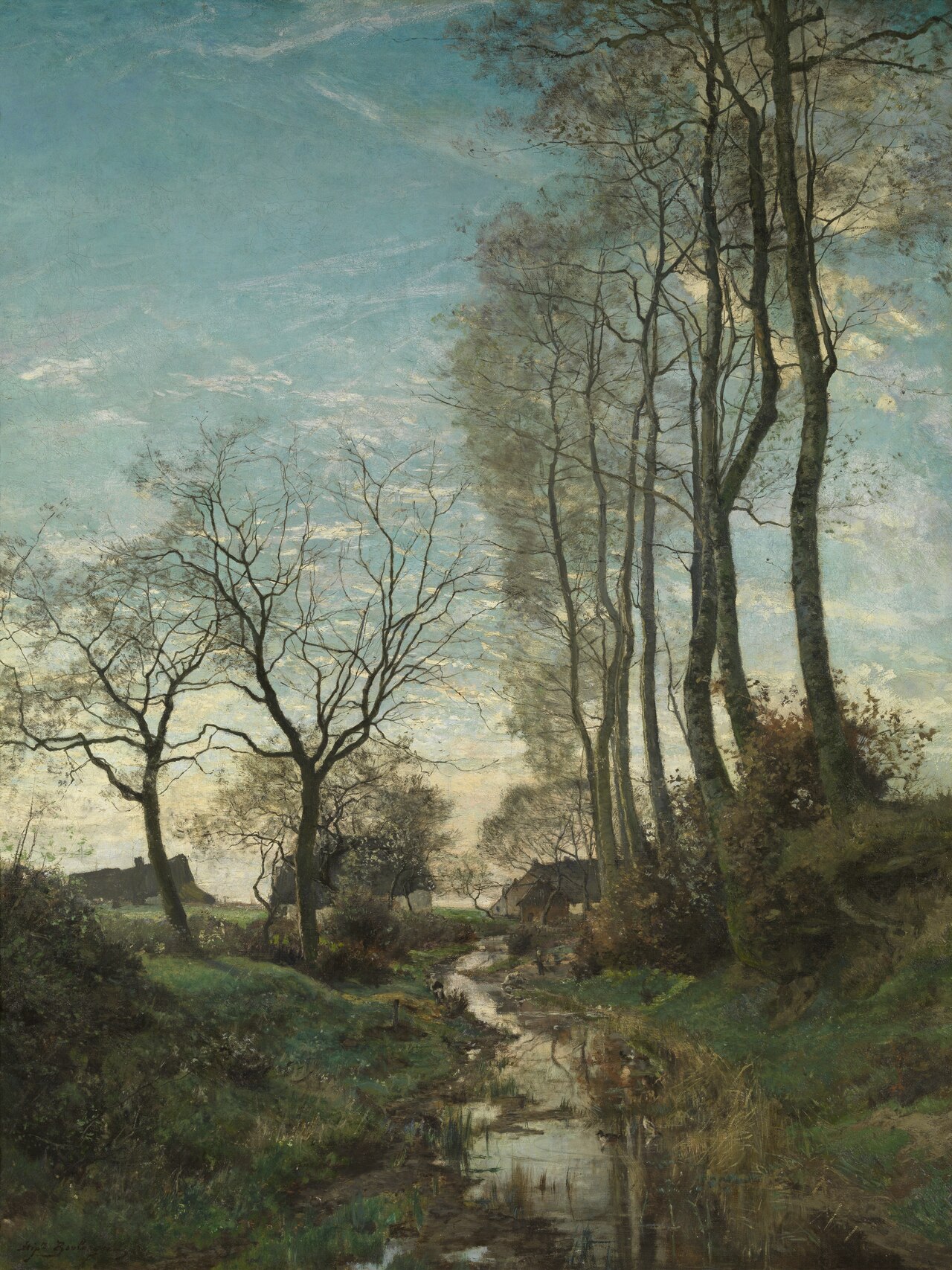
Another recurring element is the treatment of sky and weather. In works such as *After the Evening Storm* (1870), Boulenger captures the fleeting moments after a rainstorm, with diffused light reflected on wet surfaces and clouds rendered in soft, layered washes. This focus on atmospheric conditions aligns him with the Barbizon painters, yet his restrained colour choices give his work a distinctly Belgian sensibility.
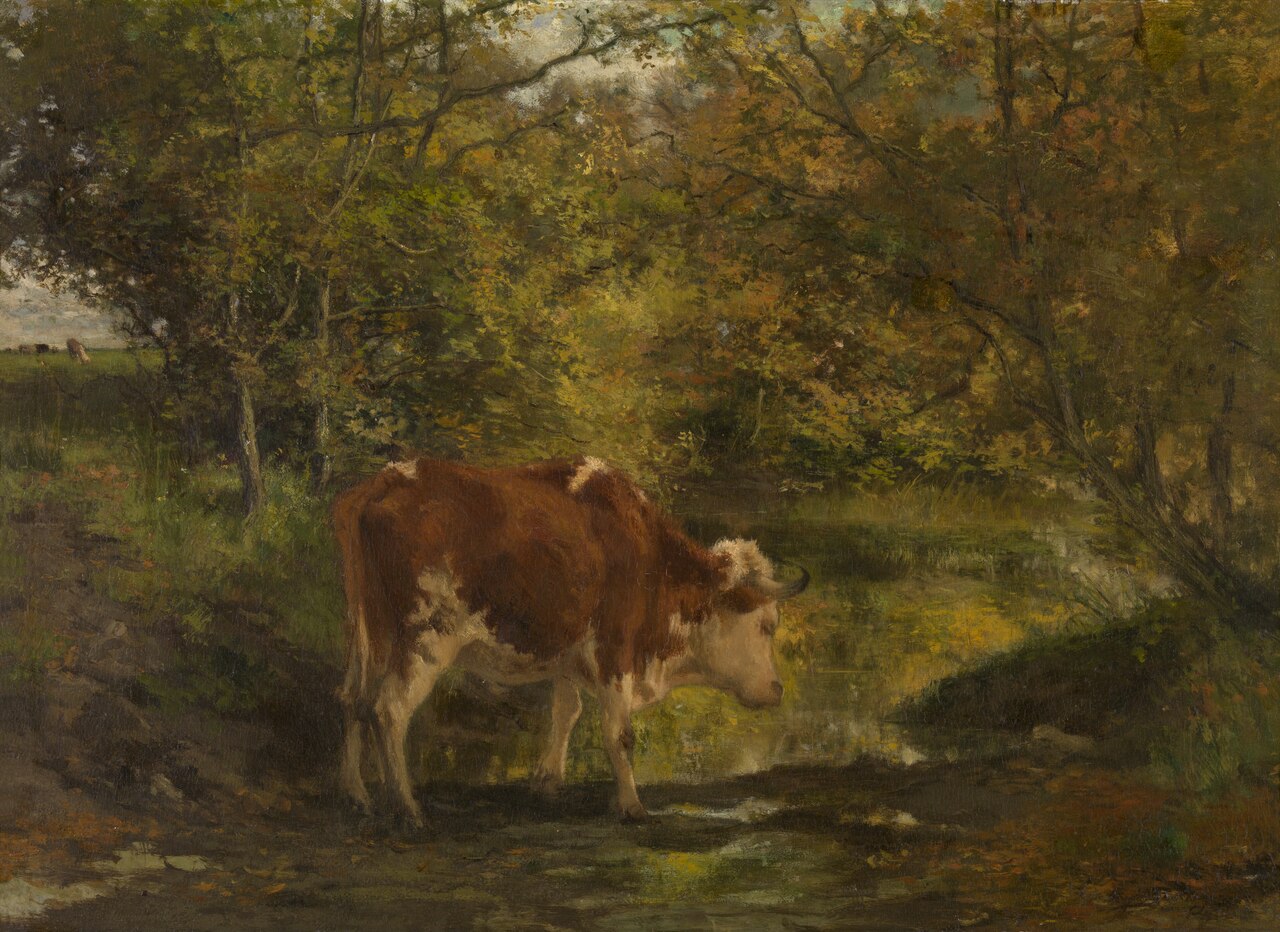
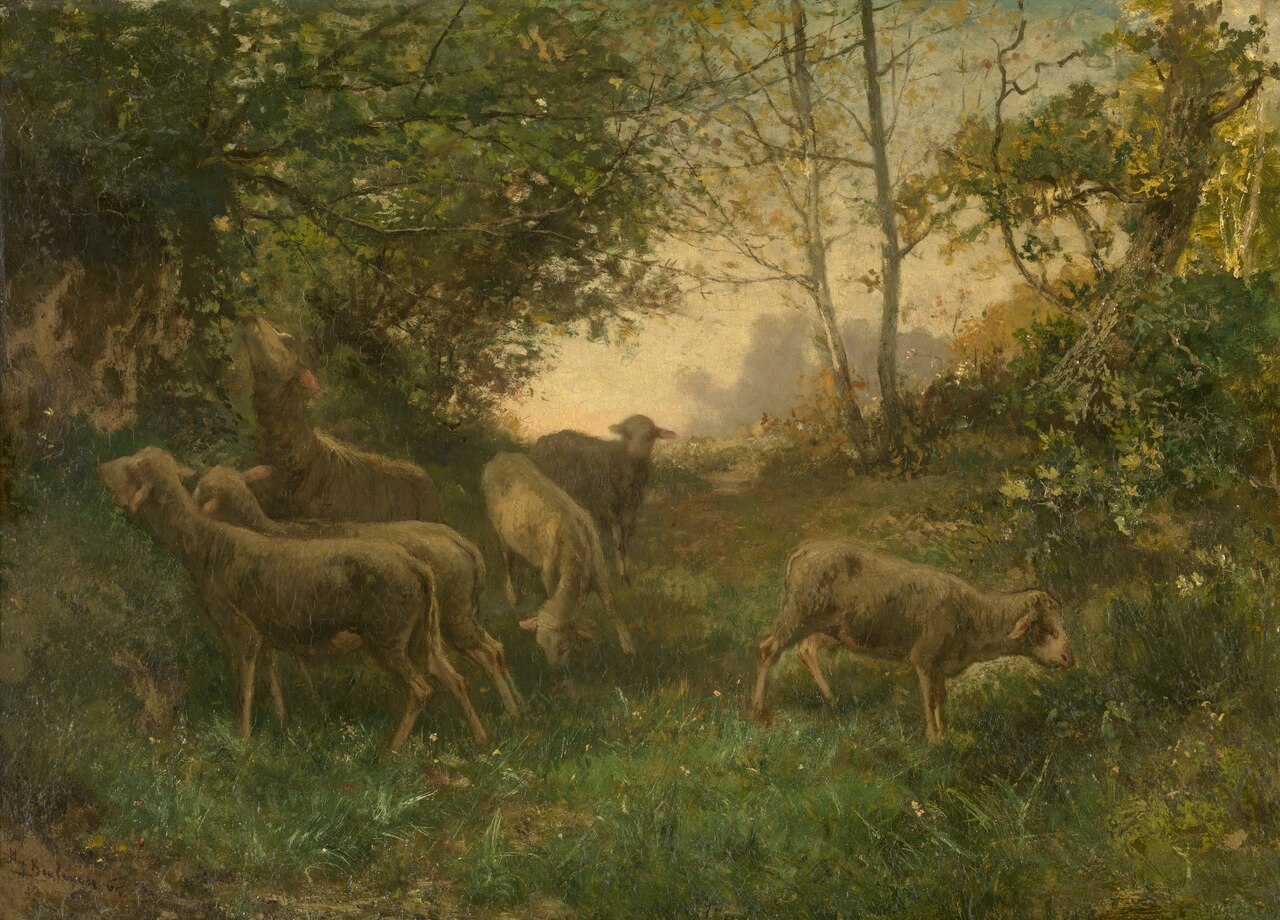
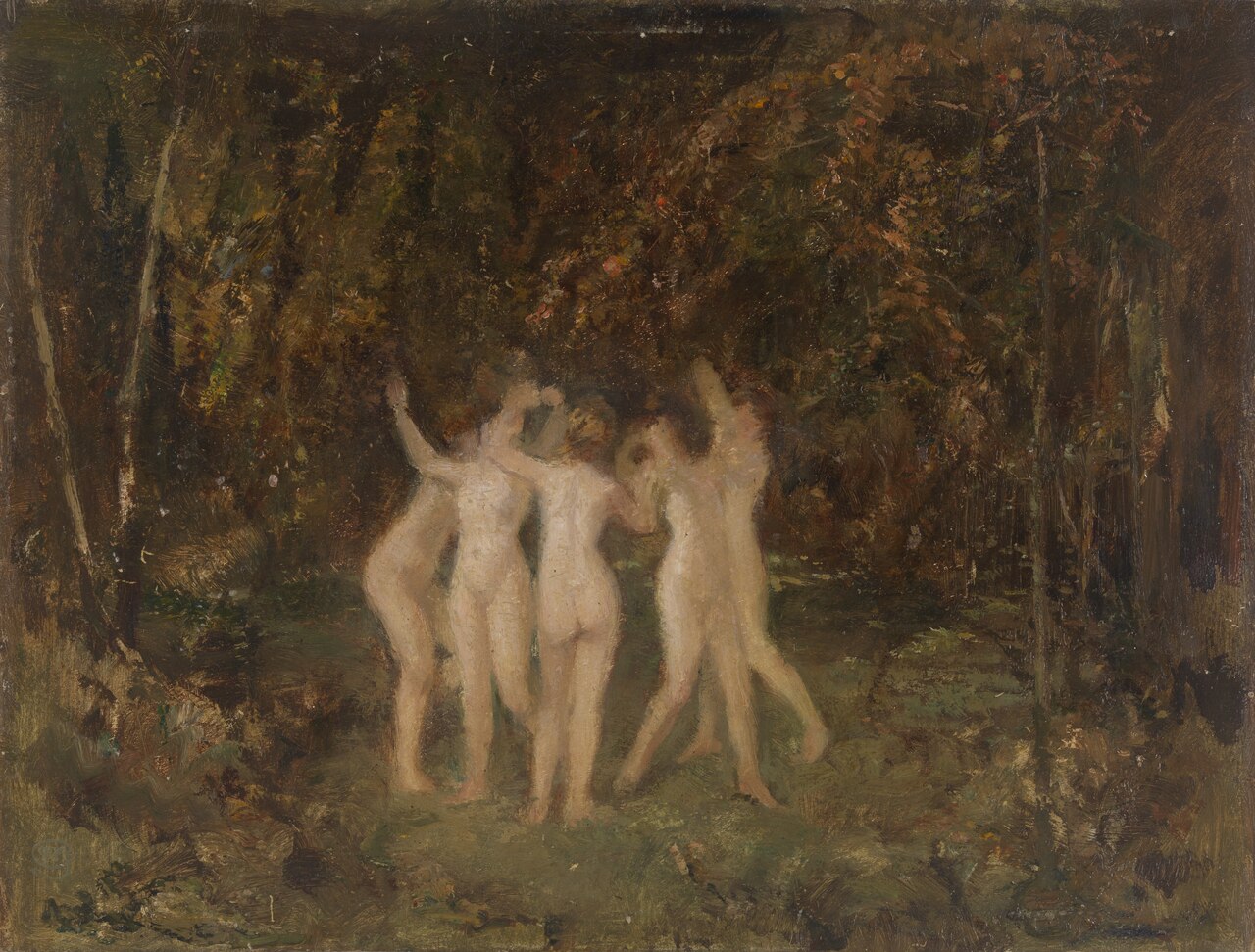
Major works - **After the Evening Storm (1870)** – This late work exemplifies Boulenger’s mastery of atmospheric effects. A muted landscape is illuminated by the gentle afterglow of a storm, with reflective puddles and a sky mottled in pastel clouds. The painting’s quiet optimism reflects his mature style. - **Cow at the Ditch (1864)** – A pastoral scene featuring a solitary cow by a shallow ditch, rendered with a calm, balanced composition. The animal is rendered with careful observation, while the surrounding foliage is suggested with soft, feathery brushwork, highlighting Boulenger’s skill in integrating figures into natural settings. - **Sheep on the Fringe of the Wood (1864)** – This work portrays a flock of sheep grazing at the edge of a forest. The composition draws the viewer’s eye into the depth of the woods, with light filtering through the canopy to create dappled patterns on the ground. - **Nymphs in the Forest (1866)** – Though the title suggests a mythological element, the painting remains grounded in realistic observation. Boulenger depicts ethereal figures among trees, using a subdued palette that blends the figures seamlessly with the surrounding foliage, illustrating his ability to merge narrative suggestion with naturalism. - **Josaphat Valley at Schaarbeek (1860)** – An early work that captures a broad, rolling valley near Brussels. The painting’s expansive horizon and gentle tonal transitions display Boulenger’s early interest in rendering the Belgian landscape on a grand scale, foreshadowing his later atmospheric pieces.
These works collectively demonstrate Boulenger’s consistent focus on the quiet beauty of rural Belgium, his skillful handling of light, and his subtle narrative touches.
Influence and legacy Although Boulenger’s career was cut short by his premature death in Brussels in 1874, his paintings left a lasting imprint on Belgian landscape painting. Contemporary critics hailed him as the "Belgian Corot," a testament to his ability to translate the poetic sensibility of the French Barbizon school into a distinctly Belgian context. Later generations of Belgian artists, particularly those associated with the Société des Beaux‑Arts, looked to his work as a model for integrating atmospheric observation with disciplined technique.
In the decades following his death, Boulenger’s paintings were included in major exhibitions of Belgian art, and several of his works entered public collections, where they continue to be displayed for their serene representation of the 19th‑century countryside. Art historians note that his approach helped bridge the gap between the academic tradition and the emerging modernist concerns of the late 19th century, making him a pivotal figure in the evolution of Belgian naturalism.
Today, Boulenger’s oeuvre is studied for its nuanced treatment of light and its quiet, lyrical composition. While he never achieved the international fame of his French counterparts, his contribution to the development of landscape painting in Belgium remains recognised by scholars and collectors alike. His paintings, particularly those listed above, are valued for their technical proficiency, atmospheric depth, and their role in shaping a uniquely Belgian visual language within the broader European art narrative.
Frequently asked questions
Who was Hippolyte Boulenger?
Hippolyte Boulenger (1837–1874) was a Belgian landscape painter known for his lyrical depictions of the countryside and often dubbed the "Belgian Corot".
What style or movement is Boulenger associated with?
He was not tied to a formal movement but worked in the spirit of the French Barbizon school, emphasizing atmospheric light and naturalistic scenery.
What are his most famous works?
Key works include *After the Evening Storm* (1870), *Cow at the Ditch* (1864), *Sheep on the Fringe of the Wood* (1864), *Nymphs in the Forest* (1866) and *Josaphat Valley at Schaarbeek* (1860).
Why does Boulenger matter in art history?
He helped translate Barbizon‑style naturalism into a distinctly Belgian context, influencing later Belgian landscape painters and contributing to the development of 19th‑century realism.
How can I recognise a Boulenger painting?
Look for muted earth tones, soft, layered brushwork, a focus on atmospheric effects such as post‑storm light, and tranquil rural subjects rendered with a calm, balanced composition.