Hermann Haller
1880 – 1950
In short
Hermann Haller (1880–1950) was a Swiss sculptor born in Bern and active mainly in the early‑mid‑20th century, known for public monuments such as the Hans Waldmann statue (1932) and the Widmann fountain (1914). His work combines a solid, figurative approach with a focus on civic memory and Swiss historic themes.
Notable works


_-_Landiwiese_-_Wollishofen_2012-03-28_14-36-47_(P7000).JPG)

Early life Hermann Haller was born in 1880 in the Swiss capital of Bern. Little is recorded about his family background, but the city’s rich artistic environment, with its museums and public commissions, offered a fertile ground for a young talent interested in three‑dimensional art. Haller likely received his initial training in local workshops before moving on to formal studies, a common path for Swiss sculptors of his generation. By the turn of the century he was already engaging with the technical demands of stone and bronze work, developing a disciplined approach that would define his later career.
Career and style Haller’s professional life unfolded against the backdrop of a rapidly changing Europe. While the avant‑garde movements of Cubism, Futurism and later Surrealism were reshaping artistic discourse, Haller remained rooted in a more representational idiom. His style can be described as classically informed yet pragmatic, prioritising clarity of form and narrative over abstraction. The sculptor’s preference for public commissions meant that his works were often intended for communal spaces, where clarity and durability were paramount. This pragmatic orientation aligned him with the broader tradition of Swiss civic sculpture, which favoured monuments that reinforced collective memory and local identity.
Signature techniques Haller’s technical repertoire centred on stone carving and bronze casting, the two media most commonly employed for outdoor monuments in his era. In stone, he pursued a smooth, refined surface that highlighted the volume of the figure while preserving a sense of weight. His bronze pieces display a careful patination process, allowing the metal to develop a subtle colour that both protects the work and accentuates its sculptural lines. Across his oeuvre, Haller demonstrated a consistent attention to anatomical accuracy, a skill honed through rigorous study of human anatomy and classical sculpture. He also employed a modest amount of relief work, particularly when integrating his figures into architectural settings.
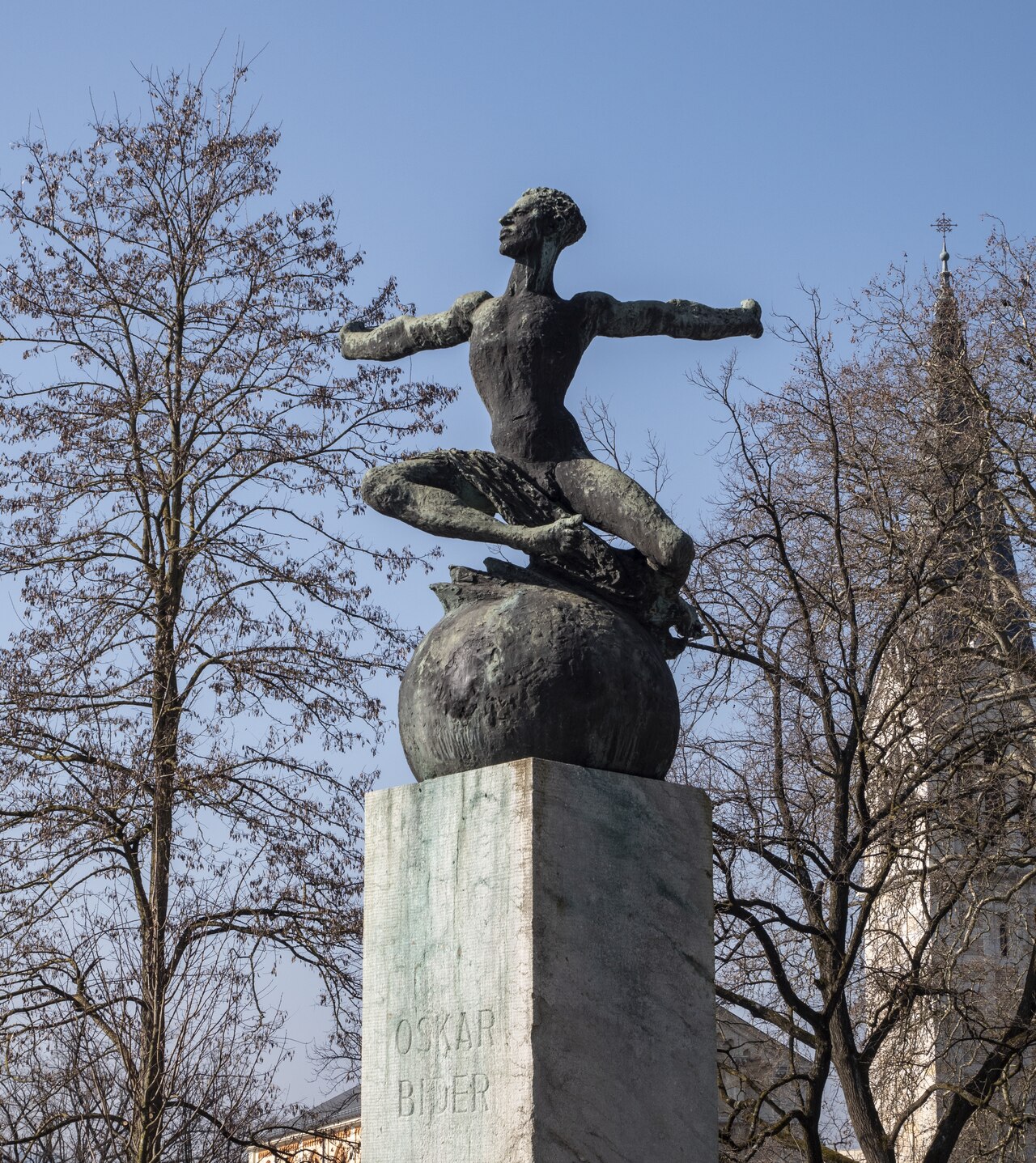
Major works - **Widmann fountain (1914)** – One of Haller’s earliest public commissions, the Widmann fountain was installed in a municipal square and combined functional water features with a bronze figure representing the eponymous historical figure. The composition balances dynamic movement with a stable base, illustrating Haller’s early mastery of integrating sculpture with urban infrastructure. - **Bider memorial (1924)** – This monument commemorates a local benefactor and showcases Haller’s ability to convey reverence through restrained gesture. The figure, rendered in a dignified pose, stands atop a stone plinth, its simplicity reinforcing the solemn purpose of the memorial. - **Monument to Hans Waldmann (1932)** – Perhaps Haller’s most celebrated work, the Waldmann statue honours the 15th‑century Bernese mayor. The bronze figure is rendered with a commanding presence, its detailed attire and facial expression evoking both authority and humanity. The work exemplifies Haller’s skill in translating historical narrative into a sculptural language that resonates with contemporary viewers. - **Mädchen mit erhobenen Händen (1939)** – Translating to “Girl with Raised Hands,” this piece departs from Haller’s overtly civic subjects to explore a more intimate, allegorical theme. The figure’s uplifted arms suggest hope or supplication, and the smooth, almost lyrical treatment of the form indicates a softer, more personal side to Haller’s practice. - **Morgarten battle monument** – Although less documented than his other commissions, the Morgarten monument reflects Haller’s ongoing engagement with Swiss national history. The composition likely commemorates the legendary 1315 battle, merging dramatic tension with the sculptor’s characteristic clarity of form.
Influence and legacy Hermann Haller’s legacy rests primarily on the visibility of his public monuments throughout Swiss towns and cities. By the time of his death in Zurich in 1950, he had contributed a series of works that continue to define the visual landscape of civic spaces. While he did not align himself with any avant‑garde movement, his dedication to craftsmanship and to the representation of collective memory earned him respect among contemporaries and later generations of sculptors who value the integration of art and public life. Today, scholars of Swiss art history cite Haller as an exemplar of early‑to‑mid‑20th‑century public sculpture, noting how his works embody a measured balance between tradition and the evolving aesthetic expectations of his era. His monuments remain subjects of preservation efforts, ensuring that his contribution to Swiss cultural heritage endures.
Frequently asked questions
Who was Hermann Haller?
Hermann Haller (1880–1950) was a Swiss sculptor known for public monuments such as the Hans Waldmann statue and the Widmann fountain.
What artistic style or movement is Haller associated with?
Haller worked in a figurative, classically informed style; he did not belong to any specific avant‑garde movement.
What are his most famous works?
His most notable works include the Monument to Hans Waldmann (1932), the Widmann fountain (1914), Mädchen mit erhobenen Händen (1939), the Morgarten battle monument, and the Bider memorial (1924).
Why is Hermann Haller important in art history?
He contributed enduring civic sculptures that embody Swiss historical memory, and his technically proficient works continue to shape the visual identity of public spaces in Switzerland.
How can I recognise a Hermann Haller sculpture?
Look for solid, realistic figures rendered in stone or bronze, with smooth surfaces, clear anatomical lines, and often a commemorative or historical subject placed in public settings.