Herman Richir
1866 – 1942
In short
Herman Richir was a Belgian artist born in 1866 in Ixelles and died in 1942 in Uccle. He is known for his notable works, including The Score and The Painter Alexandre Nestor Nicolas Robert. Richir's life and career spanned multiple decades, contributing to the Belgian art scene.
Notable works


Early life Herman Richir was born in 1866 in the municipality of Ixelles, Belgium. While specific details about his early life and education are not well-documented, it is known that he grew up in a culturally rich environment that likely influenced his decision to pursue a career in the arts. The late 19th century was a vibrant time for art in Belgium, with various movements and styles emerging, which could have inspired Richir's early interests.
Career and style Richir's career as an artist flourished during a period when Belgian art was experiencing significant transformations. Although the specific art movement or current he was associated with is not clearly defined, his works reflect a deep understanding of traditional techniques combined with an awareness of contemporary trends. This blend of classic and modern elements likely positioned Richir as a unique figure within the Belgian art scene of his time.
Signature techniques While the exact signature techniques that define Richir's work are not well-documented, his paintings suggest a mastery of color, composition, and an ability to capture the essence of his subjects. The use of light and shadow, along with a keen sense of detail, are notable aspects of his artistic approach. These elements, when combined, contribute to a distinctive style that, although not explicitly categorized under a specific movement, resonates with the artistic explorations of his era.
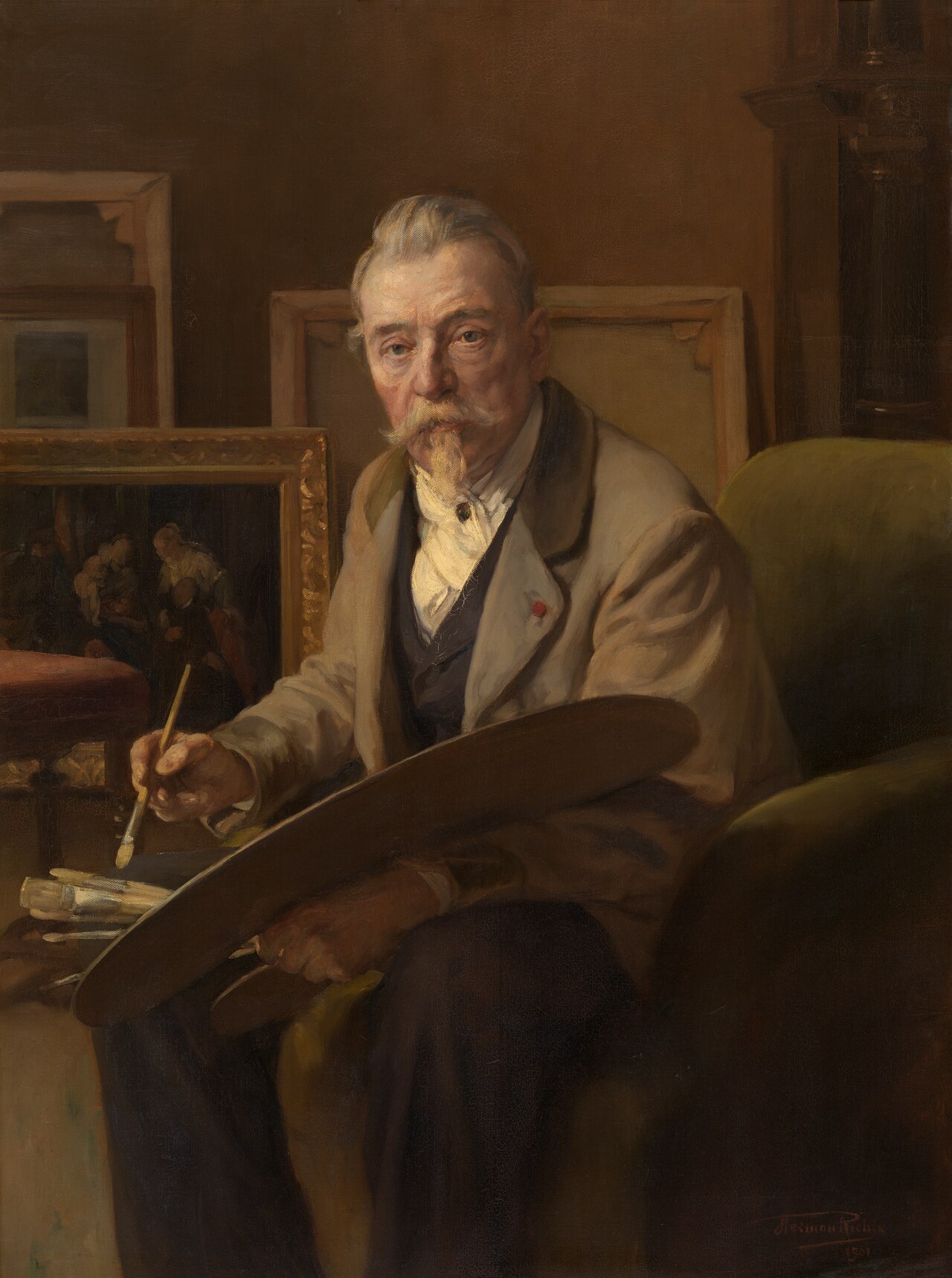
Major works Among Richir's most notable works are The Score (1910), The Painter Alexandre Nestor Nicolas Robert (1901), and The Sleep of Jamilé. The Score, created in 1910, reflects the artist's ability to balance composition and emotion, offering a glimpse into his technical skill and artistic vision. The Painter Alexandre Nestor Nicolas Robert, painted in 1901, is a portrait that showcases Richir's capacity for capturing the character and dignity of his subjects. The Sleep of Jamilé, with its dreamlike quality, highlights Richir's range and his exploration of different themes and moods in his work.
Influence and legacy Herman Richir's influence on the Belgian art scene and his legacy are subjects that require further research to fully understand. However, his contributions to the visual arts, as evidenced by his notable works, indicate that he played a role in the country's rich cultural heritage. His paintings continue to be of interest to art historians and enthusiasts, offering insights into the artistic currents of his time and the evolution of Belgian art in the late 19th and early 20th centuries.
Frequently asked questions
Who was Herman Richir?
Herman Richir was a Belgian artist born in 1866 in Ixelles and died in 1942 in Uccle, known for his contributions to the visual arts.
What style or movement was Herman Richir associated with?
The specific art movement or current associated with Herman Richir is not clearly defined, but his works reflect a blend of traditional and contemporary elements.
What are some of Herman Richir's most famous works?
Some of his most notable works include The Score, The Painter Alexandre Nestor Nicolas Robert, and The Sleep of Jamilé.
Why does Herman Richir matter in the history of art?
Richir matters because his works contribute to the understanding of the Belgian art scene during the late 19th and early 20th centuries, offering insights into the country's cultural heritage.
How can I recognize Herman Richir's work?
You can recognize his work by looking for a mastery of color, composition, and detail, along with a blend of traditional and modern elements, particularly in portraits and scenes that evoke a sense of emotion and character.
More Belgium artists
References: Wikidata