Henry Nelson O'Neil
1817 – 1880
In short
Henry Nelson O'Neil (1817–1880) was a British‑Irish painter known for historical genre scenes, especially those depicting the Indian Mutiny and romanticised deaths of cultural icons. Born in Saint Petersburg and dying in London, he combined literary interests with a vivid, narrative‑driven style.
Notable works

.jpg)
_-_Naomi_with_her_Daughters-in-Law_-_RCIN_403650_-_Royal_Collection.jpg)
_-_An_Anchorite_Reflecting_on_Death_-_RCIN_403699_-_Royal_Collection.jpg)
Early life
Henry Nelson O'Neil was born in 1817 in Saint Petersburg, then part of the Russian Empire, to a family of Irish descent. His parents were expatriates who returned to the United Kingdom during his childhood, settling in London. Little is recorded about his formal education, but contemporary accounts suggest he received a conventional Victorian upbringing and showed an early aptitude for drawing. By his late teens he was attending art classes in London, where the burgeoning Royal Academy and the commercial art market offered a fertile environment for aspiring painters.
Career and style
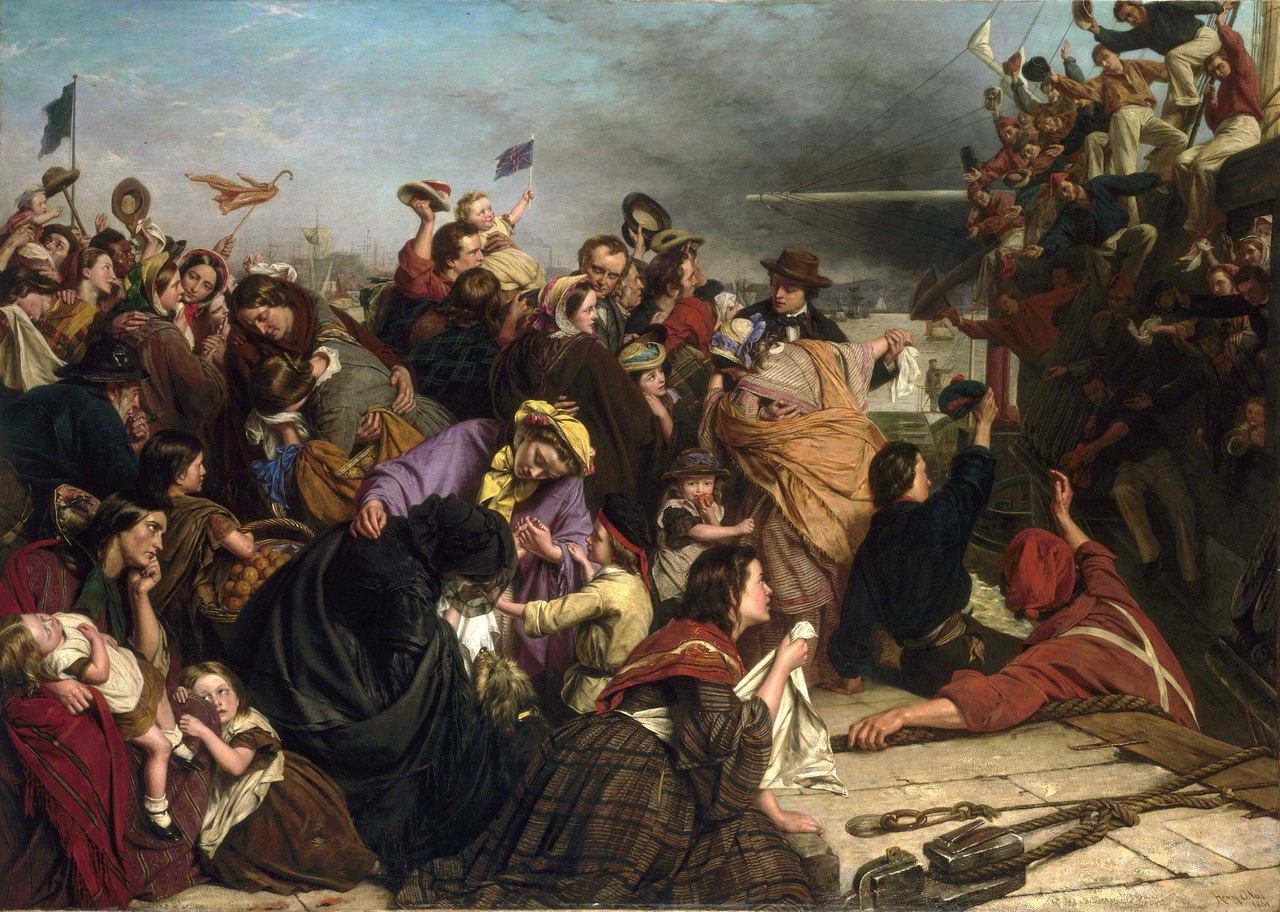
O'Neil emerged in the 1840s as a historical genre painter, a category that blended narrative illustration with the technical standards of academic painting. His early works, such as *An Anchorite Reflecting on Death* (1840), reveal a preoccupation with moral and spiritual themes, rendered with a careful chiaroscuro that emphasized the inner life of solitary figures. Throughout the 1850s he turned increasingly to contemporary history, most notably the Indian Mutiny (1857‑1858). The painting *Eastward Ho!*—dated August 1857 and exhibited the following year—depicts British troops embarking for India, capturing the mixture of patriotism and anxiety that characterised the expedition.
His style remained rooted in the Victorian tradition of clear storytelling, bright colour, and careful draftsmanship. O'Neil often incorporated literary references, a habit that reflected his parallel activity as a minor writer of the period. While he never aligned himself with a formal avant‑garde movement, his work resonated with the public appetite for dramatic, historically grounded scenes. Critics of the time praised his ability to convey narrative tension without sacrificing painterly quality, though later art historians have sometimes relegated him to the periphery of Victorian art because his subjects were considered conventional.
Signature techniques
O'Neil’s paintings are distinguished by several recurring technical choices:
1. Narrative focal points – He placed the primary action or emotional climax at the centre of the canvas, often using a single figure to anchor the story. 2. Soft yet precise lighting – A subtle use of light and shadow creates depth while maintaining the legibility of details, a technique evident in *The Parting Cheer* (1861). 3. Historical accuracy in costume and setting – Research into uniforms, architecture, and props lent his works an authenticity that appealed to Victorian audiences. 4. Integration of literary motifs – O'Neil frequently embedded symbolic objects (e.g., a music manuscript in his Mozart scenes) that linked visual and textual narratives. 5. Balanced colour palette – He favoured earthy tones punctuated by vivid accents—such as the red of a British flag or the golden hue of a sunrise—to draw the eye to key elements.
These methods allowed him to produce works that were both visually appealing and intellectually engaging, satisfying the era’s demand for morally uplifting yet entertaining art.
Major works
- The Landing of HRH The Princess Alexandra at Gravesend, 7th March 1863 (1864) – Commissioned to commemorate the royal arrival, this large‑scale canvas captures the celebratory atmosphere of the Thames dockside, with a meticulously rendered crowd and the princess’s carriage bathed in natural light. - The Parting Cheer (1861) – A genre scene depicting soldiers raising a toast before departure, notable for its dynamic composition and the interplay of warm candlelight against a darkened interior. - Eastward Ho! (August 1857, exhibited 1858) – This work portrays the departure of British troops for India, emphasizing both the resolve of the soldiers and the underlying tension of the impending conflict. - Naomi with her Daughters‑in‑Law (1844) – A biblical subject rendered with a domestic sensibility, highlighting O'Neil’s skill in depicting nuanced facial expressions and interior detail. - An Anchorite Reflecting on Death (1840) – One of his earliest known pieces, it presents a solitary hermit in contemplation, using subdued lighting to convey a meditative mood.
Beyond these listed pieces, O'Neil achieved popular success with romanticised depictions of the deaths of Mozart and Raphael. In *The Last Moments of Mozart* the composer is shown listening to singers performing his Requiem, while *The Last Moments of Raphael* portrays the painter gazing at an unseen vision of Christ, echoing the spiritual intensity that characterised his later work.
Influence and legacy
Although O'Neil never attained the fame of contemporaries such as Lawrence or Millais, his paintings contributed to the visual culture of Victorian Britain by reinforcing narratives of imperial duty, moral virtue, and artistic genius. His historical genre approach helped shape the expectations of museum and exhibition audiences, particularly in the way that complex events—like the Indian Mutiny—could be distilled into single, emotionally resonant images.
In the decades after his death in London in 1880, O'Neil’s works were reproduced in prints and illustrated books, extending his reach beyond the confines of galleries. Modern scholars view his oeuvre as a valuable record of mid‑nineteenth‑century attitudes toward empire, religion, and the arts. While his name may not dominate contemporary art histories, exhibitions focusing on Victorian narrative painting often include his pieces to illustrate the era’s blend of documentary ambition and romantic imagination.
Today, O'Neil’s paintings are held in several public collections across the United Kingdom, and they continue to be cited in discussions of how visual art mediated public perception of historical events. His legacy endures as a testament to the power of narrative painting in shaping collective memory.
Frequently asked questions
Who was Henry Nelson O'Neil?
Henry Nelson O'Neil (1817–1880) was a British‑Irish painter who specialised in historical genre scenes, especially those depicting the Indian Mutiny and romanticised deaths of cultural figures.
What artistic style or movement is he associated with?
He worked within the Victorian historical‑genre tradition, using narrative‑driven compositions, accurate costume detail, and a balanced colour palette rather than aligning with a specific avant‑garde movement.
What are his most famous works?
His best‑known paintings include *The Landing of HRH The Princess Alexandra at Gravesend* (1864), *The Parting Cheer* (1861), *Eastward Ho!* (1857/1858), *Naomi with her Daughters‑in‑Law* (1844) and *An Anchorite Reflecting on Death* (1840).
Why does he matter in art history?
O'Neil’s work exemplifies Victorian narrative painting, illustrating how art was used to convey imperial and moral narratives, and his paintings remain valuable records of mid‑nineteenth‑century British cultural attitudes.
How can I recognise an O'Neil painting?
Look for clear storytelling focal points, meticulous historical detail in clothing and setting, a soft yet precise lighting scheme, and a balanced palette that highlights a single emotional climax.